Site Selection
Finding the perfect spot: a smart restaurant location strategy
A phased smart restaurant location strategy covering demographics, streetscape, competition, logistics, and rent math so you choose a site that matches your concept and budget.
Key Takeaways
- Start with people, not buildings, demographics and psychographics must match your concept and price point.
- Evaluate foot traffic quality, corner vs. mid-block placement, signage rules, and anchor-tenant synergy.
- Walk away from high-turnover spaces, bad parking, and rent above 6–10% of projected sales.
- Use our site selection checklist and Restaurant Site Finder to score finalists before you commit.
You have crafted the perfect menu, hired a talented chef, and conceptualized an unforgettable dining atmosphere. Yet, in the hospitality industry, culinary brilliance alone cannot guarantee survival. The foundation of any thriving eatery is built on one critical decision: its physical address. This is the reality of the hospitality business, where Finding the perfect spot: a smart restaurant location strategy is just as important as the food you serve on the plate.
Too often, passionate restaurateurs fall in love with a charming building without analyzing the data behind the geography. This comprehensive site selection guide is designed to bridge the gap between architectural romance and hard business logic. Whether you are launching a fast-casual taco stand or an upscale fine-dining establishment, understanding how to choose a restaurant location is the ultimate key to unlocking long-term profitability.
Let us dive deep into the ultimate blueprint for commercial success and explore the elements that formulate a truly smart restaurant location strategy. Pair this guide with how to find the right location for your restaurant and choosing the perfect spot for restaurants.
Phase 1: Understanding the People and the Market
Before you look at bricks and mortar, you must look at the people. A location is only as good as the customer base surrounding it.
Crunching the Numbers with Demographic Analysis
A thorough demographic analysis for restaurant sites is your first line of defense against opening in the wrong zip code. You need to gather hard data on the local population within a one, three, and five-mile radius of your prospective site.
- Population density: Are there enough people living and working nearby to sustain your daily cover targets?
- Average household income: Does the local income align with your menu pricing? A high-end steakhouse will struggle in a predominantly student-housing neighborhood.
- Age and family dynamics: Are you targeting young, single professionals who eat out late, or families looking for a kid-friendly weekend brunch?
Digging Deeper: Psychographics
While demographics tell you who lives in the area, the psychographic profiling of local residents tells you why they buy. This involves analyzing lifestyle choices, values, and spending behaviors. For instance, a neighborhood might have a high median income, but if the residents prioritize home cooking and early bedtimes, a trendy late-night tapas bar might fail. Conversely, a community with a strong focus on health, wellness, and sustainability would be the ideal ecosystem for a farm-to-table vegan cafe.
Gauging Neighborhood Saturation Levels
It is crucial to determine the neighborhood saturation levels of your specific culinary niche. If a four-block radius already boasts three highly rated Italian restaurants, opening a fourth is a massive risk. While a bustling dining district draws crowds, hyper-saturation of a specific cuisine leads to cannibalized sales. Look for the "culinary gaps" in a thriving neighborhood, what do the locals want that they currently cannot get? See our guide on restaurant market saturation trends for deeper analysis.
Phase 2: Evaluating Physical Space and Streetscape
Once you have identified a viable neighborhood, the next step is assessing the actual physical footprint of the prospective buildings.
Traffic Flow and Pedestrian Patterns
Do not just look at total population numbers; you must be actively evaluating foot traffic patterns. Spend time outside the potential location at different times of the day and week.
- Is the traffic moving quickly on their way to a commuter train, or are they strolling leisurely and window shopping?
- Which side of the street gets the most afternoon sun? (This heavily impacts patio seating desirability).
- Is the location on the "going home" side of the street or the "going to work" side? Coffee shops thrive on the morning commute side, while dinner spots benefit from evening flow.
Storefront Placement
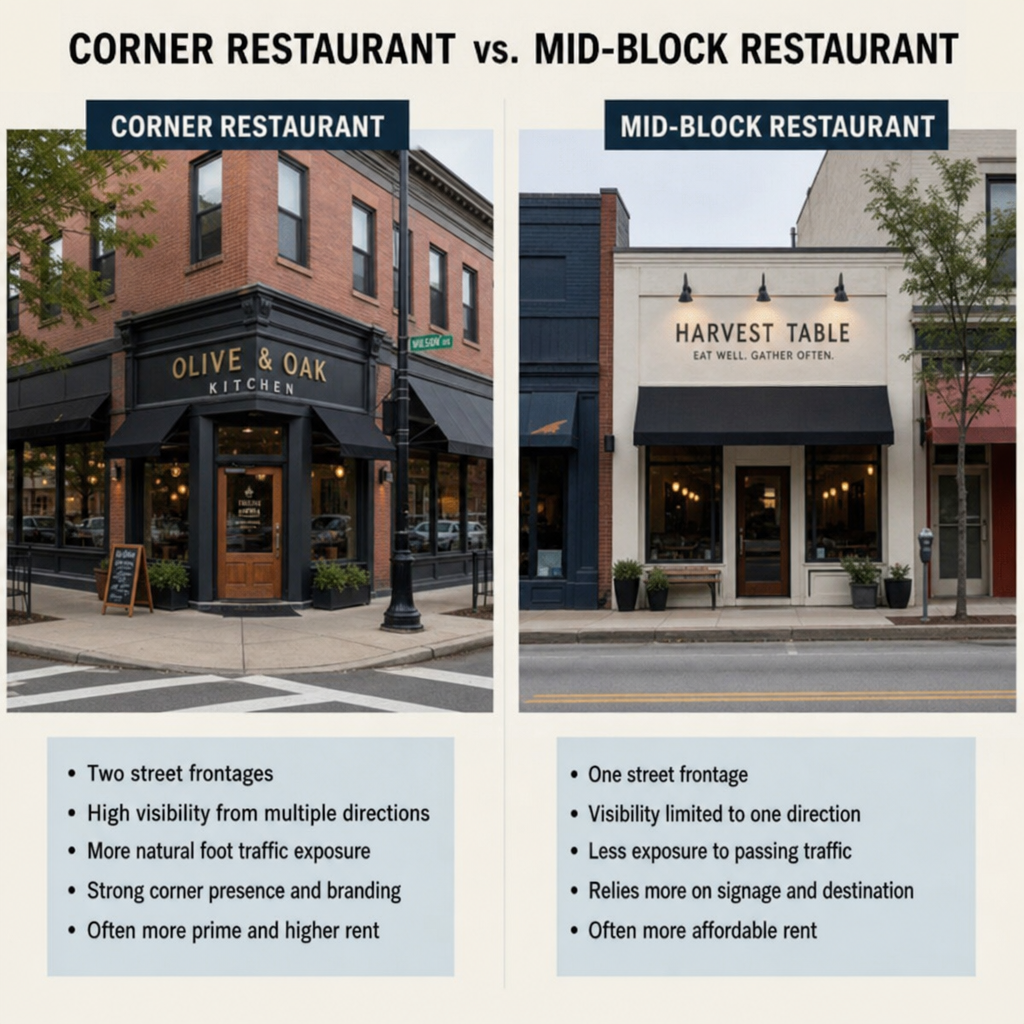
One of the classic debates in hospitality real estate is choosing between corner vs mid-block restaurant storefronts.
Corner locations offer dual street visibility, more natural light, wrap-around patio potential, and serve as natural meeting points. However, they command premium rent prices.
Mid-block locations are generally more affordable and can benefit from the foot traffic generated by adjacent businesses, but they risk blending into the streetscape if not properly branded.
Visibility and Signage
Your restaurant needs to be its own billboard. Understanding local visibility and signage requirements is paramount. A building might look beautiful, but if local city ordinances prohibit illuminated signs, blade signs, or monument signage, passing drivers and pedestrians might never know you exist. Ensure the building has a clear, unobstructed sightline from the main road, free from overgrown trees or obstructive neighboring architecture.
Phase 3: Neighbors, Synergy, and Competition
No restaurant exists in a vacuum. Your success is heavily influenced by the businesses operating around you.
Harnessing Synergy
Smart operators actively look for anchor tenants and synergy effects. An anchor tenant is a major business, like a large movie theater, a popular grocery store, or a massive corporate office building, that draws large, consistent crowds to the area. Placing your restaurant near a high-end shopping center means capturing the overflow of hungry shoppers. Similarly, a quick-service lunch spot positioned next to a hospital or university can thrive on built-in, captive audiences.
Navigating the Competition
Conducting a rigorous competitive market analysis for dining is non-negotiable. Map out every direct competitor (those serving similar food at a similar price point) and indirect competitor (different cuisine, but competing for the same dining dollars). Use this data to refine your restaurant positioning strategy. If you are opening a burger joint in an area with two established burger franchises, your positioning strategy must clearly communicate your unique value proposition, perhaps you offer grass-fed, locally sourced meat, or a nostalgic, retro dining experience that the corporate chains cannot match.
The Danger of Cursed Spaces
Every city has one: a beautiful building that has housed five different failed restaurants in the past six years. Part of your strategy must include avoiding high turnover restaurant locations. While a broker might offer you a steep discount or "turnkey" equipment left by the last tenant, you must investigate why previous operators failed. Was it a lack of parking? A terrible landlord? Poor ventilation? A bad neighborhood reputation? Do not assume your superior food will overcome a fundamentally flawed physical location.
Phase 4: Logistics, Accessibility, and Infrastructure
The most beautiful restaurant in the world will fail if operations are choked by poor logistics.
The Parking Conundrum
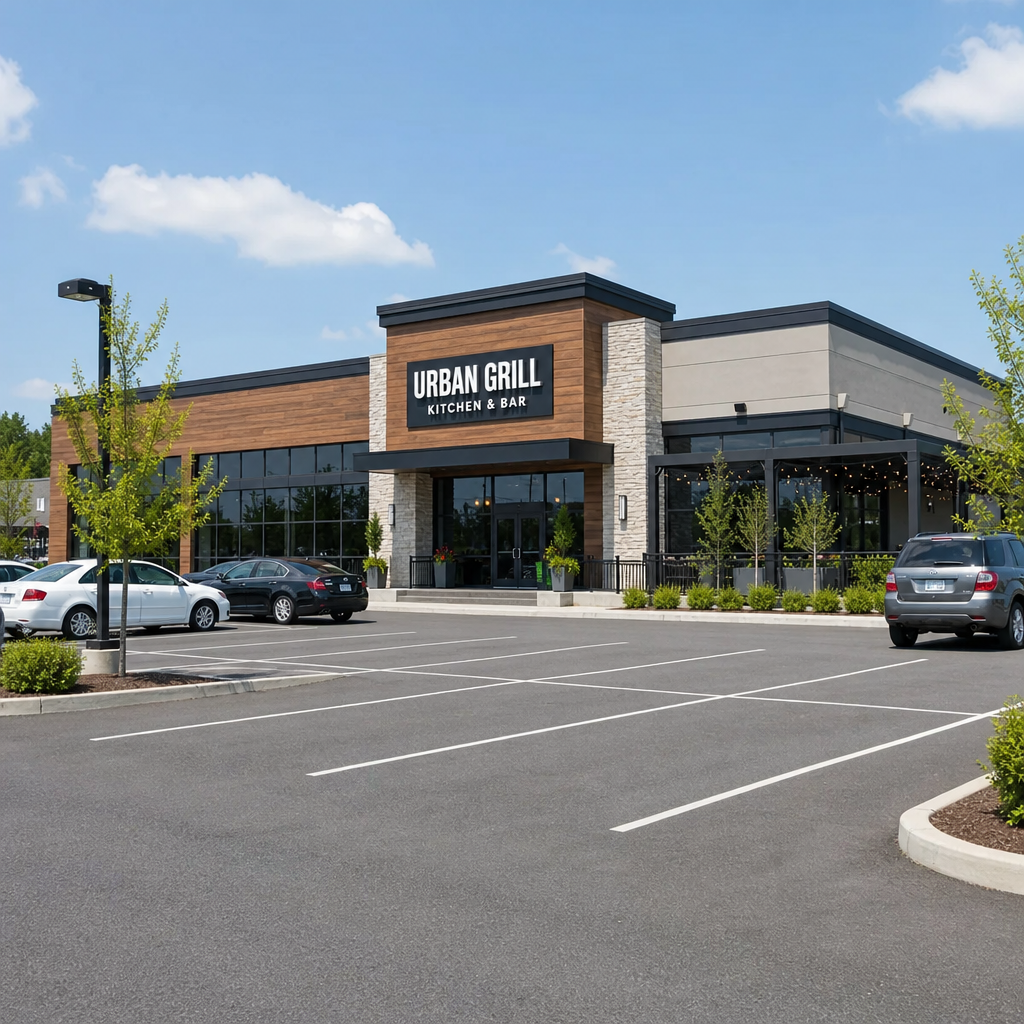
In suburban and car-dependent urban environments, parking accessibility for diners is often the deciding factor in where a customer chooses to eat.
- Does the location have a dedicated lot, or will customers rely on competitive street parking?
- Is there a safe, well-lit path from the parking area to your front door?
- Can you designate specific spots for third-party delivery drivers (UberEats, DoorDash) to ensure they don't block dine-in customers?
If parking is notoriously difficult, you may need to factor the cost of a valet service into your operating budget.
Zoning and City Regulations
Do not sign a lease without a crystal-clear understanding of the commercial zoning laws for eateries in your municipality. Just because a space was previously a retail clothing store does not mean the city will allow you to convert it into a restaurant. You must verify:
- Liquor licensing: Is the location in a "dry" zone, or too close to a school or church to legally serve alcohol?
- Infrastructure capabilities: Can the building support commercial HVAC systems, a type-1 grease hood, and high-capacity plumbing for grease traps?
- ADA Compliance: Will you need to spend tens of thousands of dollars retrofitting entrances and bathrooms to meet wheelchair accessibility laws?
Phase 5: The Financial Equation
Ultimately, restaurant real estate is a numbers game. You must align your culinary dreams with strict financial discipline.
Balancing Rent and Revenue
The most critical metric in your lease negotiation is the restaurant rent-to-revenue ratio. Industry standards dictate that your total occupancy costs (which include base rent, property taxes, insurance, and common area maintenance fees) should ideally not exceed 6% to 10% of your projected gross sales.
Example: If you project $1,000,000 in annual sales, your total yearly occupancy cost should absolutely not exceed $100,000 (roughly $8,300 per month). If the rent demands 15% or 20% of your projected revenue, you will constantly be starved for cash flow, regardless of how busy your dining room is. Walk away from bad math.
The Real Estate Dilemma: Buy or Lease?
Entrepreneurs must carefully weigh the pros and cons of buying vs leasing restaurant space.
Leasing requires significantly less upfront capital, allowing you to invest your cash into marketing, staff, and high-quality ingredients. It also provides flexibility to move if the neighborhood declines after your lease term ends.
Buying the commercial real estate requires a massive initial investment and makes you responsible for all structural repairs. However, it protects you from predatory rent hikes, builds long-term equity, and ensures that if your restaurant revitalizes the neighborhood, you reap the real estate benefits, not a landlord.

Phase 6: The Master Checklist
To ensure you do not miss any critical details during your search, use this comprehensive restaurant site selection checklist before making any binding commitments. For a printable deep dive, see our restaurant site selection checklist guide.
1. Market & Demographics
- Conducted a one, three, and five-mile radius demographic study.
- Confirmed alignment between local psychographics and restaurant concept.
- Evaluated saturation of similar cuisines in the immediate area.
- Identified primary target audience (office workers, families, tourists).
2. Physical Space & Visibility
- Monitored foot and vehicle traffic at breakfast, lunch, and dinner times.
- Evaluated the pros and cons of corner vs. mid-block placement for this specific street.
- Checked city ordinances regarding exterior signage and patio seating.
- Investigated the history of the building to avoid historically high-turnover spots.
3. Accessibility & Logistics
- Counted available parking spaces and evaluated street parking ease.
- Mapped out access for delivery trucks and waste management services.
- Assessed ADA compliance for entryways, dining rooms, and restrooms.
- Checked proximity and ease of access to public transportation hubs.
4. Financial & Legal
- Calculated projected rent-to-revenue ratio (aiming for under 10%).
- Verified commercial zoning permits for food service and alcohol sales.
- Had a contractor inspect plumbing, electrical, and HVAC capacity.
- Consulted a real estate attorney to review lease terms or purchase agreements.
- Analyzed proximity to anchor tenants that provide synergy and built-in foot traffic.
Conclusion
The success of a dining establishment is rarely a happy accident. It is the result of meticulous planning, rigorous data analysis, and a refusal to settle for "good enough." Masterful restaurant site selection is the invisible engine that drives consistent covers, brand recognition, and sustainable profit margins.
By taking the time to study the demographics, respect the financial ratios, understand local zoning, and critically evaluate the physical streetscape, you protect your culinary investment. Remember: a great menu in a bad location is a tragedy, but a great menu in the perfect location is an empire in the making. Take your time, trust the data, and secure the space that your vision truly deserves. Run a free Restaurant Site Finder analysis on your shortlist before you sign.
Run a free location analysis
Enter any address to get competitor mapping, market gaps, opportunity scoring, and concept ideas.
Analyze your location free Shop equipment at Horeca Store