Site Selection
How to Find the Right Location for Your Restaurant
Learn how to find the right restaurant location with demographic research, trade area analysis, visibility checks, kitchen infrastructure review, and rent math before you sign a lease.
Key Takeaways
- Your concept dictates real estate needs, a clear location strategy differs sharply for brick-and-mortar visibility versus cloud kitchen logistics.
- Conduct rigorous trade area analysis: demographics, population density, growth trends, and competitor mapping across every potential location on your shortlist.
- Evaluate visibility, foot traffic quality, parking, and kitchen infrastructure before falling in love with a storefront.
- Keep total occupancy cost under 6–10% of projected sales and use our site selection checklist plus Restaurant Site Finder before you sign.
Opening a restaurant is a thrilling venture, but even the most innovative menu and brilliant chef cannot save a business housed in the wrong spot. You can change your decor, overhaul your menu, and retrain your staff, but once you sign a multi-year lease, your location is fixed.
If you are asking yourself, "How to find the right location for my restaurant?", you are already taking the first crucial step toward long-term profitability. Finding that perfect spot requires a disciplined location strategy, a mix of data-driven research, financial acumen, and on-the-ground observation applied to every address you consider.
This comprehensive guide will walk you through the exact steps of choosing a restaurant location, ensuring your business gets the visibility, traffic, and structural foundation it needs to thrive. Screen potential locations with the same rigor you apply to menu testing: eliminate weak sites early so you only tour finalists worth a lease negotiation. For a structured workflow, pair this guide with how to choose a restaurant location and Restaurant Site Finder's free AI location analysis.
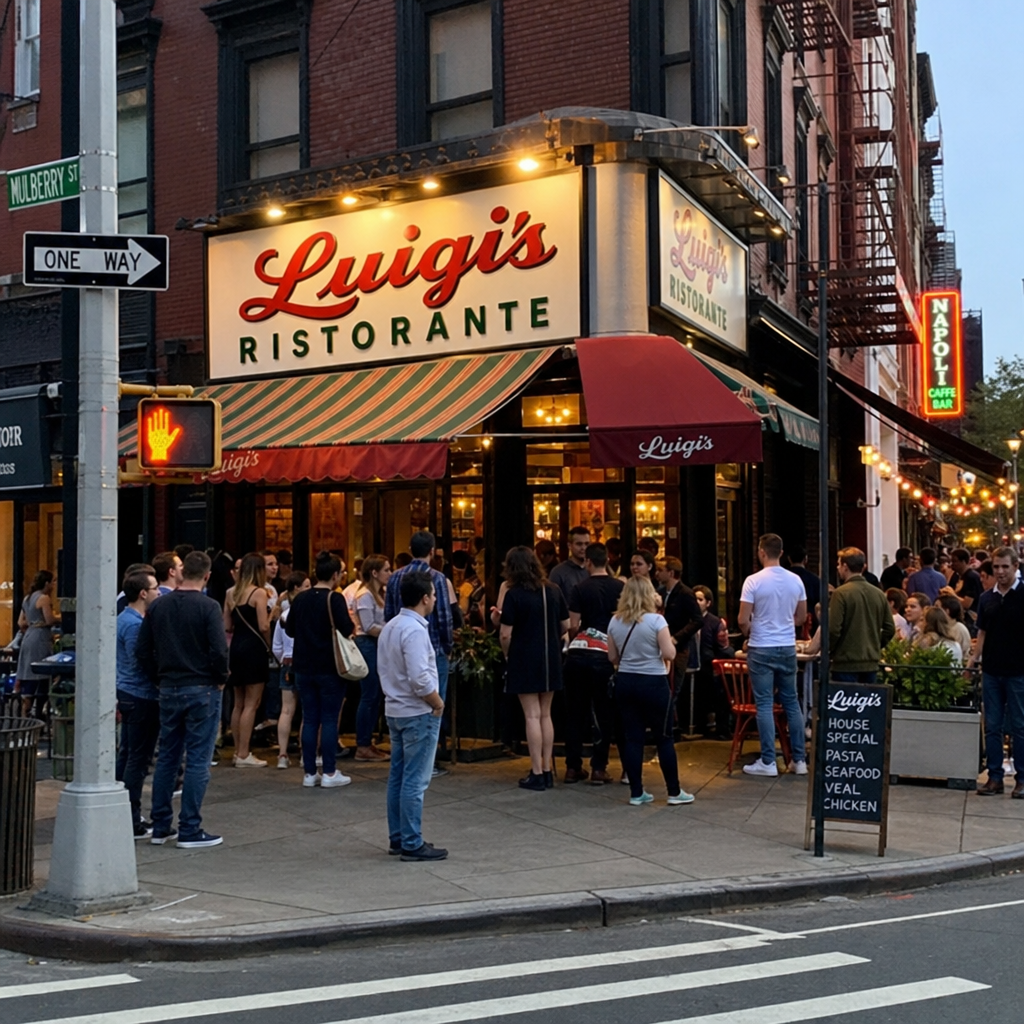
Start With Your Concept: Do You Even Need a Prime Location?
Before you begin scouring commercial real estate listings, you must have a crystal-clear understanding of your restaurant's concept. The type of food you serve, your service style, and your pricing strategy will heavily dictate your real estate needs, and whether a prime location on a high-visibility corridor is worth the rent premium.
The Brick and Mortar vs Cloud Kitchen Comparison
The modern culinary landscape offers more flexibility than ever before. A thorough brick and mortar vs cloud kitchen comparison is essential for new restaurateurs.
Brick and Mortar: Requires high visibility, substantial square footage for dining rooms, and high foot traffic. It carries higher overhead but builds stronger community presence and brand loyalty.
Cloud Kitchens (Ghost Kitchens): Operate exclusively for delivery. Because they have no dine-in customers, you can lease cheaper warehouse spaces in industrial areas. The priority here isn't curb appeal; it's being centrally located to a high volume of delivery customers.
Analyzing Target Audience Demographic Profiles
If you opt for a traditional brick-and-mortar space, understanding your target market comes before any broker tour. You must place your restaurant where your ideal customers live, work, or play, and confirm that local customer bases actually match your price point, dayparts, and format. Dive deep into target audience demographic profiles.
Are you opening a high-end vegan bistro? Look for neighborhoods with a high concentration of affluent, health-conscious millennials and Gen Z residents. Opening a family-friendly sports bar? You will want areas populated by middle-income families and recreational leagues. Look at average household income, age distribution, education levels, and household sizes in your prospective ZIP codes.
Conduct a Comprehensive Restaurant Location Analysis
Data is your best friend when selecting a site. A rigorous restaurant location analysis removes the guesswork and emotion from your decision-making process.
Assessing Trade Area Population Density
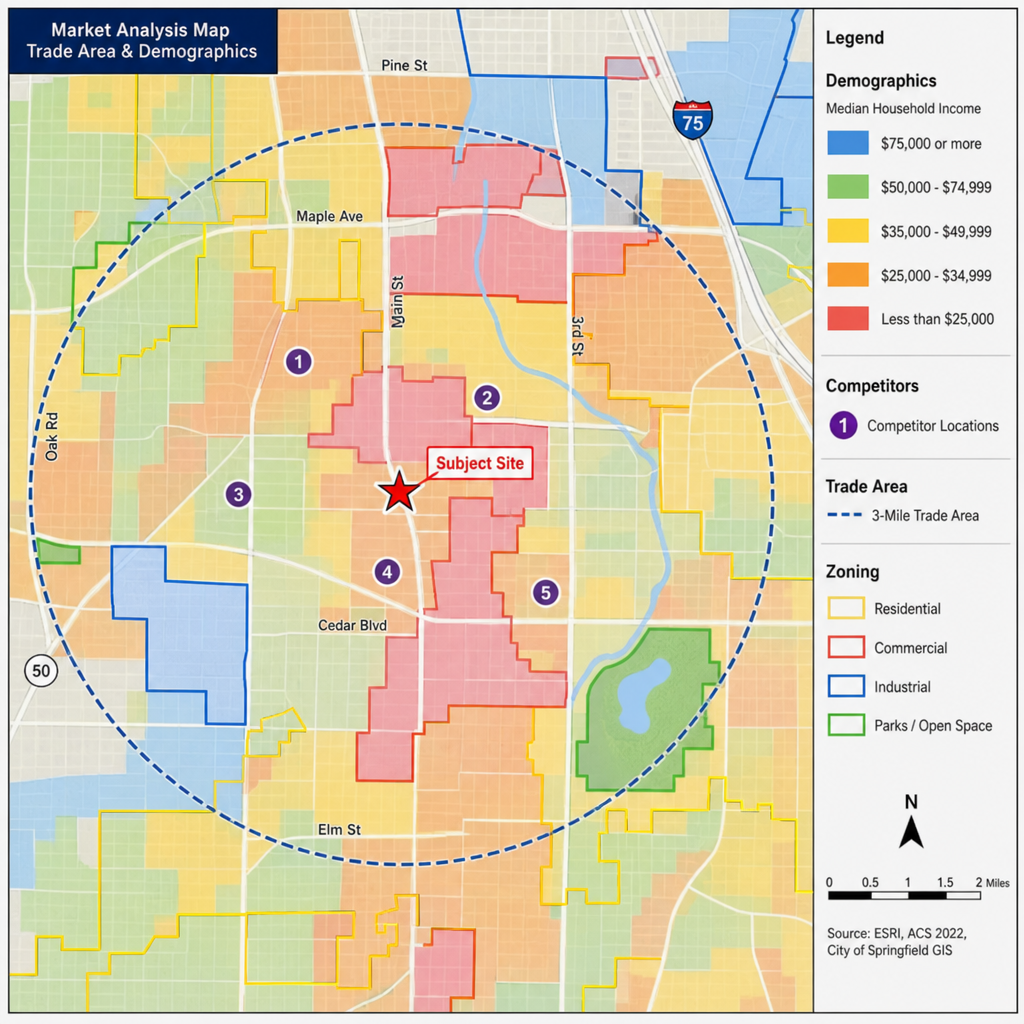
Your "trade area" is the geographic radius from which you will draw the majority of your customers. For a quick-service restaurant (QSR), this might be a 1-to-3-mile radius. For fine dining restaurants, people might drive 10 to 20 miles, destination dining pulls from wider customer bases than a neighborhood café.
Evaluate the trade area population density. Are there enough potential customers within a reasonable travel time to sustain your business? A highly dense area means more potential daily volume, but it often comes with steeper rent and fierce competition.
Studying Neighborhood Socioeconomic Growth Patterns
Do not just look at a neighborhood as it is today; look at what it will become tomorrow. Investigate neighborhood socioeconomic growth patterns. Are new apartment complexes being built? Is a major tech company opening an office nearby? Conversely, are retail spaces boarding up their windows? Positioning yourself in an up-and-coming neighborhood can allow you to lock in favorable lease rates before the area gentrifies and prices skyrocket.
Hospitality Competitor Landscape Mapping
You need to know exactly who you are up against. Conducting hospitality competitor landscape mapping involves identifying both direct competitors (restaurants with similar menus or price points) and indirect competitors (other entertainment or dining options).
The Cluster Effect: Being near competitors isn't always bad. A busy "restaurant row" draws crowds organically because people know they have options.
Market Saturation: However, if there are already five successful pizza places in a three-block radius, opening a sixth might be a recipe for disaster. Look for "white space", a gap in the market that your concept perfectly fills. See our guide on restaurant market saturation trends for deeper analysis.
Evaluate Visibility, Accessibility, and Traffic
Even the most beautiful restaurant will fail if people don't know it's there or find it too difficult to visit. When choosing restaurant location, physical logistics are paramount.
The Importance of Storefront Visibility and Brand Exposure
Out of sight often means out of mind. High storefront visibility and brand exposure can significantly reduce your marketing budget. A restaurant located on a busy intersection or a prominent corner acts as a 24/7 billboard. If your space is tucked away in a back alley or hidden on the second floor of an office building, you will need to spend heavily on marketing and wayfinding signage to drive customers to your door.
Analyzing Foot Traffic for Restaurant Success
Foot traffic is the lifeblood of coffee shops, fast-casual spots, and bakeries. Analyzing foot traffic for restaurant success involves more than just counting people. You need to know who is walking by and when.
- Visit the location on different days of the week and at various times.
- Are the pedestrians your target audience?
- Is the traffic strictly a morning commuter rush, or is there a steady evening flow for dinner service?
Urban vs Suburban Dining Market Trends
Your traffic analysis will change drastically depending on the setting. Understanding urban vs suburban dining market trends will guide your expectations.
Urban locations: Rely heavily on foot traffic, public transit, and nearby office workers. They often see high weekday lunch rushes but might empty out on weekends depending on the district.
Suburban locations: Rely almost entirely on vehicle traffic. They often feature larger dining rooms and see their highest volume during family dinner hours and weekends.
Parking Accessibility and Customer Reach
If you choose a suburban or car-dependent location, parking accessibility and customer reach become critical factors. If a potential customer has to circle the block for 15 minutes to find parking, they will likely just drive to a competitor. Ensure your location has a dedicated parking lot, affordable street parking, or nearby municipal garages. Furthermore, ensure the ingress and egress (how cars enter and exit the property) are safe and relatively traffic-free.
The Physical Space: Infrastructure and Supply Logistics
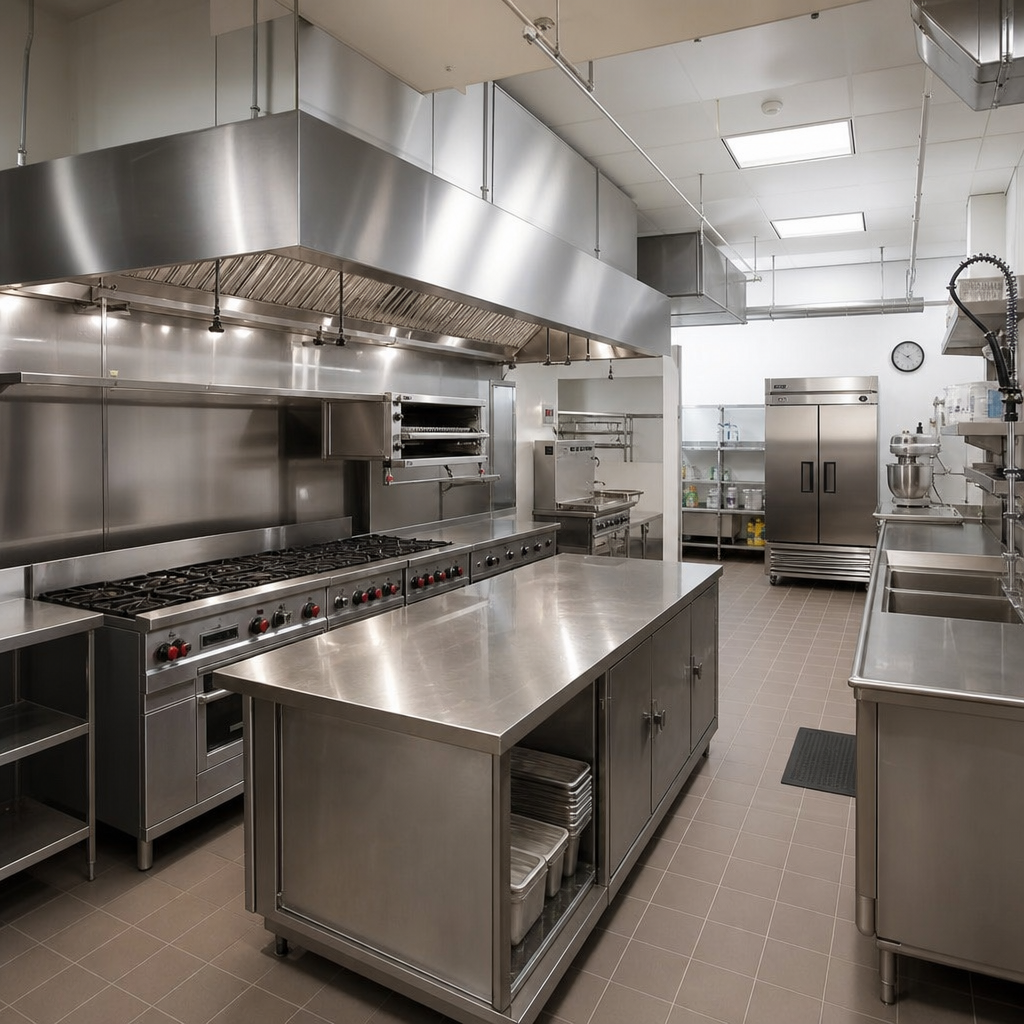
A restaurant is a manufacturing plant that produces food. The physical building must be able to handle the heavy demands of commercial cooking.
Infrastructure Requirements for Commercial Kitchens
Never underestimate the cost of retrofitting a standard retail space into a restaurant. It is always more cost-effective to lease a "second-generation" space, a building that previously housed a restaurant.
You must carefully assess the infrastructure requirements for commercial kitchens. Does the building have:
- Adequate HVAC systems and a commercial exhaust hood?
- Proper gas line sizing for heavy-duty ranges?
- A grease trap that meets local municipal codes?
- Sufficient electrical capacity for walk-in coolers and specialized equipment?
- Floor drains and washable walls?
Upgrading a first-generation space (like a former clothing store) to meet these requirements can easily add hundreds of thousands of dollars to your build-out costs.
Supply Chain Logistics and Location Proximity
Your customers need to reach you, but so do your vendors. Supply chain logistics and location proximity are often overlooked during the real estate hunt. Can large 18-wheeler delivery trucks safely navigate the streets leading to your restaurant? Do you have a dedicated loading dock, or will delivery drivers have to haul hundreds of pounds of produce through your front door during lunch service? Additionally, being located incredibly far from major distributor hubs might result in higher delivery fees or less frequent delivery schedules.
Navigating the Red Tape: Zoning and Legalities
Finding a great building is only half the battle; the local government must legally allow you to operate a restaurant there. Local zoning rules vary block by block, what works for a retail tenant may fail for a full-service kitchen with patio seating and late-night hours.
Local Food Service Zoning Ordinances
Before you fall in love with a property, check the local zoning map and local food service zoning ordinances. Zoning laws dictate what types of businesses can operate in specific districts.
- Use Classifications: Ensure the space is zoned for commercial restaurant use.
- Liquor Licenses: Some neighborhoods have strict quotas on liquor licenses or "dry" zones where alcohol cannot be sold (e.g., within 500 feet of a school or church).
- Noise and Odor Restrictions: If your restaurant backs up to a residential neighborhood, you may face strict ordinances regarding late-night operating hours, patio noise, and exhaust odors.
- Waste Management: Ensure there is legal, accessible space for commercial dumpsters and grease recycling bins.
Consult with a local real estate attorney or a permitting expeditor early in the process to avoid regulatory nightmares.
Mastering the Financials: Rent, Budgets, and Leases
The best location in the world is a terrible choice if the rent bankrupts you within six months. Financial discipline is the cornerstone of restaurant site selection.
How to Calculate Restaurant Rent Percentage
A common mistake new owners make is taking on too much rent in exchange for a "premium" location. Knowing how to calculate restaurant rent percentage will save your business.
The industry standard rule of thumb is that your total occupancy cost (base rent, property taxes, insurance, and common area maintenance) should not exceed 6% to 10% of your projected gross sales.
Example: If you project $1,000,000 in annual sales, your total annual rent should be between $60,000 and $100,000 (or $5,000 to $8,333 per month).
If a landlord is asking for $15,000 a month, you must be absolutely certain your location can generate at least $1.8 million to $2 million a year in sales to remain profitable. Be conservative with your sales projections when running these numbers.
Commercial Lease Terms for Restaurateurs
Commercial leases are complex, multi-year commitments that heavily favor the landlord. You must negotiate favorable commercial lease terms for restaurateurs. Key elements to negotiate include:
- Tenant Improvement (TI) Allowance: Will the landlord contribute cash toward your build-out (e.g., adding a grease trap or upgrading HVAC) in exchange for signing a long-term lease?
- Triple Net (NNN) Fees: Understand that you are likely paying base rent plus your share of the building's property taxes, insurance, and maintenance. These NNN fees fluctuate and must be budgeted for.
- Exclusivity Clauses: If you are opening a coffee shop in a strip mall, an exclusivity clause prevents the landlord from leasing the space next door to another coffee shop.
- Contingencies: Ensure your lease has an "out" clause if you cannot secure the necessary zoning permits or liquor licenses.

Your Ultimate Restaurant Site Selection Checklist
To synthesize all this information, here is a practical restaurant site selection checklist. Keep this handy as you tour potential locations and score each site against your location strategy. For a deeper printable version, see our restaurant site selection checklist guide.
Demographics & Market
- After understanding your target market, does the trade area match my demographic and income targets?
- Have I evaluated the trade area population density and whether local customer bases support my concept?
- Are the neighborhood socioeconomic growth patterns trending upward?
- Have I completed my hospitality competitor landscape mapping?
Visibility & Accessibility
- Is the storefront visibility and brand exposure adequate for my concept?
- Have I spent time analyzing foot traffic for restaurant success?
- Does the location align with urban vs suburban dining market trends?
- Is parking accessibility and customer reach easy and stress-free?
Infrastructure & Operations
- Does the space meet the heavy infrastructure requirements for commercial kitchens?
- Is the site a second-generation space, or will it require a costly first-generation build-out?
- Are the supply chain logistics and location proximity conducive to easy vendor deliveries?
- Have I considered a brick and mortar vs cloud kitchen comparison to ensure I actually need this space?
Financials & Legal
- Have I verified that local zoning and local food service zoning ordinances allow my specific concept and alcohol sales?
- Do I know how to calculate restaurant rent percentage, and does this space fit under 10% of projected sales?
- Have I hired a professional to help me negotiate favorable commercial lease terms for restaurateurs?
Keep these restaurant location tips in mind: Never rush the process. It is far better to delay your opening by six months to secure the right spot than to jump into a bad lease just to open your doors faster.
Conclusion
Answering the question, "How to find the right location for my restaurant?" requires patience, meticulous research, and a clear location strategy aligned with your brand's unique needs. By understanding your target market, analyzing foot and vehicle traffic, rigorously inspecting physical kitchen infrastructure, and strictly adhering to your budget formulas, you can secure a prime location that actively works for your business rather than against it.
Treat your real estate search with the same passion and perfectionism that you apply to your menu development. The right address will not just house your restaurant, it will be the foundation of its long-term success. Run a free Restaurant Site Finder analysis on your shortlist of potential locations before you sign.
Run a free location analysis
Enter any address to get competitor mapping, market gaps, opportunity scoring, and concept ideas.
Analyze your location free Shop equipment at Horeca Store