Site Selection
Restaurant Site Finder: Free AI Restaurant Location Analysis Tool
Learn how free AI restaurant location analysis maps demographics, foot traffic, competition, and daypart demand so you can choose a profitable site before signing a lease.
Key Takeaways
- Location beats menu polish, wrong geography sinks strong concepts before opening day.
- Free AI tools map demographics, foot traffic, competitors, and daypart demand in minutes, not weeks.
- Combine Restaurant Site Finder scores with on-site visits and lease math before you commit.
- Use data in negotiations: traffic patterns, seasonality, and catchment size strengthen your position with landlords.
Opening a new restaurant is one of the most exciting and terrifying ventures an entrepreneur can undertake. You can have a Michelin-star chef, a groundbreaking menu, and flawless interior design, but if your restaurant is in the wrong location, your chances of success plummet. Historically, finding the perfect spot required a mix of expensive consultants, gut intuition, and sheer luck. Today, technology has completely leveled the playing field.
Welcome to the era of the Restaurant Site Finder: Free AI Restaurant Location Analysis Tool. This groundbreaking technology is transforming how culinary entrepreneurs, franchisees, and investors approach the critical task of finding the perfect brick-and-mortar space.
In this comprehensive guide, we will explore how you can leverage these advanced location intelligence tools to secure a bustling, profitable location for your next culinary concept. Pair it with our how to choose a restaurant location guide and restaurant site selection checklist for a full workflow.
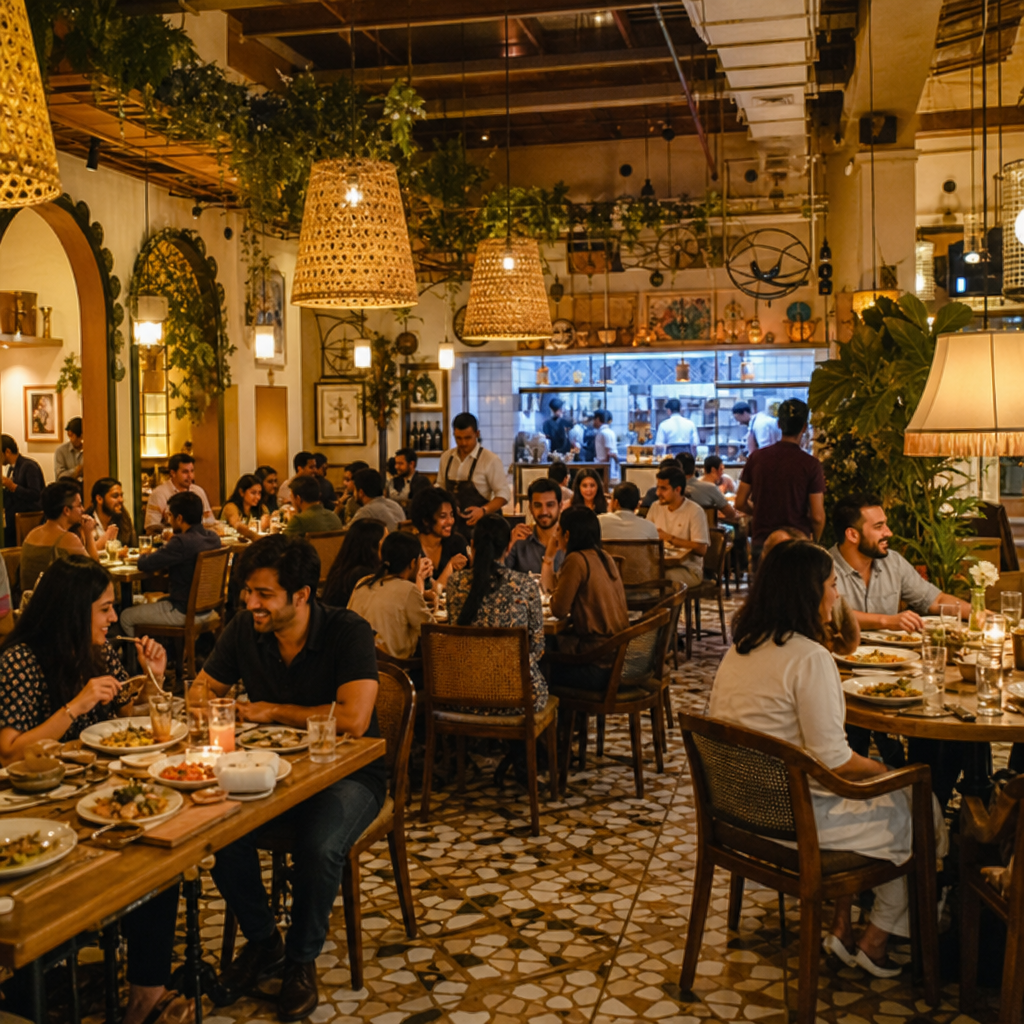
The New Era of Restaurant Site Selection
For decades, restaurant site selection was an arduous, analog process. Restaurateurs would physically drive around neighborhoods, manually count the cars passing by a vacant lot, and rely on outdated census data to guess the local demographics.
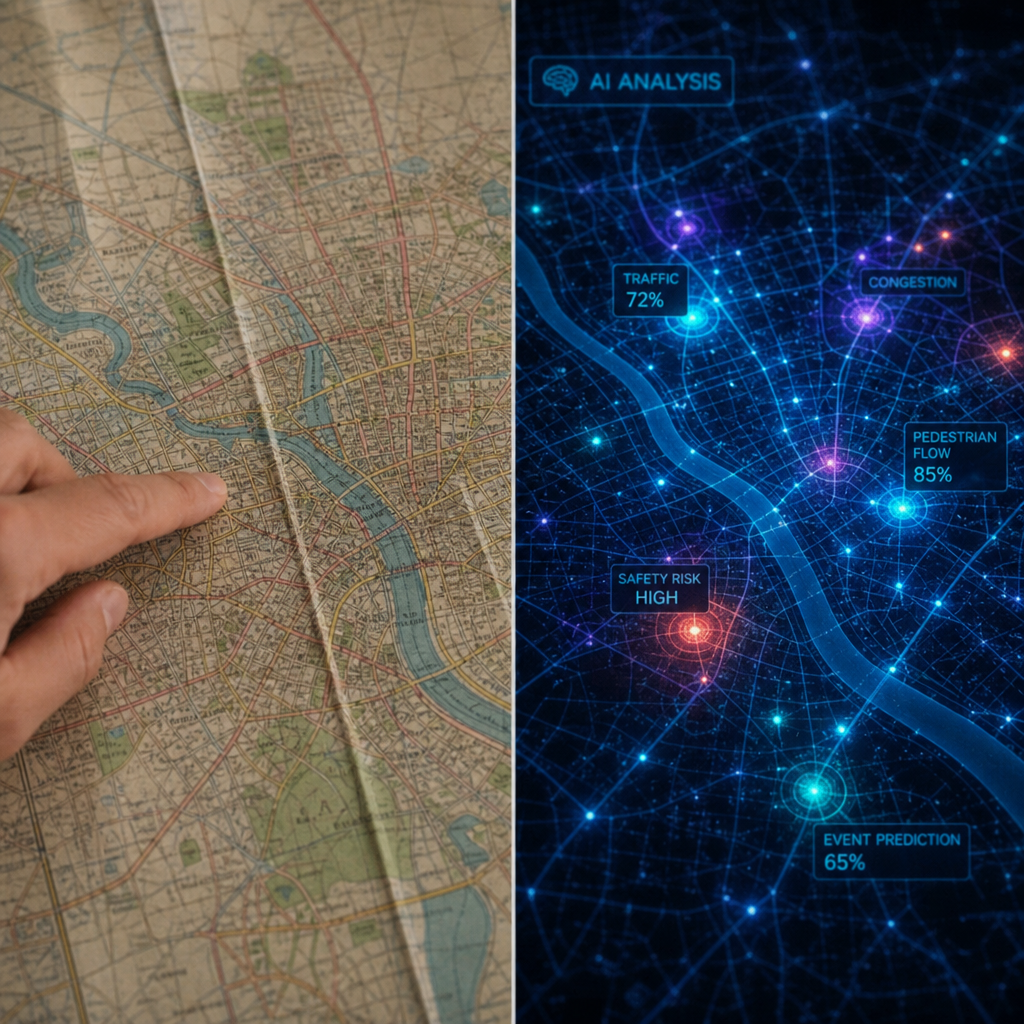
Today, the landscape has fundamentally shifted thanks to AI restaurant location analysis. By aggregating millions of data points, from smartphone mobility data to real estate pricing and social media trends, artificial intelligence provides a crystal-clear picture of a location's true potential.
AI Site Selection vs Manual Market Research
If you are wondering whether to rely on traditional methods or pivot to modern tech, understanding the difference between AI site selection vs manual market research is crucial.
Manual Market Research: Requires weeks of gathering data from disparate sources. It involves hiring consultants who charge premium fees to conduct surveys, manually observe traffic, and compile static reports that are often outdated the moment they are printed.
AI Site Selection: Delivers instant, dynamic insights. AI algorithms can instantly analyze a neighborhood's economic health, track foot traffic patterns minute-by-minute, and predict future trends based on vast historical datasets. It is faster, drastically cheaper (often free), and exponentially more accurate.
By embracing these modern systems, you are actively reducing investment risk with machine learning. Because the restaurant industry notoriously operates on razor-thin margins, mitigating the risk of a "dead zone" location can be the difference between a thriving business and early closure.
How to Choose the Best Location for a New Restaurant
Every successful restaurateur eventually faces the ultimate question: how to choose the best location for a new restaurant? While AI makes the process data-driven, you still need to know what metrics to look for. The right location must align perfectly with your specific concept, target audience, and price point.
What Makes a High-Traffic Restaurant Location?
It is easy to assume that a building on a busy street is a guaranteed goldmine. However, true visibility and accessibility are nuanced. What makes a high-traffic restaurant location isn't just the sheer volume of people; it is the volume of the right people at the right time.
Key factors include:
- Visibility: Can drivers and pedestrians clearly see your signage?
- Accessibility: Is it easy to turn into your parking lot? Is there public transit nearby?
- Proximity to Demand Generators: Are there office buildings, universities, or entertainment venues nearby that will drive hungry customers to your door?
Predictive Foot Traffic Analysis for Food Service
To truly understand a location's potential, modern software utilizes predictive foot traffic analysis for food service. Instead of just telling you how many people walked past a building last year, AI evaluates urban development plans, seasonal shifts, and local event schedules to predict how many people will walk past your restaurant next year.
For example, if the AI detects that a major tech company is opening an office two blocks away, the predictive model will forecast a massive spike in weekday lunchtime foot traffic, allowing you to secure the lease before prices skyrocket. Learn more in our trade area analysis guide.
Deep Dive: Features of the Free AI Restaurant Location Analysis Tool
When you use a sophisticated Restaurant Site Finder: Free AI Restaurant Location Analysis Tool, you are gaining access to a suite of features that previously cost corporate chains hundreds of thousands of dollars. Here is what you can expect from top-tier location intelligence tools:
1. Real-Time Demographic Mapping
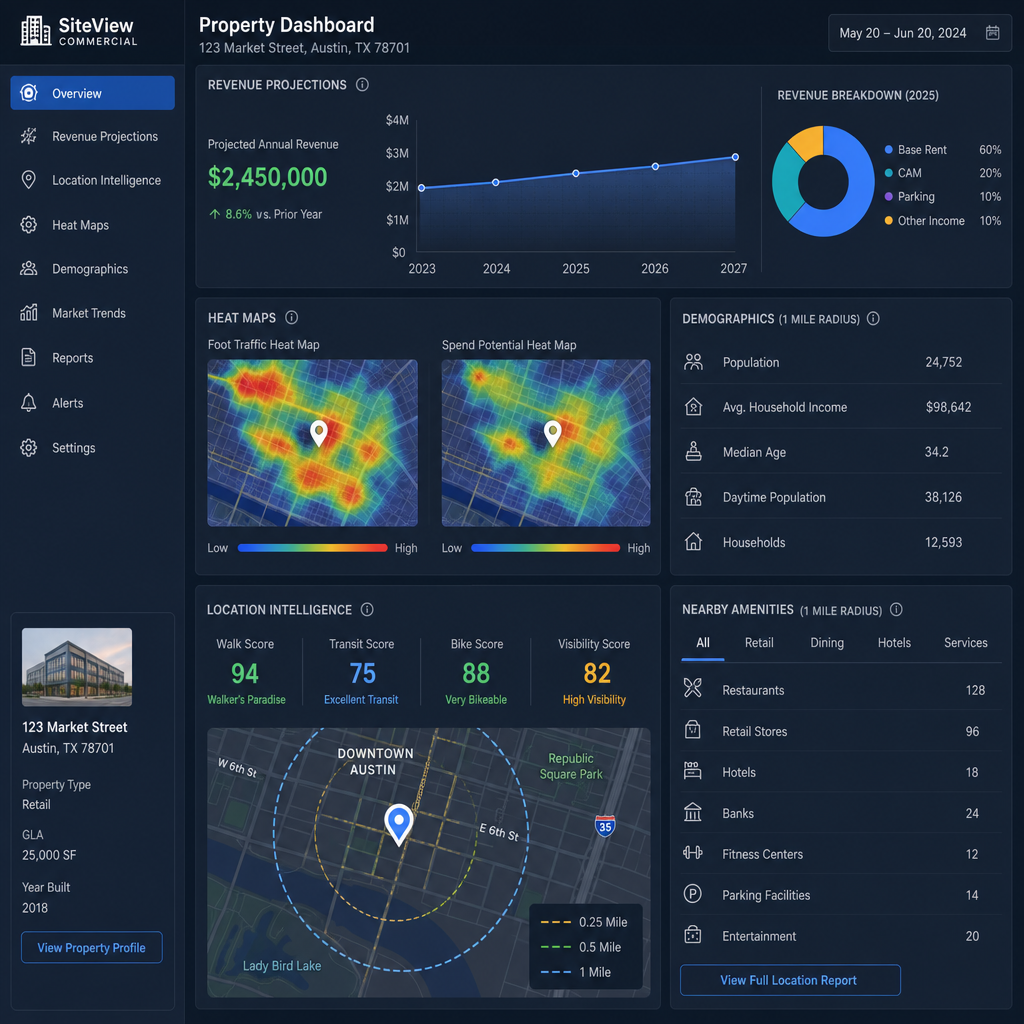
A successful restaurant must cater to the people who actually live and work in the area. Real-time demographic mapping for hospitality businesses allows you to see the exact breakdown of a neighborhood's age, income level, education, and household size. If you are opening a high-end organic vegan cafe, real-time mapping ensures you place it in a neighborhood with a high concentration of health-conscious millennials with disposable income, rather than an area populated primarily by budget-conscious college students.
2. Comprehensive Trade Area Analysis
How far are people willing to drive for your food? This is known as your catchment area. AI provides precise catchment area population data for dining establishments. By visualizing this on a map, you can see exactly how many potential customers live within a 5, 10, or 15-minute drive of your prospective site.
3. Daypart and Performance Analysis
One of the most advanced capabilities of these platforms is the integration of AI tools for retail restaurant performance location daypart analysis. "Dayparting" refers to breaking the day down into segments (breakfast, lunch, happy hour, dinner, late night). A location might be incredibly busy at noon but completely dead by 6:00 PM. AI tools analyze these micro-trends, allowing a breakfast concept to find a morning-heavy commute route, while a sports bar can secure a spot with heavy evening and weekend activity.
4. Advanced Geographic Information Systems
At the core of these platforms is a robust geographic information system for retail real estate (GIS). GIS technology layers different types of data, such as zoning laws, traffic patterns, and competitor locations, onto a single interactive map. This visual representation makes complex data easy to digest and act upon.
Strategic Benefits: Optimizing Revenue and Finding Hidden Gems
The ultimate goal of using a restaurant market analysis platform is to boost your bottom line. By removing the guesswork from your real estate strategy, you are setting up your business for long-term financial success.
Identifying Profitable Untapped Restaurant Zones
One of the greatest advantages of AI is its ability to spot anomalies and opportunities that humans miss. By analyzing demographic shifts and real estate trends, AI excels at identifying profitable untapped restaurant zones. These are neighborhoods that are on the verge of gentrification or rapid development but haven't yet been saturated by competing restaurants. Securing a lease in these emerging hot spots means you get early access to a growing customer base at a fraction of the rent.
Optimizing Revenue Through Location Intelligence
When you know exactly who your neighbors are and how they spend their money, you can tailor your business to maximize profits. Optimizing revenue through location intelligence means adjusting your operating hours, menu pricing, and marketing strategies based on the specific data of your location. If your AI tool shows a high concentration of young families in your catchment area, you can optimize revenue by introducing a robust kids' menu and family-style takeout bundles.
Practical Guide: Steps to Conduct a Restaurant Feasibility Study
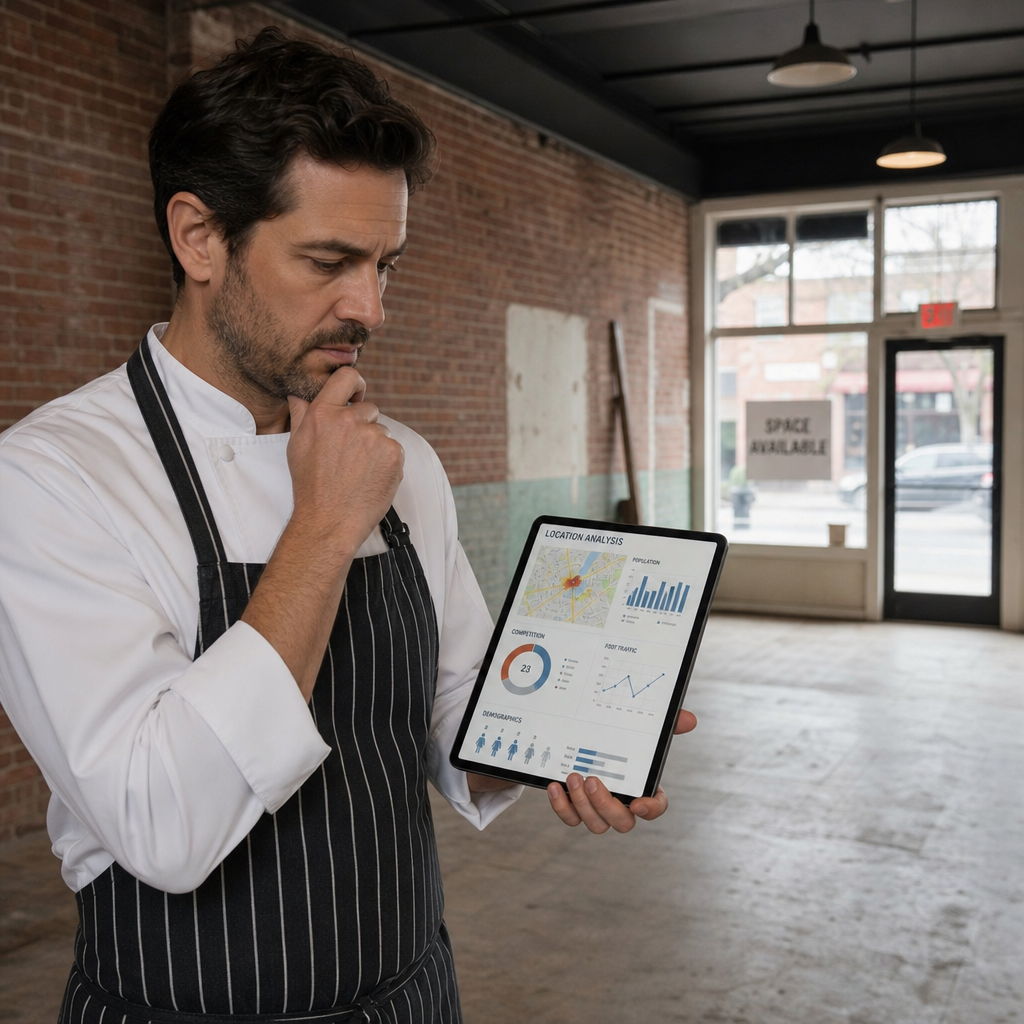
Before signing a commercial lease, you must validate your concept through a thorough feasibility study. Using an AI tool makes this process incredibly efficient. Here are the actionable steps to conduct a restaurant feasibility study using modern tech:
Step 1: Define Your Concept and Target Audience
Before the AI can help you, it needs to know what you are building. Are you opening a fast-casual taco stand, a fine-dining steakhouse, or a specialty coffee shop? Define your ideal customer persona in detail, including their age, income, and lifestyle habits.
Step 2: Utilize Automated Trade Area Analysis
Once you have a potential location in mind, plug the address into your AI tool to generate an automated trade area analysis for franchise expansion or independent launch. Look at the drive-time polygons (how far people can drive in 10 minutes accounting for local traffic). Does this area contain enough of your target audience to sustain your business?
Step 3: Analyze Competitor Density
You don't want to open a pizza shop on a street that already has three established pizzerias. Use the AI to perform a competitor density analysis for neighborhood bistros, cafes, or whatever your niche is.
Actionable tip: Don't just look for direct competitors. Look for synergistic businesses. A high-end wine bar might thrive next to a luxury theater or an upscale boutique, as they share the same clientele.
Step 4: Evaluate Consumer Spending Habits
It is not enough to know how much money people make; you need to know how they spend it. Learning how to analyze local consumer spending patterns is critical. Your AI tool can reveal the average annual spend on "food away from home" in your chosen zip code. If the local data shows that residents heavily index toward spending money at quick-service restaurants rather than full-service dining, you might need to rethink a fine-dining concept for that specific area.
Why You Need Free Market Research Tools for Culinary Entrepreneurs
In the past, the high cost of data analytics meant that only massive multinational fast-food chains could afford to optimize their real estate choices. Independent chefs and small hospitality groups were left to fend for themselves, often leading to a high failure rate in the independent restaurant sector.
The emergence of free market research tools for culinary entrepreneurs is democratizing the hospitality industry. By utilizing a Restaurant Site Finder free AI location analysis tool, you are arming yourself with enterprise-grade data at zero cost. This allows you to allocate your startup capital where it belongs: toward securing the best ingredients, hiring top-tier staff, and marketing your grand opening.
Actionable Tips for Securing Your Ideal Location
To ensure you get the absolute most out of your AI restaurant location analysis, keep these practical tips in mind during your search:
- Visit the site at different times: While AI provides incredible daypart data, nothing replaces the human experience. If the AI says the location is busy on Tuesday at lunch and dead on Sunday morning, visit the site physically during those times to observe the vibe of the traffic.
- Check the parking situation: A location can have incredible foot traffic data, but if you are opening a concept where people drive to you (like a large family restaurant), a lack of parking will negate all other positive metrics.
- Look at the history of the building: If a specific storefront has housed four different restaurants that all failed within the last five years, use your AI tool to figure out why. Is the local spending power too low? Is visibility blocked by a tree line? Use data to solve the mystery before you become the fifth failure.
- Leverage data in lease negotiations: When you find your spot, bring your AI-generated restaurant market analysis to the negotiation table. If the data shows that foot traffic drops significantly in the winter months, use that empirical evidence to negotiate a more favorable, seasonally adjusted rent structure with the landlord.
Conclusion
The days of choosing a restaurant location based on a "good feeling" or a rudimentary drive-by are officially over. The food service industry is more competitive than ever, and surviving requires strategic, data-backed decision-making.
By embracing a Restaurant Site Finder: Free AI Restaurant Location Analysis Tool, you are taking the guesswork out of your real estate strategy. Whether you are conducting a deep dive into catchment area population data for dining establishments, leveraging predictive foot traffic analysis for food service, or simply looking for the best neighborhood for your independent bistro, AI provides the clarity you need.
Equip yourself with these powerful, accessible technologies, understand your market on a granular level, and lay a rock-solid, profitable foundation for your culinary dreams. The perfect location is out there, and now, you have the exact map to find it.
Frequently Asked Questions
What is Restaurant Site Finder?
A free AI-powered tool that analyzes any restaurant address for competitor mapping, market gaps, review sentiment, opportunity scoring, and GO/NO-GO guidance before you sign a lease.
How is AI site selection different from manual market research?
AI aggregates mobility, demographic, and competitor data in minutes. Manual research takes weeks, costs more, and often relies on outdated static reports.
What data should I check before choosing a restaurant location?
Visibility, accessibility, catchment population, competitor density, daypart foot traffic, local spending patterns, and whether the trade area matches your concept and price point.
Can free location tools replace visiting a site in person?
No. Use AI for scoring and trade-area math, then visit finalists at different dayparts to confirm parking, signage sight lines, and neighborhood vibe.
How do I use location data in lease negotiations?
Bring AI trade-area and seasonality reports to landlords to justify rent caps, TI allowances, or seasonal adjustments when traffic drops in slower months.
Run a free location analysis
Enter any address to get competitor mapping, market gaps, opportunity scoring, and concept ideas.
Analyze your location free Shop equipment at Horeca Store