Site Selection
How to select a location if I want to start a new restaurant
Learn how to select a restaurant location when starting a new eatery, covering demographics, foot traffic, competition, infrastructure, and rent-to-revenue math before you sign a lease.
Key Takeaways
- Define your concept and target psychographics before touring vacant spaces, demographics alone are not enough.
- Separate visibility from accessibility; count qualified foot traffic and verify parking at peak hours.
- Audit zoning, utilities, and kitchen infrastructure, second-generation spaces save major build-out costs.
- Keep occupancy under 6–10% of projected sales and use our checklist plus Restaurant Site Finder before you sign.
Opening a restaurant is a thrilling venture, but even the most innovative menu and brilliant chef cannot save a business that is set up in the wrong place. If you find yourself wondering, "How to select a location if I want to start a new restaurant?" you are already asking the most critical question in the hospitality industry. The physical spot you choose will dictate your foot traffic, influence your marketing budget, and ultimately determine your long-term profitability.
Mastering restaurant location selection requires a blend of data-driven research, financial acumen, and an understanding of human behavior. You cannot simply rely on a "gut feeling" when signing a ten-year commercial lease. Instead, you need a systematic approach.
In this comprehensive guide, we will break down the essential restaurant location selection factors you need to consider, from analyzing the local market to negotiating your lease, ensuring your new eatery is positioned for success. Pair this with how to find the right location for your restaurant and finding the perfect spot: a smart restaurant location strategy.
1. Understand Your Concept and Target Audience
Before you start touring vacant commercial spaces, you must have a crystal-clear understanding of what you are selling and who you are selling it to. Your restaurant's concept dictates the type of neighborhood that will embrace it.
Demographics vs. Psychographics
When analyzing neighborhood demographics for food business viability, most people stop at age, average income, and household size. While these are crucial site selection criteria, you must dig deeper.
Success heavily relies on identifying target market psychographics, the values, habits, interests, and lifestyles of the people in the area. For example, an organic, plant-based cafe will thrive in a neighborhood where residents value sustainability and wellness, even if their income levels match a neighboring town that prefers traditional fast food.
Future-Proofing Your Location
Furthermore, it is vital to research demographic shifts affecting long-term viability. Is the neighborhood currently undergoing gentrification? Are new apartment complexes or corporate offices being built nearby? Conversely, are major employers leaving the area? A thorough restaurant site analysis must account for what the neighborhood will look like in five to ten years, not just what it looks like today.
2. Traffic, Visibility, and Accessibility
Once you have identified a neighborhood that matches your target audience, the next step in your restaurant location selection criteria is evaluating the physical movement of people and vehicles around potential sites.
The Foot Traffic Factor
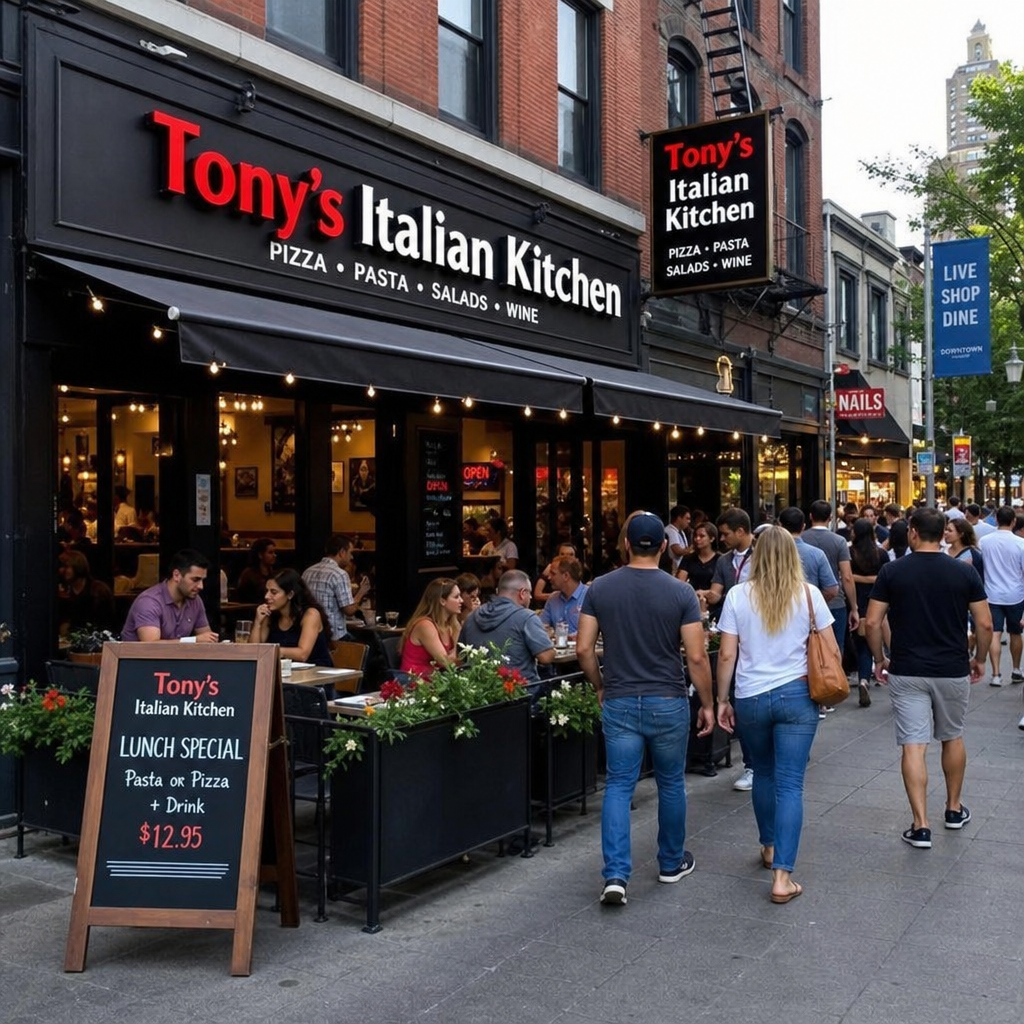
Evaluating pedestrian foot traffic patterns is mandatory for concepts like quick-service restaurants, coffee shops, and bakeries. You need to know not just how many people walk by, but who they are and why they are there. Are they hurried commuters rushing to the train, or are they leisurely weekend shoppers? To get accurate data, visit the location at different times of the day and week. Stand outside and physically count the passersby to see if the volume aligns with your sales projections.
High-Traffic Retail Spots vs. Destination Dining
You will inevitably have to choose between high-traffic retail spots vs destination dining locations. High-traffic retail spots (like malls or busy downtown corners) come with built-in customer bases but carry premium rent prices. Destination dining locations (tucked away in quieter neighborhoods or rural areas) offer cheaper rent, but you will have to spend significantly more on marketing to draw people in. Your choice depends entirely on your concept, a fast-casual lunch spot needs high foot traffic, while a Michelin-star-style experiential dinner concept can thrive as a destination.
Visibility vs. Accessibility
Many new restaurateurs confuse visibility with accessibility. You must carefully weigh visibility vs accessibility for dining establishments. A building might be highly visible from a busy highway (great visibility), but if a customer has to navigate a maze of one-way streets or cross a dangerous median to get into the parking lot, they simply won't bother (poor accessibility).
The Parking Dilemma
Never underestimate the power of a parking spot. Knowing how to assess local parking availability is a crucial skill. Does the location have a dedicated lot? If it relies on street parking, are there meters, and what are the time limits? Consider visiting the area during your proposed peak dining hours to see how difficult it is to park. If parking is notoriously terrible, you may need to factor the cost of a valet service into your business plan.

3. Evaluating the Competitive Landscape and Synergy
A brilliant location does not exist in a vacuum. It is heavily influenced by the businesses operating around it.
Analyzing the Competition
Conducting a competitive landscape analysis for new eateries is a delicate balancing act. On one hand, you do not want to open a boutique pizzeria right next door to a wildly popular, established pizza joint. On the other hand, a complete lack of competition might be a red flag indicating that the area simply does not support dining out.
Interestingly, opening near your competitors can sometimes be beneficial. Establishing your business in a known "restaurant row" or culinary district trains consumers to head to your street when they are hungry, increasing your chances of capturing overflow traffic.
Finding Anchor Businesses
As you refine your restaurant site selection criteria, pay close attention to the proximity to complementary anchor businesses. Anchor businesses are large entities that naturally draw massive crowds, such as movie theaters, sports arenas, large corporate office parks, or universities. If you open a sports bar near a minor league baseball stadium, or a quick-service salad bar near a massive corporate plaza, these anchor businesses will do a significant portion of your marketing for you.
4. The Physical Space and Infrastructure Needs
Falling in love with the aesthetics of a building is easy, but the physical shell must be capable of supporting a commercial food operation. This is where many first-time owners make costly mistakes regarding their restaurant location selection criteria.
Zoning and Permits
Before you even look at the plumbing, you must investigate the legalities of the space. Navigating restaurant zoning laws and building permits can be a nightmare if you aren't prepared. Is the building zoned for commercial food service? If it was previously a retail clothing store, obtaining a "change of use" permit can take months and thousands of dollars. Furthermore, if your concept relies heavily on alcohol sales, you must verify that the local zoning allows for a liquor license at that specific address, some areas restrict alcohol sales within a certain radius of schools or churches.
Utility Infrastructure
Restaurants are heavy industrial operations masquerading as hospitable dining rooms. You must rigorously assess restaurant utility infrastructure requirements. Does the building have the necessary electrical capacity (often requiring 3-phase power) to run multiple commercial refrigerators and ovens? Is the water line wide enough to pass health department codes? Is there sufficient natural gas capacity for a high-output commercial kitchen?
The Cost of Conversions
If you choose a space that has never been a restaurant, beware of the hidden costs of renovating commercial kitchen space. Installing a commercial kitchen ventilation hood (with a make-up air unit) and a fire suppression system can easily cost tens of thousands of dollars. You must also consider the installation of in-ground grease traps, ADA-compliant restrooms, and reinforced flooring. Often, taking over a "second-generation" restaurant space, one that recently closed but already has the kitchen infrastructure built in, is the most financially sound decision for a new operator.

5. Financial Feasibility and Lease Negotiations
Once you have found a space that ticks all the boxes regarding demographics, traffic, and infrastructure, the final hurdle is the financial paperwork. A bad lease can bankrupt a great restaurant.
Setting Your Rent Budget
When calculating your financials, you must aim for the ideal rent-to-revenue ratio for restaurants. Industry standards suggest that your total occupancy costs (base rent, property taxes, insurance, and common area maintenance) should not exceed 6% to 10% of your projected gross sales. If you project $1 million in annual sales, your total yearly rent should ideally be under $80,000. If the landlord's asking price pushes your ratio up to 15% or 20%, you will struggle to achieve profitability, no matter how good the location is.
Negotiating the Lease
Commercial leases are incredibly complex and generally written entirely in the landlord's favor. Here are a few vital commercial lease negotiation tips for restaurateurs:
- Tenant Improvement (TI) Allowance: Ask the landlord to contribute to the build-out costs. Landlords are often willing to offer a TI allowance to help upgrade their property, which can significantly offset your hidden costs of renovating.
- Rent Abatement (Free Rent): Negotiate a period of free rent during your build-out phase. You should not have to pay rent while you are waiting on city permits and construction to finish.
- Exclusivity Clause: If you are moving into a multi-unit shopping center, demand an exclusivity clause. This prevents the landlord from leasing another unit in the same complex to a direct competitor (e.g., if you open a taco shop, the landlord cannot lease to another Mexican restaurant).
- HVAC Responsibility: Commercial HVAC units are notorious for breaking down. Try to negotiate a cap on your responsibility for HVAC repairs, or require the landlord to deliver the unit in good working order with a warranty.
6. A Step-by-Step Checklist for Your Final Decision
To summarize your restaurant site analysis, use this actionable checklist when evaluating your final options. Keeping these restaurant location selection factors top of mind will prevent emotional decision-making. For a fuller printable version, see our restaurant site selection checklist.
- Verify the Demographics: Ensure the neighborhood's psychographics and income levels match your concept's price point and vibe.
- Count the Traffic: Physically observe the location to evaluate pedestrian and vehicular traffic during your intended peak hours.
- Check Accessibility: Confirm that the location is easy to get into, features adequate parking, and offers high visibility.
- Analyze Competitors and Anchors: Map out direct competitors and complementary businesses within a one-mile radius.
- Audit the Infrastructure: Bring a general contractor to assess utility limits, zoning requirements, and the feasibility of building out the kitchen.
- Run the Math: Calculate the lease terms against your projected sales to ensure you hit the ideal rent-to-revenue ratio.
Conclusion
Finding the perfect spot is rarely a fast process. It requires patience, diligence, and a willingness to walk away from spaces that do not align with your business model. By relying on strict site selection criteria rather than emotion, you mitigate the massive risks associated with starting a food business.
Take the time to evaluate traffic patterns, understand the local zoning laws, negotiate your lease fiercely, and analyze the neighborhood's long-term trajectory. When you meticulously apply these principles of restaurant location selection, you build a solid, profitable foundation that allows your culinary vision to truly shine. Run a free Restaurant Site Finder analysis on your shortlist before you sign.
Run a free location analysis
Enter any address to get competitor mapping, market gaps, opportunity scoring, and concept ideas.
Analyze your location free Shop equipment at Horeca Store