Site Selection
Restaurant Site Finder: A Comprehensive Guide 2026
How to choose a winning restaurant location in 2026 using data, demographics, trade-area mapping, and AI—before you sign the lease.
Key Takeaways
- Location isn't everything—but it is a variable you can model, test, and de-risk before you sign a lease.
- Evaluate every site against demographics, traffic, competition, access, buildout feasibility, zoning, and occupancy cost.
- Map primary, secondary, and tertiary trade areas with real movement and spending data—not a single population number.
- In 2026, AI forecasting, leaner footprints, delivery logistics, and local search all reshape what "good" looks like.
- Run a free analysis at Restaurant Site Finder, then use our 15-factor checklist to compare finalists.
How to choose a winning restaurant location using data, demographics, and AI—before you sign the lease.
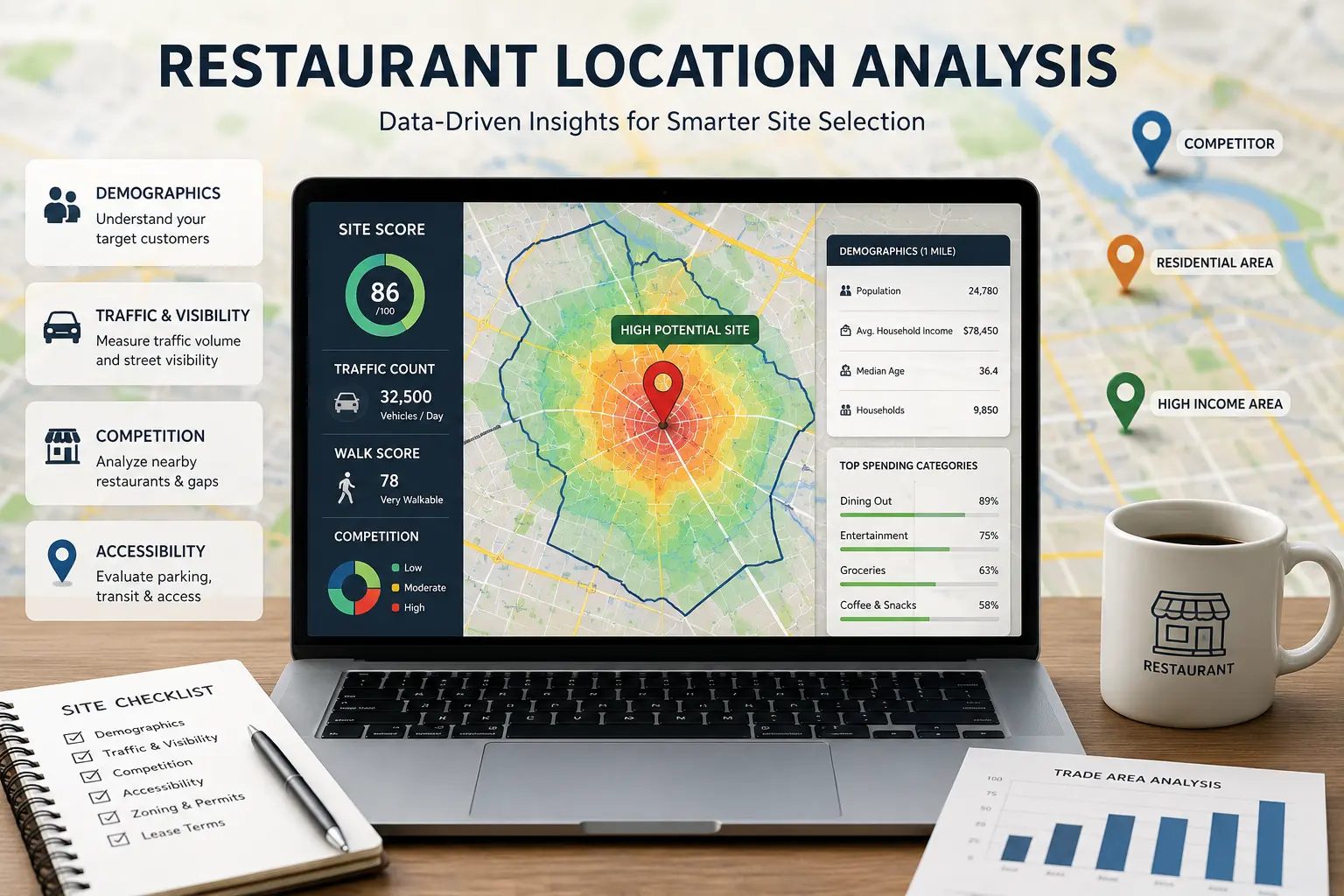
There's an old saying in the restaurant business: a great menu can be copied, a great chef can be poached, but a great location can never be taken away from you. It's also the one decision you can't easily undo. You can change your menu next month. You can retrain staff next week. But once you sign a five- or ten-year lease, your restaurant is tied to that trade area, that traffic pattern, and that customer base for a very long time.
That's why site selection deserves the same rigor as your financial model or your recipe development—not gut instinct, but data. This guide walks through everything operators need to know about restaurant site selection in 2026: the numbers behind restaurant failure, the frameworks top operators use, the technology reshaping how sites get chosen, and a practical checklist you can apply to your own search.
Why Location Still Decides Success or Failure
Let's start by clearing up a myth. You've probably heard that 60%, even 90%, of restaurants fail in their first year. That figure isn't accurate. According to Bureau of Labor Statistics data analyzed by SCORE, roughly 81% of restaurants actually make it through year one, and just over half are still operating after five years. Restaurant failure is real, but it's not the bloodbath popular wisdom describes.
What is true is that location-related mistakes are one of the most common—and most preventable—causes of closure. Location intelligence research from Kalibrate estimates that an average of more than 90,000 restaurants close annually, and a meaningful share of those closures trace back to a site that never matched the concept in the first place: the wrong demographic mix, insufficient traffic, an invisible storefront, or a lease that ate too much of the revenue before the doors even opened.
The lesson isn't that location is everything. It's that location is a variable you can actually model, test, and de-risk—if you use the right process.
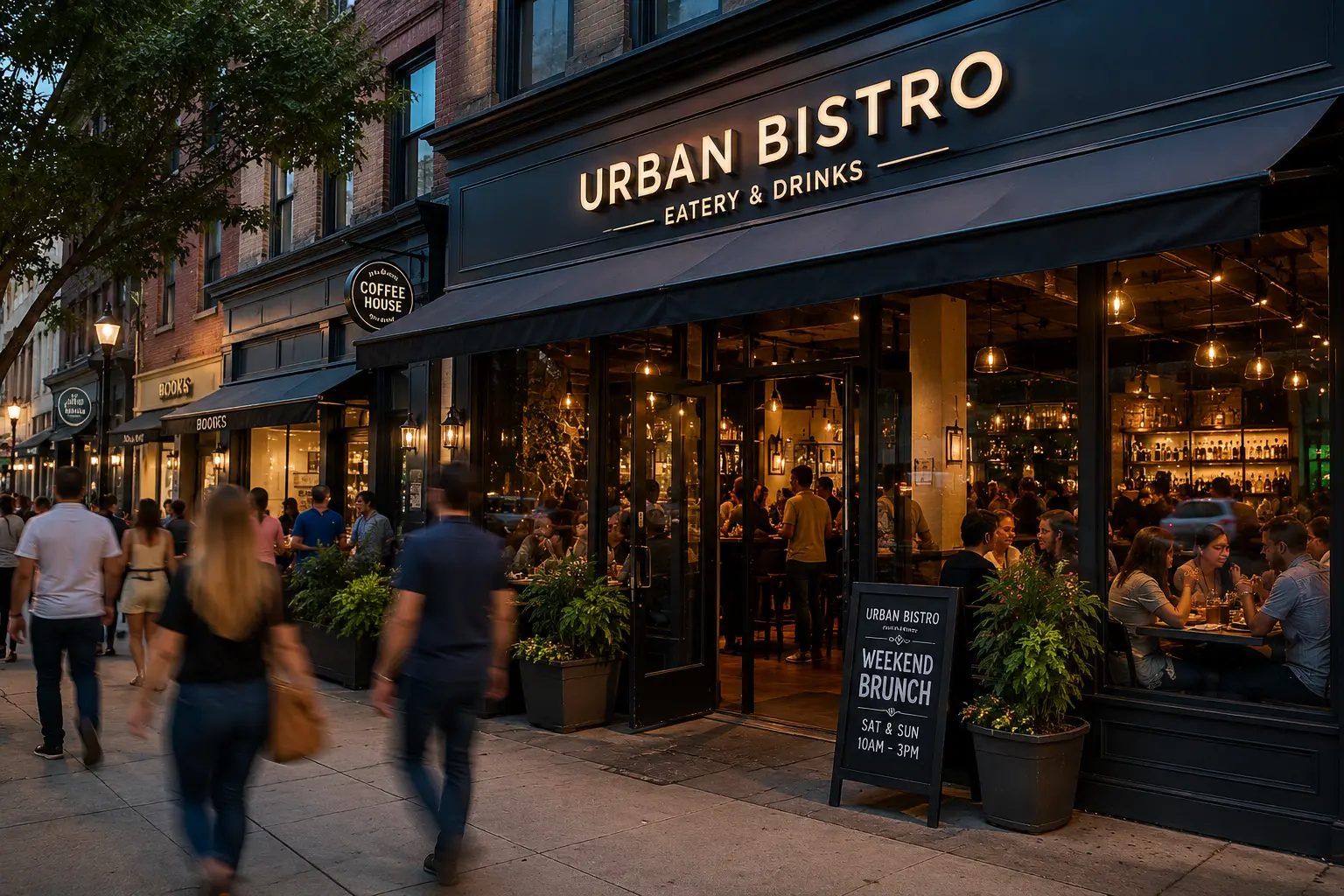
The Core Factors Behind Every Great Restaurant Site
No two concepts need the exact same location, but nearly every experienced site selector evaluates candidate properties against the same handful of dimensions.
Demographics and psychographics. Age, household income, family composition, and lifestyle all shape whether a neighborhood will respond to your concept. Two areas with identical income levels can behave completely differently—one favors value and convenience, the other favors experiential, higher-check dining. A breakfast concept wants residential density and weekend traffic; a lunch-focused fast-casual wants daytime office population; a bar or late-night concept wants proximity to entertainment districts and the right age mix nearby.
Traffic and visibility. Both vehicle and pedestrian traffic correlate directly with walk-in volume, but raw traffic counts only tell part of the story. A site also needs to be visible and easy to enter—a beautiful location that's impossible to turn into from a six-lane road will underperform a modest one with an easy right-turn entrance. Many site selectors still use the "30-30-30" heuristic for high-traffic concepts: roughly 30,000+ daily vehicles passing the site, at least 30% of that traffic able to access the site easily, and a location visible and legible enough that a driver can decide to stop within about 30 seconds.
Competition and cotenancy. Nearby competitors aren't automatically a bad sign. Clusters of similar restaurants can create a "restaurant row" effect that pulls in more total diners than any single location could attract alone—think of a city's well-known food streets. What matters is whether your concept fills a genuine gap in that competitive set or simply adds another undifferentiated option. Reviewing which cuisines, price points, and formats already exist nearby—and where the white space is—should shape both your location choice and your menu positioning.
Accessibility and parking. If customers can't reach your restaurant conveniently, they will choose a competitor that's easier to get to. Parking availability, proximity to public transit, and ease of access for delivery and takeout drivers all factor into whether a site can convert nearby demand into actual visits.
Size, layout, and buildout feasibility. The site needs to fit more than the dining room. Walk-in coolers, cooking lines, dish pits, storage, and staff areas all require square footage, and second-floor or rooftop spaces can hurt visibility and complicate licensing (many jurisdictions won't issue a trade license for a kitchen located on the top floor of a building, for instance). Confirm the shell can physically support your concept before falling in love with the address.
Zoning, permits, and licensing. A site can check every demographic and traffic box and still be a dead end if zoning doesn't allow food service, if a liquor license isn't available in that jurisdiction, or if health department requirements can't be met in the existing structure. Zoning and permitting should be verified early, not after a lease is signed.
Occupancy cost. A frequently cited rule of thumb is that total occupancy cost—rent plus common area maintenance, property taxes, and insurance on a triple-net lease—shouldn't exceed roughly 10% of realistic year-one revenue. Model this against a conservative covers estimate, not an optimistic one, and negotiate protections like percentage-rent caps and co-tenancy clauses wherever possible.
For a deeper factor-by-factor walkthrough, see our 15 factors restaurant site checklist.
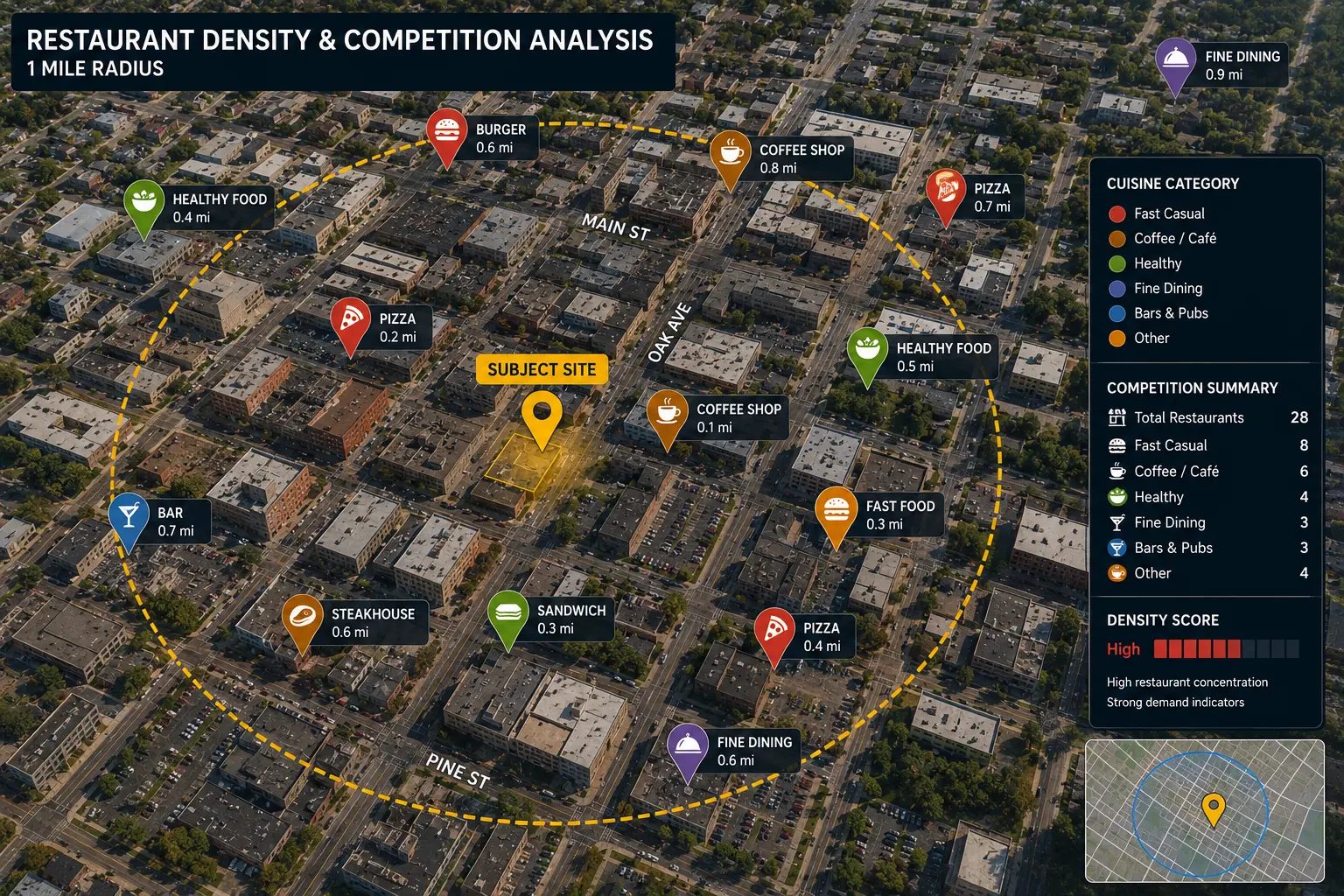
Mapping the Trade Area: Primary, Secondary, and Tertiary
Professional site selectors typically divide the customer base around a potential site into three rings:
- Primary trade area — the immediate surrounding zone, often a 1–3 mile radius for quick-service concepts or a short drive-time polygon for full-service restaurants, where most day-to-day customers will come from.
- Secondary trade area — a wider ring that contributes meaningful but smaller volume, often shoppers, commuters, or residents willing to travel a bit further.
- Tertiary trade area — destination diners who will travel specifically for your restaurant because of its reputation, cuisine, or experience. For most concepts, this segment is a small share of revenue, but it matters more for destination restaurants or locations in tourist-heavy areas.
Instead of relying on a single fixed population number ("this neighborhood needs 20,000 residents"), the more reliable modern approach is to combine local demographics, per-capita restaurant spending, competitive density, and real movement data for that specific trade area. A location that looks thin on paper can still support a strong concept if spending patterns and competitive gaps line up; a location with a large population can still underperform if it's already saturated with similar concepts.
Learn more in our trade area analysis guide for restaurants.
What's Changing in 2026
A handful of shifts are actively reshaping how operators think about site selection this year.
AI-powered forecasting is going mainstream. Where GIS mapping and demographic overlays used to be the domain of large chains with dedicated real estate teams, AI-driven tools are now putting competitor mapping, market-gap detection, and opportunity scoring within reach of independent operators and small groups evaluating just one or two sites.
Smaller, leaner footprints. With real estate costs elevated, more brands are turning to asset-light formats—drive-thru-only builds, smaller fast-casual footprints, and cloud/ghost kitchens—to reach profitability faster and access prime corners that a full-size dining room couldn't justify.
Delivery and off-premise access shape site value. The growth of delivery and ghost kitchens means a site's value increasingly depends on how efficiently orders can get out the back door, not just how many people walk in the front. Loading access, parking for delivery drivers, and proximity to dense delivery zones now factor into site scoring alongside traditional foot traffic.
Value-consciousness is reshaping trade areas. Industry research from McKinsey shows that food-away-from-home costs have climbed faster than grocery prices in the past two years, and consumers—particularly older, lower- and middle-income households—are tightening restaurant budgets. This makes trade-area income alignment and realistic pricing benchmarks more important than ever; a site surrounded by budget-conscious households needs a concept and price point to match.
Local search and "GEO" (generative engine optimization) matter earlier. As more diners discover restaurants through AI assistants and conversational search rather than typing keywords into Google, structured, hyperlocal data about a restaurant's location is becoming a ranking factor in its own right—another reason to treat your address, service area, and local listings as part of the site strategy, not an afterthought.
Experience-driven and entertainment-district locations. Several 2026 industry outlooks point to continued strength in entertainment-district locations—sites near sports venues, event corridors, and mixed-use developments—as operators chase guests looking for a full night out rather than a quick meal.
From Site to Storefront: Don't Forget Equipment Planning
A site that scores well on demographics and traffic can still lose money if the kitchen buildout doesn't match the concept. Before you sign, walk the space with your menu and workflow in mind:
- Does the layout support your kitchen line without excessive labor movement?
- Is there enough electrical and gas capacity for your equipment package?
- Is there space for walk-in refrigeration, dry storage, and a compliant dish pit?
- What existing equipment, hood systems, or grease traps convey with the lease, and what will you need to source new?
Pricing out your commercial kitchen equipment—ranges, refrigeration, prep stations, ventilation—alongside your site evaluation gives you a realistic all-in opening cost instead of an unpleasant surprise after the lease is signed. Pair this with our commercial kitchen equipment buying guide when you start sourcing.
A Practical Site Selection Checklist
- Define your concept's criteria first. Target guest, price point, daypart focus, and format (dine-in, quick-service, delivery-forward) all determine what "good" looks like before you look at a single address.
- Screen candidate markets and neighborhoods using demographic and spending data, not assumptions.
- Map competitors and gaps in each trade area—where is the concept underserved, and where is it already saturated?
- Evaluate traffic and access for each finalist site, including delivery and parking logistics.
- Visit in person, more than once, at different times of day and different days of the week.
- Build a realistic pro forma with occupancy cost benchmarked against conservative, not optimistic, sales projections.
- Confirm zoning, permits, and licensing before you fall in love with a site.
- Negotiate lease protections—rent caps, renewal options, co-tenancy clauses, and pre-opening contingencies that let you walk away if conditions aren't met.
- Plan your equipment and buildout budget alongside the real estate decision, not after.
- Score and compare finalists objectively, using a consistent, written framework rather than instinct alone.
When you're ready to make a call, use our Go/No-Go restaurant location framework.
How Restaurant Site Finder Helps
Restaurant Site Finder was built to bring the kind of data-driven analysis that used to require a dedicated real estate team or an expensive consulting engagement within reach of independent operators, small groups, and first-time restaurateurs. The free, AI-powered tool lets you drop a pin on any address and get:
- Competitor mapping — see exactly which restaurants, cuisines, and formats already operate in the trade area.
- Market gap detection — identify underserved cuisines, price points, or dayparts nearby before you finalize a concept.
- Opportunity scoring — a data-backed score that summarizes how a candidate site stacks up, so you can compare finalists side by side instead of relying on gut feel.
- Equipment planning — once you've narrowed in on a site, move straight into planning the commercial kitchen buildout it will need.
The goal isn't to replace human judgment—a site visit, a conversation with the landlord, and a walk around the block at 7pm on a Saturday still matter. The goal is to make sure that judgment is backed by real data before you sign a lease you're locked into for years.
Final Thoughts
Choosing a restaurant site in 2026 sits at the intersection of timeless fundamentals—visibility, accessibility, demographics, competition—and a new layer of AI-powered tools that make sophisticated analysis accessible to operators of every size. The restaurants that get this right treat site selection the way they treat their menu: something to test, measure, and refine with data, not a decision made on instinct alone.
Whether you're scouting your first location or your fifth, running each finalist site through a structured framework—and a tool like Restaurant Site Finder—can be the difference between a location that quietly works in your favor for the next decade and one you spend years trying to overcome.
Ready to evaluate your next location? Try the free AI-powered analysis at Restaurant Site Finder and get competitor mapping, market gap detection, and an opportunity score for any address—before you sign the lease.
Run a free location analysis
Enter any address to get competitor mapping, market gaps, opportunity scoring, and concept ideas.
Analyze your location free Shop equipment at Horeca Store