Site Selection
Choosing the Ideal Location for Restaurants
How to choose the ideal restaurant location, concept fit, market research, visibility, accessibility, cost balance, competition signals, operational readiness, and a practical site comparison process.
Key Takeaways
- The best location for restaurant success matches your concept, audience, costs, competition, and operations, not just the busiest street.
- Start with concept fit, then validate demand with restaurant market research before you tour spaces.
- Balance visibility, access, and total occupancy cost; cheap rent can still fail if buildout or traffic fit is wrong.
- Screen addresses free at Restaurant Site Finder, then compare finalists with our site selection checklist.
A restaurant's location shapes who sees it, who visits it, how often they return, and whether the business can operate profitably over time. The right spot is not just "busy" or "trendy"; it is a place where your concept, customers, costs, competition, and daily operations all fit together. With thoughtful restaurant market research and a practical approach to restaurant site selection, you can make a location decision with more confidence and fewer expensive surprises.
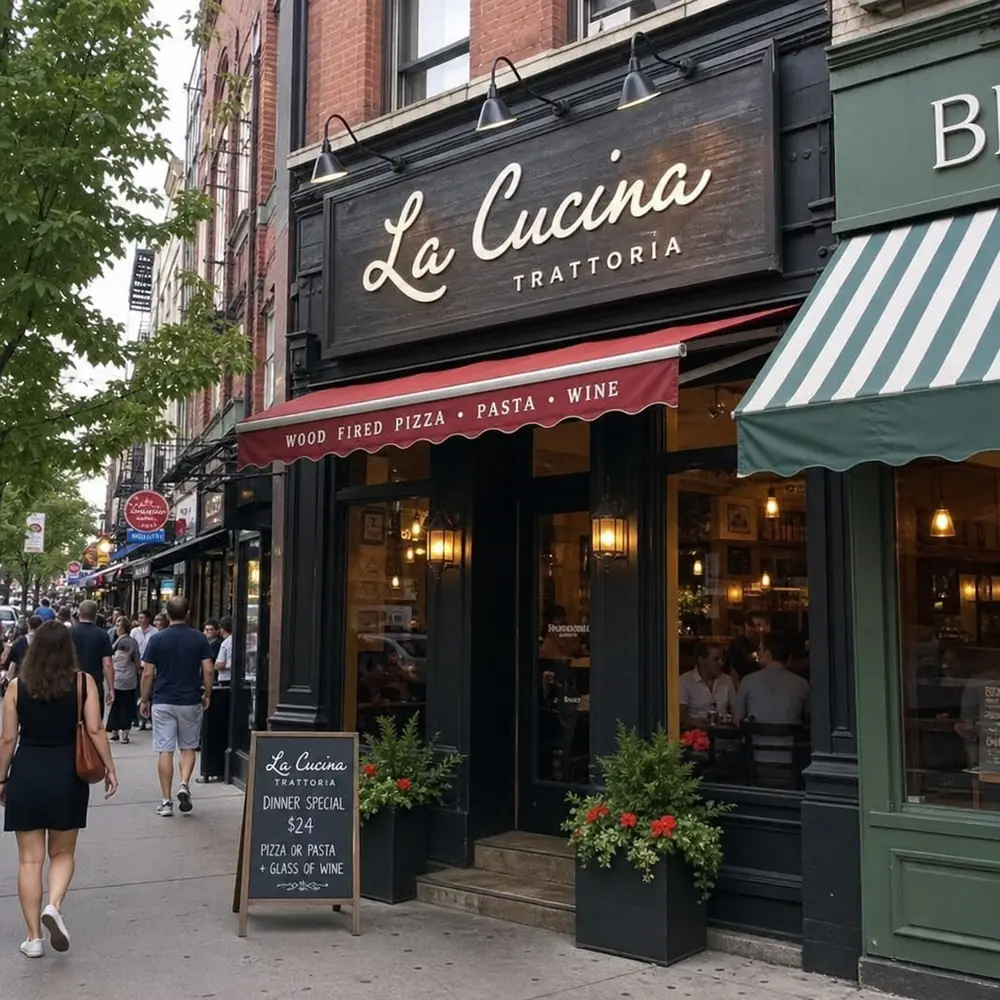
What makes a location right for a restaurant?
The right restaurant location is one where your target customers are easy to reach, your concept feels natural, your operating costs are sustainable, and your restaurant can stand out enough to attract repeat business. A great site should support both visibility and convenience, but it also needs to work behind the scenes for deliveries, staffing, parking, utilities, and future growth.
Many restaurant owners start by asking, "Where is the busiest street?" That is understandable, but traffic alone does not guarantee sales. A high-foot-traffic area may be perfect for a quick-service lunch spot, while a quieter neighborhood with strong evening demand may be better for a cozy dinner concept. The best location for restaurant business success is the one that matches your specific audience and operating model.
Before you fall in love with a storefront, step back and look at the full picture. Who lives, works, shops, or studies nearby? When are they in the area? What do they already eat, and what feels missing? These questions help you move from guesswork to a smarter location strategy.
Start with your restaurant concept
Your concept should guide your location search, not the other way around. A breakfast café, a fine dining restaurant, a family-friendly pizza shop, and a late-night taco counter all need different surroundings to succeed. When the concept and location are out of sync, even a beautiful space can become difficult to operate.
Think about your menu, price point, service style, atmosphere, and average visit length. A fast-casual restaurant benefits from visibility, quick access, and high turnover. A destination restaurant can often work in a less obvious spot if the experience is memorable enough and guests are willing to plan ahead.
It helps to define the daily use case for your restaurant. Are people grabbing coffee before work, meeting friends after shopping, ordering lunch near the office, or celebrating special occasions? Once you know the role your restaurant plays in a customer's day, you can identify locations that naturally support that behavior.
A simple concept-location checklist can keep your search focused:
- Customer purpose: Are guests coming for convenience, experience, value, speed, or celebration?
- Typical visit time: Will your busiest hours be breakfast, lunch, dinner, late night, or weekends?
- Price fit: Does the surrounding area support your expected average check?
- Atmosphere fit: Does the neighborhood match the mood you want to create?
- Access needs: Will customers walk in, drive, use delivery apps, or make reservations?
- Operational fit: Can the site support your kitchen, storage, waste handling, and staffing needs?
This early clarity prevents you from chasing locations that look exciting but do not support the way your restaurant actually makes money. See choosing a site that drives success for a deeper concept-to-site framework.
Use restaurant market research before you choose
Restaurant market research is the process of understanding the customers, competitors, demand patterns, and local conditions around a potential site. It gives you a clearer view of whether a location has enough of the right people, at the right times, with the right needs, to support your business.
Start by studying the area's customer base. Look at local residents, office workers, students, tourists, commuters, and weekend visitors. Each group has different dining habits. Office workers may support weekday lunch demand, while residents may matter more for dinner, takeout, and repeat visits.
Then look at timing. Some streets are busy at noon but empty after 6 p.m. Others may be quiet during the week but packed on weekends. Your restaurant should not depend on traffic that disappears when you need it most.
Competitor research is just as important. A nearby restaurant serving similar food is not automatically a bad sign. In some areas, restaurant clusters attract more diners because people already see the neighborhood as a place to eat. The question is whether your concept offers a clear reason to choose you.
Useful market research activities include:
- Walk the area at different times. Visit on weekdays, weekends, lunch hours, dinner hours, and slower periods. Notice who is around and what they are doing.
- Study nearby businesses. Offices, gyms, schools, hotels, theaters, clinics, and retail stores can all shape dining demand.
- Observe customer behavior. Are people lingering, rushing, carrying takeout, dining in groups, or eating alone?
- Review the competitive mix. Identify direct competitors, indirect competitors, price ranges, cuisines, service styles, and gaps.
- Talk to local people. Residents, employees, property managers, and nearby business owners can offer practical insight you will not get from a spreadsheet.
- Check local development plans. New housing, road changes, transit updates, or major construction can affect traffic and visibility.
Good research does not remove all risk, but it helps you avoid choosing a site based only on emotion, appearance, or a landlord's sales pitch. For methodology, read effective strategies for restaurant market research.
Visibility and accessibility shape first impressions
A restaurant needs to be easy to notice and easy to enter. Visibility helps people discover you, while accessibility reduces friction when they decide to visit. If either one is weak, you may need a stronger marketing budget, clearer signage, or a more destination-worthy concept.
Visibility includes more than being on a busy street. Consider sightlines, signage options, lighting, corner exposure, storefront width, and whether trees, parked cars, neighboring signs, or building design block the view. A restaurant that is technically "on the main road" may still be hard to spot from a moving car or crowded sidewalk.
Accessibility depends on how your customers arrive. For a walkable downtown restaurant, sidewalk flow, crosswalks, transit stops, and nearby offices may matter most. For a suburban restaurant, parking, drive access, turning lanes, and road direction can become major factors. For a delivery-heavy concept, driver pickup access and clear entrances may be just as important as dine-in convenience.
When evaluating accessibility, ask yourself:
- Can customers find the entrance quickly?
- Is parking available, convenient, and realistic during peak hours?
- Are there barriers such as difficult turns, one-way streets, poor lighting, or confusing layouts?
- Is the site comfortable for families, older guests, or people with mobility needs?
- Can delivery drivers pick up orders without disrupting dine-in guests?
- Will weather affect foot traffic or outdoor waiting areas?
Small inconveniences can add up. If guests have to circle the block, struggle to park, or miss the entrance, they may choose an easier option next time.
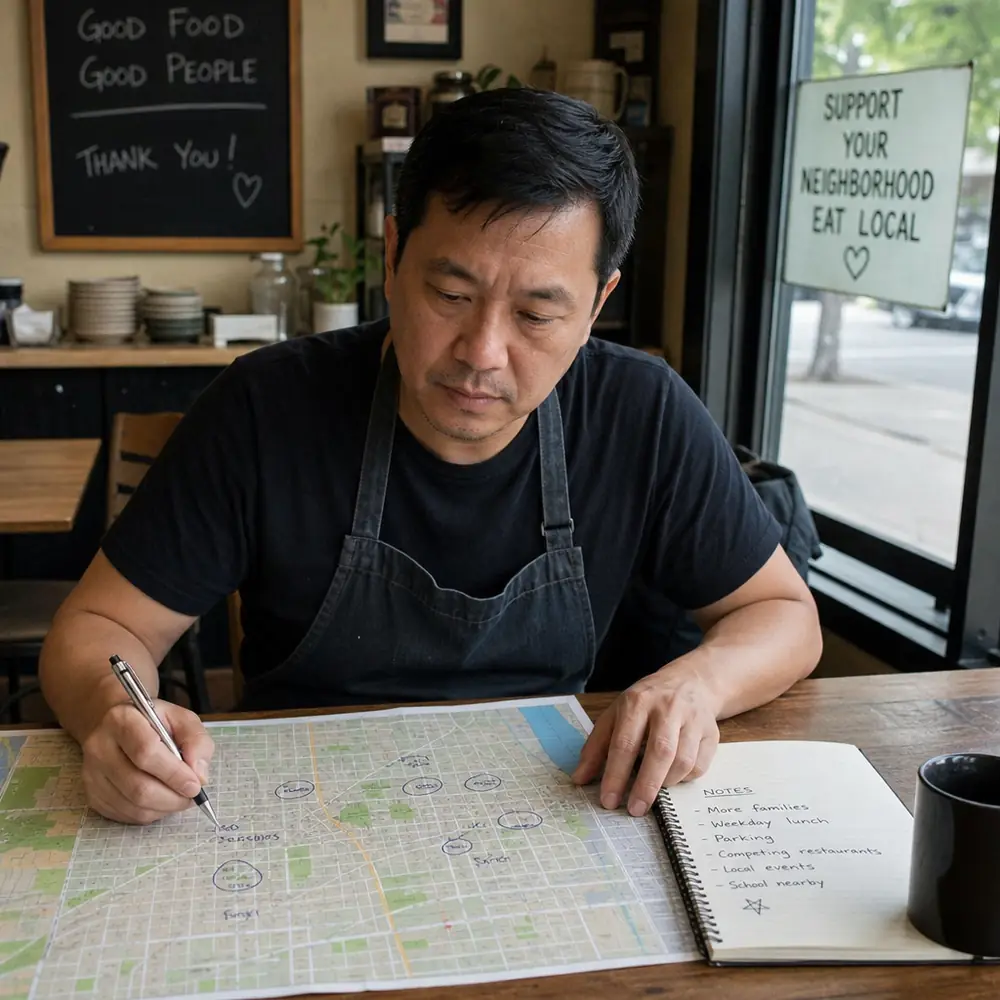
The best site balances demand with cost
A prime location may bring more exposure, but it often comes with higher rent, stricter lease terms, and more competition. A lower-cost location may protect your margins, but only if it still brings enough customers. The goal is not to find the cheapest or most visible space; it is to find a site where the economics can work.
Rent is only one part of the cost picture. Buildout requirements, utilities, maintenance, insurance, permits, common area fees, equipment needs, and required upgrades can all influence whether a location is financially realistic. A second-generation restaurant space may reduce some setup complexity, but it still needs careful inspection.
Before committing, compare the site's likely sales potential with its fixed costs. If the rent requires an aggressive sales level from day one, the location may leave little room for mistakes, seasonality, or slow growth. A strong site should give your restaurant a fair chance to build momentum.
Also consider how the lease supports your plans. A short lease may limit security, while a long lease can become a burden if the site underperforms. Renewal options, exclusivity clauses, signage rights, maintenance responsibilities, and restrictions on hours or menu items can all affect daily operations.
A practical financial review should include:
- Expected rent and related property costs
- Estimated buildout and opening expenses
- Utility capacity and upgrade needs
- Seating capacity and realistic table turnover
- Takeout, delivery, catering, or private event potential
- Labor availability and commute convenience for staff
- Seasonal changes in traffic or demand
- Lease flexibility if the business grows or changes
The best location for restaurant business performance is usually the one where demand, cost, and operational practicality are in healthy balance. Model your break-even point before you sign.
Competition can be a warning or an opportunity
Competition is not automatically bad. In fact, being near other restaurants can signal that diners already visit the area for food. The key is understanding whether the market is crowded in a way that helps you or crowded in a way that makes differentiation difficult.
Direct competitors serve a similar audience with a similar cuisine, price point, or experience. Indirect competitors may not look like your restaurant, but they still compete for the same dining occasion. A sandwich shop, grocery prepared-food counter, food truck, and casual café may all compete for the same lunch customer.
To evaluate competition, look beyond the number of restaurants nearby. Study how busy they are, what they do well, where their reviews suggest gaps, and whether customers appear satisfied. You are not looking to copy them; you are looking to understand the local dining conversation.
Strong differentiation may come from:
- A cuisine that is underrepresented in the area
- Faster service for a time-sensitive customer base
- A warmer atmosphere than nearby quick-service options
- Better takeout packaging or pickup flow
- Family-friendly seating in an area with many households
- A focused menu that is easier to understand and execute
- A price point that better matches local expectations
If every nearby restaurant already serves the same occasion at the same price with strong customer loyalty, entering that location may be harder. But if demand is visible and customer needs are not fully met, competition can actually validate the opportunity.
Match the neighborhood to your brand experience
Every neighborhood has a rhythm. Some areas feel polished and professional. Others are creative, casual, residential, tourist-heavy, student-focused, or nightlife-driven. Your restaurant should feel like it belongs while still offering something distinctive.
Brand fit affects more than décor. It influences menu design, service expectations, music, hours, staff tone, signage, and promotional strategy. A refined tasting-menu concept may struggle in a location where most people want quick, affordable meals. A casual counter-service concept may feel out of place in an area where guests expect full service and longer dining experiences.
Spend time noticing the emotional feel of the area. Are people dressed for work, exercise, school, shopping, or a night out? Are groups moving quickly or taking their time? Do people appear to be locals, visitors, or commuters? These observations help you understand whether your restaurant will feel natural there.
It is also worth thinking about long-term identity. If the neighborhood is changing, your restaurant may grow with it, but change can be uneven. New developments may bring opportunity, while construction or rising rents may create pressure. Choose a location that works for your opening strategy and still makes sense as the area evolves.
Operational details matter more than they seem
Customers experience the dining room, but your team experiences the whole site. A restaurant location that looks perfect from the street can still cause daily problems if the kitchen is too small, deliveries are awkward, storage is limited, or the layout slows service.
During restaurant site selection, pay close attention to the practical details that affect speed, safety, and consistency. A poor layout can increase labor strain. Limited storage can lead to more frequent ordering and higher stress. Weak ventilation, inadequate plumbing, or electrical limitations can create costly delays before opening.
Important operational questions include:
- Is there enough kitchen space for the menu you plan to serve?
- Can the dining room layout support comfortable seating and efficient service?
- Are restrooms appropriately located and sufficient for expected guest volume?
- Where will deliveries arrive, and when can vendors access the building?
- Is there enough dry, refrigerated, and frozen storage?
- How will trash, recycling, and grease handling work?
- Can staff enter, store belongings, and take breaks appropriately?
- Does the building support your equipment, ventilation, and utility needs?
These details may not be glamorous, but they shape the guest experience. When operations flow well, food arrives faster, staff feel less pressure, and customers notice the difference.
How should you compare multiple restaurant sites?
Compare restaurant sites using a consistent scorecard that weighs customer demand, visibility, access, competition, costs, brand fit, and operational readiness. This keeps the decision grounded, especially when one space feels exciting but another may be more practical.
Create a shortlist and visit each location more than once. A site can feel completely different on a rainy Tuesday morning than on a Saturday night. Take notes immediately after each visit so your impressions do not blur together.
A useful site comparison process looks like this:
- Define your must-haves. Separate non-negotiables from nice-to-haves. For example, ventilation capacity may be essential, while patio space may be optional.
- Score each site consistently. Use the same categories for every location so you are comparing fairly.
- Estimate realistic sales potential. Think in terms of likely customer occasions, not just total traffic.
- Review total occupancy costs. Include rent, fees, improvements, utilities, and maintenance obligations.
- Test the customer journey. Approach the site as a guest would, from arrival to entrance to ordering or seating.
- Get professional input. A broker, attorney, contractor, designer, or experienced restaurant consultant can identify issues you may miss.
- Sleep on the decision. A lease is a major commitment, so avoid rushing because of pressure or excitement.
The goal is not to find a flawless site. Every location has trade-offs. The goal is to understand those trade-offs clearly before you sign. Use select the perfect location for your restaurant as a criteria reference when scoring finalists.
Common location mistakes to avoid
Many restaurant location mistakes happen because owners focus on one attractive feature and overlook the larger business picture. A beautiful space, a busy road, or a low rent can all be tempting, but none of them guarantees success on its own.
Watch for these common pitfalls:
- Choosing traffic without relevance: Lots of people nearby does not help if they are not your target customers.
- Underestimating buildout costs: A cheap lease can become expensive if the space needs major work.
- Ignoring parking or access issues: Guests may love your food but still avoid the hassle.
- Assuming competitors prove demand: Competition only helps if there is room for your concept to stand out.
- Skipping multiple site visits: One visit rarely reveals the full rhythm of a location.
- Overcommitting on rent: High fixed costs can create pressure before the restaurant has steady demand.
- Forgetting staff needs: A hard-to-reach location can make hiring and retention more difficult.
Avoiding these mistakes does not require perfection. It requires patience, research, and the discipline to walk away when the numbers or conditions do not support the dream.
A thoughtful location choice supports long-term growth
Choosing a restaurant location is part research, part strategy, and part practical judgment. The right site should help customers discover you, make visits easy, support your team, and give the business enough financial room to grow. When your concept, audience, neighborhood, and operations align, the location becomes more than an address; it becomes part of the restaurant's identity.
If you are comparing potential spaces now, take your time and look beyond first impressions. Do the restaurant market research, test the customer journey, study the competition, and evaluate the true cost of operating in each space. Smart restaurant site selection will not remove every challenge, but it can give your restaurant a stronger foundation from the very first day.
Run free AI analysis on your shortlist at Restaurant Site Finder before you sign, and pair the results with how to choose a restaurant location for a full validation workflow.
Run a free location analysis
Enter any address to get competitor mapping, market gaps, opportunity scoring, and concept ideas.
Analyze your location free Shop equipment at Horeca Store