Site Selection
Choosing a Site That Drives Success for Restaurant Business
How to choose a restaurant site that drives success, concept fit, customer behavior, visibility, neighborhood demand, competition signals, lease checks, financial fit, and a practical site selection process.
Key Takeaways
- The best restaurant site matches your concept, customer habits, visibility, access, costs, and growth potential, not just the busiest street.
- Evaluate foot traffic, vehicle access, and delivery reach through your target guest's dayparts, not raw volume alone.
- Run a pre-lease checklist on zoning, hood/grease, utilities, signage, parking, and repair duties before you negotiate rent.
- Screen candidate addresses with free AI analysis at Restaurant Site Finder, then compare finalists with our Go/No-Go framework.
A great restaurant starts with a strong concept, good food, reliable service, and a site that makes it easy for the right guests to visit. Choosing the right location for restaurant success is not just about finding a busy street or a beautiful storefront; it is about matching your concept with customer habits, visibility, access, costs, and long-term growth potential. This guide walks through the practical factors that help restaurant owners and operators evaluate a site with more confidence.
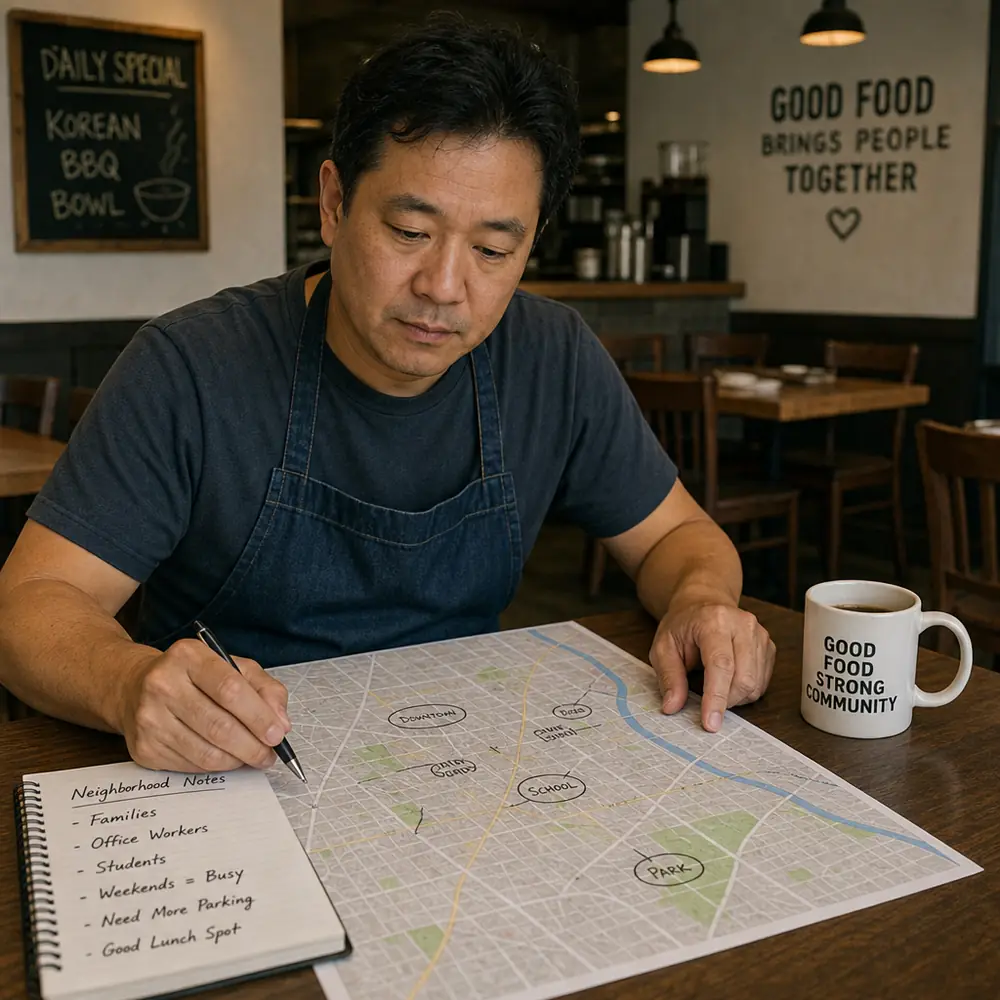
Why does restaurant location matter so much?
Restaurant location matters because it affects how easily customers discover you, how often they return, what they expect to pay, and whether your daily operations run smoothly. A strong location can support foot traffic, delivery reach, brand positioning, hiring, vendor access, and profitability, while a weak site can make even a great menu harder to sell. If you have ever searched for the "closest restaurant for breakfast to my location," you already understand how strongly convenience shapes dining decisions.
The simple answer to why location is important for restaurant planning is this: people usually choose restaurants within the context of their day. They may be commuting, meeting friends, shopping nearby, looking for a quick breakfast, or ordering dinner from home. Your site determines whether your restaurant fits naturally into those moments.
A restaurant does not need to be in the most expensive area to succeed. It needs to be in the right area for its audience. A fast-casual lunch spot may depend on office workers and students, while a destination tasting menu may thrive in a quieter district if parking, reputation, and experience are strong enough. The best site is the one where your concept, customers, operations, and numbers make sense together.
The strongest sites fit the restaurant concept
Before comparing rent, traffic counts, or neighborhood trends, define the type of restaurant you are building. The location for restaurant growth should support the concept from the first impression. A cozy brunch café, a late-night burger shop, a family pizza place, a seafood restaurant, and a premium steakhouse all need different site conditions.
Think about how your ideal guest will use the restaurant. Are they walking in before work, driving across town for dinner, grabbing takeout after school pickup, or meeting friends on the weekend? The answer changes what "good location" means.
For example, a breakfast-focused restaurant benefits from morning visibility, convenient parking, easy ordering, and proximity to homes, offices, hotels, gyms, or transit stops. A dinner restaurant may care more about evening foot traffic, nearby entertainment, safe lighting, and a setting that feels comfortable for longer visits. A delivery-heavy concept needs efficient kitchen flow, access to dense residential zones, and enough room for drivers to pick up orders without disrupting dine-in guests.
When concept and site are aligned, everything feels more natural. The signage makes sense. The menu fits the customer's occasion. The pricing matches the neighborhood. The building supports the kitchen. Guests do not have to work hard to understand why the restaurant belongs there. For a structured approach to concept-to-site fit, see how to choose a restaurant location.
Customer behavior should lead the search
A promising restaurant site is not only where people are; it is where the right people are at the right time. Foot traffic, vehicle traffic, and delivery demand all matter, but they must be evaluated through the lens of your target customer.
Start by building a practical picture of your audience:
- Daily routines: Where do they live, work, study, shop, exercise, or socialize?
- Dining occasions: Are they looking for breakfast, lunch, dinner, coffee, takeout, catering, or late-night food?
- Spending comfort: Does the area support your likely price point?
- Time sensitivity: Do guests need speed, convenience, atmosphere, or a more relaxed experience?
- Access habits: Will they walk, drive, bike, use transit, or order delivery?
- Group size: Are you serving solo diners, couples, families, office groups, tourists, or event crowds?
This kind of thinking keeps the site search grounded. A location may look busy, but if the traffic is mostly people rushing through without interest in your type of food, it may not convert. Another site may have less visible traffic but stronger fit because it sits near offices that need lunch, apartments that order takeout, or hotels with visitors searching nearby options.
Use customer behavior as a filter. When a property looks attractive, ask how a real guest would find you, choose you, reach you, order from you, and return again.
Visibility and access shape first-time visits
Visibility is one of the most practical advantages a restaurant can have. People are more likely to visit when they can easily see the storefront, understand what is offered, and enter without confusion. Strong visibility reduces friction, especially for new guests who have not yet formed a habit around your brand.
Look closely at the sightlines. Can drivers see the sign before they pass the entrance? Can pedestrians recognize the restaurant from across the street? Is the storefront blocked by trees, parked vehicles, utility poles, construction, or neighboring signage? At night, is the entrance well lit and easy to identify?
Access matters just as much. If people cannot park, turn in safely, cross the street easily, or find the door, they may choose another option. This is especially important for breakfast, lunch, and takeout, when convenience often drives the decision. A guest looking for the closest restaurant for breakfast to my location may not choose the place with the best menu if getting in and out feels difficult.
Consider access from several angles:
- Pedestrian access: Sidewalks, crosswalks, lighting, street activity, and nearby foot traffic.
- Vehicle access: Parking, traffic flow, entrance visibility, turning ease, and pickup areas.
- Transit access: Bus stops, train stations, bike lanes, rideshare drop-off points, and commuter patterns.
- Delivery access: Driver waiting areas, clear pickup instructions, back-door options, and kitchen-to-counter flow.
- Accessibility: Entrances, restrooms, seating routes, and general comfort for guests with mobility needs.
A site does not need to be perfect in every category, but weaknesses should be understood before signing a lease. If the food is great but the entrance is hard to find, signage and exterior design become critical. If parking is limited, the concept should be walkable, delivery-friendly, or located where guests already expect to park nearby.
Neighborhood fit creates long-term demand
Restaurants rely on repeat behavior, and repeat behavior grows more easily when the neighborhood supports the concept. The best site is not only attractive today; it has a realistic chance of staying relevant as the surrounding area changes.
Look at the mix of homes, offices, schools, hotels, shops, entertainment venues, gyms, medical centers, and community spaces nearby. Each one can create different dining occasions. Apartments may support dinner delivery and weekend brunch. Offices may support lunch, coffee, catering, and after-work traffic. Hotels may bring visitors who search locally and choose based on convenience, reviews, and clear menus.
Also consider the rhythm of the area. Some neighborhoods are strong during weekday lunch but quiet at night. Others are busy on weekends but slow Monday through Thursday. A shopping district may perform well in the afternoon, while a residential neighborhood may build steady evening demand. These patterns should match your hours, staffing plan, and menu.
Do not rely only on surface impressions. Visit the area at different times:
- Early morning, especially if breakfast or coffee is part of the plan.
- Midday, to understand lunch traffic and office movement.
- Late afternoon, when schools, errands, and commuting patterns appear.
- Dinner hours, to observe parking, lighting, and competing restaurants.
- Weekend mornings and evenings, when leisure dining habits may change.
A location that feels excellent on a Saturday afternoon may feel very different on a rainy Tuesday morning. Good restaurant site selection requires seeing the neighborhood in motion, not just reviewing a listing photo.
Competition can be a signal, not just a threat
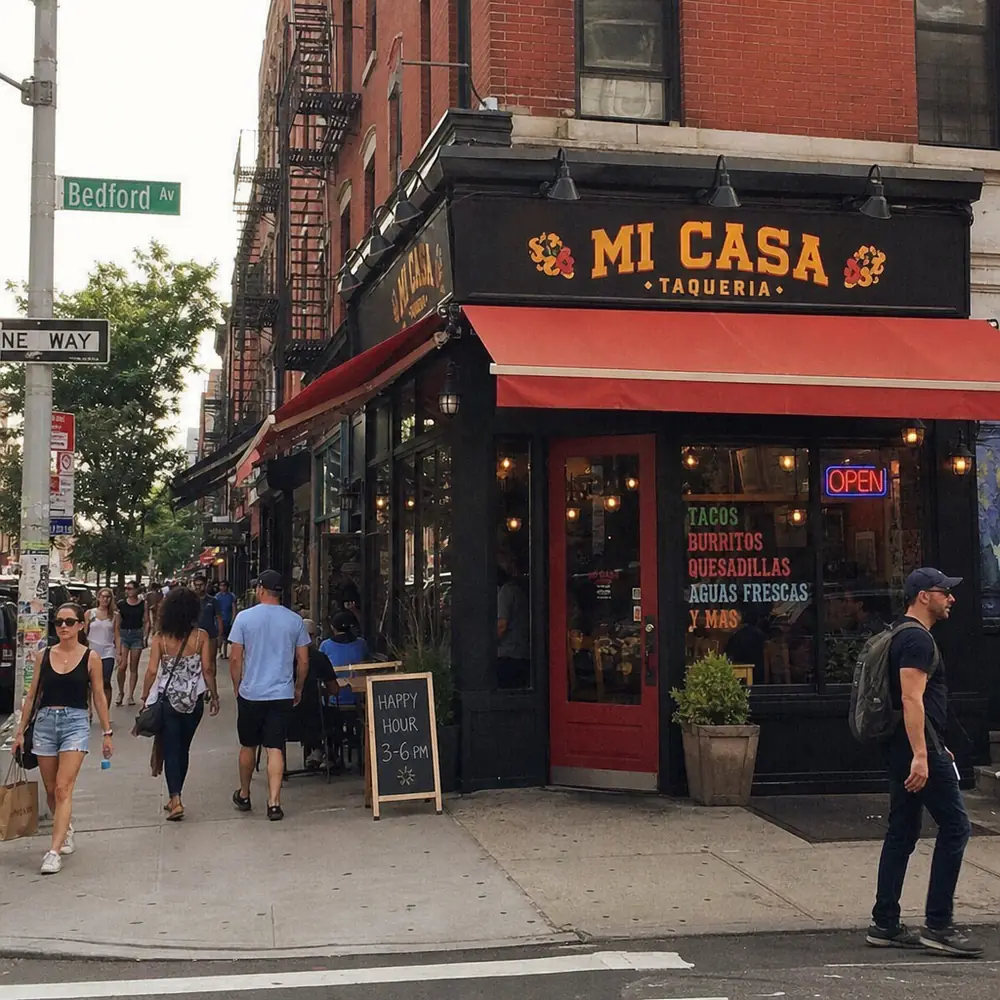
Many owners feel nervous when a site is near other restaurants. That caution is understandable, but competition is not always bad. In many cases, nearby restaurants prove that people already come to the area to eat.
The key is to understand whether the competition strengthens or weakens your opportunity. A group of restaurants can create a dining destination, especially when each concept serves a different occasion. A café, taco shop, bakery, wine bar, and ramen restaurant may all benefit from shared foot traffic because they are not identical choices. But if the block is full of restaurants with the same cuisine, price point, and service style, differentiation becomes harder.
Study competitors through practical questions:
- What do they serve, and what dining occasion do they own?
- Are they busy because of location, brand loyalty, price, quality, speed, or lack of alternatives?
- What do their reviews suggest customers value or complain about?
- Are there gaps in breakfast, lunch, dinner, family dining, takeout, catering, or dietary preferences?
- Does the neighborhood already have too much of one concept and too little of another?
- Can your restaurant stand out without relying on discounting?
Competition should help you sharpen your positioning. If the area is full of quick lunch spots, maybe your advantage is a calmer sit-down experience. If there are many dinner restaurants but few strong morning options, a breakfast or brunch concept may find room. The goal is not to avoid every competitor; it is to choose a location where your restaurant has a clear reason to be chosen. See restaurant competitive analysis for success for a structured framework.
What should you check before signing a restaurant lease?
Before signing a restaurant lease, review the site from operational, financial, legal, and customer-experience angles. A space may look appealing, but hidden constraints can affect buildout costs, menu execution, hours, signage, seating, delivery flow, and profitability. The decision should be based on more than rent and appearance.
A careful review helps you avoid expensive surprises. Even if you are working with brokers, landlords, designers, or consultants, you should understand the major issues yourself. The more specific your questions, the more likely you are to spot risks early.
Use this pre-lease checklist as a starting point:
- Zoning and permitted use: Confirm that restaurant use is allowed and that your specific service model fits local rules.
- Licensing needs: Consider food service permits, alcohol licensing if relevant, outdoor seating rules, and signage approvals.
- Ventilation and hood systems: Check whether the space can support the cooking equipment your menu requires.
- Grease trap and plumbing: Make sure capacity, location, and condition are suitable for restaurant operations.
- Electrical and gas service: Confirm whether existing utilities can support kitchen equipment, refrigeration, lighting, and HVAC.
- HVAC performance: Guests and staff need a comfortable space, and kitchens generate heat.
- Restroom requirements: Review the number, accessibility, condition, and code expectations.
- Trash and deliveries: Understand where waste is stored and how vendors will access the building.
- Signage rights: Clarify what signs are allowed, where they can be placed, and who controls approval.
- Parking rights: Confirm whether spaces are dedicated, shared, limited by time, or affected by neighboring tenants.
- Hours of operation: Check lease restrictions, neighborhood rules, noise limits, and security concerns.
- Exclusivity clauses: Look for restrictions that may prevent you from selling certain menu items, especially in shopping centers.
- Repair responsibilities: Understand who pays for roof, structure, utilities, equipment, common areas, and maintenance.
- Buildout timeline: Make sure the lease schedule allows enough time for design, permitting, construction, inspections, and hiring.
If a site has been a restaurant before, do not assume it is automatically ready. Existing infrastructure can be helpful, but equipment may be outdated, code requirements may have changed, or the prior layout may not fit your concept. A second-generation restaurant space can save time in some cases, but only after careful inspection. Our full restaurant site selection checklist expands on each item.
Financial fit protects the business
A beautiful restaurant space can still be a poor choice if the numbers do not work. Rent is only one part of occupancy cost. Common area maintenance, insurance, property taxes, utilities, repairs, percentage rent, storage, parking arrangements, and buildout costs can all affect the true cost of the location.
Restaurant margins can be tight, so the site must support enough sales volume to justify its expenses. A premium corner may provide visibility, but if the rent forces unrealistic sales targets, the business may feel pressured from the start. A lower-cost side street may be attractive, but if guests cannot find it and marketing costs rise, savings can disappear.
Think about financial fit in layers:
- Startup cost: Buildout, design, permits, equipment, deposits, professional fees, opening inventory, hiring, and pre-opening marketing.
- Monthly occupancy cost: Base rent, additional lease charges, utilities, maintenance, storage, waste, and parking-related costs.
- Sales potential: Expected covers, average check, takeout volume, delivery demand, catering opportunities, and seasonal changes.
- Break-even pressure: The sales level needed to cover fixed costs before the restaurant becomes profitable.
- Flexibility: Whether the lease allows enough room to adapt the model if customer behavior changes.
Avoid choosing a site based only on optimism. It is better to run conservative scenarios and ask what happens if sales take longer to build than expected. Model your break-even point before signing; a location should give the restaurant a fair chance to grow, not require perfection from day one.
The building should support the guest experience
Guests may not notice the technical details of a restaurant space, but they feel the results. They notice if the room is too loud, the line blocks the door, the pickup area is confusing, the restrooms are awkward, or the dining room feels cramped. Site selection should include how the building will shape the full experience.
The layout should match your service style. A quick-service restaurant needs an intuitive order path, clear menu boards, efficient pickup, and room for queues. A full-service restaurant needs comfortable seating, server flow, kitchen access, host space, and a dining room that supports the desired mood. A bakery or café may need display visibility, morning speed, and enough counter space for drinks, pastries, and takeout.
Pay attention to the less glamorous details. Ceiling height can affect atmosphere and ventilation. Window placement can influence natural light and street appeal. Kitchen size can limit menu variety or production speed. Storage affects purchasing and prep. Restroom placement affects comfort. The distance between the kitchen and dining room affects service efficiency.
A good building does not simply look nice. It helps staff do their jobs well and helps guests relax, order, eat, pay, and leave with a positive impression.
Digital discovery is part of location now
Restaurant location used to mean mostly physical placement. Today, it also includes how easily customers find you online when they are nearby and ready to decide. Local search, maps, review platforms, delivery apps, social media, and mobile browsing all influence whether a guest chooses your restaurant.
This matters because many guests search with immediate intent. They may type "breakfast near me," "best lunch nearby," or the very specific "closest restaurant for breakfast to my location." If your restaurant is nearby but your online presence is incomplete, inaccurate, or unappealing, another business may win that visit.
Digital location basics include:
- Keeping your business name, address, phone number, and hours consistent online.
- Adding accurate categories that reflect your cuisine and service style.
- Uploading clear photos of the exterior, interior, menu items, and entrance.
- Posting current menus in an easy-to-read format.
- Responding professionally to reviews when appropriate.
- Making online ordering, reservations, or contact options easy to find.
- Checking that map pins, parking notes, and entrance details are correct.
Physical convenience and digital clarity work together. A guest may discover you on a map, check photos, read the menu, scan reviews, and then walk or drive over within minutes. If any part of that path creates doubt, the site loses some of its advantage.
Growth potential matters beyond opening day
A restaurant site should support the business you are opening now and the one you hope to operate in the future. That does not mean choosing the largest or most expensive space. It means asking whether the site gives you reasonable room to build demand, adjust operations, and stay competitive.
Look for signs of durable opportunity. Is the neighborhood stable or improving? Are new homes, offices, hotels, transit improvements, or community investments changing the area? Are there seasonal swings that you can plan around? Does the lease provide a path for renewal if the restaurant succeeds?
Also consider whether the space can adapt. A concept may start with dine-in and later add catering, private events, retail products, breakfast service, or more takeout. The site does not need to support every possible future idea, but it should not block obvious growth paths that matter to your concept.
At the same time, be careful with speculation. A location should make sense based on current conditions, not only future promises. Planned development can help, but delays happen. Choose a site that has a realistic foundation now and upside later.
Common location mistakes are avoidable
Many restaurant location problems come from moving too quickly or falling in love with one feature. A dramatic storefront, low rent, busy street, or trendy district can be exciting, but no single factor should carry the whole decision.
Watch for these common mistakes:
- Choosing traffic without fit: A busy road is less valuable if your target guests cannot stop easily or do not want your concept.
- Underestimating buildout: A cheap lease can become costly if the space needs major kitchen, utility, or code upgrades.
- Ignoring daypart patterns: A site may be strong at dinner but weak for breakfast or lunch, or the reverse.
- Assuming competitors are the problem: Lack of competition can mean opportunity, but it can also mean limited demand.
- Overlooking parking and pickup: Even loyal guests may avoid a restaurant that is hard to access.
- Skipping lease details: Restrictions on signage, hours, menu items, repairs, or renewals can limit performance.
- Forgetting staff needs: Hiring and retention can suffer if the site is hard for employees to reach or unpleasant to work in.
- Relying only on emotion: A space can feel perfect and still fail the financial or operational test.
The best safeguard is a disciplined process. Compare multiple locations, visit each one several times, review the numbers, ask detailed questions, and get professional guidance where needed. A slower decision at the beginning can prevent a much more expensive correction later.
A practical process for choosing the right site
Choosing a restaurant site becomes easier when you treat it as a structured decision instead of a search for a perfect space. No location will have every advantage. Your job is to identify which strengths matter most, which weaknesses can be managed, and which problems are deal-breakers.
A useful process looks like this:
- Define the concept clearly. Write down your cuisine, service style, target guest, price point, hours, and revenue channels.
- Map your ideal customer. Identify where they live, work, travel, shop, and search for food.
- Set financial boundaries. Know your maximum realistic occupancy cost and buildout comfort zone before touring spaces.
- Create site criteria. Prioritize visibility, parking, walkability, delivery access, square footage, patio potential, kitchen needs, or neighborhood fit.
- Tour with operations in mind. Picture the guest path, staff workflow, vendor deliveries, trash removal, and peak-hour pressure.
- Study the area at different times. Visit during the dayparts that matter most to your concept.
- Review the competitive set. Look for demand signals, gaps, saturation, and positioning opportunities.
- Check technical requirements early. Investigate utilities, ventilation, plumbing, grease management, and code-related issues before committing.
- Model conservative numbers. Estimate sales needs and cost pressure without assuming instant success.
- Negotiate carefully. Pay attention to rent, term, improvement allowances, repair duties, signage, exclusivity, renewal options, and opening timelines.
This process helps turn a complex decision into a series of practical questions. It also makes it easier to compare locations fairly. A site with higher rent may be worth it if it reduces marketing friction and supports strong sales. A lower-rent site may be better if it fits the concept and keeps the business financially flexible.
Run your shortlist through Restaurant Site Finder for free AI competitor mapping, demographic match, and opportunity scoring before you sign, and pair the results with how to find the right location for your restaurant for a full validation workflow.
The right location supports the whole restaurant
Choosing a location for restaurant success is really about choosing the conditions your business will operate in every day. The right site helps customers find you, supports the way they want to dine, gives staff a workable environment, and gives the business a realistic financial foundation.
There is no universal perfect restaurant location. A strong choice depends on the concept, audience, neighborhood, access, competition, building condition, lease terms, and long-term potential. When those pieces work together, the location becomes more than an address. It becomes part of the restaurant's value.
Take your time, ask specific questions, and evaluate each site from both the customer's point of view and the operator's point of view. A careful decision at this stage can make marketing easier, operations smoother, and growth more achievable from the day the doors open.
Run a free location analysis
Enter any address to get competitor mapping, market gaps, opportunity scoring, and concept ideas.
Analyze your location free Shop equipment at Horeca Store