Site Selection
Find the Perfect Location for Opening a Restaurant in Texas
A numbers-backed guide to finding the perfect restaurant location in Texas, trade areas, metro markets, urban vs suburban sites, traffic counts, ROI modeling, zoning, health permits, drive-thru requirements, and lease negotiation.
Key Takeaways
- Texas site selection starts with concept fit, dayparts, ticket size, and how guests arrive (car-first markets need access, not just traffic volume).
- Score primary, secondary, and tertiary trade rings with restaurant location demographics Texas data, retail traffic counts, and competitive gaps.
- Pressure-test occupancy cost with a restaurant location ROI analysis and verify zoning, health permits, and drive-thru geometry before you sign.
- Run free location analysis at Restaurant Site Finder on your Texas shortlist.
Choosing a site in Texas isn't just about "busy streets" and "cheap rent." The state's rapid growth, car-first travel patterns, shifting neighborhood demographics, and city-by-city permitting and zoning differences mean your address can either become your best marketing channel, or your biggest recurring expense.
This guide to finding the perfect restaurant location in Texas covers site selection and local considerations to help you make a confident, numbers-backed decision, whether you're opening a food truck-to-brick-and-mortar concept, a fast-casual with a drive-thru, or a chef-driven dining room that depends on evening traffic.
Start with the Concept-to-Location Fit (Before You Tour Spaces)
One of the most common ways operators avoid site selection mistakes is by getting very specific about what your concept needs to succeed, not just what you can afford.
Ask these first:
- Who is your primary guest? (income, age, family status, work schedule)
- What is the main daypart? breakfast, lunch, dinner, late night
- What is the average ticket and needed volume?
- How do guests arrive? car, foot, rideshare, transit
- How much visibility do you need? destination vs impulse
- What operations requirements are non-negotiable? hood/venting, grease interceptor, patio, alcohol, drive-thru
This is the foundation of how to choose a restaurant location in a way that aligns brand, menu, and economics. It also keeps "great-looking" spaces from distracting you from the math behind what makes a good restaurant location.
Define Your Trade Area Using Real Behavior, Not Assumptions
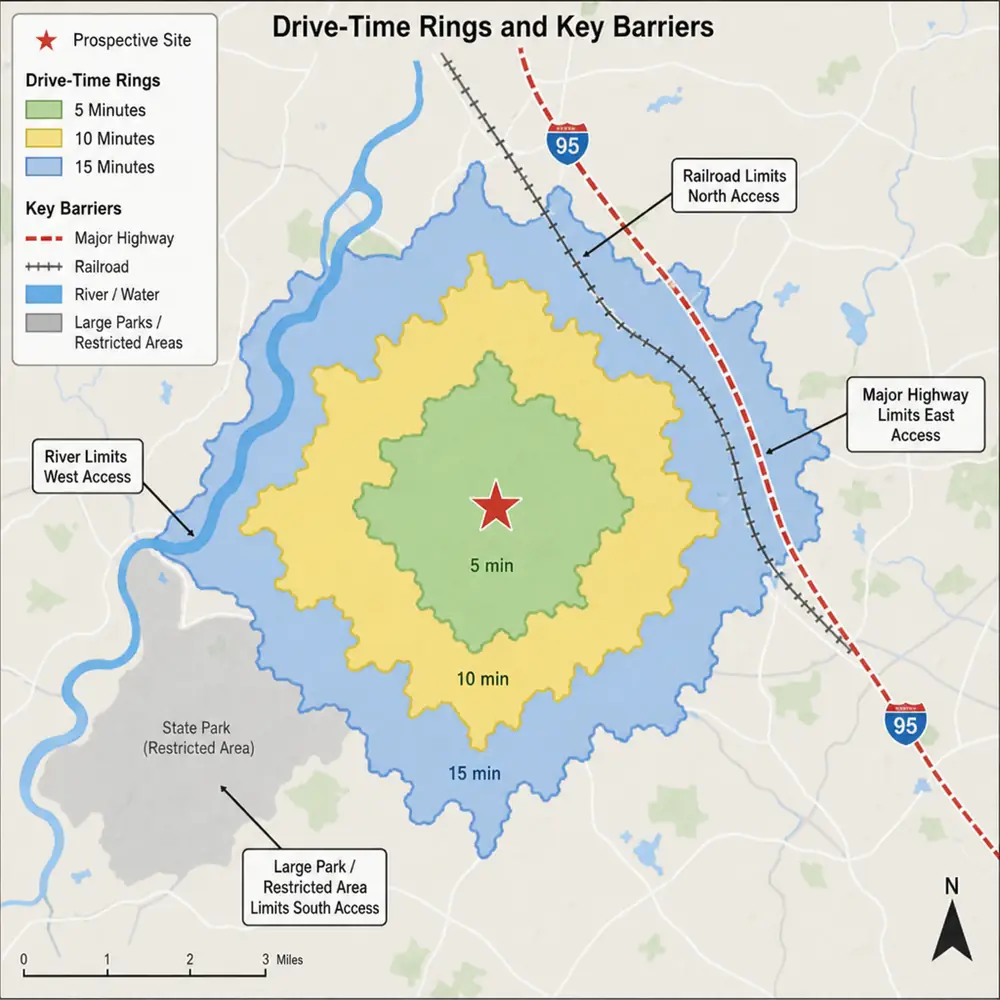
In Texas, trade areas are often shaped by highways, frontage roads, bridges, school zones, and commute patterns.
Build a Practical Trade-Area Model
For restaurant site selection, use three rings:
- Primary: 0–10 minutes (core guests, repeat visits)
- Secondary: 10–20 minutes (weekends, special trips)
- Tertiary: 20–30 minutes (events, destination dining)
For urban cores, those rings may be smaller; for suburban areas, they may be larger. This framework keeps your restaurant location demographics Texas research realistic. See our trade area analysis for restaurants guide for a deeper framework.
What to Measure in Each Ring
- Resident population + growth trends
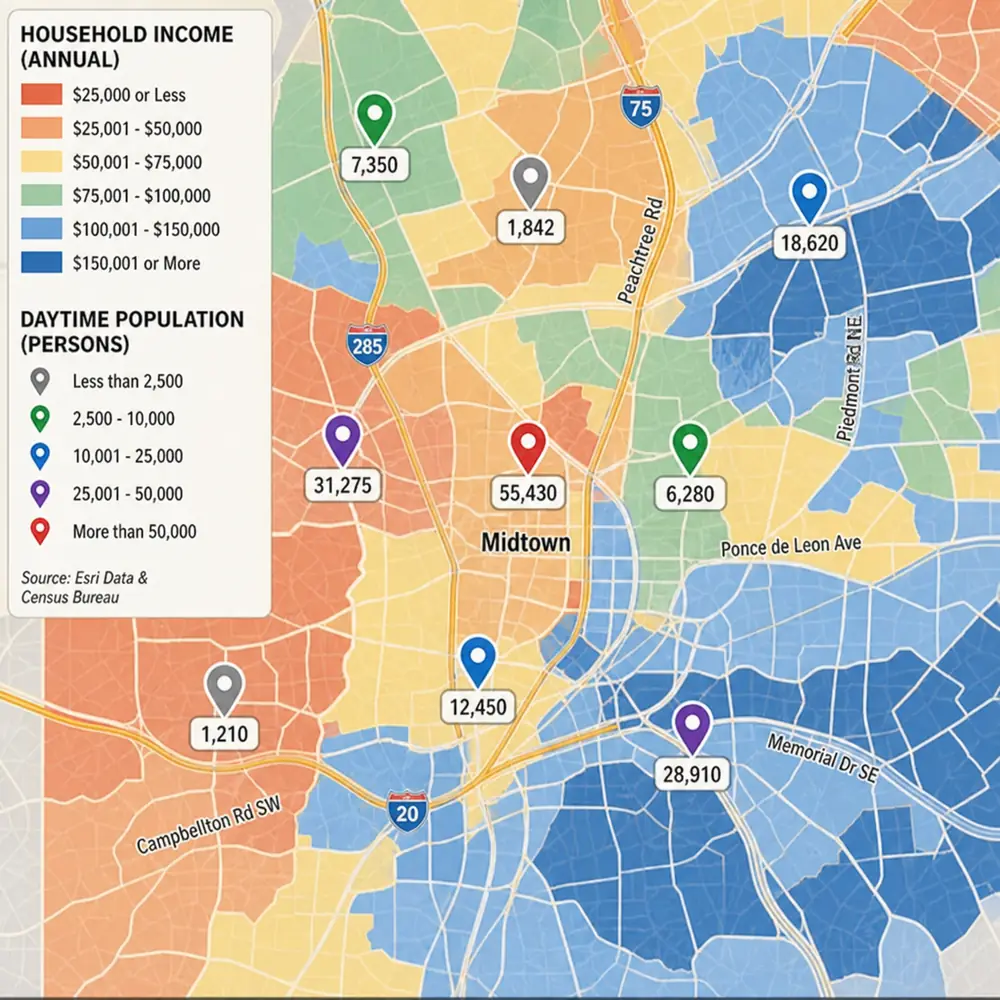
- Daytime population (workers, students, hospital campuses)
- Household income bands aligned to your ticket size
- Family composition (kids matter for many casual concepts)
- Tourism or event draw (arenas, convention centers, parks)
- Competitive density and category saturation
Pick the Right Texas Market: "Best City" Depends on Your Format
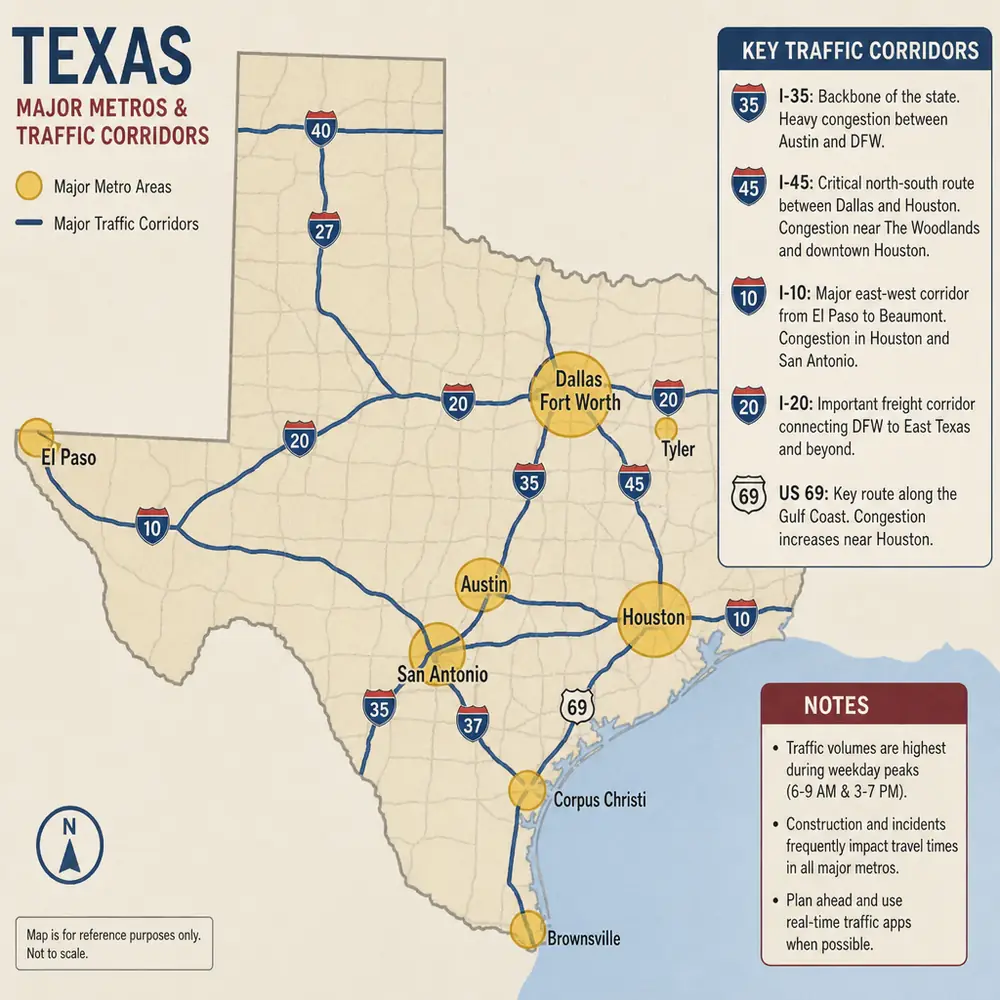
Searching for best Texas cities for restaurants is useful, but "best" is contextual. Texas has multiple restaurant ecosystems, each with different cost structures and customer expectations.
Quick Positioning by Metro (Practical, Not Hype)
- Dallas–Fort Worth (DFW): high suburban growth, strong lunch and family dining, heavy car traffic, many multi-unit operators competing for prime sites.
- Houston: diverse neighborhoods, wide range of rent tiers, major medical and energy employment centers; traffic patterns can make "close" feel far.
- Austin: strong demand and food culture, but competition is intense and occupancy costs can be high in prime corridors.
- San Antonio: strong tourism and value-sensitive diners in many areas; great opportunities with smart neighborhood targeting.
- Secondary growth hubs: logistics, manufacturing, universities, and new housing, often better for ROI than headline neighborhoods.
The goal is not to chase the trendiest zip code. It's to find the perfect restaurant location in Texas for your concept's economics.
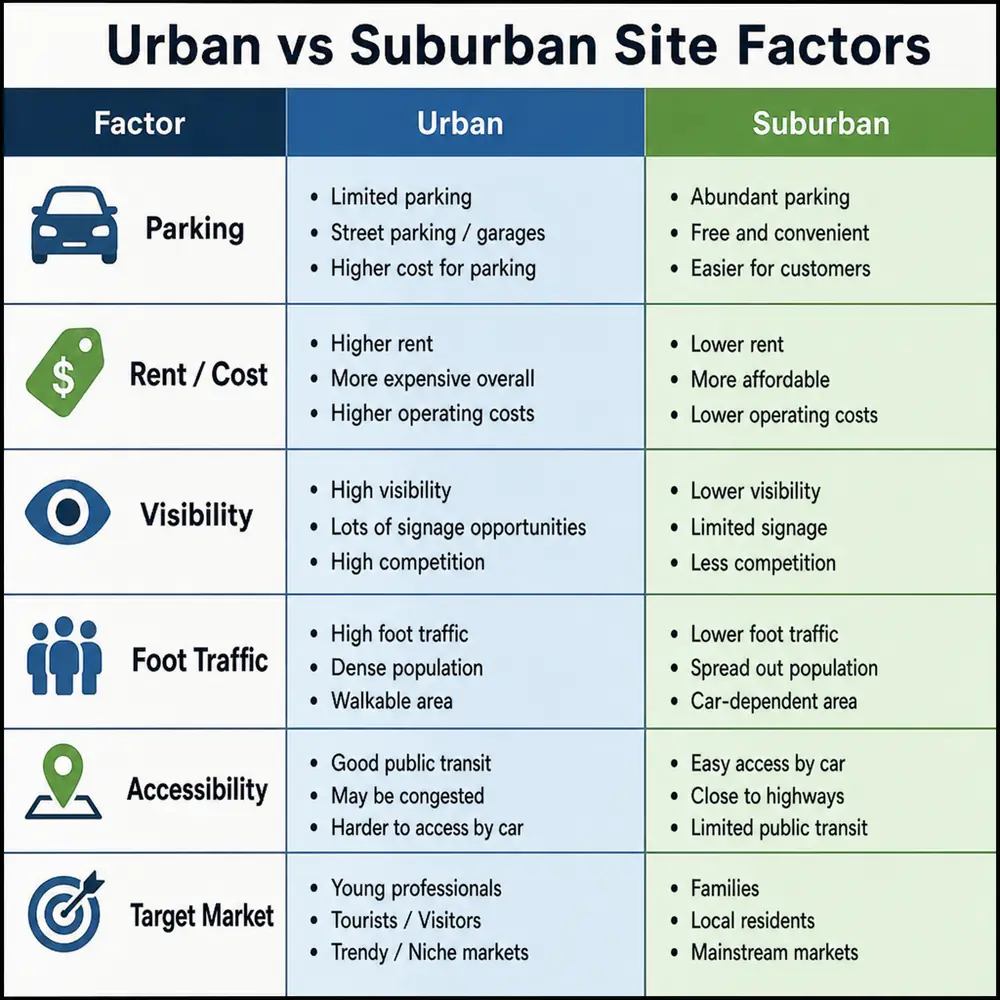
Urban vs Suburban Restaurant Location: How to Decide (Texas Edition)
The urban vs suburban restaurant location debate is bigger in Texas because the state's growth has been heavily suburban, and many diners default to driving and parking.
Urban sites (downtowns, dense neighborhoods)
Pros: higher visibility and brand halo; better walk-in potential near offices, hotels, and nightlife; synergy with retail/entertainment districts.
Cons: higher rent and CAM charges; parking constraints and delivery logistics; permitting complexity and older building retrofits.
Suburban sites (power centers, neighborhood nodes, arterial corridors)
Pros: easier parking, clearer access, larger spaces, patio potential; strong dinner/weekend patterns for families; more drive-thru opportunities.
Cons: you may need strong signage and traffic exposure; lunch can be weaker if daytime population is limited; competition clusters around the same anchors.
Your decision should be driven by restaurant location ROI analysis, not just vibes. A suburban site with solid access and manageable rent often beats an "iconic" urban corner that can't support the occupancy cost.
Use Traffic, Access, and Visibility Like an Engineer, Not a Tourist
In Texas, "busy road" doesn't always mean "easy to enter." For Texas restaurant site selection, your access plan matters as much as traffic volume.
Retail Traffic Counts Texas: What to Look For
When you evaluate retail traffic counts in Texas, focus on:
- Directional traffic (which side of the road you're on)
- Time-of-day peaks aligned to your dayparts
- Speed limits (higher speeds reduce impulse turns)
- Intersection proximity (good for visibility, tricky for access)
- Construction risk (long projects can kill momentum)
If possible, request or purchase daily vehicle counts (ADT), turning movement counts at nearby intersections, foot traffic estimates in urban districts, and mobile location data (where visitors come from and where else they go).
Access Checklist for Texas Corridors
- Can cars enter from the main road or only a frontage road?
- Is there a protected left turn or only a risky crossing?
- How many "decision points" before the entrance?
- Is the driveway shared with a congested gas station or fast-food queue?
- Are there median restrictions that force U-turns?
These details are the difference between a "good corner" and a perfect restaurant location in Texas that converts passing traffic into guests.
Match Your Demographics to Your Menu Pricing (and Be Honest)
Restaurant location demographics in Texas should directly support your pricing and frequency.
Build a Price-to-Income Fit
- Define your target average ticket (with tax and typical add-ons)
- Estimate frequency (weekly, monthly, special occasion)
- Compare to household income distribution in the primary ring
If your concept needs repeat visits, you want a strong base of households that can afford your ticket comfortably, not aspirationally.
Don't Ignore Psychographics
Two neighborhoods with similar income can behave differently:
- One may prioritize local/independent dining
- Another may prefer national chains and value deals
- Some areas over-index on delivery, others on dine-in socializing
Use local reviews, competitor busy times, and delivery-app heat maps to validate assumptions.
Competitive Mapping: Look for Gaps, Not Just "No Competitors"
In restaurant site selection, "no competitors" can mean "no demand." Instead, look for:
- Category gaps (e.g., no quick healthy lunch within 8 minutes)
- Quality gaps (plenty of options, but poor execution)
- Daypart gaps (area goes dark after 8 p.m., or lunch options are thin)
- Convenience gaps (drive-thru missing, parking pain, slow service)
Also evaluate adjacency: complementary anchors (grocery, gyms, theaters), trip generators (schools, parks, clinics, campuses), and office clusters that support lunch. See our restaurant competitive analysis guide for a full audit framework.
Site Economics: Run a Restaurant Location ROI Analysis Early
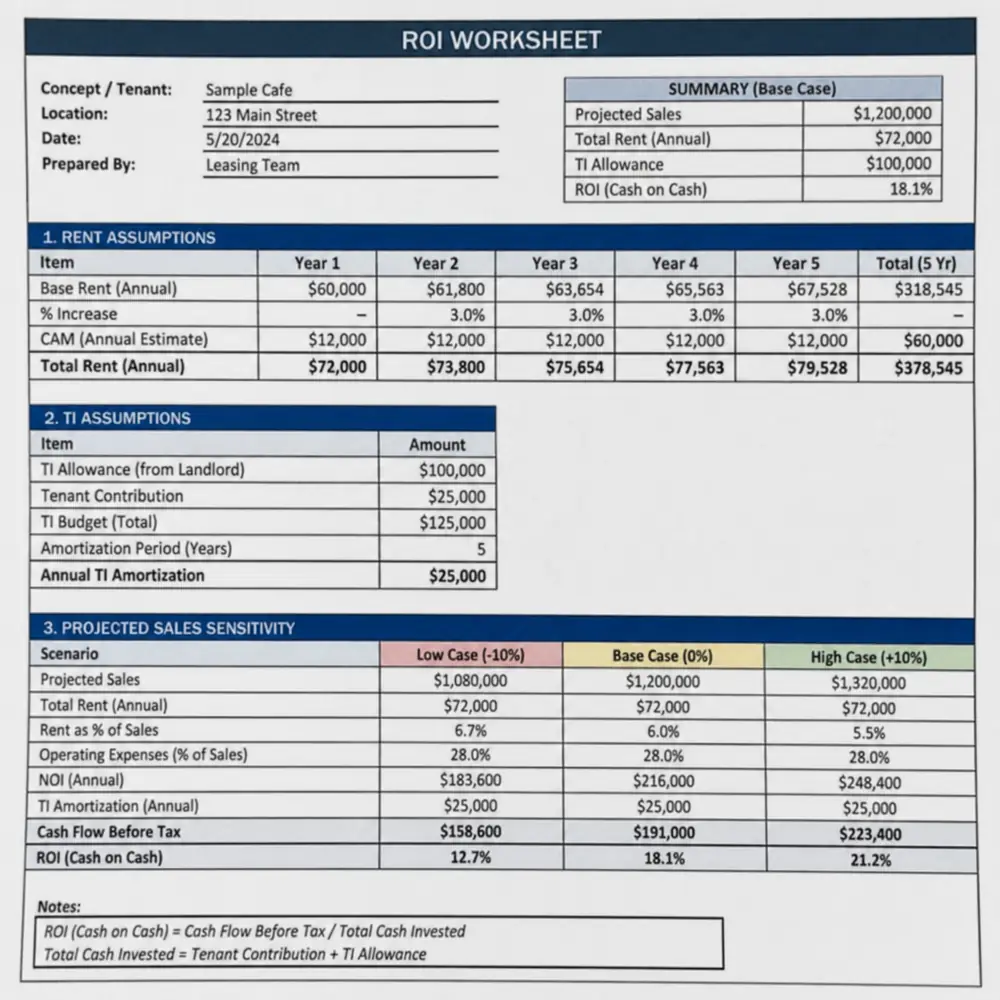
A lease you can't afford will overwhelm even great food. Do a basic restaurant location ROI analysis before you fall in love.
Key Numbers to Model
- Expected weekly transactions by daypart
- Average ticket (conservative)
- Prime cost targets and labor assumptions
- Rent + CAM + taxes + insurance (occupancy cost)
- Required tenant improvements (TI) and equipment
- Marketing ramp-up period (months to stabilize)
A practical rule: if your occupancy cost forces you into unrealistic volume assumptions, it's not one of the best restaurant locations for your concept.
Alternatives to High-Rent Storefront
If prime corridors are too expensive, consider alternatives to high-rent storefront such as:
- Endcaps in neighborhood centers (often better access + signage)
- Second-generation restaurant spaces (existing hood/grease)
- Non-traditional pads near grocery outparcels
- Smaller footprints with higher throughput (pickup windows, smart kitchen layout)
- Ghost kitchen + small branded pickup point (market testing)
- Food hall stalls as a stepping-stone (be careful with margin structure)
These options can improve ROI and reduce upfront buildout risk without sacrificing demand.
Restaurant Location Checklist Guide (Texas-Specific Due Diligence)
Use this restaurant location checklist to reduce surprises, pair it with our full site selection checklist.
Building and infrastructure
- Existing hood/venting capacity and condition
- Grease interceptor size and location
- Gas capacity, electrical panel capacity, HVAC performance
- ADA compliance needs (ramps, restrooms, seating)
- Delivery access (where trucks stop, when they can unload)
Operational flow
- Kitchen line fits your menu and volume
- Pickup and delivery driver staging (avoid lobby chaos)
- Restroom count and placement
- Patio feasibility and noise constraints
Parking and circulation
- Realistic stall count during peak hours
- Conflicts with neighboring tenants (gym peaks vs dinner peaks)
- Drive aisle widths and queue spillover risk
Legal/land use and restrictions
- Zoning allowed use and any special permits
- Signage rights and monument sign availability
- Exclusives (another tenant may block your category)
- Hours restrictions (especially near residential)
This is where many teams avoid common site selection mistakes, by verifying constraints before signing.
Texas Zoning for Restaurants: Plan for City-by-City Differences
Texas zoning for restaurants varies significantly by municipality, and even by corridor within a city. Don't assume a space that "used to be a restaurant" is automatically compliant for your use.
Key zoning considerations:
- Allowed use type (restaurant, bar, drive-thru, late-night)
- Alcohol-related distance rules (often near schools/churches; rules vary)
- Parking minimums and shared parking agreements
- Patio, music, and amplified sound rules
- Grease waste and environmental requirements
Work with a local zoning/land-use professional early, especially if your concept includes late hours, alcohol, or drive-thru service.
Texas Health Department Permits and Inspections: Don't Underestimate Timing
Texas operators often interact with local health departments (typically city or county). Texas health department permits can affect your opening schedule, so build slack into your timeline.
Common permit/inspection topics:
- Food establishment permit application and plan review (where required)
- Plumbing approvals tied to grease management
- Ventilation/hood and fire suppression sign-offs
- Final health inspection scheduling (may depend on local workload)
Tip: ask your GC and architect what local agencies require, and confirm directly with the city/county to prevent last-minute rework.
Drive-Thru Site Requirements Texas: Design for Queues and Safety
For QSR and fast-casual brands, drive-thru site requirements in Texas can make or break throughput. Texas is drive-thru-friendly, but the site must support it.
Evaluate:
- Stacking capacity (how many cars can queue without blocking parking or streets)
- Entry/exit geometry (right-in/right-out is often safest)
- Menu board placement (avoid tight turns and blind spots)
- Speaker clarity (distance from traffic noise)
- Pickup window placement (weather cover, pedestrian conflicts)
- Delivery app driver flow (separate from drive-thru if possible)
If the queue spills into main circulation lanes, you'll lose guests and may trigger landlord or city complaints.
Restaurant Lease Negotiation Texas: Focus on Risk, Not Just Rent
Restaurant lease negotiation in Texas should prioritize clauses that protect you during buildout and ramp-up.
Key lease points to negotiate (or at least understand):
- Tenant improvement allowance (TIA) and reimbursement timing
- Free rent / abatement during construction and permitting delays
- Rent commencement tied to certificate of occupancy (CO)
- Exclusivity (prevent direct competitors in the center)
- Signage rights (building sign, monument sign, pylon visibility)
- HVAC, roof, plumbing responsibilities (NNN surprises hurt)
- Assignment and sublease rights (future flexibility)
- Go-dark clause and operating hours requirements
- Kick-out clause tied to sales thresholds (rare, but valuable)
Also ask for clarity on CAM reconciliations and caps where possible. A "good rent" can become a bad deal after unpredictable pass-throughs.
Validating the Site: 7 Field Tests Before You Commit
Data is essential, but you should still physically test the location.
Do these in person:
- Park and walk the trade area at lunch and dinner
- Count cars entering the center for 15 minutes during peak
- Test the left turn into the site at rush hour
- Stand at the sign line: can drivers read your future signage?
- Visit competitors: note wait times, staffing, ticket size cues
- Check lighting and safety at night (guests remember this)
- Talk to neighboring tenants about traffic patterns and problem days
These steps reveal friction that reports miss, and help you identify truly best restaurant locations for your format.
Putting It All Together: A Simple Site Scoring Model
To make decisions faster, score each finalist site from 1–5 on:
- Demand (demographics + daytime population)
- Access (turns, entry, visibility)
- Traffic (vehicle + foot aligned to dayparts)
- Competition (gap opportunity vs saturation)
- Buildout risk (second-gen vs heavy retrofit)
- Lease risk (terms, CAM, signage)
- Operations fit (parking, pickup, patio, drive-thru)
- ROI (conservative sales vs occupancy cost)
This makes Texas restaurant site selection less emotional and more repeatable, especially if you plan multiple units.
Conclusion: The "Perfect" Texas Location Is the One That Makes Your Model Work
The perfect restaurant location in Texas is rarely the flashiest address. It's the site where access is easy, your guests already live/work/play, your lease terms match your ramp-up reality, and your buildout risk is controlled.
Use traffic and demographic proof, validate with field tests, and negotiate a lease that protects the opening timeline. Do that, and you'll dramatically improve your odds of landing among the best restaurant locations, not just in Texas, but in your category.
Quick takeaway: Treat your site like an investment. If your restaurant location ROI analysis works under conservative assumptions, and your zoning, permitting, and operational flow check out, you've found a location worth signing.
Run free AI analysis on your shortlist at Restaurant Site Finder. For a West Coast comparison, see our California restaurant location guide.
Frequently Asked Questions
How do I find the perfect restaurant location in Texas?
Define concept fit, score trade areas on demographics and access, audit competition, model ROI, and validate with field tests before signing.
What are the best Texas cities for restaurants?
Match your format to the metro, DFW for suburban growth, Houston for diversity, Austin for food culture (high competition), San Antonio for tourism and value segments.
Should I choose an urban or suburban restaurant location in Texas?
Let ROI and daypart demand decide. Suburban sites often win on access and parking; urban sites win on visibility and walk-in traffic at higher occupancy cost.
What Texas zoning should I verify before signing a lease?
Allowed use, alcohol distance rules, parking, patio/sound rules, grease requirements, and drive-thru or late-night provisions, each city differs.
Is Restaurant Site Finder free for Texas site analysis?
Yes. Enter any US address at restaurantsitefinder.com for competitor mapping and opportunity scoring.
Run a free location analysis
Enter any address to get competitor mapping, market gaps, opportunity scoring, and concept ideas.
Analyze your location free Shop equipment at Horeca Store