Site Selection
Find the Perfect Location for Opening a Restaurant in California
A practical, data-driven guide to finding the perfect restaurant location in California, demographics, foot traffic, Anaheim submarkets, competitor audits, ROI modeling, zoning, liquor licenses, and lease negotiation.
Key Takeaways
- Define concept-to-location fit before touring vacancies, destination vs convenience concepts need different California corridors.
- Score trade areas with California restaurant demographics data, foot traffic patterns, and competitor whitespace, not hype alone.
- Pressure-test rent with a restaurant location ROI calculator and confirm zoning, liquor, and buildout timelines before you sign.
- Run free location analysis at Restaurant Site Finder on your California shortlist.
Opening a restaurant in or near California can be wildly rewarding, but only if your address works as hard as your menu. The right site can lower marketing costs, boost repeat visits, and protect margins in a high-rent, highly competitive state.
This guide walks you through a practical, data-driven way to find the perfect location for opening a restaurant in California, with on-the-ground considerations like permitting, zoning, and lease structure, plus tools and checklists you can use immediately.
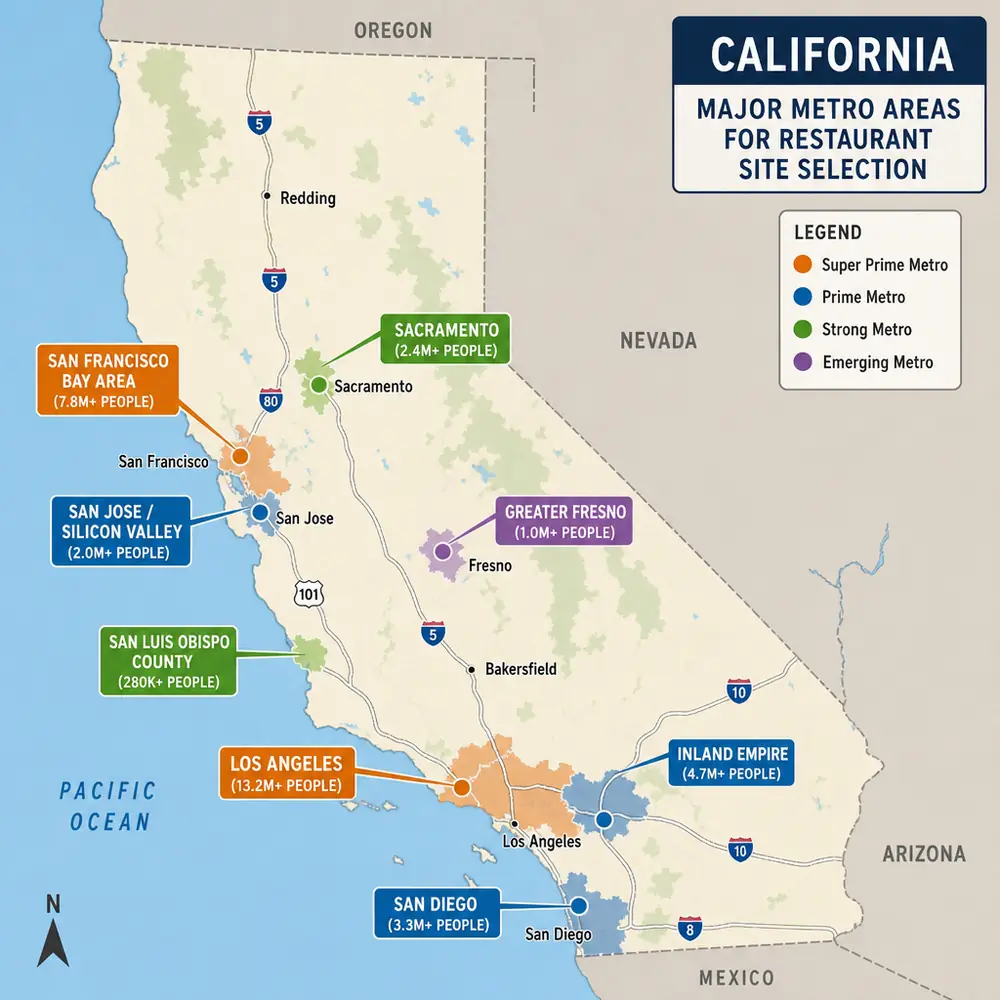
Start with a Location Strategy (Not a Vacancy)
Before you tour spaces, clarify what "perfect" means for your concept. Most operators who avoid bad restaurant location mistakes decide how they win, then choose a neighborhood that makes winning easier.
Define Your Concept-to-Location Fit
Ask:
- Who is your core customer? (families, students, commuters, tourists, high-income locals)
- What's the primary purchase occasion? (weekday lunch, late-night, weekend brunch)
- Is it destination or convenience?
Destination concepts can survive slightly off the main drag. Convenience concepts need visibility and access.
This is the foundation of how to choose a restaurant location decisions, and it shapes every data point you'll review.
Use California Restaurant Demographics Data to Pick the Right Trade Area
"Great food" isn't a demographic segment. You need local demand that matches price point and frequency.
What to Evaluate
Use California restaurant demographics data to check:
- Population size and growth
- Daytime population (workers) vs nighttime population (residents)
- Median household income aligned to your ticket size
- Age and household makeup (families vs singles)
- Tourism volume (seasonality matters)
- Ethnic/cultural preferences (especially for niche cuisines)
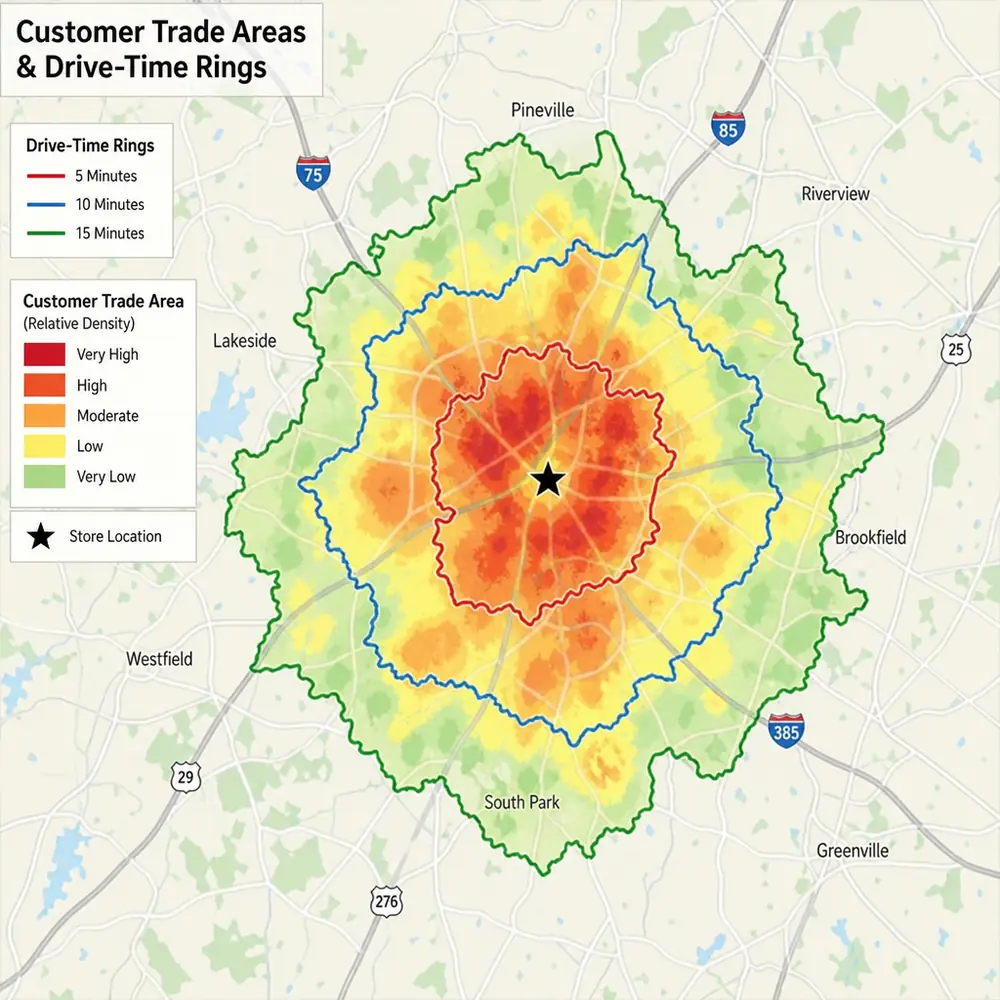
Trade Area Rule of Thumb (Customize It)
- Quick service: 1–3 miles (or 5–10 minutes)
- Fast casual: 2–5 miles
- Full service: 5–10 miles (sometimes more if destination)
This approach supports a stronger restaurant location analysis California process because it ties demand to drive time, not arbitrary zip codes. For a deeper framework, see our trade area analysis for restaurants guide.
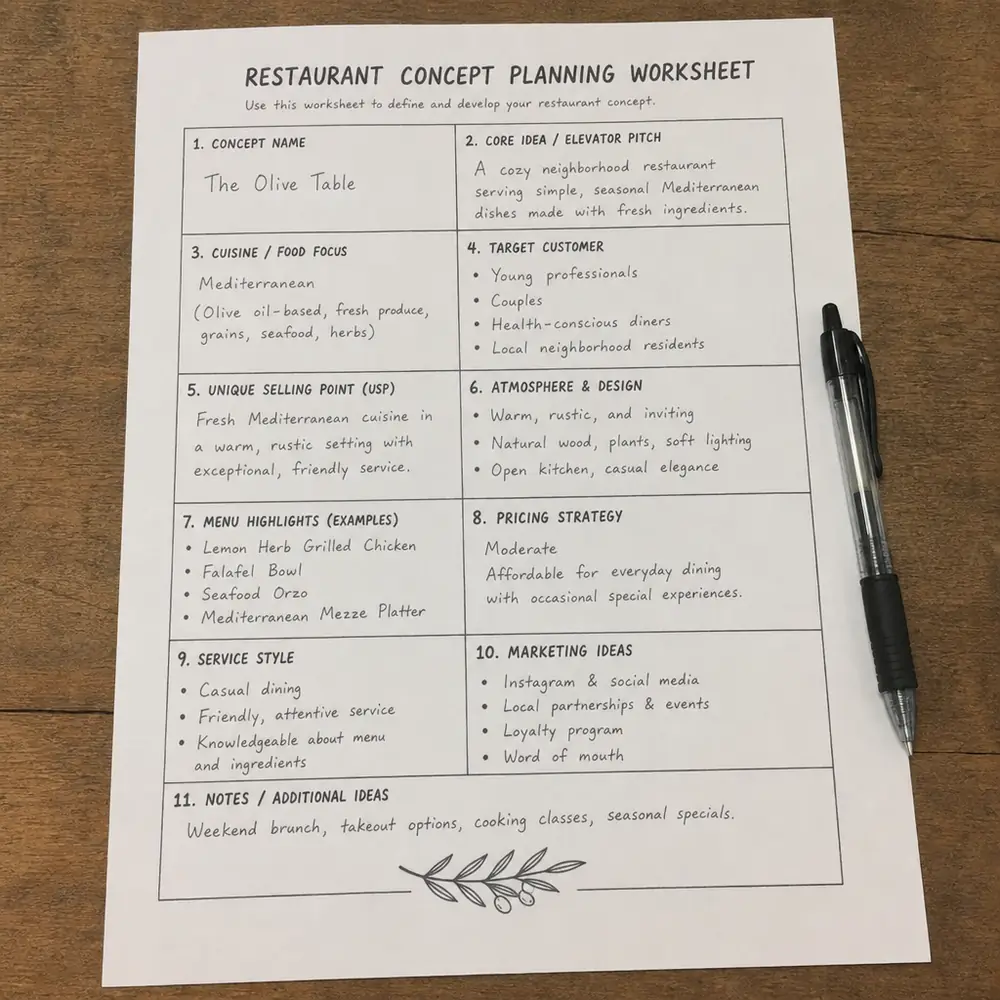
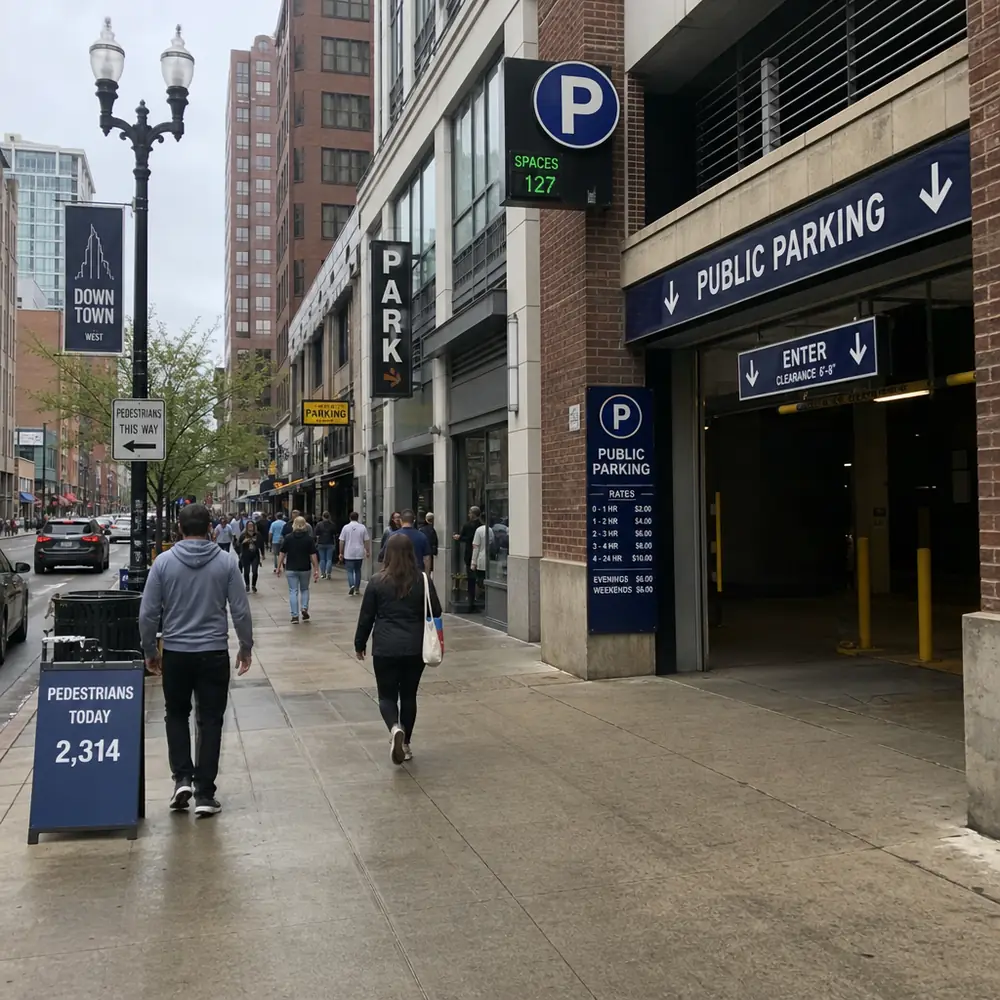
Make Foot Traffic and Access Measurable (Not a Guess)
In many California markets, visibility isn't enough, access is everything.
Foot Traffic Data for Restaurants: What to Look For
When reviewing foot traffic data for restaurants, analyze:
- Daily and weekly patterns (weekday lunch vs weekend peaks)
- Seasonality (tourist corridors can drop sharply off-season)
- Cross-street "pause points" (intersections, transit stops, grocery anchors)
- Dwell time (are people passing through or actually lingering?)
- Device-based visitor profiles (where people live, where else they visit)
Also evaluate:
- Parking count, ingress/egress, left-turn difficulty
- Delivery pickup flow (curb management is real in many cities)
- ADA access and path of travel
This is a key part of what makes good restaurant location decisions in car-heavy suburbs and mixed-use urban corridors alike.
Choose the Right City and Submarket (California Isn't One Market)
If you're researching the best cities to open a restaurant in CA, avoid relying on hype alone. Instead, pick 3–6 target submarkets and score them against your concept.
High-Level Factors That Shape City Performance
- Rent levels and typical lease terms
- Permitting speed and complexity
- Workforce availability and wage pressures
- Tourism dependence
- Competition density
- Consumer spending patterns
Match your concept with the right environment:
- Office-heavy areas: lunch-friendly formats, fast throughput
- Residential growth corridors: family dining, takeout, weekend spikes
- Entertainment zones: late-night and weekend strength
A "best restaurants in CA" list can inspire concept positioning, but it's not a substitute for site economics.
Spotlight: California Restaurant Location Anaheim (and Nearby Corridors)
A California restaurant location in Anaheim search often means you're thinking about tourism, conventions, sports traffic, and dense hospitality ecosystems. Anaheim can be strong, but only if you select the right pocket and design for your demand source.
Anaheim-Specific Considerations
- Tourist-driven spikes: weekends, holidays, convention calendars
- Customer mix: visitors vs locals changes by corridor
- Higher expectations: guests compare you to highly polished competitors
- Parking and access: crucial for families and groups
- Menu engineering: fast decision-making helps high-volume periods
If your concept relies on locals, consider nearby residential and commuter corridors where repeat business is easier to build than in pure visitor zones. Don't just pick "Anaheim", pick a micro-market and validate it with real traffic and competition data.
Competitor Analysis for Restaurant Sites (Do It Like an Operator)
Strong competitor analysis for restaurant sites goes beyond "there are a lot of restaurants here." You're looking for whitespace and proof of demand.
What to Audit Within a 5–10 Minute Drive
- Direct competitors (same cuisine + price point)
- Indirect competitors (same occasion: quick lunch, family dinner, dessert)
- Top-performing anchors (grocers, gyms, theaters, big-box)
- Review patterns (consistent complaints = opportunity)
- Wait times and capacity constraints (signals unmet demand)
Fast Fieldwork Checklist
- Visit at your peak times (not just midday)
- Count occupied seats, not just cars in the lot
- Note staffing levels and speed of service
- Observe takeout volume and delivery drivers
This makes your restaurant location California decision more defensible, especially when rent is aggressive. See our full guide on restaurant competitive analysis.
Drive-Thru vs Dine-In Location: Choose Based on Throughput Economics
The drive-thru vs dine-in location decision impacts site size, parking, permits, and ROI.
Drive-thru tends to win when:
- You have a simplified menu and high repeat frequency
- Morning and late-night demand is strong
- You can secure stacking space (no traffic spillback)
- Signage visibility is excellent
Dine-in tends to win when:
- You need ambiance to justify price point
- Alcohol and dessert are major profit drivers
- You rely on group occasions and longer dwell time
Hybrid models (dine-in + strong takeout lane) are increasingly common, but they require thoughtful site layout to avoid pickup congestion.
Run a Restaurant Location ROI Calculator Before You Fall in Love
A "great corner" can be a terrible deal. Use a restaurant location ROI calculator approach, simple is fine, to pressure test the address.
Core Inputs to Model
- Projected transactions/day (by daypart)
- Average check and gross margin
- Labor % targets
- Rent + NNN (don't ignore CAM charges)
- Tenant improvement (TI) cost and amortization
- Marketing ramp (first 6–12 months)
- Delivery commission impact (if applicable)
Quick Sanity Check Ratios (Concept-Dependent)
- Rent as % of sales: often targeted within a workable band for your segment (typically 6–10% total occupancy for many concepts)
- Break-even covers per day: align with realistic seat turns and peak demand
If a landlord asks for a rent number that only works under "perfect world" volume, the location isn't perfect, it's risky.
Restaurant Market Research Tools That Speed Up Site Selection
You don't need a giant budget, but you do need consistent data sources. Mix digital research with real-world observation.
Recommended categories of restaurant market research tools:
- Foot traffic and visitation analytics platforms
- Mapping tools for drive-time and density
- Review and menu intelligence platforms
- Real estate listing data + historical vacancy context
- Survey tools for concept testing
Even a lightweight stack can improve your restaurant location analysis California by making assumptions visible and testable. Start with free AI screening at Restaurant Site Finder.
California Zoning Laws for Restaurants: Reduce Permitting Surprises
California zoning laws for restaurants vary by city and even by corridor. A space that "used to be a restaurant" is helpful, but not a guarantee.
Verify Early (Before LOI if Possible)
- Allowed use (restaurant, fast food, bar, live entertainment)
- Seating capacity limits
- Patio rules and setbacks
- Grease interceptor requirements
- Hood/venting allowances and rooftop mechanical constraints
- Parking minimums and shared parking agreements
- Signage limitations
Also confirm whether you're in overlays (coastal, historic, downtown specific plans) that add steps.
Liquor License Requirements California: Factor Time and Cost Into Your Timeline
If alcohol is part of your profit plan, treat it like a project, not a checkbox. Liquor license requirements in California can affect:
- Opening date
- Buildout sequencing
- Capital needs
- Site viability (some areas face additional restrictions)
Location implications:
- Some addresses have a smoother path due to prior licensing history
- The license type you need should match your service model (beer/wine vs full bar)
- Neighborhood sensitivity can influence approvals
Build a realistic timeline buffer and avoid signing a lease that assumes instant alcohol sales unless you have contingencies.
Restaurant Lease Negotiation Tips (California Edition)
Great operators still fail with bad leases. Use these restaurant lease negotiation tips to protect cash flow.
Terms to Negotiate (or at Least Fully Understand)
- Rent structure: base + percentage rent triggers
- NNN caps and CAM audit rights
- TI allowance and disbursement schedule
- Free rent or rent abatement during permitting/buildout
- Exclusivity clauses (limit direct competitors in the center)
- Assignment/sublease flexibility (exit strategy matters)
- Kick-out clause tied to permitting or sales thresholds
- Option periods and rent bumps
California buildouts can run long. Align the lease start date with realistic permitting and construction schedules.
Restaurant Site Selection Checklist (Print This and Use It)
A restaurant site selection checklist keeps emotions from driving decisions.
Market & demand
- Trade area population + growth trend
- Daytime workers and weekend activity
- Income and price-point fit
- Tourism seasonality (if relevant)
Visibility & access
- Signage sightlines and speed of road traffic
- Easy turns, safe ingress/egress
- Parking count and shared-use rules
- Delivery driver and pickup flow
Space & infrastructure
- Venting/hood feasibility
- Gas/electrical capacity
- Grease interceptor presence/requirements
- ADA access and restroom compliance
- Patio potential (and rules)
Competition & positioning
- Direct/indirect competitors mapped
- Anchors that generate compatible traffic
- Review-based gaps you can exploit
Financials
- All-in occupancy cost (base + NNN + fees)
- TI budget vs landlord contribution
- Ramp plan and cash buffer
- ROI model stress-tested at conservative volume
Compliance
- Zoning/use confirmation
- Health department constraints
- Liquor pathway clarity (if applicable)
Common Pitfalls to Avoid (The Expensive Lessons)
Even seasoned founders repeat these bad restaurant location mistakes:
- Leasing a space with impossible venting or mechanical constraints
- Overestimating foot traffic quality (lots of passersby, few buyers)
- Underestimating parking friction in car-dependent areas
- Ignoring construction timeline and opening without a cash cushion
- Choosing a "cheap" rent site that requires excessive marketing to create demand
- Assuming a previous tenant's success will transfer to your concept
If you remember one thing: a "deal" isn't a deal if it adds months of delay or forces discounting to drive traffic.
Putting It Together: A Simple 30-Day Plan to Pick a Winner
To find the perfect location for opening a restaurant in California, run a structured sprint:
- Week 1: Define customer + dayparts + model (drive-thru vs dine-in)
- Week 2: Shortlist 10–15 areas using demographics and demand signals
- Week 3: Tour spaces, gather foot traffic data, and run competitor audits
- Week 4: Build ROI scenarios, confirm zoning, and start lease negotiations
This process keeps the dream alive while keeping the numbers honest.
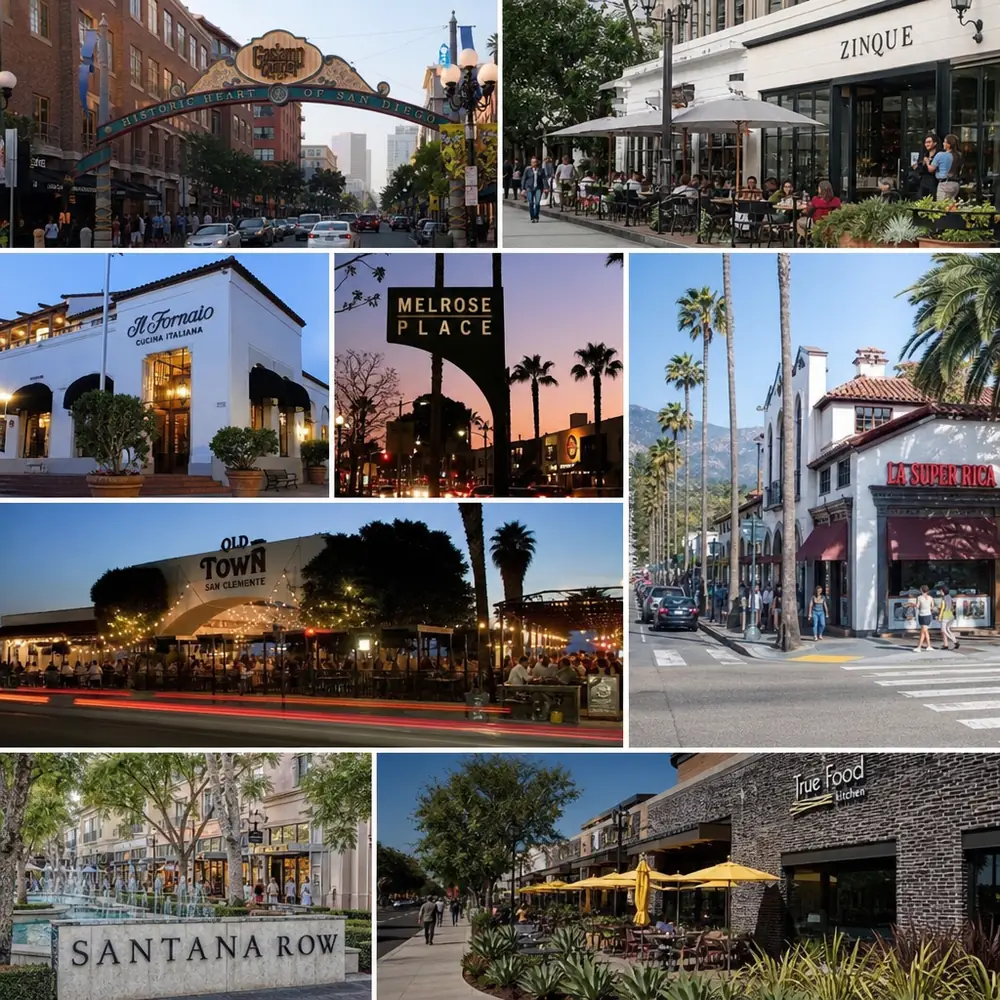
Takeaway: The "Perfect" Location Is the One That Makes Your Economics Easy
There's no single best corner in California, only the best match for your concept, your customer, and your cost structure. Treat restaurant location in California as a data-backed decision: validate demand with California restaurant demographics data, confirm access with foot traffic data for restaurants, pressure test the lease with a restaurant location ROI calculator, and de-risk compliance by checking California zoning laws for restaurants and liquor license requirements early.
Do that, and you'll be choosing a location that can support not just a great opening, but a great year two and year five. Run free AI analysis on your shortlist at Restaurant Site Finder before you sign.
Frequently Asked Questions
How do I find the perfect restaurant location in California?
Define concept fit, score trade areas on demographics and traffic, audit competitors, model ROI, and confirm zoning and liquor pathways before signing a lease.
What trade area radius should a California restaurant use?
Quick service: 1–3 miles; fast casual: 2–5 miles; full service: 5–10+ miles for destination concepts, always adjust for drive time.
Is Anaheim a good place to open a restaurant?
It can be, for tourism and convention traffic, but pocket selection and demand source (visitors vs locals) determine success.
What California zoning should I verify before signing a lease?
Allowed use, capacity, patio rules, grease interceptor, hood/venting, parking, signage, and any coastal or historic overlays.
Is Restaurant Site Finder free for California site analysis?
Yes. Enter any US address at restaurantsitefinder.com for competitor mapping and opportunity scoring.
Run a free location analysis
Enter any address to get competitor mapping, market gaps, opportunity scoring, and concept ideas.
Analyze your location free Shop equipment at Horeca Store