Site Selection
How to Choose the Best Location for a Restaurant
How to choose the best restaurant location, concept fit, trade area demand, visibility, traffic patterns, competition, rent economics, building readiness, lease terms, and a practical site comparison process.
Key Takeaways
- The best restaurant location matches your guest, concept, and economics, not just the busiest corner or cheapest lease.
- Define concept and trade area before touring spaces; evaluate visibility, daypart traffic, competition, building readiness, and total occupancy cost.
- Visit finalists at multiple dayparts, score sites consistently, and verify zoning, permits, and lease terms before signing.
- Screen candidate addresses free at Restaurant Site Finder, then validate with our Go/No-Go framework.
Choosing a restaurant location is a balance of market demand, visibility, access, operating costs, and brand fit. The best site is not simply the busiest corner or the cheapest lease; it is the place where your target guests already move, dine, spend, and return often enough to support the concept. This guide explains restaurant site selection in practical terms so you can evaluate opportunities with more confidence and avoid costly assumptions before signing a lease.
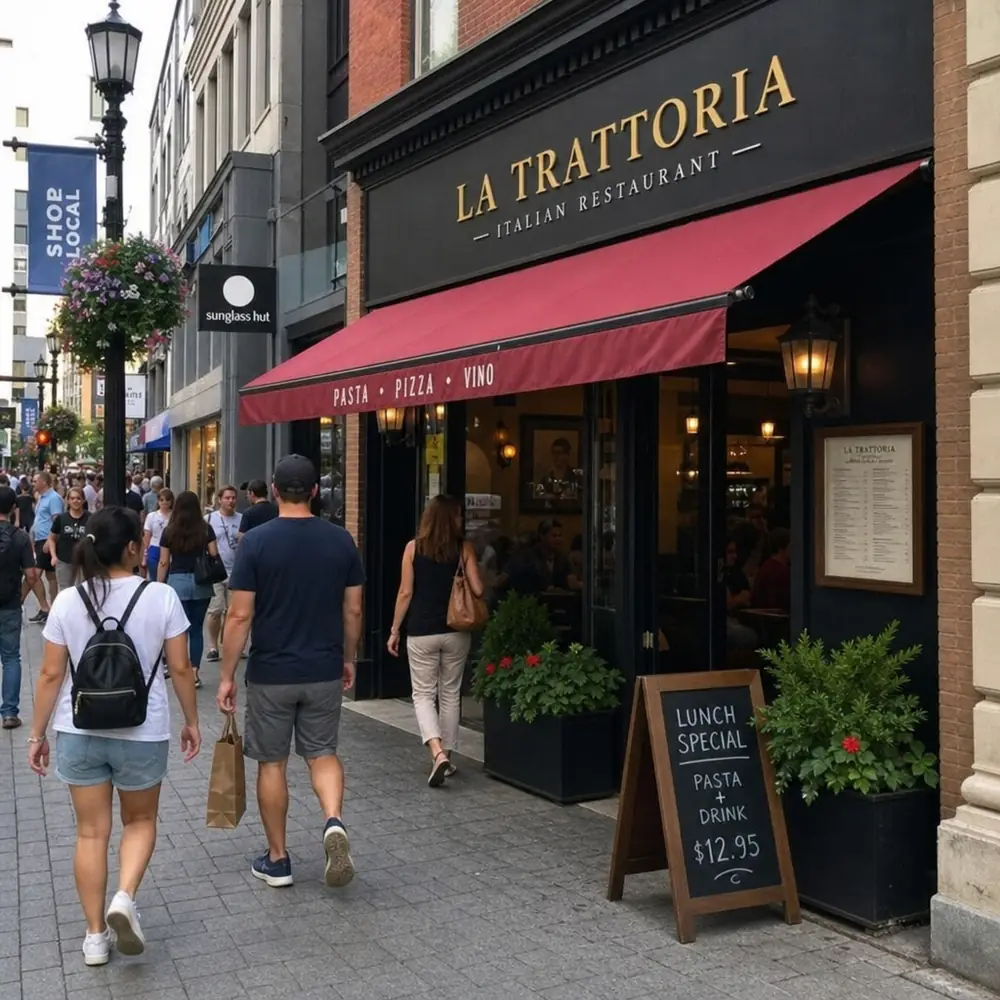
What makes a restaurant location successful?
A successful restaurant location gives the right guests a clear reason and an easy way to visit. It supports the concept's price point, service style, menu, hours, staffing model, delivery needs, and long-term profit goals. In other words, the right restaurant location is not universal; it is specific to the restaurant you plan to operate.
A quick-service lunch spot may thrive near office buildings, transit stops, schools, or medical campuses. A destination tasting-menu concept may not need the same walk-by traffic, but it does need parking, neighborhood appeal, strong wayfinding, and a customer base willing to travel for a planned experience. A family restaurant may prioritize evening and weekend traffic, nearby residential density, and easy parking over a glamorous address.
Strong restaurant location strategy starts by matching three things:
- Your guest: Who they are, where they live or work, how often they dine out, and how much they are likely to spend.
- Your concept: Whether the restaurant is casual, premium, fast, experiential, delivery-focused, late-night, family-oriented, or built around another clear use case.
- Your economics: Rent, buildout, labor access, utilities, maintenance, taxes, delivery costs, and the sales volume needed to stay healthy.
The mistake many operators make is judging a site emotionally. A beautiful storefront can hide weak parking, poor visibility, high rent, or a neighborhood that does not match the menu. A plain-looking space can become a strong performer if it sits in the right daily traffic pattern and fits the operating model.
Start with the concept before scouting spaces
Before walking properties, define the restaurant as clearly as possible. Location scouting tips are only useful when you know what you are scouting for. Without a concept filter, every open space can look promising for the wrong reason.
Your concept should answer basic operating questions. Are guests expected to dine in for an hour, pick up in five minutes, order delivery, celebrate special occasions, grab lunch between meetings, or bring children after school? Each behavior points to different location needs.
For example, a coffee shop may care deeply about morning foot traffic, visibility from a commuter route, and speed of access. A dinner-focused bistro may need evening neighborhood energy, nearby entertainment, safe lighting, and parking after work hours. A high-volume takeout restaurant may be less dependent on ambiance but more dependent on curb access, delivery driver flow, kitchen layout, and proximity to dense residential areas.
Clarify these essentials before you begin:
- Primary daypart: Breakfast, lunch, dinner, late night, weekends, or all-day service.
- Service model: Counter service, full service, fast casual, fine dining, drive-thru, delivery-heavy, catering, or hybrid.
- Average guest visit: Quick stop, planned meal, social gathering, family outing, date night, business lunch, or special occasion.
- Target price point: Budget-friendly, mid-market, premium casual, or luxury.
- Space needs: Kitchen size, dining room capacity, storage, patio, bar, pickup area, restrooms, and back-of-house flow.
- Brand personality: Quiet and refined, high-energy, neighborhood-friendly, convenience-driven, chef-led, or entertainment-focused.
This step prevents you from falling in love with a location that works for restaurants in general but not for your restaurant. See restaurant concept development if you are still defining the model.
Understand your target customer and trade area
A trade area is the geographic zone where most of your customers are likely to come from. It may be a few blocks in a dense urban neighborhood, several miles in a suburban market, or a broader region for a destination restaurant. Defining that area helps you judge whether the location has enough realistic demand.
Demographics matter, but they should not be read too simplistically. Income, age, household size, employment density, tourism, student populations, and commuting patterns all influence restaurant demand. A high-income area may support premium dining, but it may not support your concept if residents commute elsewhere, cook at home often, or already have many similar options. A mixed-income neighborhood may be excellent for a casual restaurant if the price point and menu align with daily habits.
Psychographics are equally important. These include lifestyle, dining preferences, cultural tastes, convenience expectations, and attitudes toward new concepts. A health-focused bowl shop, a late-night taco counter, and a white-tablecloth seafood restaurant can all serve "adults with disposable income," but they are not serving the same occasion.
To assess your customer fit, look for signs such as:
- Nearby businesses that attract your target guest.
- Residential density that supports repeat visits.
- Office, school, medical, or entertainment anchors that create predictable demand.
- Local spending patterns that match your price point.
- Competing restaurants with similar or complementary customer bases.
- Gaps in the market that your concept can fill without forcing unfamiliar behavior.
You do not need perfect data to make progress, but you do need a grounded view of who will come, when they will come, and why they would choose you over nearby alternatives. Read trade area analysis for restaurants for a structured approach.
Visibility, access, and convenience drive visits
People cannot visit a restaurant they do not notice, cannot find, or find too inconvenient. Visibility and access are especially important for casual, impulse, commuter, and first-time visits. Even destination restaurants benefit when the path from discovery to arrival feels easy.
Visibility includes more than being on a busy road. Consider the angle of the storefront, sign placement, lighting, landscaping, street speed, neighboring facades, and whether drivers or pedestrians have enough time to recognize the restaurant before passing it. A sign that looks clear when you stand across the street may be invisible from a moving car.
Access includes every step between deciding to visit and reaching the front door. A location with high traffic can underperform if turns are difficult, parking is confusing, sidewalks are poor, or guests have to circle the block repeatedly. In dense urban areas, foot traffic, transit proximity, bike access, rideshare drop-off points, and perceived safety may matter more than dedicated parking.
Use this practical access checklist during restaurant site selection:
- Can guests see the restaurant from the direction they naturally travel?
- Is the entrance obvious, well-lit, and welcoming?
- Is parking available, visible, affordable, and easy to understand?
- Can delivery drivers and pickup customers stop without blocking operations?
- Are there safe pedestrian crossings nearby?
- Does traffic flow support your key dayparts?
- Are there barriers such as medians, one-way streets, construction zones, or confusing intersections?
- Is the location easy to describe in a sentence?
Convenience is not glamorous, but it compounds. If guests can reach you without friction, they are more likely to try you once and return regularly.
Analyze traffic patterns, not just traffic volume
High traffic volume can be misleading. What matters is whether the people passing the site are likely to stop for your type of restaurant at the time you need them. A street may carry thousands of cars, but if they are moving fast during a stressful commute with no easy turn-in, that traffic may create awareness without sales.
Look at traffic by daypart and direction. Morning traffic may help a bakery or coffee concept but do little for a dinner restaurant. Evening outbound traffic may help takeout if guests can easily pull in on their way home. Weekend pedestrian traffic may be more valuable for brunch, dessert, and family concepts than weekday office density.
Foot traffic also needs context. Count people at different times and observe their behavior. Are they tourists browsing, workers rushing, students lingering, residents walking dogs, or nightlife crowds moving between bars? A large number of pedestrians is less useful if they are not in a buying mindset.
When you visit a potential site, do not inspect it only once. Return during:
- Morning opening hours to assess commuter patterns and nearby routines.
- Lunch hours to see office, school, retail, or delivery demand.
- Afternoon lulls to understand quiet periods and staffing implications.
- Dinner hours to observe parking, lighting, neighborhood energy, and competition.
- Weekend peaks to test leisure traffic and family or entertainment patterns.
- Bad weather or off-season periods if those conditions affect your market.
The goal is to identify repeatable demand, not one exciting moment. A site that feels lively only during a single weekend event may not sustain daily operations.
Competition can be a warning sign or an advantage
Restaurants often fear competition, but a cluster of restaurants can signal strong dining demand. Guests already associate the area with eating out, which can make discovery easier. The key is understanding whether nearby restaurants compete directly, complement your concept, or reveal saturation.
Direct competitors serve a similar guest, occasion, cuisine, service style, and price point. If several nearby operators already own the same niche, you need a strong reason to believe you can differentiate. That reason might be quality, speed, atmosphere, menu focus, hospitality, branding, or a more convenient format, but it should be specific.
Complementary businesses can help. A wine bar near a boutique theater, a casual lunch spot near offices, or a dessert shop near family restaurants may benefit from existing traffic without fighting for the exact same meal occasion. Retail stores, gyms, hotels, campuses, salons, breweries, cinemas, and event venues can also create helpful customer flow.
When evaluating competition, ask:
- Which nearby restaurants are consistently busy, and at what times?
- What price points seem accepted in the area?
- Are there cuisine gaps or service gaps?
- Are guests waiting for tables, or are dining rooms half-empty?
- Do competitors rely on tourists, residents, workers, students, or nightlife?
- Is the neighborhood known for dining, convenience, entertainment, or errands?
- Could your restaurant become part of a dining cluster, or would it be isolated?
Competition research should make your positioning sharper. If every nearby restaurant is fast and casual, a relaxed full-service concept may stand out. If the area is filled with premium dinner spots, an affordable lunch-and-dinner model may capture a different occasion.
How much should rent influence restaurant site selection?
Rent should influence restaurant site selection heavily, but it should never be judged alone. The right question is not "Is this rent cheap?" or "Is this address worth it?" The right question is whether the location can realistically generate enough sales to support the total occupancy cost while leaving room for labor, food, marketing, maintenance, debt, and profit.
A low-rent space can become expensive if it lacks visibility, requires major repairs, has poor utilities, limits operating hours, or needs a buildout that drains cash before opening. A higher-rent location can make sense if it brings strong traffic, saves marketing spend, supports higher sales volume, or reduces friction for guests. The value depends on the full economic picture.
Occupancy cost typically includes more than base rent. Depending on the lease, you may also face common area maintenance charges, property taxes, insurance, utilities, trash service, pest control, equipment obligations, signage costs, parking fees, percentage rent, or other pass-through expenses. These terms can change the true cost of a site dramatically.
Before committing, build conservative sales scenarios:
- Low case: What happens if opening sales are slower than expected?
- Base case: What sales level is realistic after the initial launch period?
- Strong case: What could happen if traffic, reviews, and repeat visits perform well?
- Break-even case: What revenue is required to cover fixed and variable costs?
If a location only works under the strong case, it is risky. A sound restaurant location strategy leaves margin for normal surprises, such as delayed permits, hiring pressure, equipment repairs, seasonality, slower weekdays, or marketing costs. Model your break-even point before you sign.
The building must support the operation
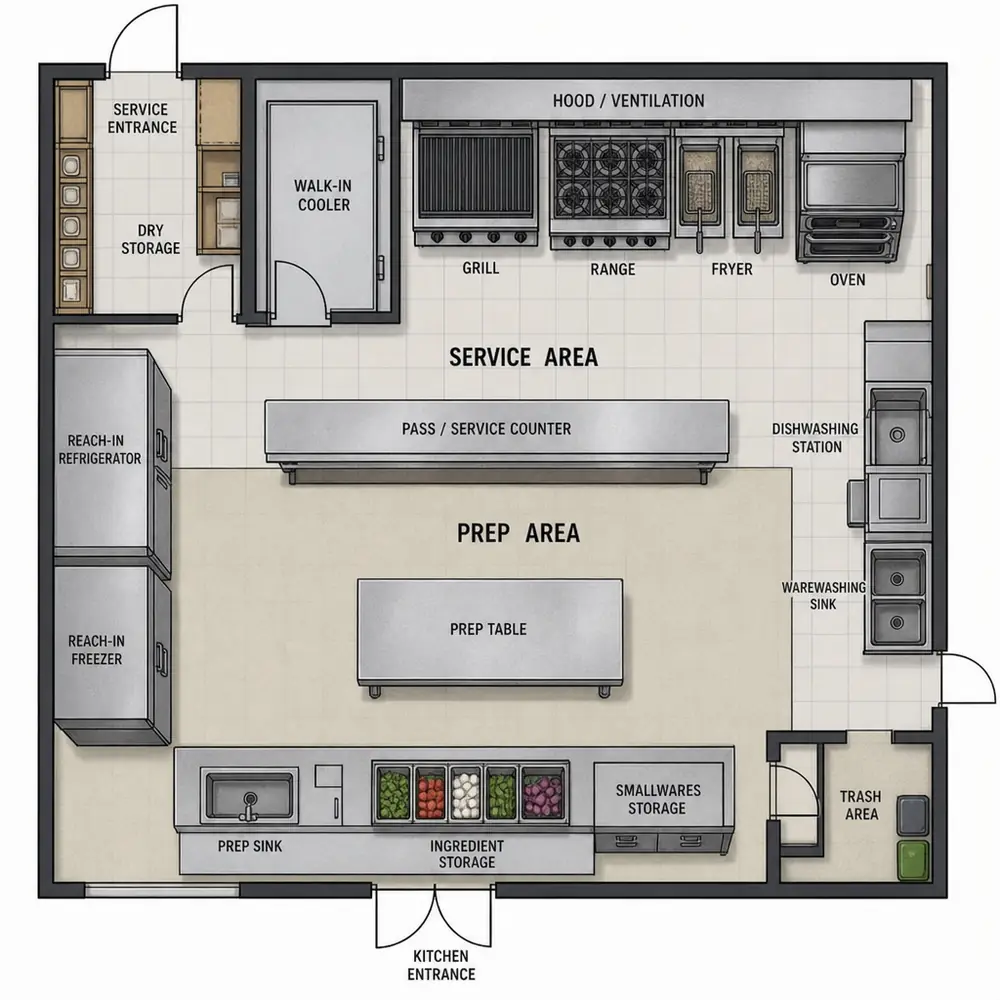
A restaurant is not just a storefront; it is a production facility, hospitality space, storage system, workplace, and compliance environment. A location with strong market potential can still fail if the building cannot support the restaurant's physical needs.
Second-generation restaurant spaces can be attractive because they may already include hoods, grease traps, plumbing, restrooms, floor drains, gas lines, electrical capacity, and dining room infrastructure. However, existing equipment does not automatically mean the space is ready. Systems may be outdated, undersized, poorly maintained, or unsuitable for your menu.
Raw spaces can offer design flexibility, but buildout costs and permitting complexity can be significant. If a space has never been a restaurant, confirm early whether the building can accommodate ventilation, grease management, fire suppression, accessibility, trash handling, deliveries, and required utilities.
Important building factors include:
- Kitchen layout and production flow.
- Exhaust hood capacity and fire suppression requirements.
- Grease trap location and size.
- Electrical, gas, water, and sewer capacity.
- HVAC performance for kitchen heat and guest comfort.
- Storage for dry goods, refrigeration, packaging, cleaning supplies, and smallwares.
- Restroom count, condition, and accessibility.
- Ceiling heights, structural columns, and sightlines.
- Trash, recycling, and delivery access.
- Noise transfer to neighbors or residential units.
- Outdoor seating potential, if relevant.
Bring qualified professionals into the process before signing. A contractor, architect, kitchen designer, attorney, accountant, and local code specialist can help identify risks that are easy to miss during a casual walkthrough.
Lease terms shape long-term flexibility
The lease can be as important as the address. A restaurant lease determines what you can build, how long you can stay, how costs may change, and what happens if the business grows, changes, or struggles. A great-looking deal can become restrictive if the terms do not match restaurant realities.
Pay attention to use clauses, exclusivity, renewal options, assignment rights, signage rights, patio rights, delivery access, maintenance responsibilities, personal guarantees, rent escalations, free rent periods, tenant improvement allowances, and default provisions. These details affect both daily operations and future business value.
For example, a restrictive use clause may prevent you from adding catering, selling packaged goods, serving alcohol, extending hours, or adapting your menu. Weak renewal options may leave you vulnerable after investing heavily in buildout. Limited signage rights may reduce visibility in a way that no amount of interior design can fix.
Lease negotiation is not only about lowering rent. It is about aligning risk. If you are funding expensive improvements that stay with the building, the lease should give you enough time and security to benefit from that investment. If the landlord controls repairs to critical systems, the lease should state responsibilities clearly.
Because leases are legal documents with long-term consequences, get professional advice before signing. Generic assumptions can be expensive when they meet specific lease language.
Zoning, permits, and compliance come early
Regulatory issues should be checked early, not after you have negotiated the headline rent. Zoning may restrict restaurant use, alcohol service, outdoor seating, drive-thru lanes, live music, late-night operations, signage, ventilation, parking, or delivery activity. Even a former restaurant space may not automatically support your intended use.
Permits and approvals vary by location and concept. Health department requirements, building permits, fire inspections, accessibility rules, grease disposal, liquor licensing, sidewalk seating, entertainment permits, and signage approvals can all affect cost and timing. If your opening plan depends on a patio, bar program, late-night hours, or high-volume cooking equipment, verify those details before committing.
Compliance also affects neighborhood relationships. Ventilation odors, noise, trash storage, delivery trucks, outdoor speakers, and late-night crowds can create conflict if they are not planned well. A restaurant that fits the physical space but clashes with surrounding residents or businesses may face ongoing operational pressure.
A practical early due diligence list includes:
- Confirm the proposed restaurant use is allowed.
- Check whether alcohol service is possible if it is part of the business model.
- Review signage rules and visibility restrictions.
- Verify parking, patio, delivery, and trash requirements.
- Understand health, fire, and building approval steps.
- Ask about planned roadwork, redevelopment, or zoning changes nearby.
- Estimate permitting timelines conservatively.
Do not treat these steps as paperwork. They can determine whether the location can actually become the restaurant you are imagining. See restaurant permits and licenses for a broader compliance overview.
Brand fit affects perception before the first bite
Guests form expectations before they see the menu. The block, neighboring businesses, building condition, storefront design, lighting, and arrival experience all shape what they believe your restaurant will cost, how it will feel, and whether it is "for them." Strong brand fit makes the restaurant feel natural in its setting.
If your concept is polished and premium, the surrounding environment should support that expectation. If your brand is casual and playful, a highly formal district may work against the mood unless you have a clear strategy. If your restaurant is built around families, the area should feel comfortable, safe, and convenient for children and groups.
Brand fit does not mean blending in completely. Sometimes the best restaurant stands out because it brings something fresh to a neighborhood. But it should stand out in a way that feels useful and believable, not disconnected.
Ask yourself:
- Will the target guest feel comfortable arriving here?
- Does the neighborhood support the restaurant's price and occasion?
- Do surrounding businesses strengthen or confuse the brand?
- Can signage, lighting, and design communicate the concept quickly?
- Does the area feel aligned with the hours you need to operate?
- Would guests recommend the location as part of the experience?
A restaurant location is part of the brand story. It can make the concept easier to understand, or it can force the restaurant to overcome the environment every day.
How do you compare two promising restaurant locations?
Compare two promising restaurant locations by scoring them against the same criteria, not by relying on first impressions. The stronger choice is usually the site that best matches your target guest, concept, economics, building needs, and long-term flexibility with the fewest unresolved risks. A structured comparison helps separate excitement from evidence.
Use a simple scoring method. Rate each site from one to five for the factors that matter most to your concept, then add notes explaining the score. The notes are more important than the number because they reveal assumptions to test.
Consider scoring these categories:
- Target customer fit: The surrounding population and daily traffic match your guest profile.
- Daypart strength: The site supports the hours when you need sales most.
- Visibility: Guests can notice the restaurant from natural travel paths.
- Access: Parking, walking, transit, pickup, and delivery are practical.
- Competition: Nearby restaurants create demand without overwhelming your niche.
- Economics: Rent, buildout, and operating costs support realistic sales scenarios.
- Building readiness: Utilities, kitchen systems, layout, and code requirements are manageable.
- Lease flexibility: Terms support buildout investment, renewal, signage, and operational needs.
- Brand fit: The area reinforces the restaurant's identity and expected experience.
- Risk level: Unknowns are limited, understood, or solvable before commitment.
After scoring, identify the biggest uncertainty for each site. One location may have better traffic but uncertain permitting. Another may have lower rent but weaker visibility. The right decision may depend on which risk you can reduce before signing.
Common restaurant location mistakes to avoid
Many location problems begin with understandable shortcuts. Operators are busy, opportunities move quickly, and attractive spaces create urgency. Still, slowing down before signing is far less painful than correcting a poor site after opening.
Avoid these common mistakes:
- Choosing rent over revenue potential: Cheap rent does not help if the location cannot generate enough sales.
- Assuming traffic equals customers: Passing vehicles or pedestrians only matter if they match your concept and can easily stop.
- Ignoring daypart mismatch: A lunch-heavy area may not support a dinner concept, and a nightlife district may not help a breakfast shop.
- Underestimating buildout: Plumbing, ventilation, electrical upgrades, grease systems, accessibility work, and repairs can change the total investment.
- Skipping lease review: Unfavorable terms can limit signage, hours, menu changes, renewals, or exit options.
- Overlooking delivery and pickup flow: Modern guest behavior often requires dedicated space and efficient handoff.
- Failing to visit at different times: A site can feel strong during one peak period and weak the rest of the week.
- Copying another restaurant's strategy: A location that works for one concept may not work for yours.
The best location scouting tips are often disciplined habits: observe repeatedly, verify assumptions, ask better questions, and make the numbers prove the story.
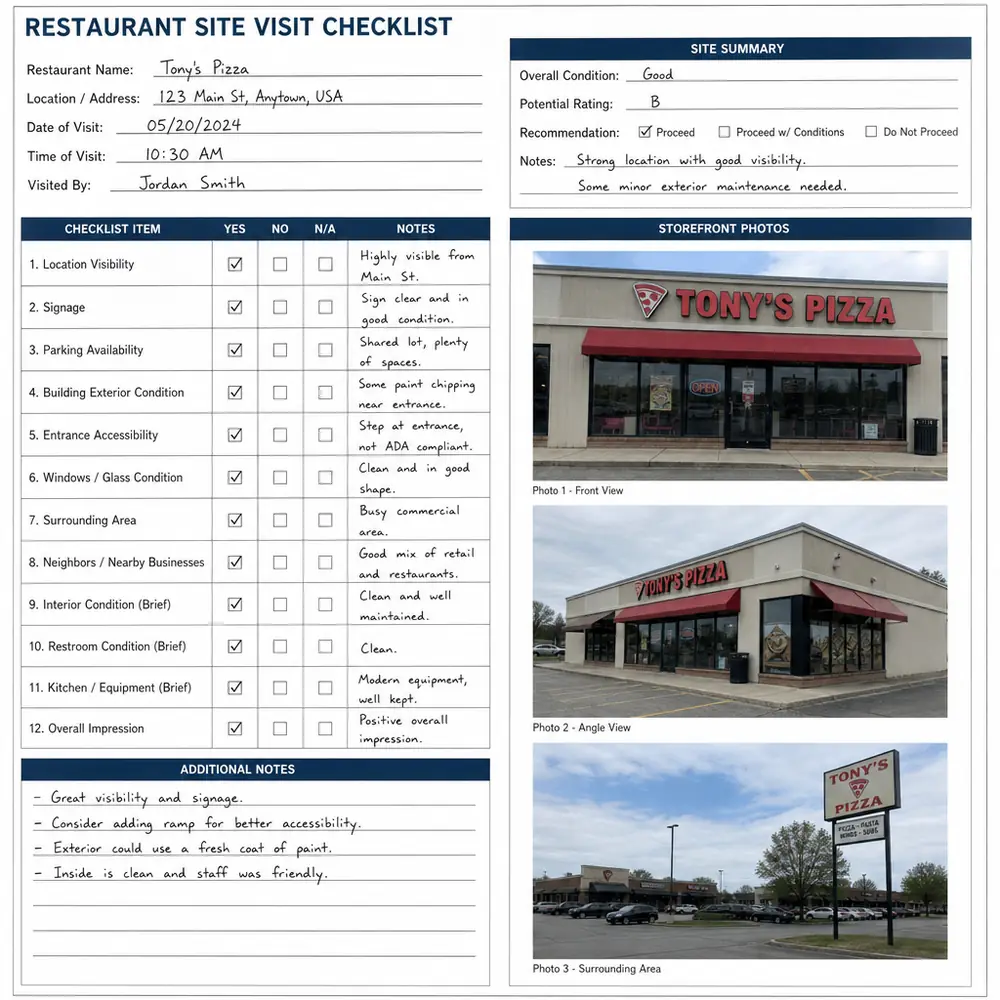
A practical site visit checklist
A site visit should be more than a walkthrough. Treat it like field research. Bring a camera, notebook, measuring tape if appropriate, and a clear list of questions to investigate.
During each visit, review:
- Street presence: Notice whether the storefront is visible, memorable, and easy to identify. Look at it from across the street, from a car, from the sidewalk, and from the most likely parking or transit points.
- Guest arrival: Walk the route a guest would take. Check lighting, sidewalk condition, door placement, parking clarity, perceived safety, and whether the entrance feels intuitive.
- Interior flow: Imagine the path from host stand or counter to seating, restrooms, pickup shelves, bar, kitchen, dish area, storage, and exits. Look for bottlenecks that could frustrate guests or staff.
- Back-of-house practicality: Review delivery access, trash storage, prep areas, equipment placement, ventilation, utilities, and staff movement. A beautiful dining room cannot compensate for a kitchen that cannot execute the menu.
- Neighbor dynamics: Observe surrounding tenants, noise sensitivity, residential proximity, complementary businesses, and potential conflicts. Your neighbors can help create traffic or complicate operations.
- Evidence of demand: Count pedestrians, watch parking turnover, observe nearby restaurant activity, and note when the area feels active or quiet. Repeat this at different times before drawing conclusions.
- Questions to verify: List every assumption you still need to confirm, such as zoning, hood capacity, patio rights, liquor licensing, utility loads, repair history, and planned construction.
A checklist makes the process less emotional. It also helps your advisors give better guidance because you can bring them specific observations rather than vague impressions. Use our full restaurant site selection checklist as a reference.
Build your restaurant location strategy around evidence
A strong restaurant location strategy combines observation, data, financial modeling, professional review, and clear positioning. No single factor should make the decision alone. Visibility without affordability, low rent without demand, or a beautiful space without operational capacity can all create problems.
The best process is layered. Start broad by identifying neighborhoods or trade areas that match your concept. Narrow the search to sites with the right traffic patterns, customer base, and competitive environment. Then evaluate specific spaces through lease terms, buildout needs, permits, and conservative financial projections.
A simple decision process looks like this:
- Define the concept and target guest.
- Identify trade areas with matching demand.
- Shortlist sites based on visibility, access, traffic patterns, and brand fit.
- Visit each site at multiple times and document observations.
- Compare competitors and complementary businesses.
- Estimate buildout, rent, occupancy costs, and realistic sales levels.
- Verify zoning, permits, utilities, and code requirements.
- Review lease terms with qualified advisors.
- Compare risks side by side.
- Choose the location that supports both guest demand and operating discipline.
This approach does not remove all risk. Restaurants always involve uncertainty. But it helps you make a decision based on how the location will function every day, not just how it feels during the first tour.
Final thoughts on choosing the right restaurant location
Learning how to choose the best location for a restaurant means learning how to connect the guest experience with the business model. The right site helps people discover you, reach you, understand you, and return without friction. It also gives the operation enough economic breathing room to handle the realities of staffing, food costs, repairs, marketing, and changing demand.
Do not rush the decision because a space looks attractive or a landlord is pushing for speed. Take the time to define your concept, study the trade area, test the traffic, inspect the building, understand the lease, and verify the rules. A disciplined restaurant site selection process can protect your investment and give the restaurant a stronger chance to become part of its neighborhood's regular routine.
Run free AI analysis on your shortlist at Restaurant Site Finder, then compare finalists with how to choose a restaurant location and select the perfect location for your restaurant for a full validation workflow.
Run a free location analysis
Enter any address to get competitor mapping, market gaps, opportunity scoring, and concept ideas.
Analyze your location free Shop equipment at Horeca Store