Site Selection
Restaurant Location Strategy: How to Choose the Most Profitable Spot
A numbers-forward restaurant location strategy, concept fit, trade areas, foot traffic, competitor mapping, feasibility math, rent ratios, mall vs street, GIS, scoring, and lease negotiation to pick the most profitable spot.
Key Takeaways
- A restaurant location strategy stacks demand, visibility, and rent you can survive, not just a trendy neighborhood.
- Define your trade area, run real foot traffic analysis, and map competitors by meal occasion, not cuisine alone.
- Stress-test rent with a rent-to-sales ratio and a lightweight feasibility study before you fall in love with a storefront.
- Screen sites free at Restaurant Site Finder, then walk the block and verify zoning.
Picking a great menu is only half the battle. The other half is putting that menu in front of the right people, at the right time, with a cost structure you can survive.
A smart restaurant location strategy isn't about chasing "the hottest neighborhood", it's about stacking small advantages: demand you can realistically capture, visibility people can't ignore, and rent you can actually pay. If you're wondering about restaurant placement and the best location for a new restaurant, this guide walks you through a practical, numbers-forward way to choose the most profitable spot.
Start with the Concept: Who You Serve and Why This Area Fits
Before you tour spaces, lock in the basics of your location strategy for restaurant success:
- Your primary guest (age range, income, lifestyle, dining frequency)
- Occasion (weekday lunch, late-night, family dinner, grab-and-go, destination dining)
- Price point + check average
- Service model (full service, fast casual, QSR, café, bar-forward)
- Operational needs (hood/venting, grease trap, prep space, deliveries, outdoor seating)
This is the foundation of demographic targeting and strategic positioning. Without it, "busy street" can turn into "busy street with the wrong people."
Define the Trade Area (and What It Means in Real Life)
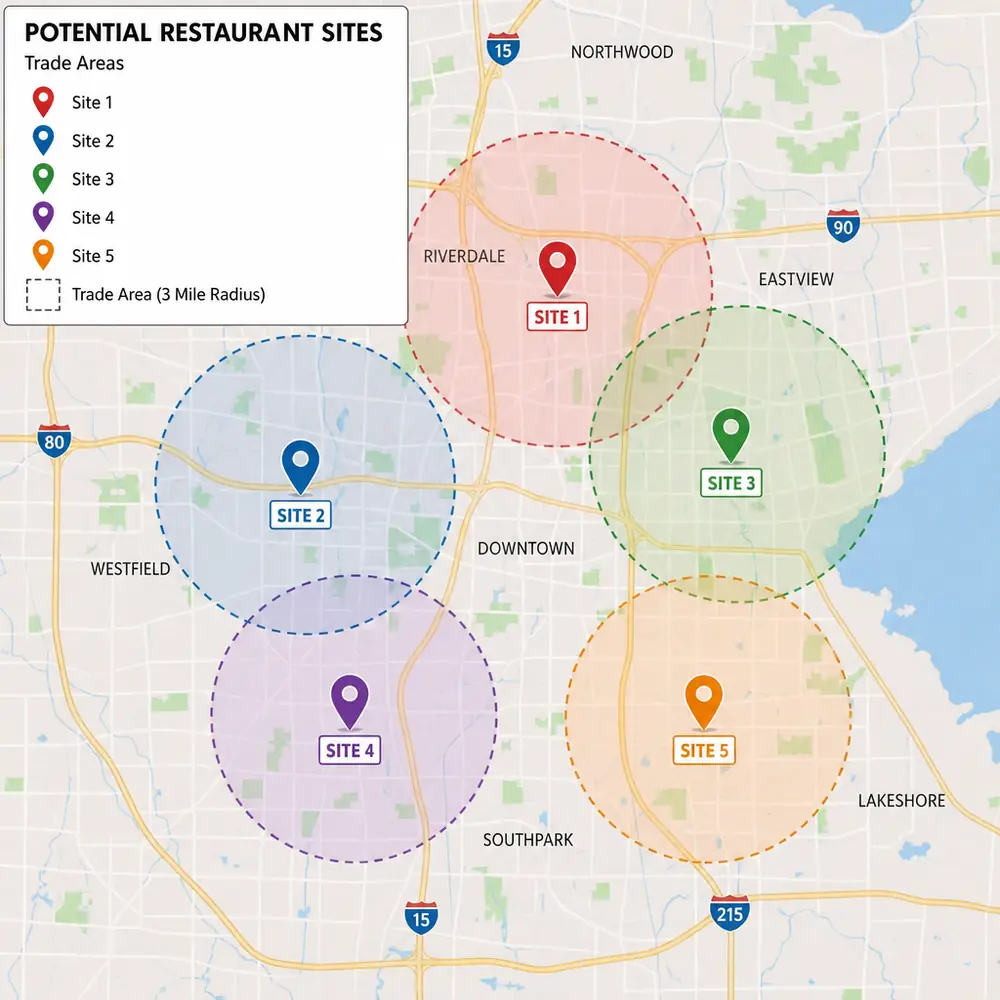
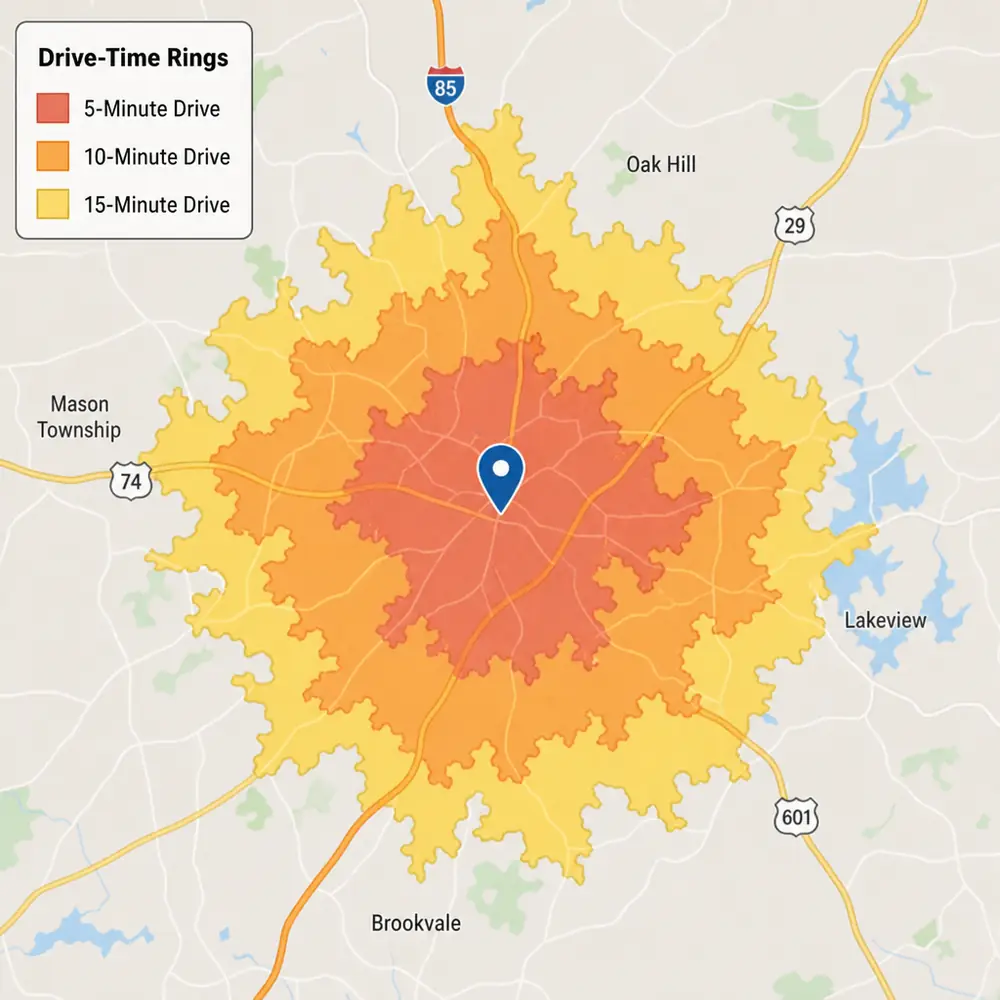
If you've asked, what is restaurant trade area analysis, here's the simple version: it's the geographic area that will produce most of your sales, based on how far people will travel for your concept.
A quick rule of thumb (adjust to your market and competition):
- Coffee/bakery: 3–10 minute walk or drive-time equivalent in dense areas
- Fast casual: 5–12 minutes
- Full service: 10–20 minutes
- Destination/specialty: wider, but depends heavily on parking and reputation
For dense urban markets, trade areas often skew smaller on foot, and transit access can matter more than parking. In suburban markets, drive-time rings often matter most. See our full trade area analysis for restaurants guide.
Do Market Research That's Specific, Not Generic
"Neighborhood is growing" isn't enough. Good market research for a restaurant is local, measurable, and tied to your concept.
Restaurant Demographic Research Methods That Actually Help
Use a mix of quick observational work and data sources:
- On-site observation: who's walking by, when, and what they're carrying (gym bags, strollers, office badges)
- Housing + employment mix: renters vs owners, office density, school proximity
- Daypart demand: lunch vs dinner vs late-night vs weekend brunch
- Spending signals: grocery mix, fitness studios, boutique retail vs discount anchors
This is practical location analysis: you're looking for "enough of my people, often enough, with enough budget."
Foot Traffic Analysis: Measure the Right Traffic, Not Just "A Lot"
Everyone asks how to analyze restaurant foot traffic. The key is that raw volume isn't the goal, qualified traffic is.
How to Run a Simple Foot Traffic Analysis
Bring a clicker counter or use a counting app. Count in 15-minute blocks:
- 7–9am, 11am–1pm, 5–7pm (plus your concept's peak hours)
- Weekday vs weekend
- Good weather vs bad weather (if possible)
Track:
- Total passersby
- % who glance at storefronts
- % who enter nearby food businesses
- Bottlenecks: crosswalks, bus stops, building entrances
Then compare that to your capacity and model. A small dining room can't monetize a huge rush; a grab-and-go concept can.
Don't Ignore Friction Points
Foot traffic is sensitive to:
- Sidewalk width
- Stair-only entrances
- Construction patterns
- Corner vs mid-block visibility
- Lighting at night
This is location optimization in practice: reduce barriers between "seeing you" and "buying from you."
Competitive Analysis: Map Your True Competitors (Not Just Restaurants)
A strong competitive analysis looks beyond "same cuisine." Your competitors are any places that compete for the same meal occasion and budget.
Restaurant Competitor Mapping Techniques
Create a simple map (Google My Maps works fine) and pin:
- Direct competitors (same cuisine + similar price)
- Indirect competitors (different cuisine, same occasion)
- Substitutes (grocery hot bar, meal kits, convenience stores)
- Demand magnets (cinemas, arenas, colleges, hospitals)
Then note busy times, wait times, pricing, online ratings patterns, and how they win (speed, vibe, value, consistency).
This is part of the restaurant site selection process: you're looking for gaps you can fill, not fights you can't afford. See restaurant competitive analysis for success.
Use a Feasibility Study to Prevent Expensive Surprises
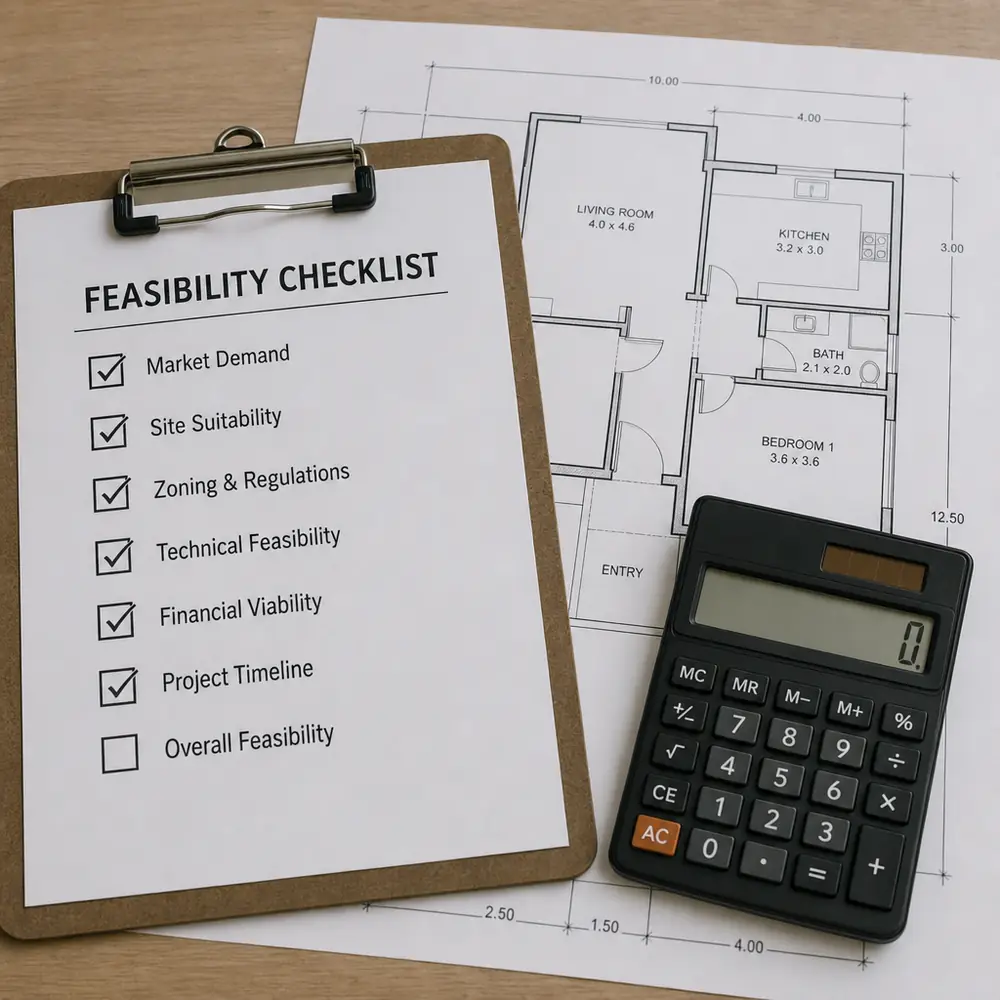
A restaurant location feasibility study sounds formal, but it can be straightforward. You're testing whether the site can produce enough sales at your margin, with that rent, under real-world constraints.
Include:
- Estimated sales range (conservative/base/optimistic)
- Labor assumptions by daypart
- COGS assumptions by menu
- Rent + CAM + taxes + insurance
- Build-out and equipment estimates (especially ventilation)
- Permitting timelines and risks
- Parking and access realities
If you want a label for this step: it's site selection plus financial stress-testing.
Rent Math: Master the Rent-to-Sales Ratio (and What It Hides)
A common sanity check is the rent to sales ratio for restaurants:
Rent (and often occupancy costs) ÷ gross sales
Operators differ on what's "acceptable" by concept and market, but the point is consistency: you must know what sales the site needs to justify the rent.
Go Beyond Base Rent
For many locations, the real occupancy cost includes:
- Base rent
- CAM/NNN (common area maintenance / triple net)
- Property tax pass-throughs
- Insurance
- Required maintenance responsibilities
- Percentage rent (in some deals)
When people underestimate occupancy, they blame marketing later.
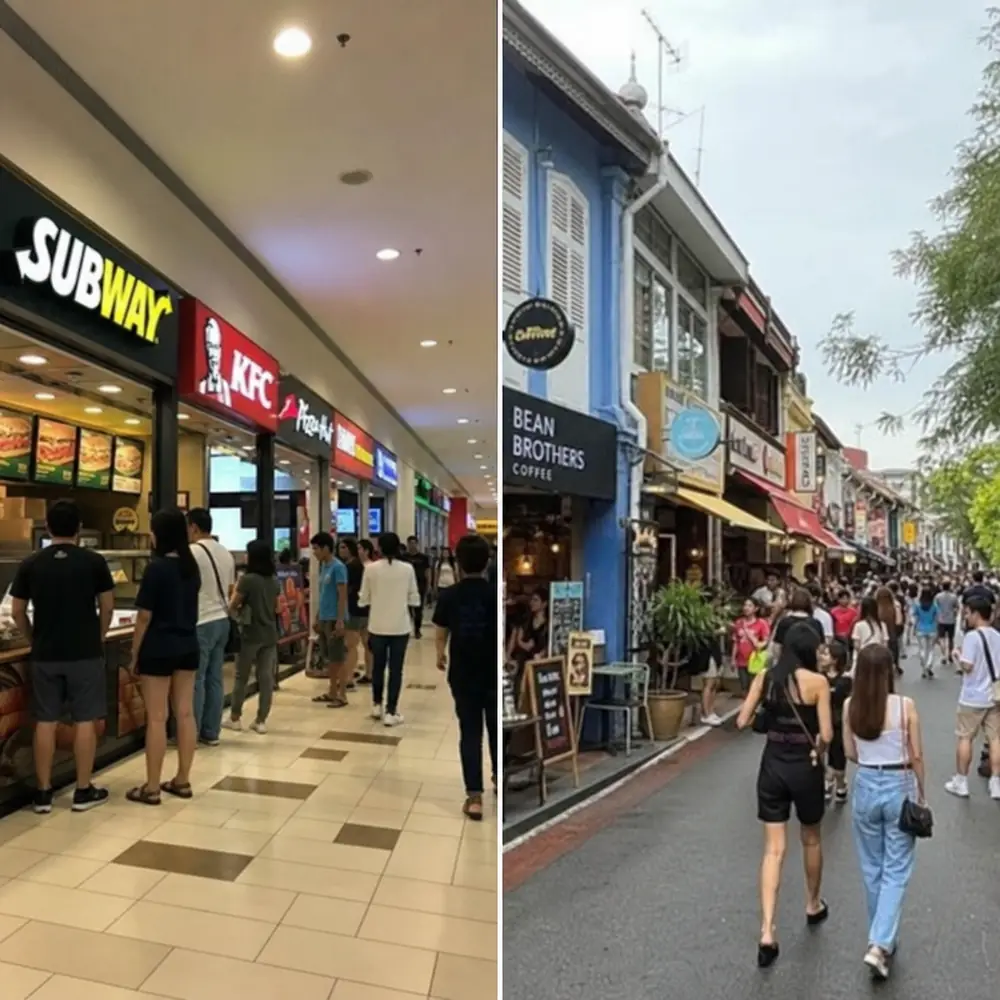
Choosing Between Mall vs Street Location: Pick the Trade-Off You Can Win
Choosing between mall vs street location depends on your concept and your tolerance for control vs convenience.
Mall location advantages: built-in traffic (especially if anchored well), shared parking, weather protection, strong lunch and weekend patterns (varies by mall type).
Mall risks: less control over signage and exterior identity, strict operating hours, higher fees (CAM/marketing), tenant mix changes can swing traffic.
Street location advantages: strong brand presence and "place" identity, potential for late-night, patio, and destination energy, more flexibility in hours and vibe (depending on lease/zoning).
Street risks: parking variability, construction disruptions, traffic may be "fast" not "stoppable," security/lighting can matter more.
Your restaurant placement choice should match how you capture demand: impulse vs planned trips vs repeat routine.
Parking, Access, and the "Last 50 Feet" Problem
The parking availability impact on restaurant sales is real, especially outside dense cores. But even in walkable neighborhoods, access matters.
Check:
- Number of dedicated/shared spots
- Turnover (are spots always taken by employees of nearby offices?)
- Loading zones for deliveries
- Bike parking
- ADA access (ramps, door widths, restroom layout)
- Drop-off zones for rideshare
A perfect site on paper can fail because the last 50 feet is annoying.
Urban Planning, Zoning, and Permitting: Don't Treat Them as Afterthoughts
Urban planning decisions shape traffic flow, parking minimums, outdoor dining rules, and future construction. During your search, look at:
- Planned streetscape projects (good or disruptive)
- Transit changes
- Nearby developments that will add residents or offices
Also verify restaurant zoning and permitting requirements early:
- Zoning use approvals (restaurant, bar, live music)
- Patio/outdoor dining permits
- Signage rules
- Grease interceptor requirements
- Noise restrictions
- Hours limitations
- Liquor license feasibility
A site that can't legally operate your model is not a "great deal."
How to Use GIS for Location Planning (Without Becoming a Data Scientist)
If you're curious about how to use GIS for location planning, think of it as layering maps to spot patterns:
- Population density + income
- Daytime population (workers) vs nighttime (residents)
- Competitor locations
- Transit stops and parking lots
- Drive-time or walk-time trade areas
You can do lightweight GIS-style analysis using basic mapping tools (pins + layers), demographic platforms, and restaurant location analytics software (helpful for multi-unit or data-heavy decisions).
GIS doesn't replace site visits, it tells you where to visit first. Start with free screening at Restaurant Site Finder.
Build a Shortlist with a Simple Scoring Model
To keep emotion out of decisions, score each candidate site (1–5) across:
- Trade area fit (your guest is actually there)
- Visibility/signage potential
- Foot traffic quality (by your dayparts)
- Accessibility/parking/transit
- Build-out complexity (venting, gas, grease)
- Lease terms and total occupancy cost
- Competitive intensity and differentiation room
- Permitting risk and timeline
This kind of scoring turns "vibes" into a small business restaurant location strategy you can explain to partners and lenders.
The Lease: Negotiate Like Occupancy Will Decide Your Future (Because It Will)
If you're learning how to negotiate a restaurant lease, focus on the clauses that control your downside risk.
Key items to push for:
- Tenant improvement (TI) allowance if build-out is heavy
- Rent abatement during construction/permits
- Clear definition of "delivery date" and what condition the space is in
- Exclusivity (especially in centers) to prevent direct duplicates
- Assignment/sublease rights if you need to exit
- Options to renew with reasonable increases
- Cap on CAM/NNN increases where possible
- Contingencies: permitting, liquor license, hood approval
If a landlord won't budge on anything, treat that as data: you may be the one carrying all the risk.
Common Restaurant Location Mistakes (and How to Avoid Them)
These show up again and again:
- Picking a cheap space that needs a massive build-out
- Overestimating foot traffic conversion (lots of walkers ≠ lots of buyers)
- Ignoring daypart mismatch (office-heavy area for a dinner-only concept)
- Assuming parking won't matter when most guests drive
- Underestimating permitting timelines and running out of cash
- Choosing a "destination" spot without a destination-ready brand
- Failing to map competitors beyond same cuisine
If you avoid these, you're already ahead.
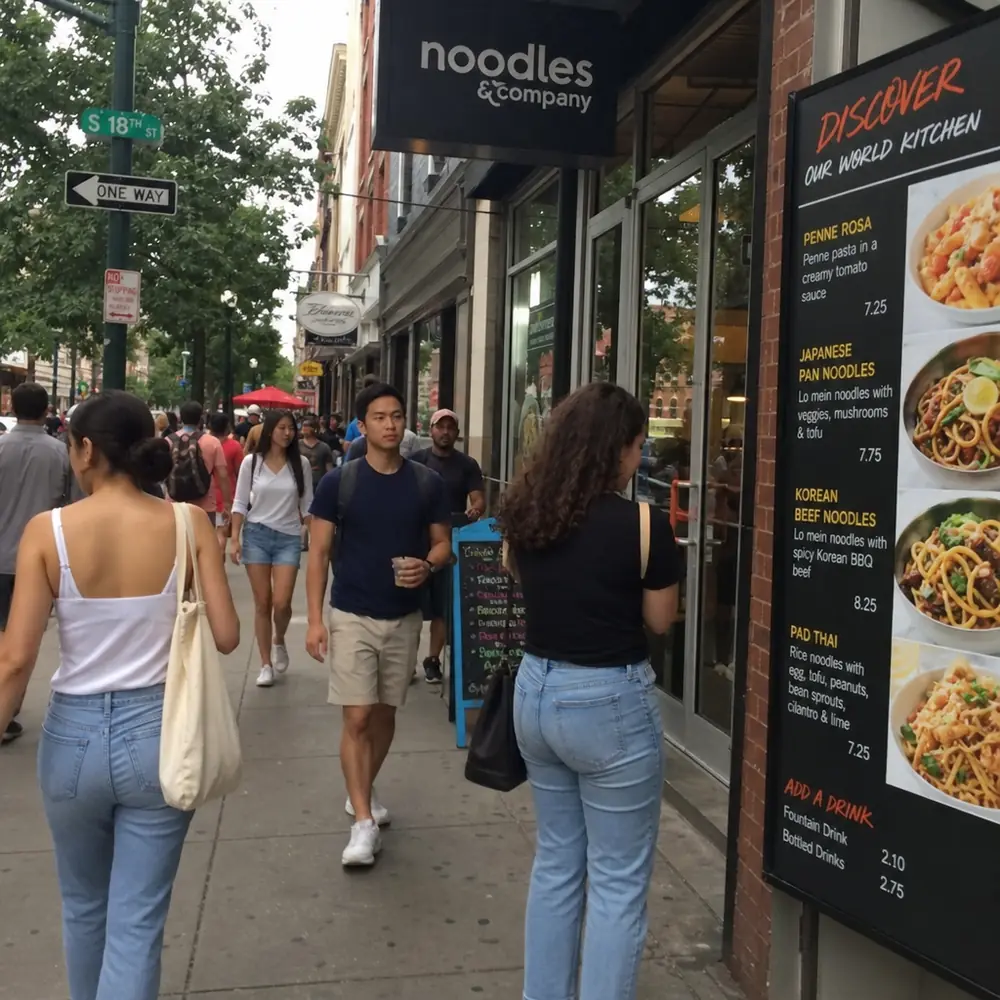
A Practical Takeaway: Your Location Strategy Should Be Boring on Paper
The most profitable sites often look unglamorous in a pitch deck because they're built on fundamentals: repeatable demand, easy access, and a lease you can survive. A strong restaurant location strategy comes down to disciplined restaurant site selection process work, solid market research, real foot traffic analysis, honest competitive analysis, and a lease that doesn't crush you.
If you do the math, walk the blocks, test the trade area, and verify zoning early, your "perfect location" stops being a guess and becomes a plan. Pair this with finding the perfect spot: a smart restaurant location strategy and our site selection checklist.
Frequently Asked Questions
What is a restaurant location strategy?
A structured approach to site selection based on concept fit, trade area demand, traffic quality, competition, occupancy cost, and permitting.
What is restaurant trade area analysis?
It defines the geographic zone that produces most sales based on travel time, typically 3–20 minutes depending on concept and density.
What is a good rent-to-sales ratio for restaurants?
There is no universal ratio; the site must support realistic sales at your margin after full occupancy costs.
How do I analyze restaurant foot traffic?
Count passersby in 15-minute blocks at peak dayparts; measure qualified traffic that enters food businesses, not volume alone.
Is Restaurant Site Finder free for location strategy research?
Yes. Enter any US address at restaurantsitefinder.com for competitor and opportunity analysis.
Run a free location analysis
Enter any address to get competitor mapping, market gaps, opportunity scoring, and concept ideas.
Analyze your location free Shop equipment at Horeca Store