Site Selection
How to Find the Perfect Restaurant Location
How to find the perfect restaurant location, concept fit, neighborhood demand, visibility, access, competition, financial checks, operational fit, site scoring, repeat visits, lease review, and red flags.
Key Takeaways
- The perfect restaurant location balances demand, visibility, access, affordability, and operational fit, not just a busy street or pretty storefront.
- Start with your concept, study who lives and works nearby, check visibility and access, review competition, run the numbers, and match the building to operations.
- Compare finalists with a consistent scoring process and visit at multiple dayparts before signing a lease.
- Screen candidate addresses free at Restaurant Site Finder, then validate with our Go/No-Go framework.
Choosing where to open your restaurant is one of the biggest decisions you will make before the first plate ever leaves the kitchen. The right spot can put you close to the guests you want, support smooth operations, and make your concept easier to understand at a glance. This guide walks through how to find the perfect restaurant location with practical restaurant location tips you can use before signing a lease or buying a property.
What makes a perfect restaurant location?
A perfect restaurant location is not just a busy street or a pretty storefront. It is a place where your target customers already spend time, your concept fits the neighborhood, your costs make sense, and the space can support daily service without constant friction. In other words, the perfect location for restaurant business success is a balance of demand, visibility, access, affordability, and operational fit.
That balance matters because restaurants depend on repeat visits, easy decisions, and consistent experiences. A great chef cannot fully overcome a space that is hidden, hard to reach, too expensive, or badly matched to the local crowd. On the other hand, a thoughtful restaurant site selection process can help you spot opportunities that are easy to miss when you focus only on foot traffic.
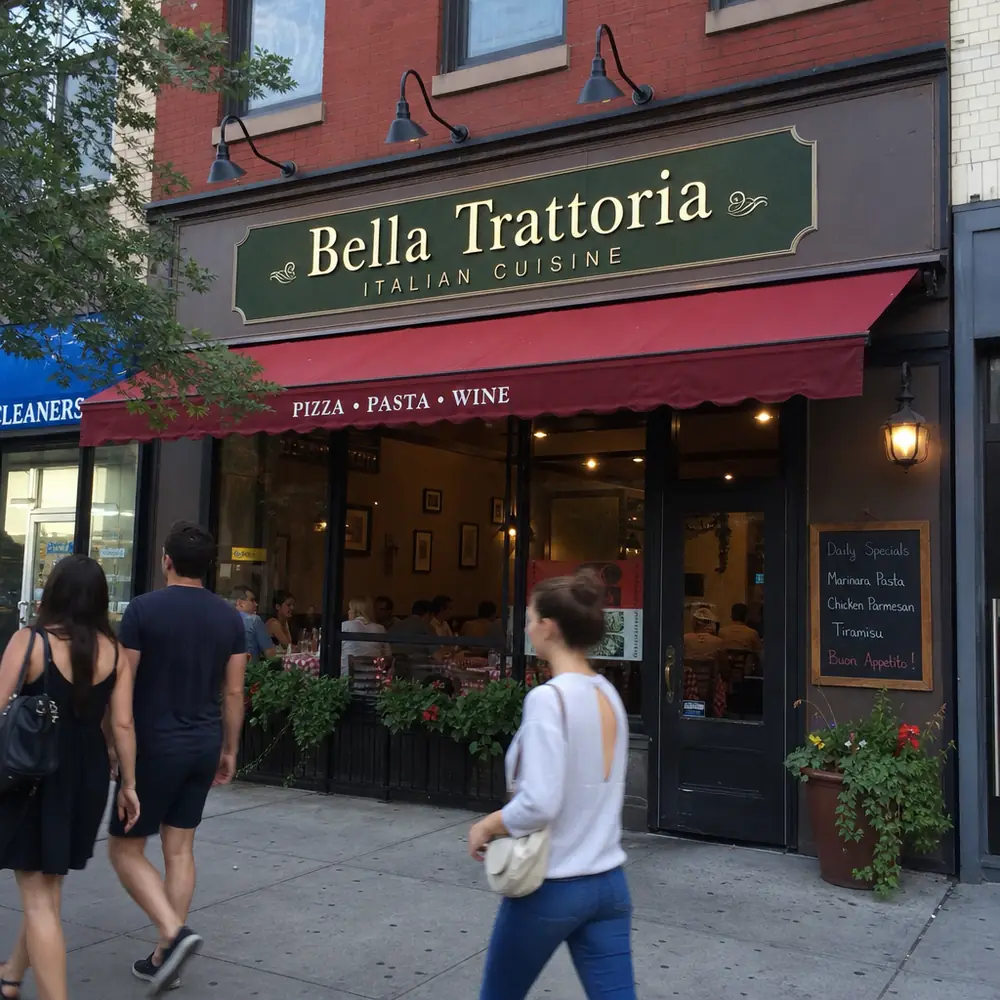
Think of location as part of the guest experience. Before someone tastes the food, they notice the street, parking, neighboring businesses, lighting, signage, and how easy it feels to walk in. If those pieces support your brand, your restaurant starts building trust before the host says hello.
Start with your restaurant concept, not the real estate
Many first-time owners fall in love with a space before they fully define the restaurant. That can lead to expensive compromises later. A cozy wine bar, a quick-service lunch counter, a family pizza place, and a fine dining restaurant all need different types of locations.
Before touring properties, write down what your restaurant needs to function well. This does not have to be a formal business plan, but it should be specific enough to guide decisions. Your concept should shape the neighborhood, square footage, layout, rent range, signage needs, hours, and even the side of the street you prefer.
A simple concept checklist can help:
- Service style: Fast casual, full service, counter service, takeout-heavy, delivery-focused, or reservation-based.
- Average visit: Quick meal, lingering dinner, special occasion, coffee break, late-night bite, or family gathering.
- Target guest: Office workers, students, families, tourists, commuters, neighborhood regulars, or destination diners.
- Price point: Budget-friendly, mid-range, premium, or luxury.
- Daypart strength: Breakfast, lunch, dinner, late night, weekend brunch, or all-day dining.
- Space requirements: Kitchen size, seating count, patio, bar, storage, pickup area, restrooms, and waiting space.
When you define these details early, you are more likely to choose the perfect restaurant location instead of trying to force your idea into a space that was never right for it. See restaurant concept development if the model is still taking shape.
Study the people who live, work, and visit nearby
The best restaurant locations are built around real customer behavior. A neighborhood might look lively, but that does not automatically mean it has the right audience for your concept. You need to know who is nearby, when they are nearby, and why they would choose your restaurant.
Start by observing the area at different times of day. A block that feels packed at noon may be quiet after 6 p.m. A street that seems slow on weekdays may become a weekend hotspot. If your restaurant depends on dinner traffic, lunch crowds alone will not carry it.
Look at the people moving through the area and ask practical questions:
- Are they walking quickly to work, browsing slowly, or looking for a place to sit down?
- Do they appear to be local residents, office workers, students, shoppers, or visitors?
- Are they alone, in pairs, with coworkers, or with families?
- What restaurants are they already choosing?
- Do nearby businesses create natural meal occasions?
It also helps to talk to people in the neighborhood. Nearby shop owners, residents, building managers, and employees can often tell you what the area is really like beyond first impressions. They may know whether weekends are strong, whether parking is a problem, or whether the block has struggled to support certain types of restaurants.
How do I know if the neighborhood fits my concept?
The neighborhood fits your concept when the local habits, income levels, pace, and dining needs match what you plan to offer. If you are asking, "how to find the perfect location for my restaurant," start by comparing your ideal guest with the people already using the area every day. The closer the match, the less work you have to do convincing people to change their routine.
For example, a grab-and-go lunch concept often works best near offices, campuses, hospitals, transit stops, or dense retail zones. A date-night restaurant may need a district where people already go out in the evening. A family-friendly casual spot usually benefits from nearby residential areas, easy parking, and a comfortable, low-stress entrance.
The key is to avoid wishful thinking. Do not assume people will come just because your food is good. Ask whether your restaurant solves a real problem or adds something clearly desirable to the neighborhood.
A good neighborhood fit usually has:
- A clear customer base that matches your menu, price, and service style.
- Consistent traffic patterns during the hours you need most.
- Complementary businesses that attract similar guests without directly copying your concept.
- A dining gap you can fill in a way that feels useful and distinct.
- A brand match between your atmosphere and the area's personality.
If several of these are missing, the space may still be attractive, but it may not be the perfect location for restaurant business growth. Use restaurant market analysis for structured demand study.
Visibility and access can make or break daily sales
A restaurant should be easy to see, easy to understand, and easy to enter. Visibility is more than having a sign. It includes storefront width, window placement, lighting, street angle, nearby obstructions, and whether people can quickly tell what kind of restaurant you are.
Walk or drive toward the location from multiple directions. Notice when you first see the storefront. If trees, parked vehicles, construction barriers, or neighboring signs block the view, you may need extra marketing just to help people notice you. That can add pressure to your budget.
Access is just as important. Guests may skip a restaurant if turning into the parking lot feels stressful, if the entrance is confusing, or if delivery drivers have nowhere to stop. Even loyal customers can get tired of a location that makes every visit feel like a chore.
When evaluating visibility and access, look for:
- Strong sightlines from the sidewalk, road, or main pedestrian path.
- Signage options that are allowed by the landlord and local rules.
- A clear, welcoming entrance.
- Safe pedestrian access and good lighting.
- Convenient parking, transit, bike access, or rideshare drop-off options.
- Delivery and pickup flow that will not crowd dine-in guests.
These details may seem small during a tour, but they affect the daily ease of doing business.
Check the competition without fearing it
Many owners think competition is a bad sign. In reality, nearby restaurants can be helpful if they bring diners to the area and prove that people already eat out there. The real question is whether the market has room for your specific concept.
Study nearby restaurants like a customer. Visit during your expected busy periods. Look at their menus, price points, service style, wait times, seating, atmosphere, and customer base. You are not copying them; you are learning what the area already supports.
Competition becomes a concern when several restaurants offer nearly the same food, price, and experience to the same audience. If your concept has no clear difference, you may end up fighting for attention on discounts or convenience alone. But if you bring something the neighborhood lacks, nearby dining activity can actually work in your favor.
Ask yourself:
- What do guests already have plenty of?
- What seems missing or underserved?
- Are competitors busy because of strong demand, limited options, or both?
- Can your restaurant stand out in a way that guests understand quickly?
- Would your concept benefit from being part of this dining cluster?
Smart restaurant site selection is not about avoiding every competitor. It is about finding a place where your restaurant has a reason to exist.
Run the numbers before you get emotionally attached
A beautiful space can still be a bad deal. Before you decide it is the perfect restaurant location upfront, slow down and test the financial side. Rent, utilities, buildout, maintenance, taxes, insurance, common area charges, and required improvements can quickly change the picture.
Your location cost should make sense for your expected sales, not just for your hopes. If the rent requires unrealistic traffic from day one, the pressure can hurt food quality, staffing, marketing, and guest experience. A cheaper space is not automatically better either if it limits sales or requires major repairs.
Consider these financial questions before moving forward:
- What are the full monthly occupancy costs, not just base rent?
- How much buildout or equipment work is needed before opening?
- Are there hidden costs tied to grease traps, ventilation, plumbing, electrical systems, or accessibility updates?
- Does the lease allow the hours, signage, alcohol service, patio use, or delivery setup you need?
- How long can you cover expenses if sales build slowly?
- What happens if nearby construction, road changes, or tenant turnover affects traffic?
It is wise to involve a qualified commercial real estate professional, attorney, accountant, contractor, or restaurant consultant before signing. The goal is not to make the process complicated. The goal is to understand the real cost of the location before you commit. Cross-check totals against our 2026 opening cost guide and break-even math.
Match the building to your operations
A restaurant location is also a workplace. If the building does not support the way your team needs to cook, serve, clean, receive supplies, and handle waste, everyday service becomes harder than it should be.
A dining room may look charming, but the back-of-house space might be too small. A kitchen may seem workable until you realize storage is limited, deliveries block the entrance, or the ventilation system needs major upgrades. These issues do not always show up in listing photos.
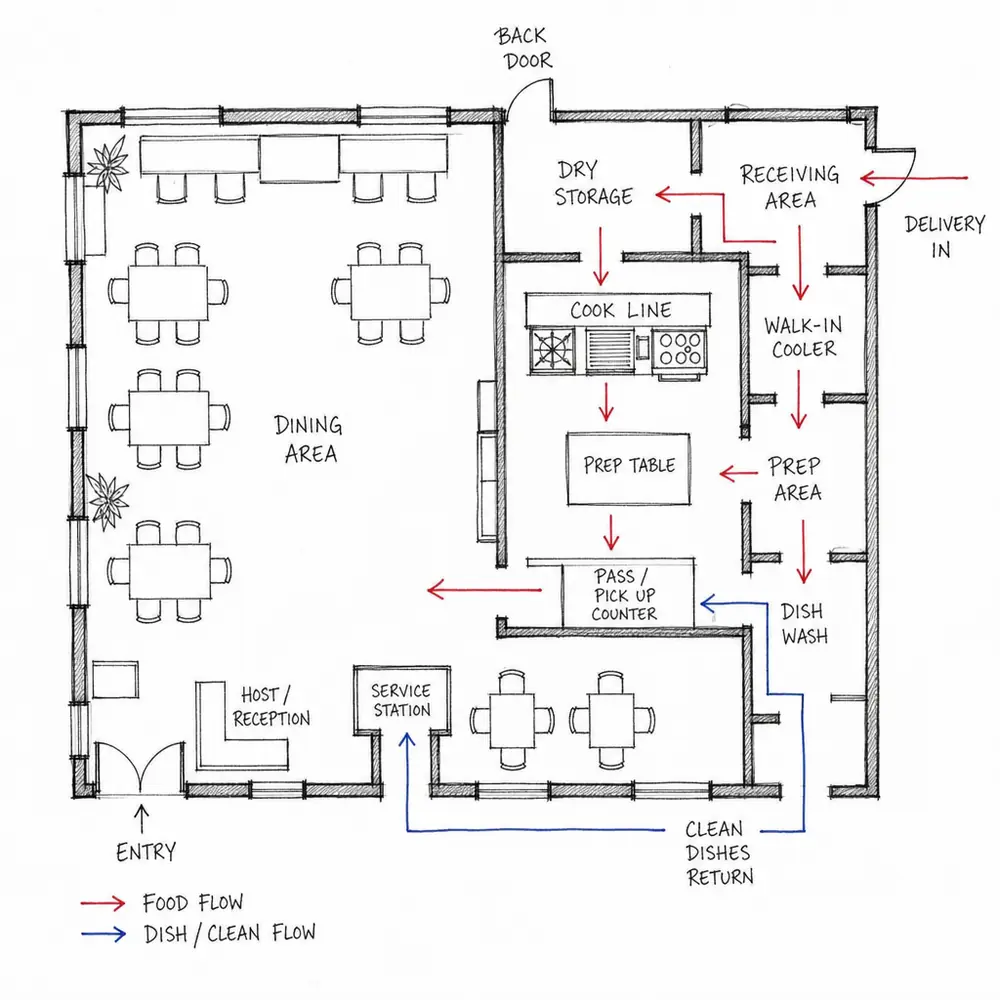
Tour the space with operations in mind. Picture a busy shift from open to close. Where do guests wait? Where do servers move? Where does takeout sit? Where do staff store dry goods, cleaning supplies, and personal items? Where do trash and recycling go?
Pay close attention to:
- Kitchen layout and equipment placement.
- Hood system, ventilation, plumbing, electrical, and gas capacity.
- Restroom count and condition.
- Storage for food, beverages, packaging, and supplies.
- Delivery access for vendors.
- Waste removal and grease management.
- Staff flow between kitchen, bar, dining room, and pickup areas.
- Accessibility and safety requirements.
Operational fit may not feel as exciting as a lively street corner, but it protects consistency. A space that works well behind the scenes helps your team serve guests faster, cleaner, and with less stress.
How should you compare several possible locations?
Compare possible locations using the same criteria, not just gut feeling. A simple scoring process helps you stay objective when one space has great windows, another has lower rent, and another sits in a busier district. This is one of the most useful restaurant location tips because it turns a big emotional decision into a clearer business choice.
Create a shortlist of serious options, then rate each one on the factors that matter most to your concept. You can use a basic one-to-five score for each category, then add notes explaining the score. The notes are important because two locations may have the same total score for very different reasons.
Useful comparison categories include:
- Target customer fit.
- Visibility from street or sidewalk.
- Foot traffic and vehicle traffic quality.
- Parking, transit, and overall access.
- Competition and nearby demand drivers.
- Rent and total occupancy cost.
- Buildout complexity.
- Kitchen and service flow.
- Lease flexibility.
- Long-term neighborhood potential.
After scoring, look for patterns. A location with one weak area may still work if the weakness is fixable. For example, limited visibility might be improved with approved signage and lighting. But a location with several core problems, such as poor customer fit, high rent, and difficult access, is risky even if the space looks great. Pair scoring with our restaurant site selection checklist and how to choose the best location for a restaurant.
Visit the site like a customer more than once
Never judge a restaurant site from one tour. Visit in the morning, at lunch, after work, at dinner, late evening, and on weekends if those times matter to your concept. Bring someone with you who will be honest, not just encouraging.
During each visit, act like a guest. Try to park. Walk from nearby offices, apartments, transit stops, or shopping areas. Notice whether the walk feels safe and pleasant. Look at lighting, noise, smells, traffic speed, and the condition of surrounding properties.
Also pay attention to what changes. Some streets have great daytime energy but feel empty at night. Others have heavy car traffic but very little pedestrian activity. Some locations are easy to enter from one direction and frustrating from the other.
A repeat-visit checklist can include:
- Count how many people pass the storefront in 15 or 30 minutes.
- Notice whether people slow down, window shop, or move quickly through.
- Track nearby restaurant activity during your planned service hours.
- Test parking or transit during peak times.
- Watch for delivery trucks, trash pickup, school traffic, or road congestion.
- Observe whether the area feels inviting after dark.
The more you experience the site like a real customer, the better your decision will be.
Understand the lease before you commit
The location and the lease are tied together. A promising space can become a problem if the lease limits what you can do or leaves you responsible for expensive surprises. Before signing, make sure the agreement supports your restaurant's actual needs.
Review permitted use carefully. If you plan to serve alcohol, operate late, offer outdoor seating, host events, install special equipment, or run a strong takeout program, those uses should be allowed. Do not rely on casual verbal assurances.
Look at the lease term, renewal options, rent increases, maintenance responsibilities, exclusivity clauses, signage rights, improvement allowances, and exit options. You should also understand who pays for repairs to major systems. In restaurants, equipment and building systems are not small details; they can affect your ability to open and stay open.
Professional review is worth considering because commercial leases can be complex. A good location should not only look right today. It should give your business enough stability and flexibility to grow.
Red flags that deserve a closer look
Some issues do not automatically mean you should walk away, but they should slow the process down. If you notice several red flags at once, take them seriously.
Watch out for:
- A space with a long history of failed restaurants and no clear explanation.
- Rent that only works if sales are strong immediately.
- Poor visibility that cannot be improved with signage.
- Difficult parking or access for your specific customer base.
- Major buildout needs with unclear costs.
- Landlord restrictions that conflict with your concept.
- Weak traffic during the hours you need most.
- Nearby construction or development uncertainty.
- Kitchen systems that may not support your menu.
- A neighborhood mismatch with your price point or atmosphere.
Red flags are not there to scare you. They are there to help you ask better questions. Sometimes a concern has a simple solution. Other times it reveals that the location is not as strong as it first appeared.
Bring the decision back to the guest
At the end of the process, the best way to choose the perfect restaurant location is to picture your guest's full journey. They hear about you, decide to visit, travel to the area, find the entrance, step inside, order, eat, pay, and decide whether to return. The location either supports that journey or adds friction to it.
If you want a quick final filter, ask yourself:
- Can my ideal guests easily find and reach this place?
- Does the neighborhood make my concept feel natural?
- Can the building support the service I want to deliver?
- Do the numbers leave room for a healthy business?
- Can I see this location working not just on opening day, but years from now?
Finding the right site takes patience, but that patience is part of protecting your investment. The perfect restaurant location is rarely perfect in every possible way. It is the place where the trade-offs are clear, manageable, and aligned with the restaurant you are building.
If you slow down, study the area, compare options honestly, and keep the guest at the center of the decision, you give your restaurant a stronger start. That is the real goal of restaurant site selection: not just opening in a good-looking space, but choosing a location that helps people discover you, enjoy you, and come back.
Run free AI analysis on your shortlist at Restaurant Site Finder, then compare finalists with select the perfect location for your restaurant for a full validation workflow.
Frequently Asked Questions
What makes a perfect restaurant location?
A perfect location balances demand, visibility, access, affordability, and operational fit, the target customers already spend time nearby, your concept matches the neighborhood, costs make sense, and the space supports daily service without constant friction.
How do I know if the neighborhood fits my concept?
Compare your ideal guest with people already using the area daily. A good fit has a clear customer base matching your menu and price, consistent traffic during your key dayparts, complementary businesses, a dining gap you can fill, and brand alignment with the area's personality.
How should you compare several possible restaurant locations?
Rate each finalist 1-5 on customer fit, visibility, traffic quality, access, competition, rent, buildout complexity, kitchen flow, lease flexibility, and neighborhood potential, then review notes to see whether weaknesses are fixable or core problems.
What red flags should slow down a restaurant site decision?
Multiple failed restaurants with no explanation, rent requiring immediate strong sales, unfixable visibility, difficult parking, unclear buildout costs, landlord restrictions blocking your concept, weak traffic at your dayparts, and kitchen systems that cannot support your menu.
When should you sign a restaurant lease?
After confirming permitted use, financial viability, operational fit, traffic at multiple dayparts, and lease terms reviewed by qualified professionals, not after one encouraging tour or emotional attachment to a storefront.
Run a free location analysis
Enter any address to get competitor mapping, market gaps, opportunity scoring, and concept ideas.
Analyze your location free Shop equipment at Horeca Store