Finance
Restaurant Startup Costs: Complete Breakdown of Expenses
Complete breakdown of restaurant startup costs, one-time vs monthly expenses, lease, buildout, equipment, permits, technology, inventory, marketing, payroll, spreadsheet planning, financing, cost reduction, and budget checklist.
Key Takeaways
- A useful restaurant startup costs breakdown separates one-time opening costs from monthly expenses and adds working capital for the slow first months.
- Plan three scenarios, lean, realistic, and stretch, instead of building around the cheapest possible version of the business.
- Major buckets: lease, buildout, equipment, permits, technology, inventory, marketing, pre-opening payroll, contingency, and working capital.
- Build a defensible spreadsheet; validate rent and trade area with Restaurant Site Finder and cross-check against our 2026 opening cost guide.
Opening a restaurant is exciting, but the money side can get messy fast. A useful restaurant startup costs breakdown separates one-time opening costs from monthly restaurant expenses, then adds a realistic reserve for the slow, unpredictable first months. While one commonly cited median for opening an independent restaurant is about $375,000, your real startup investment can be much lower or far higher depending on concept, location, size, buildout, permits, equipment, and service style.
The goal is not to find one magic number. It is to build a startup budget you can defend when you talk to landlords, lenders, investors, partners, or your accountant. The restaurant industry is large and still growing, with the National Restaurant Association projecting $1.55 trillion in U.S. restaurant industry sales for 2026, but operators are also dealing with elevated labor, food, and overhead pressure.
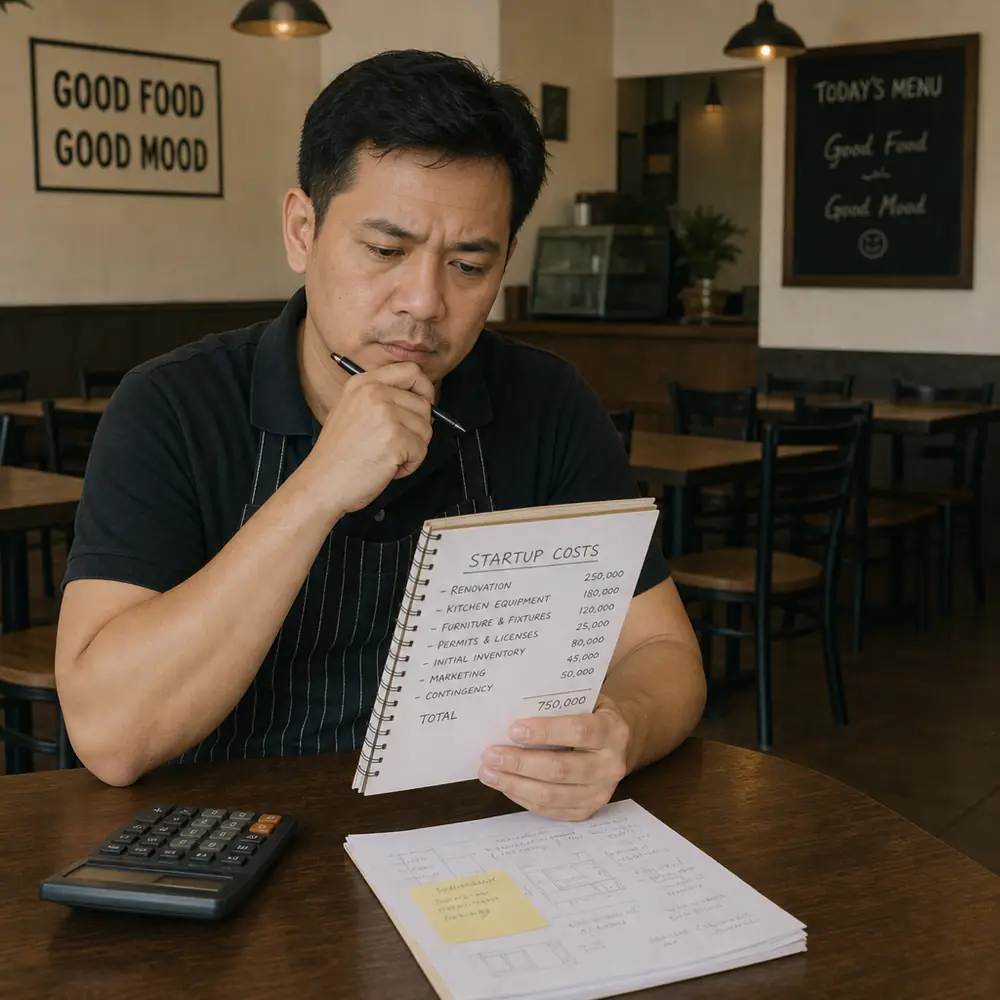
How much does it cost to open a restaurant?
The average restaurant startup costs figure is best treated as a planning benchmark, not a promise. A small counter-service shop in a second-generation space might need a modest opening budget compared with a full-service restaurant that requires a major kitchen buildout, custom bar, dining room renovation, patio, liquor license, and months of pre-opening payroll. DoorDash's 2026 guide cites a median independent restaurant startup cost of around $375,000, while also emphasizing that real costs vary widely by concept, market, and footprint.
A better question is: what kind of restaurant are you opening? Small restaurant startup costs usually rise or fall based on square footage, equipment needs, lease terms, menu complexity, staffing model, and whether the space already has restaurant infrastructure. Bar restaurant startup costs often add extra expenses for liquor licensing, bar equipment, glassware, security, beverage inventory, and compliance requirements.
If you are preparing a restaurant startup costs spreadsheet, start with three scenarios:
- Lean opening budget: The minimum you need to open safely, legally, and professionally.
- Realistic opening budget: The version that includes proper training, marketing, contingency, and working capital.
- Stretch budget: The upgraded version with nicer finishes, broader equipment purchases, stronger branding, or a bigger opening campaign.
This three-scenario approach keeps you from building your entire plan around the cheapest possible version of the business. It also helps with restaurant financing because lenders and investors usually want to see that you understand risk, not just enthusiasm. For 2026-specific ranges by concept, see how much it costs to open a restaurant in 2026.
What are the major categories in a restaurant startup costs breakdown?
Most restaurant startup costs fall into a handful of predictable buckets. The numbers inside each bucket will change by city, cuisine, service style, and building condition, but the categories themselves are fairly consistent.
The U.S. Small Business Administration recommends organizing startup expenses into one-time expenses and monthly expenses so you can estimate funding needs and understand when the business may turn profitable. That distinction matters for restaurants because a beautiful buildout does not help if you run out of cash before repeat customers develop.
Lease, deposits, and real estate costs
Your space is often one of the biggest decisions you will make. Before opening a restaurant, you may need cash for a lease deposit, first month's rent, utility deposits, common area charges, legal review, and broker-related costs. If you are buying property instead of leasing, the upfront cash requirements can become much larger.
A second-generation restaurant space can reduce initial costs because it may already include kitchen ventilation, plumbing, grease traps, restrooms, and utility capacity. That does not mean it is automatically cheap. You still need inspections, repairs, design updates, landlord approvals, and possibly code upgrades.
When reviewing a lease, look beyond base rent. Ask about annual increases, maintenance responsibilities, property taxes, insurance requirements, signage rules, parking, patio rights, trash handling, and who pays for required improvements. A low rent number can become expensive if the lease shifts too many building costs onto the operator. Screen candidate addresses at Restaurant Site Finder before committing.
Design, construction, and buildout
Buildout is where many startup budgets get uncomfortable. Even a simple dining room needs flooring, lighting, paint, furniture placement, service stations, restrooms, signage, and a layout that supports safe traffic flow. A full kitchen buildout may require electrical upgrades, gas lines, plumbing, ventilation, fire suppression, refrigeration, and health-department-ready surfaces.
The biggest mistake is budgeting for visible design while underestimating hidden infrastructure. Guests notice the tile and seating, but inspectors care about sinks, drains, hoods, storage, handwashing stations, and safe food flow. If the building was not previously used for food service, these food business expenses can climb quickly.
A good buildout budget should include:
- Architectural or design support if needed.
- Contractor estimates with written scope.
- Permitting and inspection fees.
- Kitchen ventilation and fire suppression.
- Plumbing, electrical, HVAC, and gas work.
- Dining room finishes and furniture.
- Exterior signage and lighting.
- A contingency for surprises behind walls, under floors, or above ceilings.
Kitchen equipment and smallwares
Kitchen equipment is one of the most visible startup investment categories. Depending on your menu, you may need ovens, ranges, fryers, griddles, refrigeration, freezers, prep tables, mixers, dishwashing equipment, shelving, storage containers, knives, pans, utensils, scales, thermometers, and safety supplies.
The smartest equipment plan starts with the menu, not a catalog. If your opening menu has too many cooking methods, holding requirements, and prep steps, you may need more stations, more refrigeration, and more labor. A focused menu can reduce equipment needs and make training easier.
Used or leased equipment may help reduce upfront cash needs, but it should be evaluated carefully. Check warranties, service history, parts availability, energy use, and whether the equipment meets local code. A cheap refrigerator that fails during opening week is not really cheap. Use the restaurant equipment checklist and commercial kitchen equipment buying guide; request quotes at Horeca Store.
Licenses, permits, and professional fees
Licenses and permits vary widely by location and concept. A typical food service startup may need a business license, food service permit, certificate of occupancy, sales tax registration, signage approval, music licensing, health inspections, fire inspections, and waste handling approvals. If alcohol is part of the concept, liquor licensing can add time, paperwork, and significant cost.
Professional fees belong in this category too. You may need an attorney to review the lease, an accountant to help structure books, a payroll provider, a designer, a consultant, or a permit expediter. These services can feel optional when cash is tight, but poor lease terms, tax confusion, or permit delays can cost far more later.
Because requirements change by state, county, and city, do not rely on a generic online list as your final compliance plan. Use it as a starting point, then verify with your local agencies and qualified professionals. See the restaurant permits and licenses guide.
Technology and point-of-sale systems
Restaurant technology is no longer just a cash register. Your startup budget may include a POS system, handheld ordering devices, kitchen display screens, printers, payment processing equipment, online ordering tools, reservation software, loyalty tools, payroll software, inventory systems, security cameras, Wi-Fi, and accounting integrations.
The key is to budget for both hardware and recurring software. Many operators remember the terminal cost but forget monthly subscriptions, payment processing fees, support plans, installation, staff training, and future add-ons. These recurring charges become part of restaurant overhead after opening.
When comparing systems, think about how your team will actually work. A counter-service café, a high-volume bar, and a full-service dining room do not need the same setup. Paying for features you will not use wastes cash, but underbuying can create service bottlenecks that hurt sales.
Opening inventory and supplies
Opening inventory includes food, beverages, paper goods, cleaning supplies, disposables, uniforms, menus, takeout packaging, office supplies, first-aid supplies, and restroom supplies. Bar restaurant startup costs may also include beer, wine, spirits, mixers, garnishes, kegs, CO2, glassware, bar mats, ice bins, speed rails, and draft system needs.
Inventory planning requires balance. Too little inventory causes 86'd items, emergency purchases, and frustrated guests. Too much inventory ties up cash and increases spoilage risk. For the first few weeks, many restaurants benefit from a tighter menu and more frequent purchasing while sales patterns become clearer.
Do not forget non-food opening supplies. Trash liners, sanitizer, gloves, printer paper, pens, towels, aprons, labels, tape, mop heads, and storage bins rarely sound exciting, but the operation depends on them.
Branding, marketing, and launch expenses
Marketing should not start after the doors open. Before launch, you may need logo work, menu design, photography, a basic website, local listings, social media setup, signage, printed materials, public relations support, email tools, soft-opening invitations, and launch promotions.
A practical opening campaign focuses on discoverability and trust. Customers need to know where you are, what you serve, when you open, how to order, whether reservations are available, and what makes the concept worth trying. Good marketing also helps recruit staff, attract neighborhood partners, and build early word of mouth.
Avoid spending the entire marketing budget on one grand opening push. Restaurants need repeated exposure. A smaller pre-opening campaign, followed by several weeks of local outreach and customer retention, is often more useful than one expensive splash.
Hiring, training, and pre-opening payroll
Labor costs begin before revenue does. You may need managers, cooks, servers, bartenders, dishwashers, hosts, counter staff, prep cooks, and cleaners on payroll before the first paid guest arrives. Training days, menu tastings, mock service, orientation, compliance training, and setup work all cost money.
The Bureau of Labor Statistics reported a May 2025 median hourly wage of $15.24 for food and beverage serving and related workers, but actual wages vary by role, state, city, tip structure, and labor market. Build your labor plan using local wage data rather than a national average alone.
Pre-opening labor is easy to underestimate because it feels temporary. But a rushed opening can create service problems, bad reviews, waste, staff turnover, and refunds. A better-trained team can protect the guest experience during the fragile first weeks.
What restaurant expenses continue after opening day?
Opening day does not end the spending. Once the restaurant is live, you move from startup costs into monthly restaurant expenses such as rent, utilities, payroll, food and beverage purchasing, insurance, repairs, software, marketing, loan payments, taxes, cleaning, waste removal, and accounting. The National Restaurant Association estimates that food and labor costs are the two most significant line items for restaurants, each accounting for roughly 33 cents of every sales dollar.
This is why working capital matters. If your startup budget covers construction and equipment but leaves only a few weeks of cash, the business may be under pressure before customers have time to form habits. Restaurants often need time to refine the menu, stabilize staffing, improve speed, and build repeat traffic.
Fixed and variable costs behave differently
Some restaurant overhead is fixed or semi-fixed. Rent, insurance, software subscriptions, base management salaries, loan payments, and certain utilities do not disappear just because sales are slow. These costs create pressure during quiet weeks.
Variable costs move more closely with sales. Food, beverage, hourly labor, packaging, delivery-related costs, and credit card processing generally rise when volume rises. The challenge is that they do not always move perfectly. If you overstaff for a slow night or prep too much food, variable expenses can outrun revenue.
A healthy operating budget should separate fixed costs from variable costs. This makes it easier to calculate how much sales volume you need to cover the basics and how much cushion you need for seasonality.
Prime cost deserves close attention
Prime cost usually refers to the combination of cost of goods sold and labor. In plain English, it is the money spent to make the food and staff the operation. Because food and labor are such large parts of restaurant expenses, small changes in scheduling, waste, recipe costing, vendor pricing, or menu mix can have a major impact.
You do not need complicated financial language to manage prime cost. You need accurate recipes, consistent portions, purchasing discipline, inventory counts, sales reports, and schedules that match demand. If those basics are missing, even strong sales can hide weak margins. Read what is prime cost in restaurant business and restaurant profit margins and unit economics.
How do you build a realistic restaurant startup costs spreadsheet?
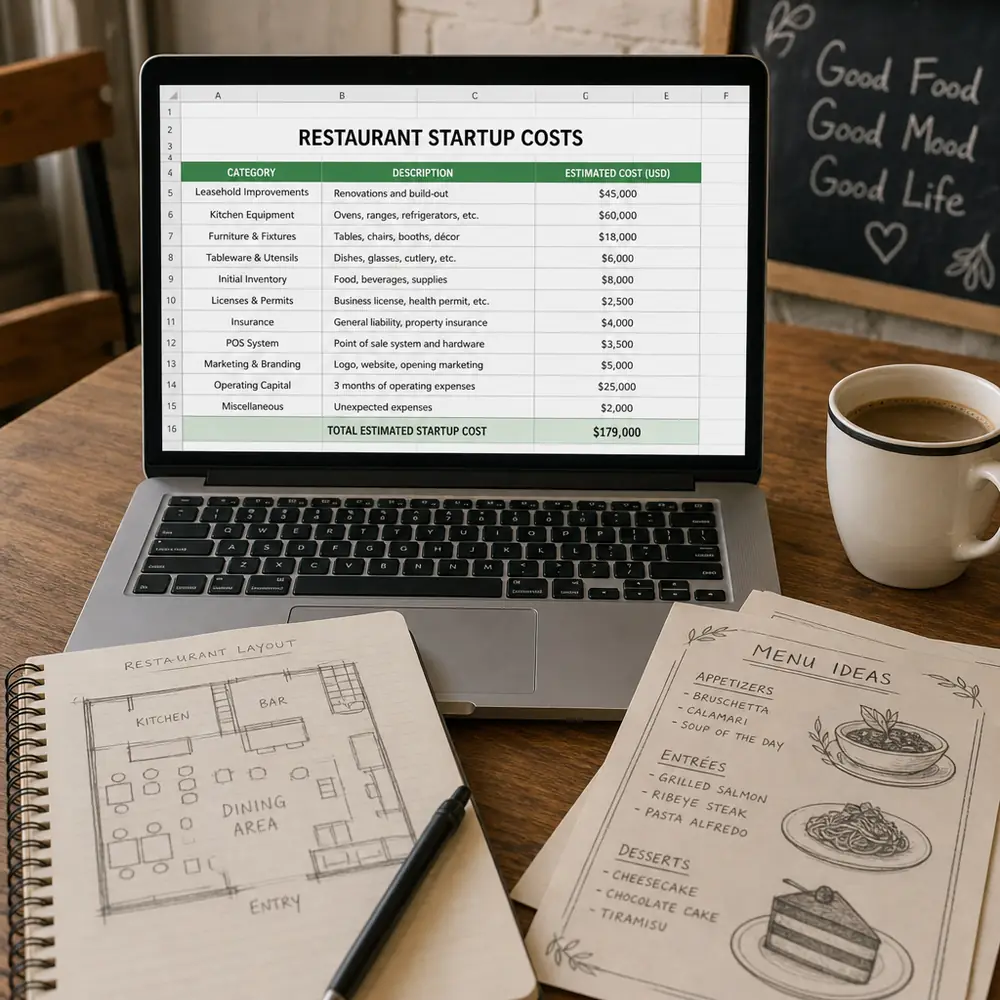
A restaurant startup costs spreadsheet is not just a list of purchases. It is a decision-making tool. It helps you compare spaces, test concept changes, estimate financing needs, and avoid confusing one-time initial costs with ongoing monthly obligations.
A strong spreadsheet should include these sections:
- One-time startup costs: Lease deposit, buildout, permits, equipment, furniture, signage, smallwares, branding, legal fees, and opening inventory.
- Monthly operating costs: Rent, utilities, payroll, food, beverages, insurance, software, marketing, repairs, accounting, cleaning, and loan payments.
- Pre-opening payroll: Recruiting, training, manager salaries, mock service, and setup labor.
- Contingency: Extra cash for delays, change orders, broken equipment, and unexpected permit issues.
- Working capital reserve: Cash set aside to cover early operating losses or slower-than-expected sales.
- Funding sources: Owner cash, investors, bank loans, SBA-backed loans, equipment financing, landlord contributions, or other restaurant financing options.
- Assumptions: Square footage, seats, average check, daily covers, labor hours, food cost targets, rent terms, and opening timeline.
The assumptions section is especially important. If your sales projection changes, the rest of the model should change too. A restaurant startup costs calculator can be helpful for rough planning, but a custom spreadsheet gives you more control because every concept has different cost drivers. Mirror structure from our restaurant business plan guide.
What restaurant financing and funding options exist?
Most founders use more than one funding source. Restaurant financing may include personal savings, partner contributions, bank loans, SBA-backed loans, investors, equipment leasing, lines of credit, crowdfunding, landlord improvement allowances, or seller financing if buying an existing business. The right mix depends on your credit, experience, collateral, concept, timeline, and tolerance for giving up ownership.
Lenders usually want to see a business plan, startup budget, sales forecast, personal financial information, lease details, and a clear explanation of how funds will be used. Investors may care more about the concept, management team, growth potential, ownership structure, and exit possibilities. Either way, vague numbers weaken your pitch.
Before taking money, understand the tradeoff:
- Debt financing lets you keep ownership, but repayment pressure starts whether sales are strong or weak.
- Equity investment can reduce monthly debt payments, but you share control and future profits.
- Equipment financing or leasing can protect cash upfront, but may cost more over time.
- Landlord allowances can help with buildout, but may come with higher rent or longer lease commitments.
- Personal funding is flexible, but it concentrates risk on the founder.
Restaurant financing is easier to discuss when your numbers are organized. A lender or investor does not need every napkin sketch, but they do need to see that your startup budget includes the unglamorous costs, not just décor and equipment.
How can you reduce startup investment without weakening the concept?
Cutting costs does not mean cutting corners. The goal is to protect guest experience, safety, and operational quality while avoiding unnecessary spending. Some of the best savings come from simplifying decisions before they become expensive.
Consider these practical moves:
- Choose a second-generation restaurant space. Existing food-service infrastructure can reduce buildout complexity, though inspections are still essential.
- Open with a focused menu. Fewer items can mean less equipment, less inventory, easier training, and less waste.
- Buy selectively used equipment. Refrigeration and high-risk items need careful inspection, but some durable equipment may be good used.
- Phase in upgrades. Start with the guest-facing essentials, then add premium décor, patio improvements, or extra technology after revenue stabilizes.
- Negotiate lease terms carefully. Free rent during buildout, tenant improvement allowances, or capped increases can matter as much as base rent.
- Avoid overbuilding the dining room. More seats only help if the kitchen, staff, parking, and demand can support them.
- Track every pre-opening purchase. Small purchases add up quickly, especially smallwares, cleaning supplies, décor, tools, and packaging.
- Keep contingency sacred. Do not spend your emergency cushion on optional upgrades before opening.
The National Restaurant Association reported that total expenses for an average restaurant rose 36% between 2019 and 2026, which makes disciplined budgeting more important than ever. When costs are elevated, the operator who tracks details has more room to adapt.
What common budgeting mistakes should you avoid?
Many restaurant budgets fail because they are optimistic in exactly the wrong places. Founders often underestimate timelines, assume sales will ramp quickly, forget pre-opening payroll, or treat the opening inventory order as a minor expense. Others spend heavily on design while leaving too little cash for marketing and working capital.
Watch for these common mistakes:
- Confusing one-time startup costs with monthly operating costs.
- Forgetting sales tax, payroll tax, insurance, and professional fees.
- Assuming the landlord will pay for improvements without written terms.
- Underestimating permit timelines and inspection delays.
- Buying equipment before the menu and kitchen layout are final.
- Opening with too many menu items and too much inventory.
- Forgetting delivery packaging, takeout supplies, and online ordering costs.
- Building projections around best-case sales from day one.
- Failing to budget for repairs after buying used equipment.
- Treating owner pay as optional for too long.
The safest approach is to make your budget slightly uncomfortable before opening. If the spreadsheet reveals a cash gap, that is useful information. It is much better to adjust the concept, raise more capital, renegotiate terms, or delay opening than to discover the gap after payroll is due.
What should be on a pre-opening budget checklist?
Before signing a lease or making major purchases, run through a practical checklist. This will not replace professional advice, but it can help you spot missing categories.
- Have you priced the exact space, not just an average market rent?
- Have you confirmed zoning, health department, fire, signage, and occupancy requirements?
- Have you separated one-time initial costs from recurring monthly expenses?
- Have you built a working capital reserve into the plan?
- Have you included pre-opening payroll and staff training?
- Have you estimated opening food, beverage, packaging, and cleaning inventory?
- Have you budgeted for technology subscriptions and payment processing?
- Have you reviewed insurance needs with a qualified provider?
- Have you included legal, accounting, and payroll setup costs?
- Have you added contingency for delays, repairs, and construction surprises?
- Have you tested your numbers against conservative sales projections?
- Have you created a funding plan that matches the timing of expenses?
If you can answer yes to these questions, your budget is already stronger than a rough average pulled from an article. If you answer no to several, pause before committing more cash.
What is the real purpose of your startup budget?
A startup budget is not only about getting open. It is about giving the restaurant enough breathing room to become a real business. The first version of the concept will need adjustment. Guests will surprise you. Labor schedules will change. Menu items will move faster or slower than expected. Vendor prices may shift. Equipment may need repairs.
That is normal. The danger is not uncertainty itself; it is opening with no room for uncertainty. A thoughtful restaurant startup costs breakdown gives you a clearer view of the road ahead and helps you make calmer decisions under pressure.
Opening a restaurant will always involve risk, but vague budgeting makes that risk harder to manage. Build your spreadsheet, verify local costs, price the unexciting details, and protect your working capital. The more honest your plan is before opening day, the better chance your restaurant has to survive the expensive learning curve that comes after it.
Frequently Asked Questions
What are the major categories in restaurant startup costs?
Most budgets group into lease and deposits, design and buildout, kitchen equipment and smallwares, licenses and professional fees, technology and POS, opening inventory, branding and marketing, and pre-opening payroll, plus contingency and working capital reserves. One-time opening costs and recurring monthly expenses should be tracked separately.
How much does it cost to open a restaurant on average?
A commonly cited median for opening an independent restaurant is about $375,000, but real totals vary widely by concept, market, and space condition. Small counter-service shops in second-generation spaces may need far less; full-service buildouts with bar programs and major renovations can exceed $1 million.
What should a restaurant startup costs spreadsheet include?
One-time startup costs, monthly operating costs, pre-opening payroll, contingency, working capital reserve, funding sources, and assumptions for square footage, seats, average check, covers, labor hours, food cost targets, rent terms, and opening timeline. Update the model when sales projections change.
What restaurant expenses continue after opening day?
Monthly expenses include rent, utilities, payroll, food and beverage purchasing, insurance, repairs, software subscriptions, marketing, loan payments, taxes, cleaning, and waste removal. Working capital must cover these while sales ramp, opening costs alone do not keep the business alive.
How can you reduce restaurant startup investment without cutting corners?
Choose second-generation restaurant space, open with a focused menu, buy selectively used equipment, phase nonessential upgrades, negotiate lease terms beyond base rent, avoid overbuilding seat count, track every pre-opening purchase, and protect your contingency fund from optional upgrades before opening.
Run a free location analysis
Enter any address to get competitor mapping, market gaps, opportunity scoring, and concept ideas.
Analyze your location free Shop equipment at Horeca Store