Guides
What Is Prime Cost in Restaurant Business?
What prime cost is in restaurant business, the formula, what to include, target percentages, food cost and labor management, common mistakes, and a weekly operating rhythm to protect margins.
Key Takeaways
- Prime cost = COGS + total labor, the clearest signal for whether sales are converting to margin or being eaten by operations.
- Use the same formula every period: count inventory, capture labor for matching dates, and compare dollars and percentage of sales.
- Balance food cost management and labor planning, cutting one expense in isolation often damages guest experience and repeat business.
- Model prime cost in your business plan and validate location economics free at Restaurant Site Finder before you sign a lease.
Prime cost is one of the most useful numbers a restaurant owner, manager, or operator can track because it shows how much money goes into the two biggest controllable expenses: products and labor. In simple terms, it combines the cost of food and beverage used with the cost of the people needed to prepare, serve, manage, and support the guest experience. If you have ever wondered what is prime cost in restaurant business planning, the answer is practical: it is the number that helps you see whether daily sales are turning into sustainable profit or being absorbed by operations.
Understanding prime cost does not require advanced accounting. It does require consistency, clean numbers, and a willingness to look at the business honestly. Once you know how to calculate it, you can make better decisions about menu pricing, scheduling, purchasing, waste control, and overall restaurant performance.
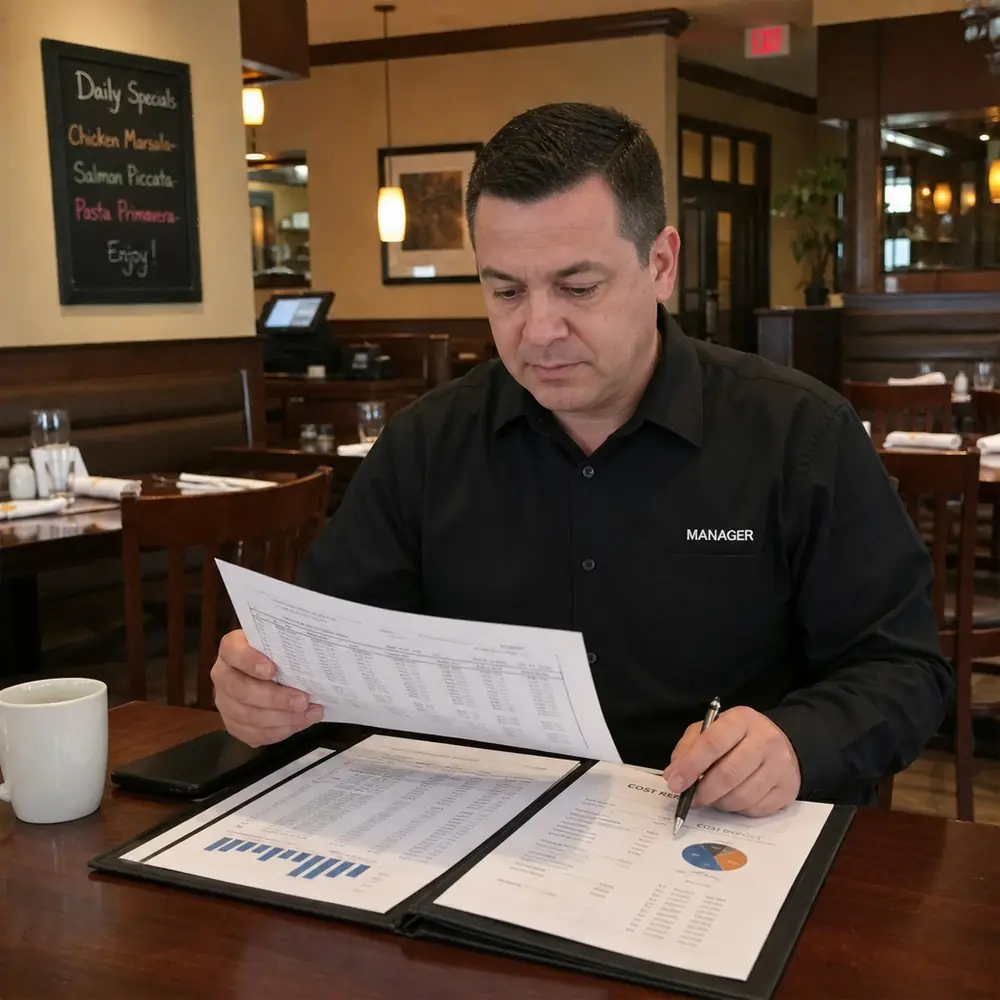
Why does prime cost matter so much?
Prime cost matters because it connects your sales to the expenses most directly involved in creating those sales. Rent, insurance, utilities, marketing, repairs, and software all matter, but food, beverage, and labor usually move the fastest and require the most frequent management attention. When prime cost is too high, a restaurant can be busy every night and still struggle to keep cash in the bank.
The value of tracking prime cost is that it turns scattered operating details into one clear management signal. A rising labor bill may not look alarming on its own if sales are strong. A higher food order may seem reasonable if the dining room has been full. But when those costs are measured together against revenue, you can see whether the business is actually becoming healthier or just busier.
Prime cost is also useful because it encourages balanced decision-making. Cutting labor too aggressively can hurt service and slow the kitchen. Reducing portions without thought can disappoint guests. Buying cheaper ingredients can damage the quality that brings customers back. By watching prime cost as a whole, operators can make smarter adjustments instead of reacting to one expense in isolation.
The basic prime cost formula
The prime cost formula is straightforward:
Prime cost = cost of goods sold + total labor cost
Cost of goods sold is often called COGS. In a restaurant, this usually includes food and beverage products that were actually used during a period, not simply everything purchased. Total labor cost includes wages and may also include related payroll expenses, depending on how your restaurant tracks labor internally. The key is to be consistent so each period can be compared fairly.
A simple version looks like this:
- Start with beginning inventory.
- Add purchases made during the period.
- Subtract ending inventory.
- The result is cost of goods sold.
- Add labor costs for the same period.
- Compare the total prime cost to sales for that period.
For example, if a restaurant uses $18,000 in food and beverage and spends $22,000 on labor during the same week, its prime cost is $40,000. If weekly sales were $65,000, the operator can divide $40,000 by $65,000 to understand prime cost as a percentage of sales. The dollar amount shows how much was spent, while the percentage helps compare performance across weeks, months, seasons, or locations.
The formula is simple, but the usefulness depends on using accurate inputs. If inventory counts are rushed, invoices are missing, or labor categories are inconsistent, the final number may point you in the wrong direction. Prime cost should be treated as an operating tool, not just a line on a report.
What should be included in prime cost?
Prime cost in restaurant business reporting should include the expenses directly tied to producing and serving what guests buy. That usually means food, beverages, hourly kitchen labor, front-of-house labor, salaried managers, and related labor expenses if those are part of your reporting method. Some restaurants include payroll taxes, benefits, and bonuses in labor cost, while others track them separately.
The most important rule is consistency. If you include manager salaries this month but exclude them next month, your trend line becomes harder to trust. If you count beverage costs in one location but separate them in another, comparisons become cloudy. Choose a method, document it, and apply it the same way every reporting period.
Product costs
Product costs include the ingredients and beverages used to generate sales. This can cover meat, seafood, produce, dairy, dry goods, coffee, beer, wine, spirits, soft drinks, garnishes, and other consumable items that appear on the menu or support menu production. Many restaurants separate food and beverage internally because the purchasing patterns, margins, storage needs, and waste risks can be very different.
Good food cost management starts with knowing the difference between purchasing and usage. Buying $10,000 worth of inventory does not mean you used $10,000 worth of inventory. Some of that product may still be on the shelf, in the cooler, or behind the bar. That is why inventory counts are essential when calculating COGS.
Labor costs
Labor costs include the people required to operate the restaurant. This may involve cooks, dishwashers, servers, bartenders, hosts, bussers, runners, supervisors, managers, and support staff. Depending on the business, labor may also include training time, overtime, paid time off, payroll taxes, insurance contributions, and other employee-related costs.
Labor is not just an expense to reduce. It is also the engine behind hospitality, speed, consistency, cleanliness, and guest satisfaction. A restaurant that saves money by understaffing may create longer waits, stressed employees, lower check averages, and weaker repeat business. The goal is not simply lower labor; the goal is productive labor that matches demand.
How prime cost helps you make better decisions
Prime cost becomes powerful when it moves from a monthly accounting review into regular management conversation. Instead of waiting until the end of the month to discover that margins were tight, operators can review purchasing, inventory, sales, and schedules weekly. That gives the team time to adjust before small issues become expensive patterns.
Here are a few practical ways prime cost can guide decisions:
- Menu pricing: If ingredient costs rise and prices stay the same, prime cost may increase even when sales look strong. Reviewing prime cost can show when menu pricing needs attention.
- Menu engineering: Popular items are not always profitable items. Prime cost can push managers to look closer at portion sizes, prep time, ingredient costs, and selling prices.
- Scheduling: Labor should match expected demand. Prime cost trends can reveal whether the restaurant is overstaffed during slow periods or understaffed during high-volume shifts.
- Purchasing: If COGS rises unexpectedly, the issue may be vendor pricing, overordering, spoilage, theft, inconsistent recipes, or inaccurate inventory counts.
- Training: High waste, remakes, slow ticket times, and poor upselling can all influence prime cost. Training can be a cost-control tool when it improves consistency.
- Cash flow planning: Since product and labor costs are paid frequently, prime cost affects how much cash is available for rent, debt, repairs, taxes, marketing, and growth.
The best operators use prime cost as a conversation starter, not a blame tool. If labor is high, the question should be why. Was there a local event? Bad weather? A scheduling error? A new team in training? If food cost jumped, was it a price increase, waste issue, inventory mistake, or menu mix change? Better questions lead to better fixes.
Food cost management and prime cost work together
Food cost management is one of the clearest ways to improve prime cost because it focuses on what happens before, during, and after a dish is sold. It begins with purchasing the right products at the right quantity, but it does not stop there. Storage, prep, portioning, recipe compliance, waste tracking, and menu pricing all play a role.
A restaurant can lose money through small leaks that are easy to miss. A prep cook may over-portion proteins by a little. A bartender may pour inconsistently. A cooler may be poorly organized, causing products to expire before they are used. A popular item may rely on an ingredient whose price has climbed, but the menu price may not have been reviewed in months.
A practical food cost routine might include:
- Counting inventory on the same day and at the same time each week.
- Reviewing vendor invoices for price changes rather than only checking order totals.
- Using standardized recipes so every dish has a predictable cost.
- Training staff on portion tools, plating standards, and waste reporting.
- Tracking comps, voids, spills, remakes, and staff meals separately.
- Comparing theoretical food cost with actual food cost when possible.
- Updating menu pricing when ingredient costs or portion standards change.
The goal is not to make every dish cheaper. The goal is to protect the guest experience while making sure the restaurant is paid fairly for what it serves. Track food cost percentage alongside prime cost for sharper diagnostics.
Labor management without hurting hospitality
Labor is often the more sensitive side of prime cost because it affects both employees and guests immediately. A food order can be adjusted quietly, but a short-staffed dining room is visible to everyone. That is why labor management should be based on planning, forecasting, and productivity rather than last-minute cuts.
Good labor control starts with understanding sales patterns. A restaurant may need a different staffing model for lunch, dinner, weekends, holidays, private events, patio season, delivery peaks, or late-night service. Looking only at total weekly labor can hide problems. One shift may be overstaffed while another is stretched too thin.
Helpful labor practices include:
- Build schedules from realistic sales forecasts, not habit.
- Compare scheduled labor with actual labor after each shift.
- Watch overtime before it becomes unavoidable.
- Cross-train employees so coverage is more flexible.
- Stagger start times and cut times based on demand.
- Review prep lists so kitchen labor matches actual production needs.
- Measure service quality along with labor cost percentage, not separately from it.
Labor planning should support the kind of restaurant you are trying to run. A fine dining room, quick-service counter, catering operation, and neighborhood bar will not use labor in the same way. Prime cost helps each business find its own balance between efficiency and hospitality.
Common prime cost mistakes to avoid
Prime cost is easy to calculate in theory, but several common mistakes can make it less useful. The first is tracking it too rarely. If you only look at prime cost once a quarter, you may discover problems long after they started. Weekly or period-based reviews give managers more timely information.
Another mistake is comparing numbers without context. A holiday week, major event, staff training period, menu rollout, equipment failure, or temporary vendor issue can distort results. Context does not excuse poor performance, but it helps explain what happened and what action makes sense.
Watch out for these pitfalls:
- Using purchases instead of actual product usage: Purchases alone can exaggerate or understate cost depending on inventory movement.
- Skipping inventory counts: Without beginning and ending inventory, COGS becomes a rough guess.
- Mixing reporting periods: Labor and product costs must match the same sales period.
- Ignoring menu mix: A shift toward lower-margin items can raise cost even if operations are disciplined.
- Treating all labor as waste: Some labor supports sales, guest satisfaction, cleanliness, and retention.
- Making sudden cuts without diagnosing the cause: Fast reductions can create bigger service and quality problems.
- Changing what is included in the formula: Inconsistent categories make trends unreliable.
Prime cost is most helpful when it is accurate enough to guide action and simple enough for managers to use. Overcomplicating the report can make it harder to discuss. Oversimplifying it can hide the real issue. The right balance is the one your team can understand, maintain, and act on consistently.
Turning the number into an operating habit
Knowing your prime cost once is useful. Building a habit around it is where the real value appears. The restaurants that benefit most from this metric usually connect it to weekly routines: inventory, invoice review, schedule review, sales forecasting, menu analysis, and manager meetings.
A simple weekly rhythm might look like this:
- Count inventory after the same service period each week.
- Enter invoices and verify product prices.
- Review labor hours, overtime, and schedule variances.
- Calculate COGS, labor cost, and prime cost.
- Compare results with recent weeks and expected performance.
- Identify one or two specific actions for the next week.
- Follow up to see whether those actions worked.
This rhythm keeps the discussion focused. Instead of saying, "Costs are too high," the team can say, "Seafood usage increased because of a special that was not priced correctly," or "Saturday lunch labor was scheduled like a dinner shift even though sales were lower." Specific findings create specific fixes.
Technology can help, but it cannot replace disciplined habits. Restaurant software, inventory tools, scheduling systems, and accounting reports can make prime cost easier to track. Still, the numbers only become valuable when managers review them, question them, and use them to improve daily decisions. See restaurant analytics software for efficiency and our prime cost glossary entry for related definitions.
A practical takeaway for restaurant operators
Prime cost is not just an accounting term. It is a practical snapshot of how efficiently a restaurant turns ingredients, beverages, and labor into sales. When tracked consistently, it helps operators protect quality, control waste, schedule smarter, price menus with more confidence, and respond faster when margins begin to tighten.
The best place to start is simple: choose your reporting period, define what you include, count inventory consistently, collect labor costs for the same dates, and apply the prime cost formula the same way every time. From there, use the result as a guide for better questions and better decisions. For target bands and margin context, read restaurant profit margins and unit economics.
A restaurant does not become stronger by staring at numbers; it becomes stronger by turning those numbers into clear, practical action.
Run a free location analysis
Enter any address to get competitor mapping, market gaps, opportunity scoring, and concept ideas.
Analyze your location free Shop equipment at Horeca Store