Guides
How to Start a Restaurant: Complete Guide for Beginners
Complete beginner guide to starting a restaurant: concept, market validation, business model, business plan, menu, location, permits, suppliers, pricing, systems, hiring, marketing, soft opening, and launch checklist.
Key Takeaways
- Starting a restaurant requires a clear concept, validated demand, realistic budget, permits, focused menu, and operating systems, not just great food.
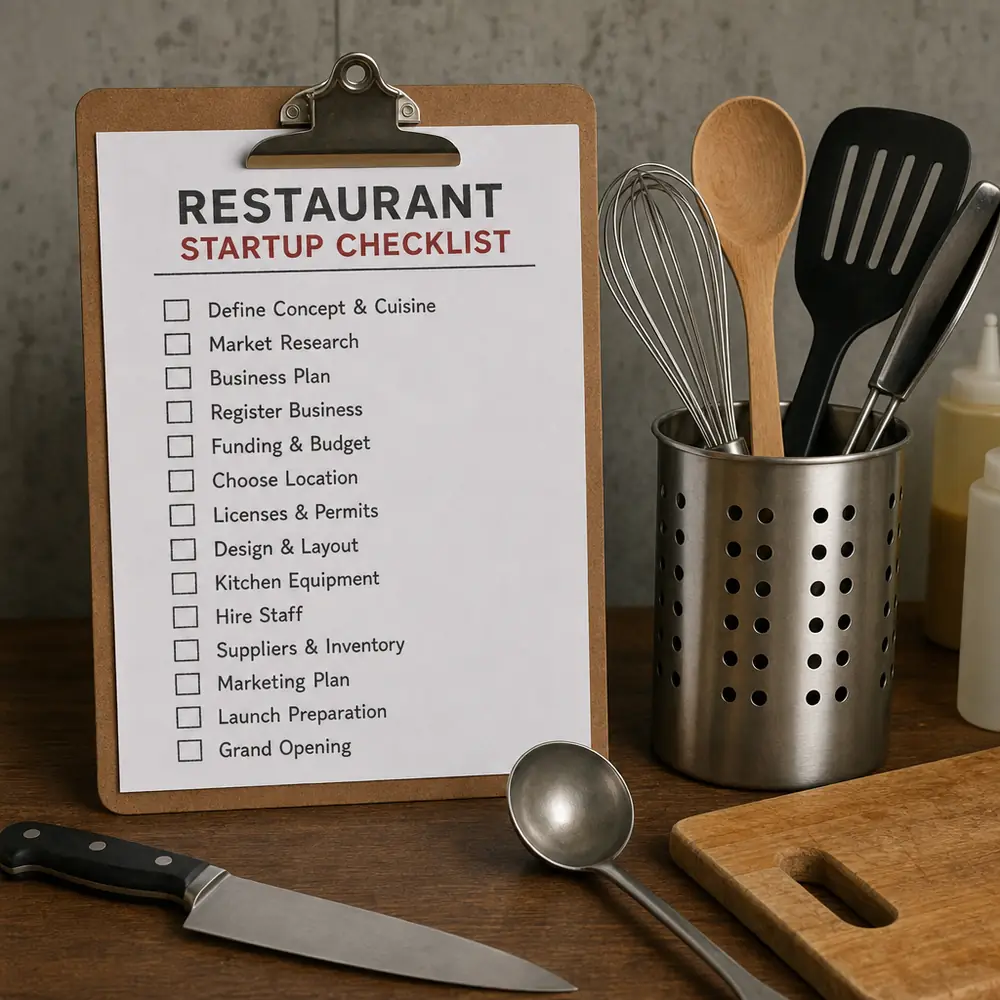
- Follow a practical sequence: concept → validation → model → plan → menu → location → compliance → suppliers → pricing → systems → team → marketing → soft opening → launch.
- Start smaller legally if capital is tight: pop-ups, catering, and shared kitchens beat informal shortcuts on licenses and food safety.
- Validate location and trade area with free analysis at Restaurant Site Finder; pair with our 2026 opening cost guide.
Starting a restaurant is a creative project, a financial decision, and an operations challenge all at once. This restaurant business guide walks beginners through the practical steps of starting a restaurant, from choosing a concept and testing demand to building a menu, getting licensed, hiring a team, and opening with confidence. You can use it for a traditional dining room, a small takeaway shop, a home-based food venture where allowed, or a virtual kitchen model.
What do you need before opening a restaurant?
Before opening a restaurant, you need a clear concept, a defined customer, a realistic budget, a legal operating structure, the right permits, a workable menu, reliable suppliers, and a plan for daily management. You do not need to have every detail perfect, but you do need enough structure to avoid expensive guesswork. The best restaurant success tips are simple at the start: validate demand, control costs early, and build systems before the rush begins.
A beginner should treat the planning stage as risk reduction. Instead of asking, "What food do I want to sell?" ask, "Who will buy this often, at what price, and why from me?" That shift helps you design a restaurant people can understand quickly and return to repeatedly.
Use this quick new restaurant checklist before you invest heavily:
- Define your restaurant concept in one clear sentence.
- Identify your target customers and when they will buy.
- Research competitors in your area or delivery zone.
- Estimate startup costs, monthly expenses, and break-even sales.
- Choose a legal business structure and business name.
- Check local food, zoning, health, fire, labor, and tax requirements.
- Build a short, profitable menu rather than a huge one.
- Find suppliers for ingredients, packaging, equipment, and cleaning items.
- Decide whether you will operate dine-in, takeaway, delivery, catering, pop-up, home-based, virtual, or a mix.
- Create basic operating procedures for ordering, prep, service, cleaning, cash handling, and customer complaints.
1. Choose a focused restaurant concept
Your concept is the foundation of every decision that follows. It influences your menu, pricing, location, interior style, staffing needs, marketing, equipment, and customer experience. A focused concept is easier to explain, easier to operate, and easier to market than a broad idea that tries to serve everyone.
Start by writing a one-sentence description. For example: "A casual neighborhood taco shop serving fresh, fast lunches and family-style dinner boxes" is stronger than "a restaurant with Mexican food." If you are researching how to start a Mexican restaurant, this clarity matters because Mexican cuisine can range from street tacos and tortas to regional specialties, seafood, modern fine dining, breakfast, desserts, or late-night takeaway. Pick a lane first, then expand only when the operation is stable.
Your concept should answer four questions:
- What type of food or beverage will you serve?
- Who is the core customer?
- What occasion are you serving: daily lunch, date night, family dinner, late-night cravings, office catering, delivery convenience, or special events?
- What makes the experience memorable without making operations too complicated?
Keep the concept practical. A beginner-friendly restaurant often starts with fewer menu categories, repeatable prep, ingredients used across multiple dishes, and a service model the owner can supervise closely. See restaurant concept development for deeper framework.
2. Research your market and validate demand
Market research shows whether your idea has enough buyers. You do not need a complex corporate study, but you do need evidence beyond personal enthusiasm. Walk the area, study delivery apps, read reviews, observe busy hours, compare price points, and notice what customers praise or complain about.
Look for patterns. If similar restaurants are always busy, demand may exist, but competition may be intense. If no one offers your concept, it could mean an opportunity, or it could mean there is not enough local demand. Your job is to find the gap: better speed, better quality, a more focused menu, stronger branding, a convenient location, or a more reliable delivery experience.
Practical validation methods include:
- Selling at a small pop-up, market, private event, or catering order where allowed.
- Testing a limited menu with friends, neighbors, or a small paid audience.
- Running a landing page or social media pre-order campaign.
- Asking local office managers, event organizers, or community groups what they regularly buy.
- Studying competitor reviews to find unmet needs, such as slow service, inconsistent portions, weak packaging, or limited vegetarian options.
Do not skip this step if you are wondering how to start a restaurant with no money or how to start a small restaurant with no money. When funds are tight, validation is even more important because you cannot afford to build a full restaurant around an untested assumption. Use restaurant market analysis for structured demand study.
3. Decide on your restaurant model
There is more than one way to enter the food business. The right model depends on your capital, local rules, skills, target customers, and appetite for risk. A full-service restaurant offers more control over atmosphere and guest experience, but it usually requires more space, staff, equipment, and upfront investment. A smaller model can help you learn the business while keeping overhead lower.
Common beginner models include:
- Dine-in restaurant: Best for concepts where atmosphere, hospitality, and table service are central to the experience.
- Quick-service or takeaway shop: Useful for simple menus, high-volume lunch traffic, or customers who value speed.
- Food truck or mobile unit: Flexible and brand-building, though still regulated and operationally demanding.
- Catering business: Good for batch production, events, office meals, and pre-booked sales.
- Pop-up restaurant: Helpful for testing demand before signing a long lease.
- Home-based food business: Possible in some places for approved food types, but rules vary widely.
- Virtual restaurant: A delivery-focused brand that may operate from a commercial kitchen, shared kitchen, or approved home setup depending on local regulations.
If you are searching how to start a restaurant from home or how to start a virtual restaurant from home, begin with local food safety laws. Many regions limit what foods can be prepared at home, where they can be sold, how they must be labeled, and whether delivery is allowed. When in doubt, contact the relevant local health or food authority before selling. Compare ghost kitchen vs. traditional restaurant if delivery-first.
How can you start a restaurant with little or no money?
You can start with little money by reducing the size of the first version, validating sales before leasing space, using pre-orders, offering catering, operating pop-ups, renting shared commercial kitchen time, buying used equipment carefully, and reinvesting early profits. "No money" does not mean "no cost"; it means you must replace big upfront spending with smaller tests, partnerships, sweat equity, and disciplined cash control.
The safest path is to begin with a minimum viable food business. Instead of launching a 60-seat restaurant, sell one focused menu at weekend events, take private orders, or operate from an approved shared kitchen. Build proof that people will pay, return, and recommend you before signing contracts that create fixed monthly pressure.
Low-budget options to consider:
- Start with catering for small events and office lunches.
- Offer pre-order meal boxes with limited pickup windows.
- Partner with an existing cafe, bar, or community venue for a pop-up.
- Rent kitchen space by the hour instead of building your own kitchen.
- Focus on a compact menu with ingredients that overlap.
- Use simple branding at first, then upgrade once revenue is consistent.
- Negotiate supplier terms carefully, but avoid taking on debt you cannot service.
Be careful with shortcuts. Skipping licenses, insurance, food safety controls, or written agreements can create bigger costs later. If capital is limited, start smaller legally rather than larger informally.
4. Write a practical business plan
A restaurant business plan does not need to be a huge document, but it must force clear decisions. It should explain what you will sell, who will buy it, how you will reach them, what it will cost, how much you must sell to survive, and who is responsible for each part of the operation. Think of it as your operating map, not a school assignment.
Include these sections:
- Concept summary: Your restaurant type, cuisine, service model, and brand promise.
- Target market: Customer groups, spending habits, location needs, and buying occasions.
- Competitive analysis: Similar restaurants, their strengths, their weaknesses, and your position.
- Menu strategy: Core items, price range, ingredient overlap, and prep complexity.
- Startup budget: Lease deposits, renovations, equipment, licenses, insurance, inventory, technology, branding, marketing, and working capital.
- Monthly operating budget: Rent, payroll, ingredients, utilities, software, loan payments, cleaning, repairs, delivery fees, and marketing.
- Sales forecast: Conservative estimates by daypart, channel, and season.
- Marketing plan: Launch plan, local partnerships, social media, review strategy, and repeat-customer tactics.
- Operations plan: Staffing, training, suppliers, cleaning, inventory, cash control, and customer service.
The financial section deserves extra attention. Many restaurants struggle not because the food is bad, but because the numbers never worked. Build conservative forecasts and update them once real sales data appears. Use our how to write a restaurant business plan guide and 2026 opening cost ranges.
5. Build a profitable menu
A strong menu is not just a list of dishes. It is a production plan, a purchasing plan, and a sales tool. The beginner mistake is creating too many items because it feels generous. In practice, a large menu can slow the kitchen, increase waste, confuse customers, and make training harder.
Start with a tight core menu. Use ingredients across multiple items so inventory moves quickly. If you serve grilled chicken, for example, it might appear in tacos, bowls, salads, and family platters. This helps control waste while giving customers enough variety.
When designing your menu, consider:
- Which dishes represent the concept best.
- Which ingredients are expensive, seasonal, or hard to source.
- Which items can be prepped safely and consistently.
- Which dishes travel well for takeaway or delivery.
- Which items have strong margins without hurting perceived value.
- Which add-ons, sides, drinks, or desserts increase average order size.
If you are opening a restaurant with dine-in service, design the menu around kitchen flow as much as flavor. If five popular dishes all require the same station at the same time, the line will bottleneck. For delivery or virtual restaurants, test packaging early; a dish that tastes excellent in the kitchen may fail after a 25-minute ride if it becomes soggy, spills, or loses texture.
6. Choose a location or production space
Location can support your restaurant or quietly drain it. A high-rent location with weak customer fit is dangerous, while a modest space near the right audience can work well. The best location depends on your concept, not just foot traffic.
For dine-in, study visibility, parking, nearby businesses, evening activity, safety, accessibility, and neighborhood habits. For takeaway, focus on convenience, ordering speed, signage, and pickup flow. For delivery, your production space should sit within a strong delivery radius and support efficient driver handoff.
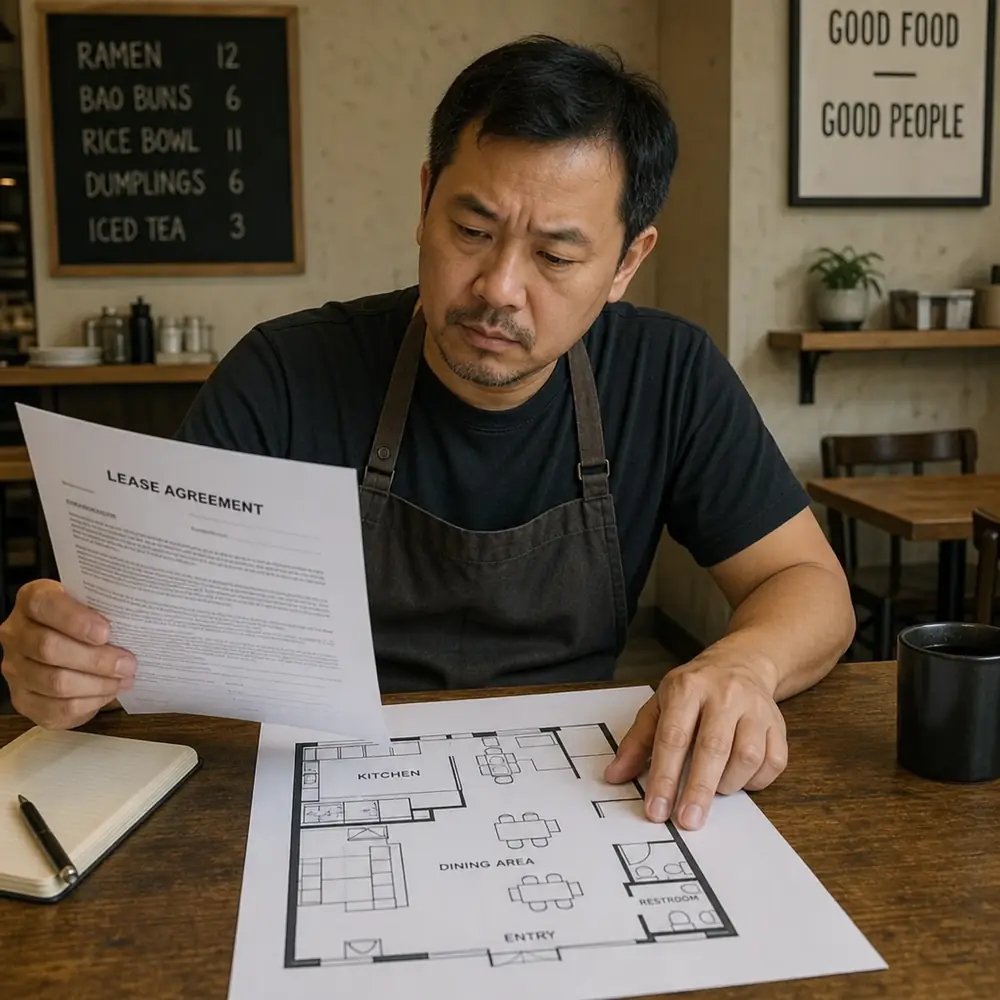
Before signing a lease, ask practical questions:
- Is restaurant use allowed in this space?
- Does the kitchen ventilation, plumbing, electrical capacity, and grease management support your menu?
- What renovations are required, and who pays for them?
- Are there restrictions on signage, hours, music, outdoor seating, or alcohol service?
- What is included in rent, and what extra fees apply?
- Can the space pass health, fire, and building inspections?
- How long is the lease, and what happens if sales are slower than expected?
Get professional help before committing to a lease if possible. A bad lease can damage a restaurant before opening day. Even if you are operating from home or a shared kitchen, review agreements carefully so you understand storage access, operating hours, cleaning duties, equipment use, and insurance requirements. Screen candidate addresses at Restaurant Site Finder and read how to choose a restaurant location.
7. Handle licenses, permits, insurance, and compliance
Food businesses are regulated because they affect public health and worker safety. Requirements vary by country, state, city, food type, and service model. Your responsibility is to confirm what applies before you sell.
Common requirements may include business registration, tax registration, food service permits, health inspections, food handler training, fire approvals, signage permits, music licenses, outdoor seating permits, alcohol licensing, waste disposal arrangements, and employer registrations. You may also need insurance for general liability, property, workers, vehicles, cyber risk, or delivery activities depending on your model.
If you are researching how to start a restaurant in Dubai, expect to deal with local licensing, food safety approvals, location rules, and business setup decisions such as mainland or free zone options depending on the activity. Because regulations and procedures can change, confirm details with the relevant Dubai authorities or a qualified local advisor before making commitments. The same principle applies anywhere: never rely only on a blog post for legal or licensing decisions.
Create a compliance folder that includes:
- Business registration documents.
- Lease or kitchen-use agreement.
- Licenses and permits.
- Inspection reports.
- Insurance policies.
- Supplier certificates where relevant.
- Employee training records.
- Cleaning logs and food safety checklists.
- Equipment maintenance records.
This folder saves time during inspections, renewals, financing discussions, and operational handovers. See the restaurant permits and licenses guide for U.S. sequencing.
8. Set up suppliers, equipment, and inventory controls
Your suppliers affect quality, consistency, and cash flow. Choose suppliers based on reliability, food safety, delivery schedule, pricing transparency, minimum order quantities, and substitution policies. The cheapest supplier is not always the best one if deliveries arrive late, products vary wildly, or communication is poor.
Build your opening inventory around your menu, not your imagination. It is tempting to stock every possible ingredient, but excess inventory ties up cash and increases spoilage. Start with par levels: the minimum and maximum amount you need for each key item based on forecast sales. Adjust after the first weeks of real trading.
Essential setup areas include:
- Cooking equipment matched to your menu.
- Refrigeration and freezer space with temperature monitoring.
- Prep tables, storage racks, containers, labels, and scales.
- Dishwashing and sanitation supplies.
- Packaging for takeaway and delivery.
- Point-of-sale system, payment processing, and receipt setup.
- Basic accounting and inventory tracking tools.
- Security, cash handling, and access controls.
Used equipment can reduce costs, but inspect it carefully and understand repair risk. A cheap refrigerator that fails during service can cost more than it saves. For critical equipment, prioritize reliability and serviceability. Use the restaurant equipment checklist and commercial kitchen equipment buying guide; request quotes at Horeca Store.
9. Price your menu and understand your numbers
Pricing is one of the most important restaurant management basics. Your prices must cover ingredients, labor, rent, utilities, packaging, fees, marketing, waste, taxes, and profit. If you price only by copying competitors, you may copy a business model that does not work for your costs.
Start by calculating the ingredient cost for each item. Then consider labor complexity, portion size, packaging, delivery commissions, and perceived value. Some dishes may have higher ingredient costs but attract customers; others may be strong profit drivers. The goal is a balanced menu, not identical margins on every item.
Track these beginner metrics weekly:
- Sales by day and time.
- Sales by channel: dine-in, takeaway, delivery, catering, events, or online.
- Food cost as a percentage of sales.
- Labor cost as a percentage of sales.
- Prime cost, meaning food cost plus labor cost.
- Average order value.
- Waste, refunds, discounts, and voids.
- Best-selling and slowest-selling items.
- Customer complaints and repeat issues.
Numbers should influence action. If waste is high, reduce prep or simplify the menu. If labor is too high on slow mornings, adjust scheduling or opening hours. If a popular item has weak margin, review portioning, supplier cost, or price. Read what is prime cost in restaurant business and restaurant profit margins and unit economics.
10. Design simple operating systems
Great food matters, but systems make it repeatable. Operating systems are the written routines that help a restaurant run the same way when the owner is tired, absent, or busy. They also make training easier and reduce conflict among staff.
Begin with standard operating procedures for the tasks that happen every day. Keep them short, visible, and practical. A laminated checklist used daily is more valuable than a long manual no one reads.
Your first systems should cover:
- Opening duties, including equipment checks and station setup.
- Prep lists by station and expected volume.
- Recipe cards with portions, cooking times, plating, and allergen notes.
- Receiving deliveries and checking quality.
- Storage, labeling, and stock rotation.
- Cleaning schedules for front and back of house.
- Cash handling and end-of-day reports.
- Complaint handling and refund rules.
- Closing duties and security checks.
Consistency protects the guest experience. If one cook serves a generous portion and another serves a smaller one, customers notice. If one cashier explains wait times honestly and another ignores delays, reviews suffer. Systems make standards clear before problems become habits.
11. Hire, train, and lead your team
Restaurants are people businesses. Even a small restaurant needs clear roles, respectful communication, and consistent expectations. Hiring only for experience can be a mistake if the person resists your standards; hiring only for personality can be risky if they cannot handle pressure. Look for reliability, coachability, cleanliness, speed, and customer awareness.
Write simple job descriptions for each role. Include duties, schedule expectations, reporting lines, uniform standards, food safety responsibilities, and performance expectations. Then build training around real tasks rather than vague advice.
A basic training plan should include:
- Explain the concept, customer promise, and menu.
- Walk through safety, hygiene, allergens, and emergency procedures.
- Demonstrate each station or service task.
- Let the trainee practice during controlled periods.
- Give feedback quickly and respectfully.
- Confirm they can perform the task during a real shift.
- Repeat training when menu items, systems, or standards change.
Leadership shows up in the small moments. Praise good habits, correct issues early, and avoid creating a culture where only speed matters. A fast team that ignores safety, cleanliness, and hospitality will eventually cost the business.
12. Build your brand and marketing plan
Restaurant marketing begins before opening day. Your brand should help customers understand what you serve, why it matters, and how to order. A good name, logo, menu design, photography style, signage, and tone of voice all make the choice easier for busy customers.
Start with the basics: claim your online profiles, create a simple website or ordering page, publish accurate hours, and make the menu easy to read on mobile. Use clear food photos rather than overly styled images that set unrealistic expectations. Show the people, process, and personality behind the business where appropriate.
Useful launch marketing tactics include:
- Soft-opening invitations for a controlled group.
- Local business partnerships and office lunch samples.
- Short videos showing signature dishes being made.
- A pre-opening email or SMS list.
- Founder story posts that explain the concept.
- Grand opening offers that encourage trial without destroying margins.
- Review requests after successful customer experiences.
- Loyalty offers for repeat visits or repeat delivery orders.
Do not rely only on social media attention. A post can create awareness, but a clear ordering path creates sales. Make sure every marketing message tells people what to do next: reserve, order, visit, call, join the list, or book catering. See strategies to increase restaurant foot traffic for post-opening tactics.
13. Run a soft opening before the official launch
A soft opening is a controlled test of your restaurant before full public promotion. It helps you find problems while the stakes are lower. Treat it as a rehearsal, not a party.
Limit the menu, guest count, hours, or order channels during the first tests. Watch ticket times, kitchen communication, payment flow, customer confusion, packaging quality, staff confidence, and product consistency. Ask guests specific questions rather than "Was everything good?" Better questions include: "Was anything unclear when ordering?" "Did the food arrive at the right temperature?" "Would you order this again?"
Use a short soft-opening checklist:
- Test every menu item under real timing.
- Confirm the point-of-sale system works.
- Check online ordering, delivery pickup, and receipts.
- Review portion sizes and plating.
- Monitor wait times.
- Confirm staff know allergy and complaint procedures.
- Test restrooms, lighting, music, signage, and seating flow.
- Review cleaning and closing procedures after service.
- Meet with the team after each shift and fix the top issues first.
Expect mistakes. The goal is to discover them early, correct them quickly, and avoid launching at full volume with broken systems.
What should you do after launch?
After launch, your priority is to stabilize operations, protect cash flow, listen to customers, and improve one measurable issue at a time. Opening week can be emotional, but the real business begins after the excitement fades. A restaurant becomes sustainable through consistent execution, not one busy weekend.
Review results daily at first. Compare actual sales with your forecast, note which items sell, track waste, and listen for repeated customer comments. Avoid making huge changes based on one complaint, but act quickly when you see a pattern.
Focus your first 90 days on:
- Tightening prep quantities based on real demand.
- Adjusting staff schedules to match busy and slow periods.
- Removing or improving menu items that create delays or waste.
- Strengthening supplier relationships.
- Responding professionally to reviews.
- Building repeat-customer channels such as email, SMS, loyalty cards, or community partnerships.
- Training supervisors so the business does not depend entirely on the owner.
- Watching cash carefully before adding new expenses.
This is also when many owners discover whether they enjoy operations as much as food. Cooking is only one part of starting food business ownership. Managing people, numbers, vendors, maintenance, and customer expectations is the daily reality.
Adapt the plan for special restaurant paths
Not every reader will open a traditional restaurant first. Some will begin from home, launch a virtual brand, explore a specific cuisine, or use restaurant experience to advise others. The same fundamentals apply, but the emphasis changes.
Starting from home or as a virtual restaurant
If you want to know how to start a restaurant from home, begin with legal permission and food safety rules. Some places allow limited cottage food sales, while others require commercial kitchen production for most prepared meals. Once you understand the rules, choose a narrow menu that can be produced consistently, packaged safely, and delivered or collected at specific times.
For how to start a virtual restaurant from home, the challenge is not only cooking; it is digital trust. Customers cannot walk past your storefront, smell the food, or see the dining room. Your menu photos, reviews, packaging, delivery reliability, and online ordering experience become the storefront. See what is a ghost kitchen for delivery-first formats.
Starting a Mexican restaurant
For how to start a Mexican restaurant, decide whether you are building around speed, regional authenticity, family meals, modern presentation, street-food energy, or a specialty such as tacos, birria, tamales, seafood, breakfast, or desserts. The concept should guide equipment, prep schedules, supplier choices, and service style. Pay special attention to fresh components, sauces, tortillas, holding quality, and delivery packaging because texture and temperature strongly affect the customer experience.
Starting in Dubai or another international market
If you are exploring how to start a restaurant in Dubai, treat market research and compliance as separate workstreams. Understand the customer mix, mall and street locations, delivery platforms, cuisine competition, staffing rules, food safety requirements, and licensing route before committing money. Because the process depends on your exact activity and location, use official sources or qualified local advisors for current requirements.
Starting a restaurant consulting business
If you are researching how to start a restaurant consulting business, you need proven expertise in a specific area such as menu development, kitchen operations, cost control, branding, launch planning, staff training, or turnaround support. Consulting is not simply giving opinions about food. Build service packages, document your process, clarify deliverables, and avoid promising results you cannot control.
Avoid common beginner mistakes
Many restaurant problems are predictable. Beginners often overspend on decor before proving demand, build menus that are too large, underestimate working capital, hire too late, open without training, ignore food cost, or depend too heavily on friends and family feedback. These mistakes are understandable, but they are also preventable.
Watch for these warning signs:
- You cannot explain the concept in one sentence.
- Your menu requires too many ingredients for expected sales.
- You do not know your ingredient cost per dish.
- You have no written opening, closing, cleaning, or prep checklist.
- You are signing a lease before confirming permits and buildout needs.
- You are counting on best-case sales to pay fixed costs.
- You are using discounts as your main marketing strategy.
- You are ignoring negative feedback because the food is "supposed to be that way."
- You are too busy working in the restaurant to review the numbers.
The best defense is a simple weekly review. Look at sales, costs, labor, waste, complaints, reviews, and cash. Then choose the top two fixes for the coming week. Small corrections made consistently are more powerful than dramatic changes made too late. Read restaurant failure rate for context on undercapitalization and location risk.
Use this beginner launch sequence
If the process feels overwhelming, follow this simple order. It keeps you focused on decisions that unlock the next step instead of jumping randomly between logo design, equipment shopping, and social media ideas.
- Define your concept, customer, and service model.
- Research competitors and validate demand with a small test.
- Choose whether to start full-service, takeaway, catering, pop-up, home-based, virtual, or shared-kitchen.
- Build a simple business plan and conservative budget.
- Create a focused menu and calculate item costs.
- Confirm legal, health, zoning, and insurance requirements.
- Choose a suitable location or production space.
- Set up suppliers, equipment, inventory, and technology.
- Write operating checklists and recipe standards.
- Hire and train the opening team.
- Build your online presence and launch marketing plan.
- Run a soft opening and fix operational problems.
- Open officially with controlled expectations.
- Review performance weekly and improve the business step by step.
This sequence is the heart of this complete guide for beginners in practical form. You do not have to complete every task perfectly before moving forward, but you should not skip the decisions that protect food safety, cash flow, guest experience, and legal compliance.
Final checklist before you open
Before opening a restaurant to the public, pause and confirm that the business can actually serve customers safely and consistently. A strong opening is not about being flawless; it is about being prepared enough to recover quickly when something goes wrong.
Use this final new restaurant checklist:
- The concept is clear and easy for customers to understand.
- The menu is short enough for the kitchen to execute well.
- Ingredient costs and menu prices have been calculated.
- Licenses, permits, inspections, and insurance are in place.
- Suppliers are confirmed and backup options are identified.
- Equipment has been tested under real service conditions.
- Staff understand their roles and basic procedures.
- Food safety, cleaning, allergen, and complaint processes are written.
- Online profiles, hours, menus, and ordering links are accurate.
- A soft opening has revealed and resolved the biggest issues.
- Cash reserves or working capital are available for the early months.
- A weekly review routine is scheduled.
Starting a restaurant is demanding, but it becomes more manageable when you treat it as a series of controlled decisions. Start small if you need to, prove demand, protect your margins, and build systems that make quality repeatable. Whether you are launching a neighborhood cafe, a Mexican restaurant, a home-based food concept, a virtual kitchen, or a future consulting path, the fundamentals stay the same: serve a clear customer, manage the numbers, follow the rules, and improve every week.
Frequently Asked Questions
What do you need before opening a restaurant?
You need a clear concept, defined customer, realistic budget, legal operating structure, required permits, workable menu, reliable suppliers, and a plan for daily management. Validate demand and control costs before heavy spending. Not every detail must be perfect, but guesswork is expensive.
How can you start a restaurant with little or no money?
Reduce the first version's size: validate with pop-ups, catering, pre-orders, or shared commercial kitchen time before signing a long lease. Buy used equipment carefully, focus on a tight menu, and reinvest early profits. No money does not mean no cost. It means smaller tests and disciplined cash control.
What should a beginner restaurant business plan include?
Concept summary, target market, competitive analysis, menu strategy, startup and monthly operating budgets, conservative sales forecast, marketing plan, and operations plan covering staffing, training, suppliers, and customer service. The financial section deserves extra attention. Many restaurants fail because the numbers never worked.
Why is a soft opening important for new restaurants?
A soft opening is a controlled test before full public promotion. It reveals ticket times, kitchen communication, payment flow, packaging quality, and staff confidence while stakes are lower. Fix the top operational issues before launching at full volume with broken systems.
What are common beginner restaurant mistakes?
Overspending on decor before proving demand, building menus that are too large, underestimating working capital, hiring too late, opening without training, ignoring food cost, and relying on best-case sales to pay fixed costs. A simple weekly review of sales, costs, labor, and cash prevents most predictable failures.
Run a free location analysis
Enter any address to get competitor mapping, market gaps, opportunity scoring, and concept ideas.
Analyze your location free Shop equipment at Horeca Store