Site Selection
The New Rules of Restaurant Location Intelligence: Why Traffic Data Alone Isn't Enough Anymore
Foot traffic counts and car clickers are no longer enough. Modern restaurant location intelligence requires psychographics, GIS trade areas, cross-visitation patterns, and predictive analytics to scale multi-location chains.
Key Takeaways
- Foot traffic counts alone miss intent, psychographics, and true trade-area shape—density does not guarantee sales.
- Mobile location data, GIS polygons, and cross-visitation patterns replace manual car counts and radius guesses.
- Multi-unit brands need saturation analysis, cannibalization modeling, and predictive sales forecasting before signing leases.
- Run a free location scan at Restaurant Site Finder, then dive deeper with our foot traffic analysis guide.
For decades, the golden rule of hospitality real estate could be summed up in three words: location, location, location. And for a long time, defining a "good" location meant finding a busy intersection, counting the cars, and signing a lease. If a street had high foot traffic and decent visibility, it was generally considered a safe bet for a new eatery.
But the landscape of the food and beverage industry has fundamentally shifted. Today, relying on a simple vehicle count or pedestrian tally is a recipe for disaster. Welcome to The New Rules of Restaurant Location Intelligence: Why Traffic Data Alone Isn't Enough Anymore.
In an era defined by hybrid work models, third-party delivery apps, and hyper-specific consumer preferences, basic footfall metrics are woefully inadequate. Modern operators must embrace sophisticated data to survive and thrive. This article explores the depths of modern location strategy, outlining how advanced spatial data and behavioral analytics are revolutionizing the way brands choose their next successful site.
The Evolution of Site Selection: Moving Beyond the Basics
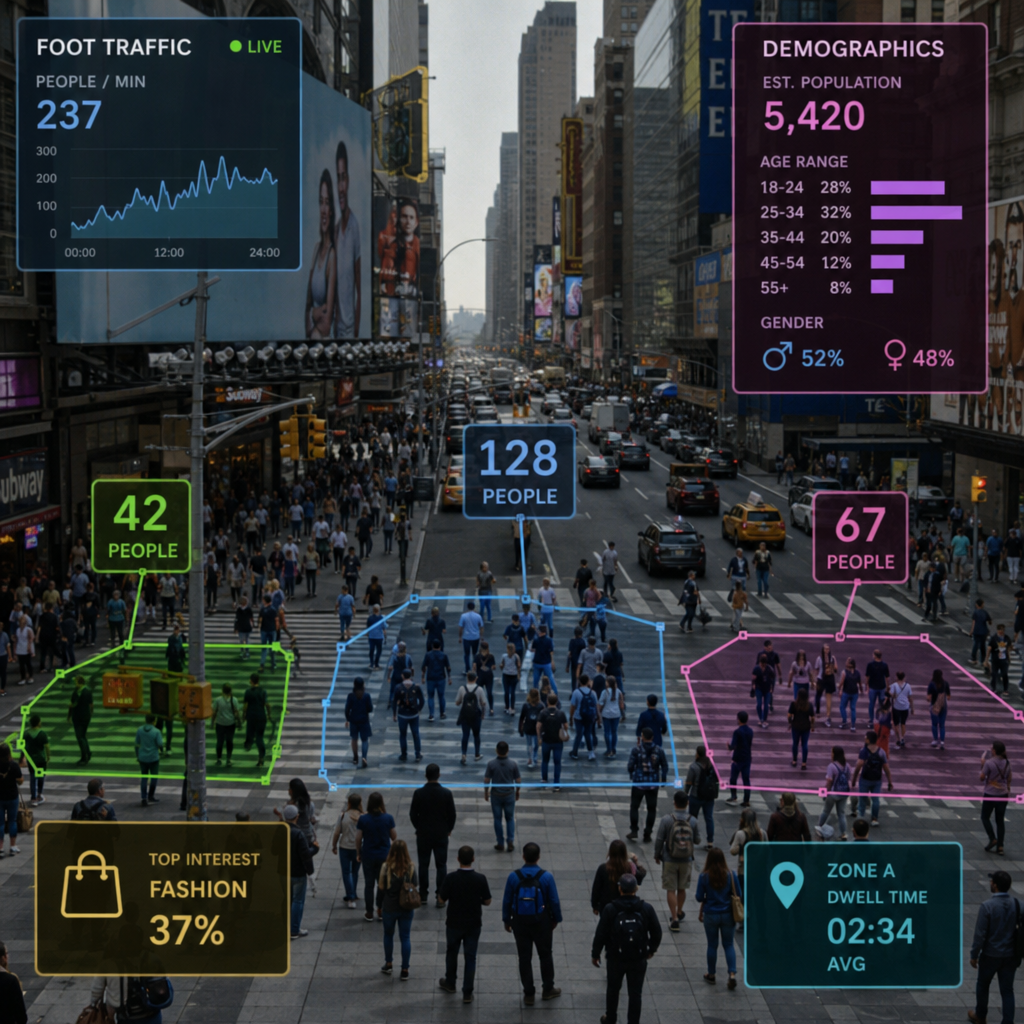
Historically, finding a new spot for a restaurant was a manual, instinct-driven process. Real estate brokers and brand executives would stand on street corners with clickers, estimating the flow of potential customers. However, the limitations of traditional foot traffic data are now painfully obvious. A raw count tells you how many people walked by, but it tells you absolutely nothing about who they are, where they are going, or what they want to eat.
Mobile Location Data vs Manual Car Counts
The transition from physical observations to digital tracking has been revolutionary. When comparing mobile location data vs manual car counts, the disparity in insight is staggering.
Manual counts capture a brief snapshot in time. They are easily skewed by weather, local events, or traffic accidents. Conversely, aggregated and anonymized mobile location data provides a continuous, 24/7 stream of information. It reveals the exact flow of human movement over weeks, months, and years. Instead of knowing that 5,000 cars drove past a site on a Tuesday, mobile data reveals that 60% of those drivers were commuting home from office parks, 20% were running errands, and 20% were tourists.
This level of granular insight allows operators to move from educated guessing to data-backed site selection. See our full AI foot traffic analysis guide for methodology.
Understanding the True Trade Area
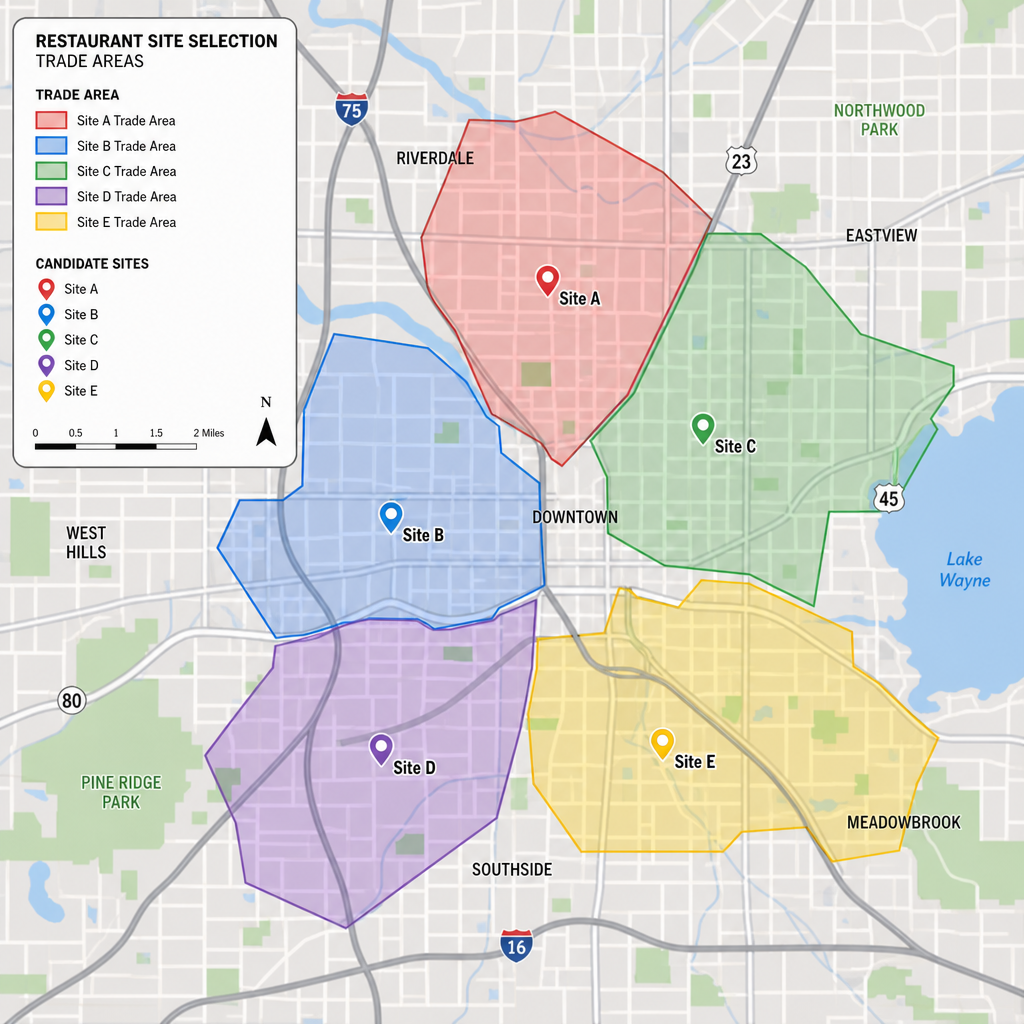
In the past, a restaurant's trade area was simply drawn as a one-, three-, or five-mile radius around a potential site. But consumers don't travel in perfect circles. They are restricted by rivers, highways, traffic patterns, and psychological barriers (like not wanting to make a left turn across a busy multilane road).
How to analyze restaurant trade areas today: define a custom polygon based on actual drive times and walking behaviors. Brands are heavily leveraging GIS for food service businesses. Geographic Information Systems (GIS) allow analysts to layer multiple datasets onto a single map.
By combining physical barriers, traffic flow, and demographic data, restaurant mapping reveals the true shape of your catchment area. You might find that a site draws customers from five miles to the north because of a convenient highway exit, but only half a mile to the south due to a major railway crossing.
Learn more in our trade area analysis guide.
Demographic Shifts Affecting Restaurant Locations
Trade areas are also constantly evolving. The rise of remote and hybrid work has fundamentally altered daytime populations. Downtown business districts that once promised guaranteed lunch rushes now experience erratic traffic, while suburban neighborhoods have seen a surge in daytime dining demand.
Tracking these demographic shifts affecting restaurant locations is non-negotiable. Modern location analytics can identify neighborhoods experiencing an influx of young professionals, families, or retirees in real-time, allowing proactive brands to secure real estate before prices skyrocket.
The Psychological Dimension of Location Strategy
If there is one crucial lesson in modern restaurant location intelligence, it is this: why density doesn't guarantee restaurant sales.
You could open a high-end, sit-down steakhouse next to a massive commuter transit hub where 100,000 people pass by daily. Despite the density, the restaurant might fail. Why? Because the intent of those 100,000 people is to catch a train and go home, not to sit down for a two-hour meal. Traffic without the right intent is just noise.
Hyperlocal Consumer Psychographic Profiling
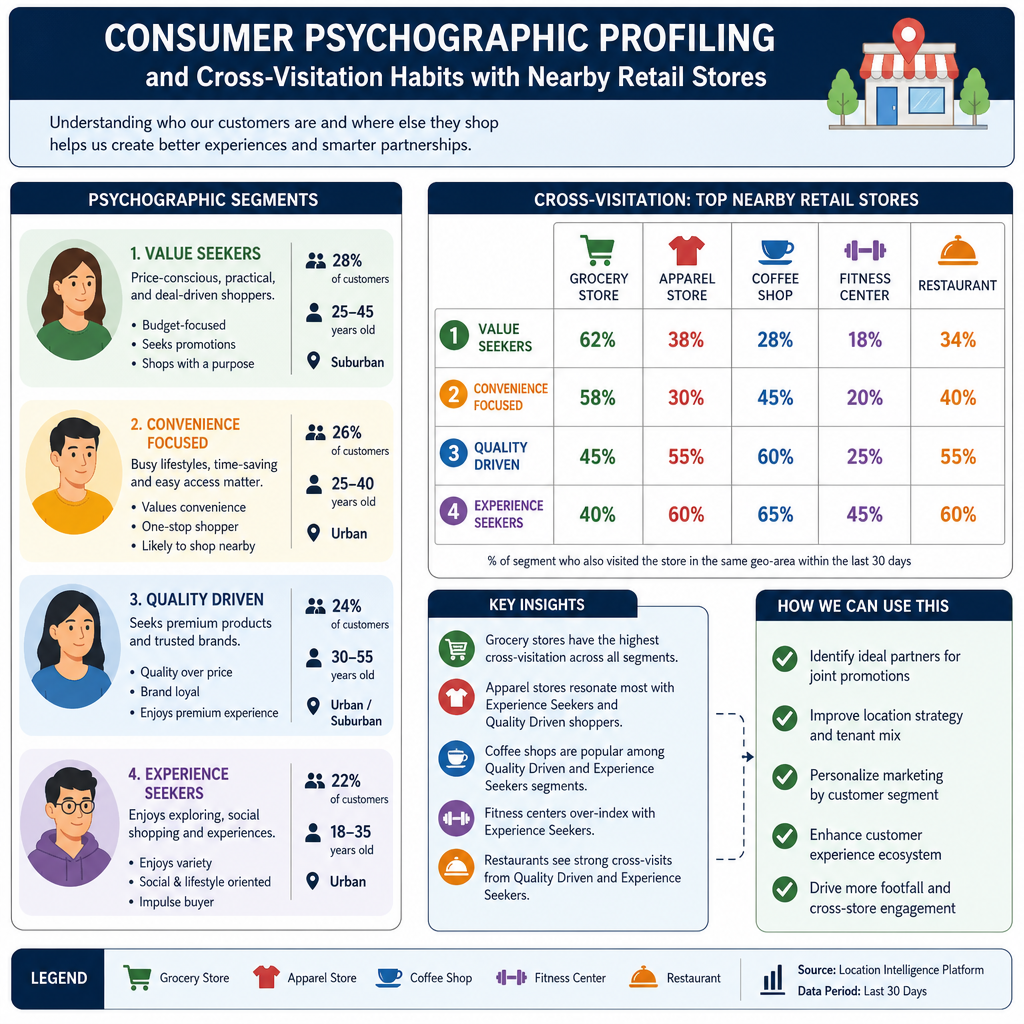
To ensure the traffic passing your site aligns with your brand, you need hyperlocal consumer psychographic profiling. This goes far beyond basic demographics like age and income. Psychographics dive into consumer lifestyles, values, and spending habits.
- Are the people in your trade area health-conscious gym-goers who value organic ingredients?
- Are they convenience-driven parents looking for a quick drive-thru dinner after soccer practice?
Understanding these nuances allows for pinpoint restaurant positioning. You aren't just putting a restaurant where people are; you are putting it where the right people are.
Identifying Cross-Visitation Patterns in Dining
Another breakthrough in modern analytics is identifying cross-visitation patterns in dining. This involves analyzing what other businesses your target customers frequent.
For example, a fast-casual salad concept might discover through data that its highest-spending customers frequently visit high-end fitness centers and premium grocery stores. By mapping the locations of these complementary businesses, the restaurant can pinpoint ideal real estate pockets. If they find a vacant storefront sandwiched between a popular yoga studio and an organic market, the likelihood of success increases exponentially.
Integrating the Digital World with the Physical
In today's omnichannel environment, a restaurant's physical location is deeply intertwined with its digital presence. Delivery apps, online ordering, and social media discoverability play massive roles in revenue generation.
Integrating digital footprints into site selection is now a standard practice for forward-thinking brands. Analysts look at search engine trends (e.g., the volume of searches for "tacos near me" in a specific zip code) and delivery app heat maps to gauge latent demand. If digital data shows a high volume of orders for a specific cuisine in a neighborhood that lacks physical restaurants serving that food, it represents a prime, untapped opportunity for a ghost kitchen or a brick-and-mortar build-out.
Scaling Smart: Strategy for Multi-Location Chains
Opening a single successful restaurant is hard; scaling a brand to 50 or 500 locations is a monumental challenge that requires absolute precision. When optimizing restaurant network expansion strategy, multi-unit operators must look at the macroscopic and microscopic levels simultaneously.
Market Analysis and Saturation
Before selecting a specific street corner, brands must evaluate the broader market. Thorough market analysis involves looking at the total addressable market (TAM) within a city or region. How many locations can the Dallas-Fort Worth metroplex support before returns diminish?
To answer this, brands utilize restaurant market saturation analysis tools. These platforms assess the current density of direct and indirect competitors relative to the target demographic population. Entering an oversaturated market requires stealing market share from established competitors, which is notoriously expensive. Finding underserved, "white space" markets offers a much smoother path to profitability.
Competitor Cannibalization and Proximity Analysis
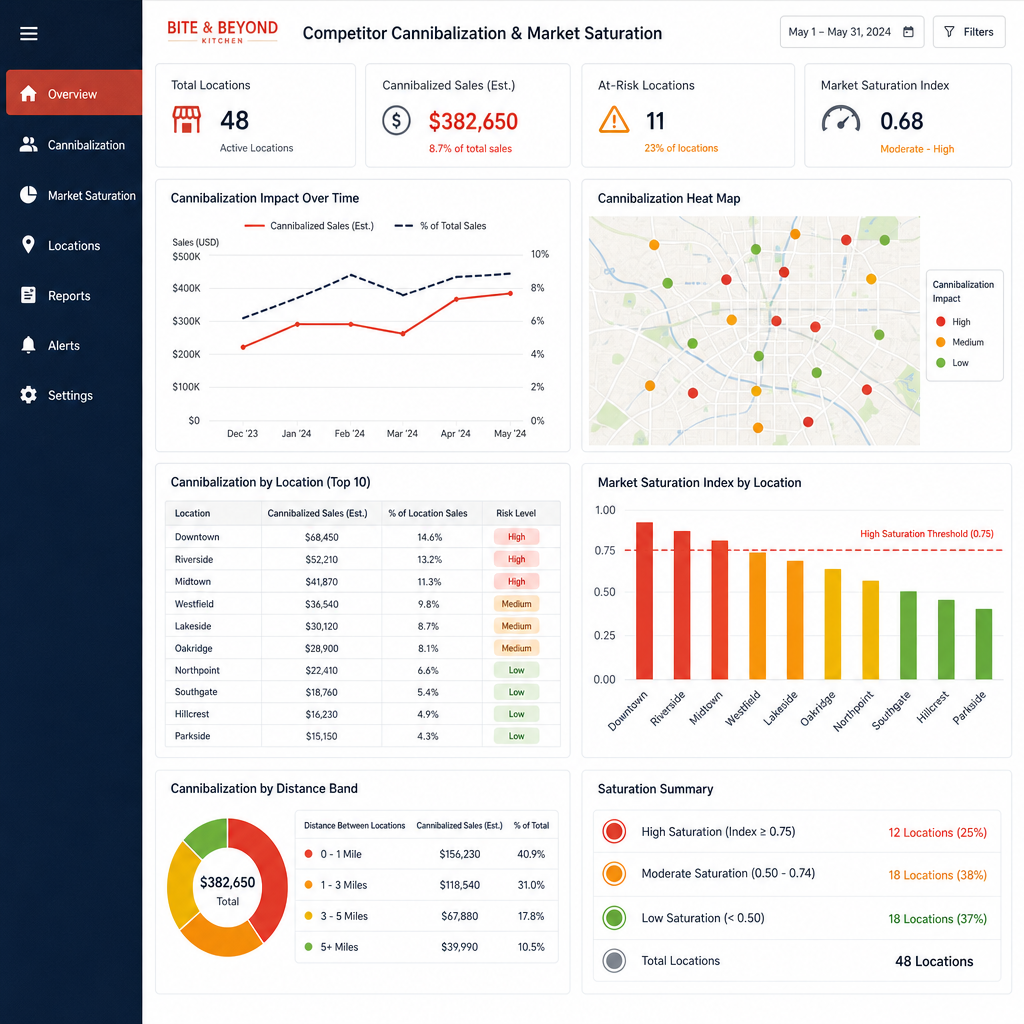
One of the greatest threats to a growing chain is its own success. If you open a new location too close to an existing one, you might not generate new revenue; you might simply split the sales of your first store.
Conducting rigorous competitor cannibalization and proximity analysis prevents this. By analyzing mobile tracking data and customer loyalty programs, brands can see exactly where their current customers live and work. Predictive models can then estimate how much revenue a proposed new site will draw from existing locations, ensuring that network expansion actually results in net-new growth.
Read our guide on franchise location intelligence and AI for scaling strategies.
The Tech Stack: Tools of the Modern Trade
You cannot execute a modern location strategy using spreadsheets and gut feelings. The complexity of the data requires specialized software. Fortunately, the market is filled with robust solutions.
Leveraging Predictive Analytics
At the cutting edge of this field is advanced spatial data science for restaurants. Data scientists build complex algorithms that ingest dozens of variables—from historical sales data and competitor proximity to local weather patterns and traffic flows.
These algorithms power predictive restaurant site selection analytics. Instead of manually crunching numbers, real estate teams can input a potential address into a platform and receive a highly accurate, AI-generated sales forecast. The system might say, "Based on the performance of our current portfolio and the demographic/traffic makeup of this new site, we project Year 1 sales of $2.4 million with an 85% confidence interval."
See how AI predicts success before you sign the lease.
Choosing the Right Partners
For growing brands, investing in the top restaurant business intelligence tools for multi-location chains is an operational necessity. These platforms serve as a centralized hub for all real estate and market data.
Furthermore, many operators choose to partner with specialized consultants and tech vendors. There are several elite restaurant location intelligence companies in the USA that offer end-to-end solutions, combining proprietary data sets with industry-specific expertise. Compare options in our 2026 buyer's guide.
Actionable Steps for Mitigating Financial Risk in Site Selection
The ultimate goal of utilizing all this data is mitigating financial risk in site selection. A bad real estate decision can cost a restaurant brand hundreds of thousands—if not millions—of dollars in lease obligations, build-out costs, and operating losses.
To protect your capital and ensure maximum ROI, follow these actionable steps when analyzing a new site:
- Define your core customer: Before looking at a map, look at your current data. Use loyalty programs and POS data to build a hyper-specific profile of your most profitable customers.
- Move beyond the radius: Stop using simple circles to define your trade area. Use drive-time mapping that accounts for traffic congestion at your peak operating hours (e.g., 5 PM to 7 PM for a dinner concept).
- Analyze the "why" of traffic: Don't just count the cars. Determine the intent of the traffic. Are they commuters, shoppers, or tourists? Ensure their intent aligns with your service model.
- Check for cannibalization: If you already have locations in the region, model the impact a new site will have on their sales. Ensure the net gain justifies the investment.
- Look for cross-visitation synergies: Map the businesses that your target demographic frequents. Try to locate your restaurant in close proximity to these synergistic brands to capture organic, high-intent footfall.
- Evaluate the digital demand: Use search engine trends and delivery app data to ensure there is active digital demand for your cuisine in the proposed area.
Use our Go/No-Go decision framework to pressure-test finalists.
Conclusion
The days of signing a ten-year commercial lease based on a gut feeling and a manual car count are officially over. The rules have changed, and the margin for error in the hospitality industry is slimmer than ever.
As we have explored in The New Rules of Restaurant Location Intelligence: Why Traffic Data Alone Isn't Enough Anymore, finding the perfect site is a multidimensional puzzle. It requires moving beyond simple density to understand the psychographics, daily habits, and digital footprints of modern consumers. It requires predictive modeling to forecast sales and spatial data science to map true trade areas.
By fully integrating robust data analytics into your site selection process, you transition from gambling on real estate to making calculated, strategic investments. Whether you are opening your second location or your two-hundredth, embracing modern location intelligence is the surest way to secure your brand's physical footprint and long-term financial success.
Ready to test a site? Enter any address at Restaurant Site Finder for a free GO/NO-GO analysis powered by Horeca Store.
Run a free location analysis
Enter any address to get competitor mapping, market gaps, opportunity scoring, and concept ideas.
Analyze your location free Shop equipment at Horeca Store