Site Selection
Restaurant Location Intelligence in 2026: Why Franchise Owners Are Ditching Spreadsheets for AI
Franchise owners are replacing static spreadsheets with AI-driven location intelligence—geospatial mapping, mobile trade areas, revenue forecasting, and cannibalization analysis—to scale with confidence in 2026.
Key Takeaways
- Static spreadsheets cannot keep pace with real-time mobility, delivery zones, or neighborhood change—AI location intelligence can.
- Geospatial data and mobile pings reveal true trade areas, not arbitrary 3-mile radius guesses.
- Machine learning forecasts first-year revenue, flags cannibalization risk, and accelerates lease decisions.
- Run a free AI scan at Restaurant Site Finder, then compare platforms in our 2026 buyer's guide.
For decades, finding the perfect spot for a new restaurant was a mix of gut instinct, basic census data, and a lot of crossed fingers. But as we navigate a highly competitive hospitality landscape, the stakes are simply too high for guesswork. Restaurant Location Intelligence in 2026: Why Franchise Owners Are Ditching Spreadsheets for AI is no longer just a catchy headline—it is the reality of modern franchise development.
Today's most successful operators aren't staring at static Excel rows. Instead, they are using advanced algorithms, dynamic mapping, and predictive models to guarantee their next opening is a lucrative hit. If you want to scale your brand effectively, understanding this technological shift is non-negotiable.
The Shift: AI vs Spreadsheets for Restaurant Market Analysis
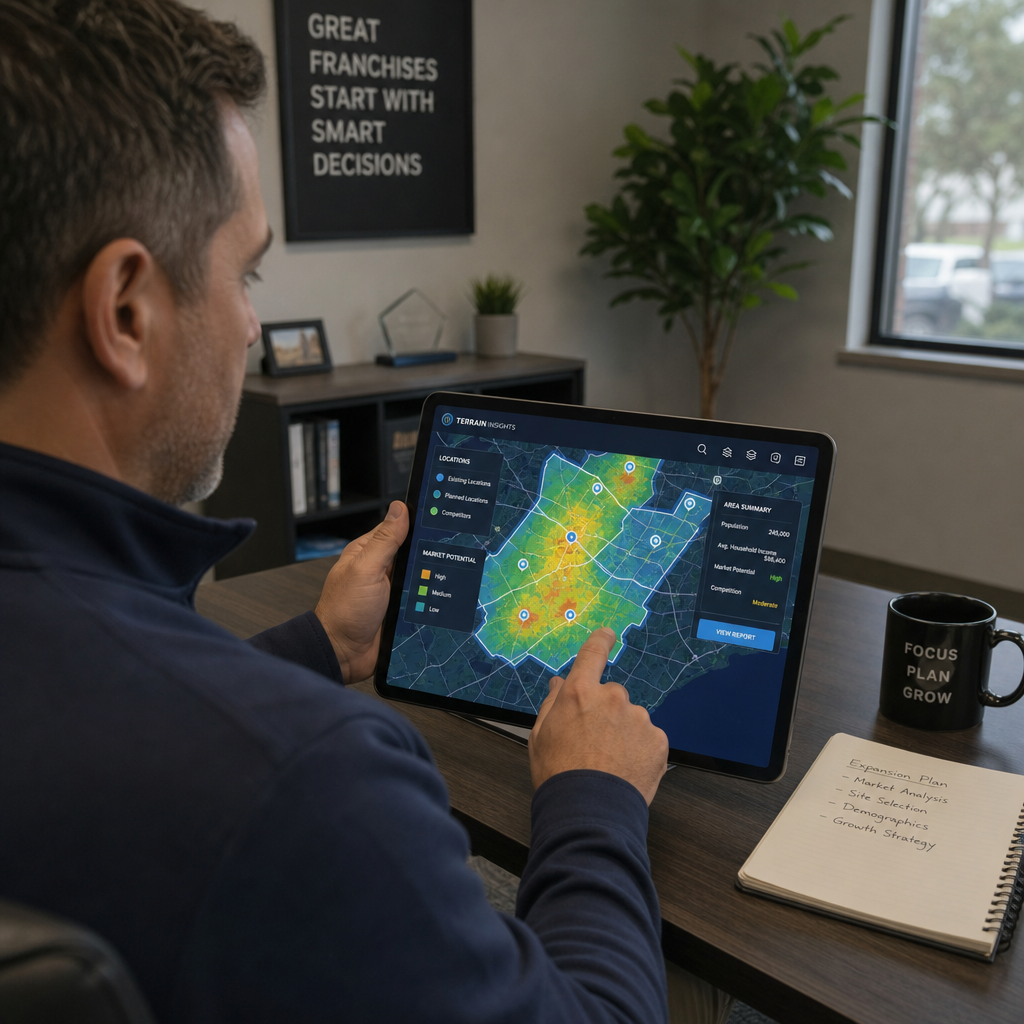
In the past, franchise developers relied on manual data entry to track competitors, estimate populations, and calculate potential rent. However, the limitations of manual spreadsheets in site selection have become glaringly obvious. Spreadsheets are static. They cannot account for sudden road closures, changing consumer habits, or the nuances of neighborhood gentrification.
When comparing AI vs spreadsheets for restaurant market analysis, the difference is like comparing a paper map to a live GPS. Artificial intelligence processes billions of data points in seconds, offering dynamic, real-time insights that a spreadsheet could never handle. It's no wonder that industry analysts continuously highlight restaurant location intelligence in 2026 as the defining operational shift of the decade.
Why Spreadsheets Fail at Scale
- Stale data: Census snapshots age quickly; AI pulls live mobility and spending signals.
- No spatial logic: Excel cannot map drive times, barriers, or delivery radius overlap.
- Manual bottlenecks: Multi-unit brands waste weeks on feasibility work that AI completes in hours.
- Hidden cannibalization: Spreadsheets rarely model how a new unit steals from existing franchisees.
For a deeper look at how AI replaces guesswork before you sign, see our guide on how AI predicts restaurant success before the lease.
Decoding the Map: How to Leverage Geospatial Data for Restaurant Expansion
So, what does this look like in practice? Knowing how to leverage geospatial data for restaurant expansion involves tapping into diverse, real-world data streams to paint a complete picture of a neighborhood.
Modern platforms use hyperlocal demographic mapping tools for franchise owners to look beyond basic age and income brackets. They dive deep into consumer psychographic profiling for restaurant site planning, identifying not just who lives in an area, but how they spend their money, their lifestyle choices, and their dining preferences.
One of the most powerful features of this technology is the use of anonymized mobile device pings for trade area identification.
Actionable tip: Instead of drawing an arbitrary 3-mile radius around a potential site, use mobile ping data to see where people are actually commuting from. You might find that a major highway creates a psychological barrier, meaning your real customer base is entirely on one side of the street.
Learn more in our foot traffic analysis guide and trade area analysis overview.
Can Machine Learning Predict Restaurant Revenue by Location?
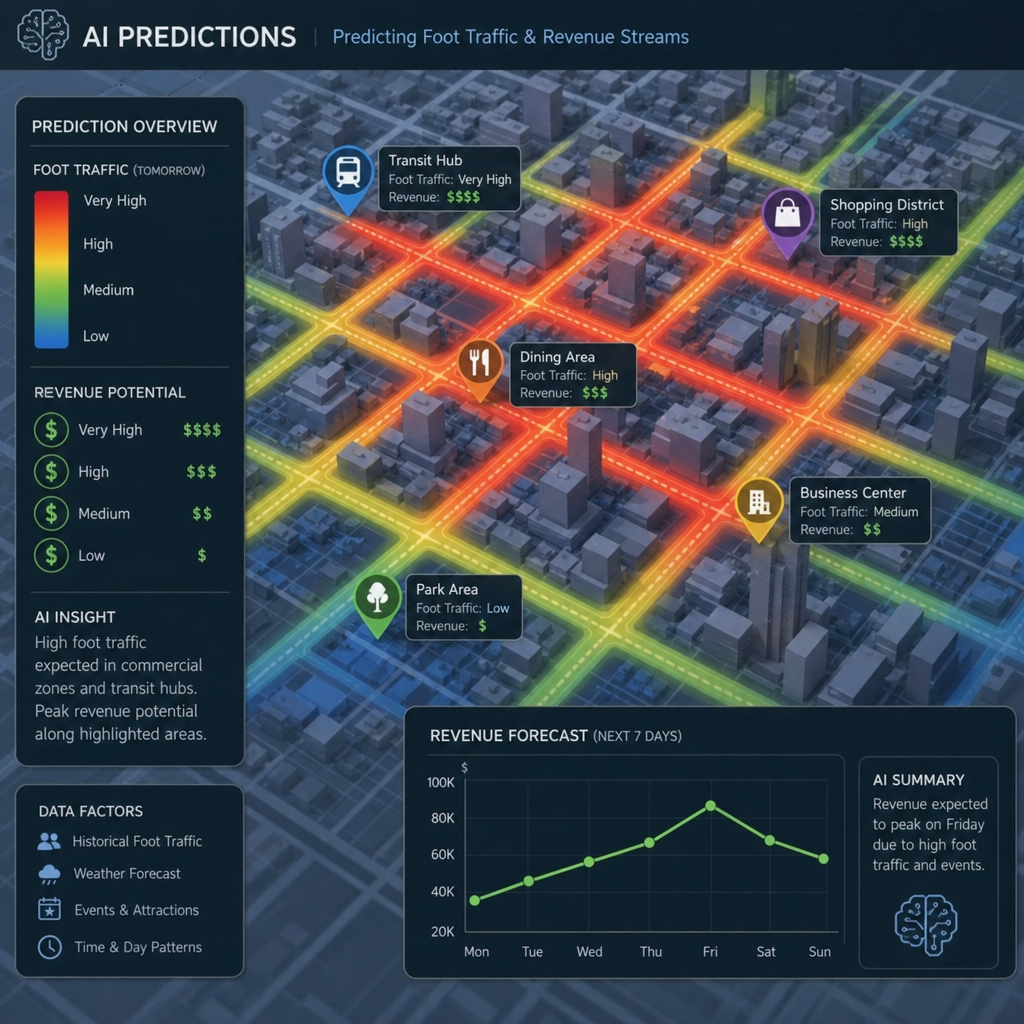
For years, franchise owners asked: can machine learning predict restaurant revenue by location? In 2026, the answer is a resounding yes.
By analyzing historical performance data across your existing units and cross-referencing it with new site data, AI models can forecast first-year sales with astonishing accuracy. This paves the way for confident, predictive site selection for multi-unit franchise growth.
Instead of spending weeks manually researching a neighborhood, development teams can now rely on automated feasibility studies for new restaurant concepts. Within hours, you can generate a comprehensive report that details projected revenue, optimal store size, and expected break-even points, allowing you to sign leases faster than the competition.
Optimizing Operations: Foot Traffic, Delivery, and Territory
Finding a great location isn't just about the physical dining room anymore. The rise of off-premise dining has forever changed how we evaluate real estate.
Real-Time Foot Traffic and Fast Food
For fast-casual and quick-service restaurants (QSRs), visibility and accessibility are everything. AI tools now offer real-time foot traffic forecasting for quick service brands, allowing operators to predict customer flow down to the hour. This helps not only in site selection but in determining optimal staffing levels before the doors even open.
The Delivery Ecosystem
If your concept relies heavily on UberEats, DoorDash, or in-house drivers, your site needs to be optimized for logistics. Implementing dynamic delivery radius optimization using spatial AI ensures your new site is perfectly positioned to reach the maximum number of hungry customers without food quality degrading during transit. The AI actively adjusts boundaries based on traffic patterns, road layouts, and historical delivery times.
Protecting Your Franchisees
One of the fastest ways to frustrate a successful franchisee is to open a new location too close to theirs. Preventing restaurant cannibalization with spatial analytics is a game-changer. AI analyzes exact customer migration patterns, ensuring that a new site will pull from untapped markets rather than stealing sales from your existing stores.
Use our Go/No-Go decision framework to pressure-test finalists before you commit.
The Business Case and the Future
Change can be daunting, but the ROI of transitioning to AI-driven location intelligence is undeniable. By avoiding just one "dud" location, the software pays for itself a hundred times over. You save on broken leases, marketing campaigns trying to save a doomed store, and the immense opportunity cost of wasted time.
As we look at the emerging trends in data-driven franchise development, it's clear that technology will only become more integrated. We are seeing platforms incorporate climate data, social media sentiment analysis, and even hyper-local economic indicators into their algorithms.
If you are looking to upgrade your tech stack, researching the best location intelligence platforms for hospitality in 2026 should be your top priority. Start with our platform comparison showdown and 2026 buyer's guide. Look for solutions that offer seamless integration with your current POS systems and provide intuitive, user-friendly dashboards.
Conclusion
The era of "hunch-based" real estate decisions is officially over. By embracing AI-driven location intelligence, franchise owners can mitigate risk, protect their existing units, and scale with absolute confidence. Toss the spreadsheets aside, leverage the power of geospatial data, and let machine learning guide your brand to its most profitable locations yet.
Ready to test a site? Enter any address at Restaurant Site Finder for a free GO/NO-GO analysis powered by Horeca Store.
Run a free location analysis
Enter any address to get competitor mapping, market gaps, opportunity scoring, and concept ideas.
Analyze your location free Shop equipment at Horeca Store