Guides
Top Strategies for Restaurant Success Today
Practical strategies for restaurant success today, concept clarity, menu design, customer service, business planning, marketing, team culture, technology, and habits that keep operations improving.
Key Takeaways
- Restaurant success today is repeat visits, trust, and healthy margins, not just a packed dining room on Friday night.
- A clear concept guides menu, staffing, marketing, and service decisions so the business does not drift.
- Strong customer service, honest marketing, and practical systems beat chasing every dining trend.
- Pair operational discipline with location fit, validate trade areas free at Restaurant Site Finder before you expand or relocate.
Running a successful restaurant today takes more than good food. Owners and managers have to balance guest expectations, rising costs, team culture, menu choices, marketing, and the daily rhythm of service. This guide breaks down practical restaurant tips you can use to strengthen the guest experience, improve operations, and build a healthier restaurant business without losing the warmth that makes hospitality special.
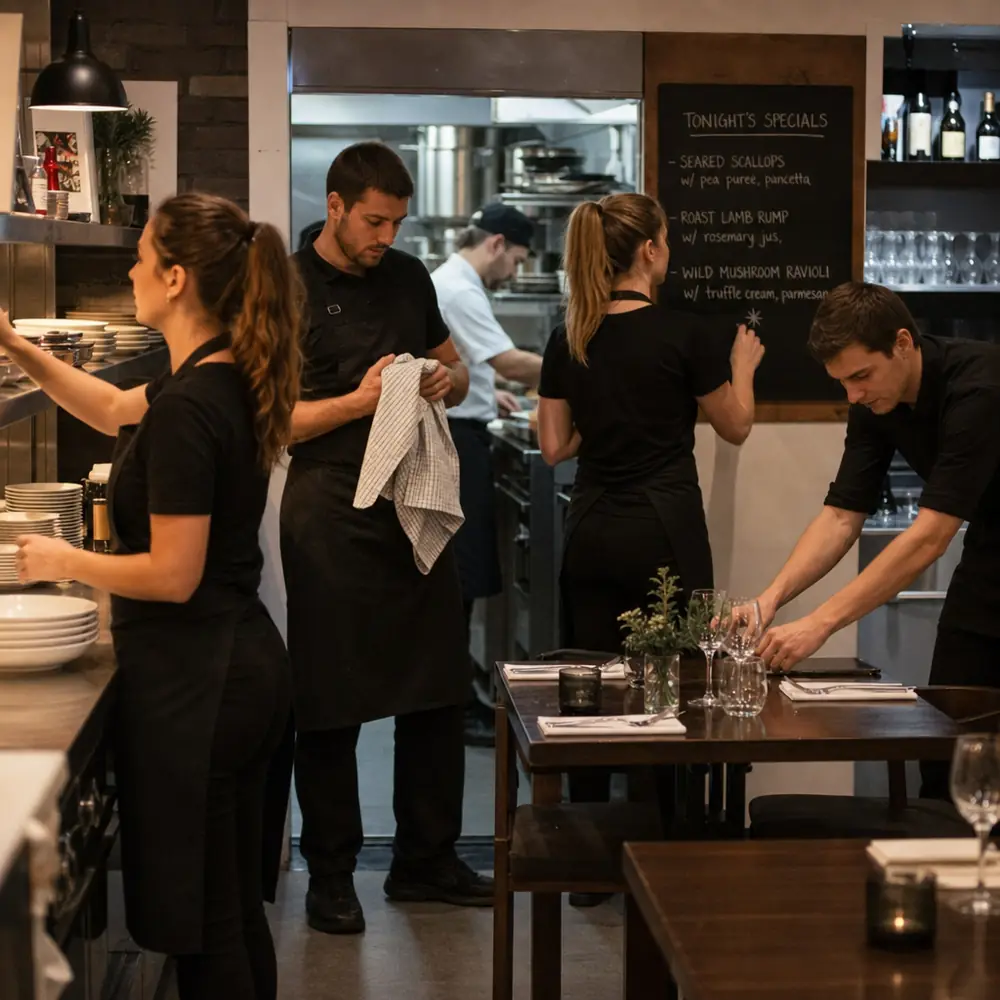
What does restaurant success look like today?
Restaurant success today means creating a place people want to return to, recommend, and trust. It is not only about filling tables on a busy Friday night; it is about delivering consistent food, thoughtful customer service, clear value, and smooth operations every day. In a changing food industry, the strongest restaurants know their audience, manage their numbers, and keep improving without chasing every trend.
That definition matters because restaurants can look busy and still struggle. A packed dining room does not always mean healthy margins, happy employees, or loyal guests. A quieter restaurant with strong repeat customers, efficient food service, and a focused menu may be in a much stronger position.
The goal is balance. You need creativity, but also structure. You need a welcoming room, but also a practical restaurant business plan. You need marketing, but the experience must be good enough to support the promise.
A strong concept gives every decision direction
Every successful culinary business starts with a clear concept. This does not mean the idea has to be complicated. In fact, the best concepts are often simple enough for guests to understand quickly and strong enough to guide decisions behind the scenes.
A concept answers questions like: Who is this restaurant for? What kind of experience are we creating? What foods, prices, service style, and atmosphere make sense together? A cozy neighborhood deli, a family-friendly café, and an upscale full-service restaurant all need different choices, even if they share the same goal of making guests happy.
A clear concept also helps prevent drift. Without one, menus grow too large, décor becomes inconsistent, marketing feels scattered, and the team may not know what kind of service to deliver. When your concept is defined, it becomes easier to say yes to the right ideas and no to the distractions.
If you are opening or refreshing a restaurant, write a short concept statement in plain language. Keep it practical, not poetic. For example, a deli restaurant business plan might describe a casual lunch spot focused on fresh sandwiches, quick service, friendly staff, and local office workers. That simple statement can shape the menu, staffing plan, hours, signage, and promotions. See our restaurant concept development guide for a structured workflow.
Menu design should support both guests and operations
Menu design is one of the most powerful tools in the restaurant business. A menu is not just a list of dishes; it shapes expectations, influences ordering, affects kitchen workflow, and plays a major role in profitability. When it is clear and focused, guests feel more confident and the team can work more smoothly.
A strong menu usually has enough variety to feel interesting but not so many choices that it overwhelms guests or slows down the kitchen. Each item should have a reason to be there. If a dish is rarely ordered, hard to prepare consistently, or uses ingredients that do not appear elsewhere, it may be adding more complexity than value.
Good menu design also considers how people actually read. Guests should be able to spot signature items, understand descriptions quickly, and compare options without confusion. Clear names, concise descriptions, and thoughtful grouping can make the experience easier before a server even arrives.
Useful menu checks include:
- Guest clarity: Can someone understand the style, portions, and main ingredients without asking several questions?
- Kitchen flow: Can the team prepare the menu well during peak hours?
- Ingredient overlap: Are ingredients used across multiple dishes to reduce waste?
- Price confidence: Do prices feel aligned with the experience, portion, and setting?
- Brand fit: Does every item support the restaurant's concept?
A menu should evolve, but it should not change randomly. Review sales, listen to guest feedback, and ask the kitchen what slows them down. Small menu improvements can create better service, lower waste, and a more enjoyable dining experience. Track contribution margin against prime cost targets when you refine the menu.
Dining trends matter, but they should not run the business
Dining trends can inspire fresh ideas, but they should not replace clear judgment. Trends shift quickly, and not every popular idea fits every restaurant. The best operators watch what guests are responding to, then adapt only the ideas that match their concept, team, and kitchen.
Some trends affect broad guest expectations. People may look for more flexible ordering, clearer ingredient information, lighter options, shareable plates, casual quality, or experiences that feel personal. Other trends are more style-based and may fade faster. The key is knowing the difference.
Before adding a trend to your menu or service model, ask whether it solves a real guest need. Will it improve speed, flavor, comfort, value, or convenience? Can your team execute it consistently? Does it make sense for your space and price point?
This is where hospitality management becomes practical. Managers should create room for creativity while protecting the business from unnecessary complexity. A trend that excites guests and works operationally can be a smart move. A trend that creates confusion, waste, or inconsistent service may cost more than it brings in.
Customer service is built before the guest arrives
Great customer service does not begin when the host says hello. It begins with hiring, training, scheduling, communication, and the standards you set for the team. Guests notice the smile at the door, but they also feel the systems behind it.
A strong service culture gives staff the confidence to act with warmth and consistency. Team members should understand the menu, know how to handle common problems, and feel supported when service gets busy. If employees are confused, rushed, or unsupported, guests usually feel it.
Practical service standards may include:
- Greeting guests within a reasonable time and making eye contact.
- Explaining menu items in simple, helpful language.
- Checking back without interrupting too often.
- Handling complaints calmly and without blame.
- Keeping the dining room clean, comfortable, and organized.
- Thanking guests sincerely before they leave.
The small moments matter. A server remembering a regular's favorite drink, a manager checking on a table after a delay, or a host making a waiting guest feel seen can turn an ordinary meal into a memorable one.
Customer service also needs recovery skills. Mistakes happen in every restaurant. What matters is how quickly and honestly the team responds. A sincere apology, a clear solution, and a calm tone can protect trust even when something goes wrong.
How can restaurants become better places for business meetings?
Restaurants become better places for business meetings when they make the experience easy, comfortable, and predictable. Guests planning a business meeting in restaurant settings usually care about seating, noise level, service timing, privacy, Wi-Fi availability, and a menu that works for different preferences. If your team understands those needs, a restaurant business meeting can become a valuable repeat occasion.
This opportunity is not limited to formal private dining rooms. Many restaurants can attract business guests by offering reliable lunch service, quiet corners, flexible reservations, and staff who know when to be attentive without hovering. The goal is to support conversation, not compete with it.
To serve this audience well, think through the details. Are tables spaced comfortably enough for conversation? Can guests split checks if needed? Are there shareable starters that make ordering easy? Can the kitchen handle a group that has limited time?
Restaurants can also make business dining easier by training hosts and servers to recognize the occasion. A table discussing documents or laptops may prefer a slightly different pace than a group celebrating a birthday. Thoughtful service does not need to be stiff; it simply needs to match the guest's purpose.
A practical restaurant business plan keeps ideas grounded
A restaurant business plan should not be a document that gets written once and forgotten. It should be a working guide for decisions. Whether you are opening a new concept, expanding, or improving an existing operation, the plan helps connect your ideas to real-world numbers and actions.
At a basic level, a restaurant business plan should cover the concept, target guests, menu direction, staffing needs, startup or operating costs, pricing approach, marketing plan, and expected challenges. It should also explain what makes the restaurant different in a way guests can understand.
For a small deli, the plan may focus on lunch traffic, takeout speed, simple inventory, and strong neighborhood visibility. For a full-service concept, the plan may place more emphasis on table turns, reservations, bar service, training, and the guest experience from arrival to departure.
Important planning areas include:
- Audience: Who is most likely to visit, and why would they choose you?
- Location fit: Does the concept match nearby workers, residents, visitors, or commuters?
- Menu economics: Can dishes be prepared consistently at prices that support the business?
- Staffing: How many people are needed for smooth service, and what training do they need?
- Marketing: How will people discover the restaurant and remember it?
- Operations: What systems will keep purchasing, prep, service, and cleaning on track?
Even administrative details deserve attention. For example, choosing the appropriate full service restaurant business code for registrations, taxes, or reporting may not feel exciting, but getting business details organized early can prevent confusion later. When in doubt, owners should confirm requirements with the appropriate professional or local authority.
Restaurant marketing works best when it feels honest
Restaurant marketing should make people hungry, curious, and confident. It should not promise an experience the restaurant cannot deliver. The best marketing reflects the real personality of the place and gives guests a clear reason to visit.
Start with the basics. Your online information should be accurate, including hours, address, menu, reservation details, and contact options. Photos should look appealing but realistic. If a guest sees one thing online and experiences something completely different in person, trust can fade quickly.
Social media can help, but it does not need to become a full-time performance. Share dishes, behind-the-scenes moments, staff highlights, seasonal updates, and useful reminders. A simple post about a fresh soup, a lunch special, or a new patio setup can be more effective than a polished message that feels disconnected from the restaurant.
Marketing also happens inside the restaurant. Menus, signage, server suggestions, loyalty cards, packaging, and follow-up emails all shape what guests remember. A friendly server recommending a signature dish may be one of the most effective marketing moments you have.
Simple restaurant marketing ideas include:
- Feature one signature item consistently so guests know what you are known for.
- Encourage happy guests to leave reviews, without pressuring them.
- Partner with nearby businesses for lunch, catering, or meeting options.
- Create seasonal offers that fit your concept rather than copying competitors.
- Use email or text updates only when you have something genuinely useful to say.
Good marketing is not noise. It is a clear invitation backed by a good experience.
Team culture shapes the guest experience
Guests may never see the pre-shift meeting, the prep list, or the manager solving a scheduling issue, but they feel the results. A restaurant with a respectful team culture usually delivers calmer, warmer, more consistent service. A tense team often creates a tense dining room.
Hospitality management is not only about managing guests. It is also about supporting employees so they can do good work. That means clear expectations, fair communication, useful training, and leaders who stay steady under pressure.
Team culture improves when managers communicate before problems grow. If the kitchen is running behind, the front-of-house team needs to know. If a menu item is unavailable, servers should hear it before guests do. If a new employee is struggling, coaching should happen early and kindly.
Recognition also matters. Restaurants are fast-paced, and it is easy to focus only on mistakes. Noticing a well-handled complaint, a clean station, or a team member helping a coworker reinforces the behavior you want to see again.
Technology should make service feel smoother, not colder
Technology can help restaurants save time, reduce errors, and communicate more clearly. But it should support hospitality, not replace it. Guests still want to feel welcomed, understood, and cared for.
Reservation platforms, point-of-sale systems, online ordering, digital waitlists, and inventory tools can all improve food service when used thoughtfully. The danger comes when tools create friction. If guests cannot find the menu, modify an order, ask a question, or reach a person when needed, convenience turns into frustration.
Choose technology based on real problems. If phone lines are overwhelmed, online ordering may help. If no-shows are hurting the dining room, better reservation communication may help. If inventory is difficult to track, a stronger back-office tool may be worth exploring.
Train the team well, too. A system is only useful if people know how to use it during real service. Keep the guest experience at the center and let technology handle the tasks that make hospitality easier. See streamlining growth with restaurant software tools for a practical stack overview.
What habits keep a restaurant improving over time?
Restaurants improve over time by reviewing what is working, fixing small problems early, and staying close to guest feedback. The best operators do not wait for a crisis before making changes. They build simple habits that keep the business aware, flexible, and focused.
A weekly review can be enough to spot patterns. Look at busy periods, slow periods, popular dishes, guest comments, staff concerns, and operational bottlenecks. Ask what caused the week to feel smooth or stressful. Then choose one or two improvements instead of trying to fix everything at once.
Helpful improvement habits include:
- Walk through the restaurant as if you are a first-time guest.
- Taste menu items regularly for consistency.
- Review guest complaints for patterns, not just one-time issues.
- Ask staff what slows them down during service.
- Refresh training when standards begin to slip.
- Remove tasks, menu items, or processes that add complexity without value.
This steady approach keeps growth manageable. It also helps the restaurant stay true to its concept while responding to real changes in guest behavior. Benchmark financial health against restaurant profit margins and unit economics monthly, not only when cash feels tight.
Strong restaurants combine warmth with discipline
The restaurant world rewards people who can care about details without losing sight of the guest. Food matters. Numbers matter. Cleanliness, timing, staffing, and marketing matter too. But the heart of the business is still hospitality: making people feel welcome and well served.
Success today comes from combining clear planning with genuine human connection. A focused concept, smart menu design, strong customer service, practical systems, and honest restaurant marketing all work together. None of these strategies has to be flashy to be effective.
For owners, managers, and teams, the best next step is simple: choose one area to improve this week. Tighten a menu description, coach a service habit, update your online information, review your restaurant business plan, or ask the team what would make service smoother. Small improvements, repeated consistently, can build a stronger restaurant over time.
If you are opening or expanding, start with location fit, run free trade-area analysis at Restaurant Site Finder and pair it with essential tips for starting a restaurant before you commit capital to a lease.
Run a free location analysis
Enter any address to get competitor mapping, market gaps, opportunity scoring, and concept ideas.
Analyze your location free Shop equipment at Horeca Store