Site Selection
How to Choose a Restaurant Location Based on Foot Traffic
How to choose a restaurant location based on foot traffic, concept fit, buying intent, foot traffic analysis, visibility, customer flow, traffic patterns, competition, operational fit, common mistakes, and selection framework.
Key Takeaways
- Choosing a restaurant location based on foot traffic means matching the right people, at the right time, with visibility and easy access, not just picking the busiest street.
- Separate traffic volume from buying intent; observe behavior, direction of travel, and daypart patterns before committing.
- Combine foot traffic analysis with competition, operational fit, and conservative sales assumptions.
- Screen candidate addresses free at Restaurant Site Finder, then validate with our Go/No-Go framework.
Choosing a restaurant location is not just about finding a busy street. The best dining location is where the right people pass by at the right time, notice your concept, and can easily decide to walk in. A strong location strategy uses restaurant location foot traffic as one signal alongside visibility, access, customer fit, competition, and operating costs.
Foot traffic can make a restaurant feel naturally discoverable, but volume alone does not guarantee sales. The goal is to understand customer flow, traffic patterns, and the small details that turn pedestrians into guests.
What makes foot traffic valuable for a restaurant?
Foot traffic is valuable when the people walking past your restaurant match the people most likely to buy from you. A lunch counter near office buildings may benefit from heavy weekday pedestrian traffic, while a date-night bistro may need evening visibility, parking access, and nearby entertainment more than morning crowds. The quality, timing, and intent of the crowd matter as much as the number of people passing the door.
Think of restaurant foot traffic as opportunity, not revenue. Every passerby represents a possible impression, but only a fraction will notice the storefront, understand the offer, feel that it fits the moment, and decide to enter. A good foot traffic analysis helps you separate a location that simply looks active from one that can consistently support your concept.
This is why site selection should begin with your restaurant model. Fast casual, coffee, dessert, fine dining, takeout, bars, and family restaurants all benefit from different movement patterns. Before you fall in love with a busy corner, define who you serve, when they buy, how long they stay, and what makes them choose you over the next option.
Foot traffic should match the restaurant concept
A high-traffic location can still be the wrong location if the crowd does not align with your menu, price point, service style, or daypart. A premium tasting-menu restaurant may not need thousands of pedestrians passing every hour if guests usually plan ahead and book reservations. A grab-and-go sandwich shop, on the other hand, may depend heavily on nearby workers, students, commuters, or shoppers who make quick decisions.
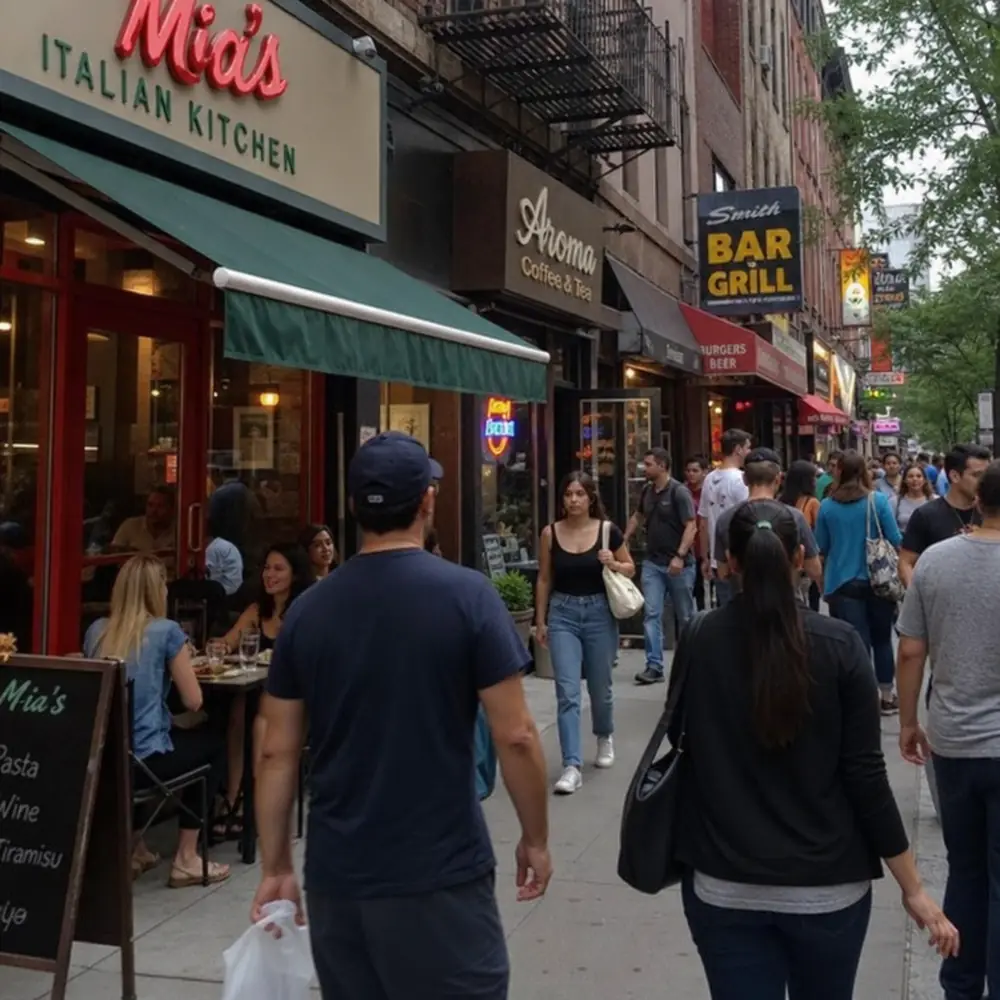
Start by mapping your concept to likely dining occasions. Are customers stopping in before work, during lunch, after school, before a show, while shopping, or after a night out? Each occasion creates a different type of customer flow. The best location analysis identifies which occasions are strongest in the trade area and whether your restaurant can naturally become part of them.
Consider these concept-to-traffic matches:
- Coffee and breakfast: early-morning commuters, office workers, transit stops, gyms, schools, and residential routes.
- Fast casual lunch: office districts, campuses, medical centers, retail corridors, and walkable mixed-use areas.
- Dessert and snacks: shopping streets, entertainment zones, parks, tourist areas, and family-friendly districts.
- Full-service dinner: neighborhoods with evening activity, theaters, hotels, nightlife, residential density, or destination appeal.
- Takeout and delivery-friendly concepts: residential density, easy curb access, nearby apartments, and convenient pickup flow.
A location can also support multiple dayparts, which is often a strength. For example, a café may benefit from morning commuters, lunch workers, and afternoon students if the surrounding area stays active throughout the day. The more your concept can serve the natural rhythm of the area, the more efficiently your visibility works. See how to choose the best location for a restaurant for full concept-first site selection.
The difference between traffic volume and buying intent
Busy sidewalks can be misleading. Some streets move people quickly from one destination to another, while others encourage browsing, lingering, and impulse spending. For restaurants, the most useful pedestrian traffic often includes people who are already in a buying mindset or open to changing plans.
A transit-heavy corridor may produce impressive counts but limited walk-ins if people are rushing to catch a train. A slower retail block with patios, window displays, benches, and nearby attractions may have fewer total pedestrians but stronger restaurant visibility and better conversion potential. The right question is not only "How many people pass by?" but "How many are likely to stop?"
Look for signals of buying intent in the surrounding environment:
- People walking in pairs or groups rather than only commuting alone.
- Shoppers carrying bags, families strolling, or visitors looking at storefronts.
- Nearby uses that create hunger or dwell time, such as offices, hotels, theaters, gyms, colleges, clinics, parks, and entertainment venues.
- Sidewalk conditions that make it easy to slow down, read a menu, or wait outside.
- Complementary businesses that attract the same audience without directly replacing your offer.
When evaluating restaurant location foot traffic, observe behavior instead of relying only on counts. Do people glance into windows? Do they cross at your side of the street? Are they moving comfortably or rushing through? These details can reveal whether customer flow supports discovery. Read understanding factors influencing restaurant foot traffic for awareness, motivation, and ease.
How do you perform a practical foot traffic analysis?
A practical foot traffic analysis combines observation, timing, mapping, and common-sense testing. You want to understand how people move through the area, where they pause, what draws them in, and whether your restaurant would be visible and convenient within that pattern. Even without advanced tools, a disciplined process can uncover risks that are easy to miss during a quick property tour.
Begin by visiting the site at the times your restaurant would depend on most. A location that seems lively on Saturday afternoon may be quiet on weekday lunch, and a street that feels dead at 10 a.m. may come alive after 6 p.m. Your analysis should reflect your real operating model, not just the landlord's best viewing window.
Use this basic observation checklist:
- Count passersby by time block. Track 15- or 30-minute periods during breakfast, lunch, dinner, late evening, weekdays, and weekends when relevant.
- Note direction of travel. Identify which side of the street people use, where they enter the block, and where they leave.
- Watch stopping behavior. Record whether people slow down, browse windows, check menus, wait near crosswalks, or gather nearby.
- Assess visibility. Stand at key approach points and see whether the storefront, signage area, entrance, and outdoor seating are easy to notice.
- Review barriers. Look for fast traffic, poor lighting, construction, blank walls, confusing entrances, narrow sidewalks, or difficult crossings.
- Compare neighboring businesses. Notice which storefronts attract attention and which are passed without a glance.
- Repeat observations. Visit during different weather conditions, days of the week, and local event schedules if those factors matter.
This process does not replace professional site selection support, lease review, or market research, but it gives you a grounded view of how the block actually works. The more often you observe the same patterns, the more confidence you can have in the location. Restaurant foot traffic analysis with AI can supplement on-the-ground counts with mobility data.
Visibility turns movement into awareness
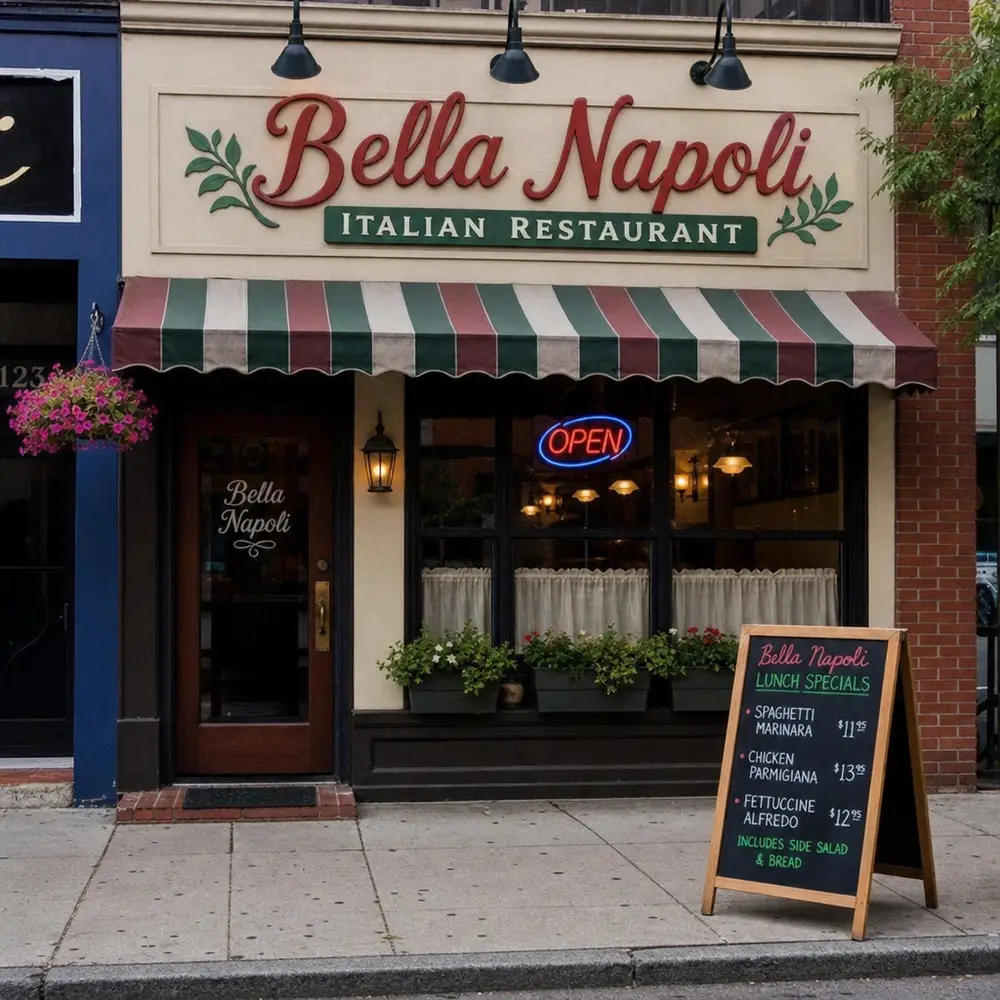
Restaurant visibility is the bridge between foot traffic and customer visits. If pedestrians cannot quickly understand what you are, where the entrance is, and why they should care, even strong traffic patterns may produce weak results. People make fast decisions while walking, so your storefront needs to communicate clearly from a distance and up close.
Visibility includes more than signage. It includes frontage, lighting, windows, menu placement, patio presence, door position, building setbacks, trees, poles, awnings, neighboring signs, and the angle from which pedestrians approach. A restaurant tucked behind columns or hidden above street level may struggle even in a busy area.
Evaluate visibility from the pedestrian's point of view:
- Can someone identify the restaurant before they are directly in front of it?
- Is the entrance obvious, welcoming, and aligned with natural walking paths?
- Is there space to display a menu, specials, or brand personality without clutter?
- Does the storefront look open and active during key business hours?
- Are windows, lighting, and interior views inviting enough to reduce hesitation?
Corner spaces often offer strong visibility because they can capture traffic from two directions, but they are not automatically better. A mid-block location near a major anchor, crosswalk, parking entrance, or transit stop may outperform a corner if customer flow naturally passes its door. The best choice depends on how people actually move.
Customer flow around the site matters
Customer flow describes how people move into, around, and away from the restaurant. It includes pedestrians, drivers, cyclists, delivery workers, rideshare users, and guests arriving from parking areas or nearby businesses. A restaurant may have strong sidewalk counts but still lose customers if the approach feels inconvenient or the entrance sits outside the natural path.
Pay close attention to crossings and decision points. Crosswalks, transit exits, parking garages, office lobby doors, hotel entrances, and theater exits can create concentrated streams of potential guests. If your storefront is before a decision point, customers may notice it while they are still choosing where to eat. If it is after the decision point, they may have already committed to another option.
Access is equally important. Guests should be able to reach the restaurant without confusion, unsafe crossings, or awkward detours. For quick-service concepts, even a few extra steps can matter during a short lunch break. For full-service restaurants, convenience still shapes first impressions and repeat visits.
Consider the full guest journey:
- How does a pedestrian first notice the restaurant?
- Where would they stop to read the menu?
- Can a group gather near the entrance without blocking the sidewalk?
- Is the door easy to find from both directions?
- Where do pickup customers, delivery couriers, or rideshare passengers wait?
- Does the flow work during rain, darkness, crowds, or peak demand?
When customer flow is smooth, the restaurant feels easy to choose. When it is awkward, guests may not consciously know why they keep walking, but they often do.
Traffic patterns change by time, season, and neighborhood
A strong location strategy looks beyond a single busy moment. Traffic patterns can shift dramatically by hour, weekday, season, school calendar, tourism cycle, office occupancy, event schedule, and weather. Restaurants are especially sensitive to these patterns because demand is tied to meals, social habits, and local routines.
For example, an office district may be excellent for weekday lunch but quiet at dinner. A tourist area may surge during weekends or high season and soften at other times. A residential neighborhood may have modest daytime pedestrian traffic but strong evening takeout demand. None of these patterns are automatically bad; they simply need to match your revenue plan and staffing model.
When reviewing a potential location, create a simple traffic calendar:
- Morning: commuter flow, coffee demand, school drop-off, gym traffic.
- Midday: office lunch, student breaks, retail browsing, service appointments.
- Afternoon: snack occasions, remote workers, parents, shoppers.
- Evening: dinner, entertainment, neighborhood walks, hotel guests.
- Late night: bars, events, shift workers, nightlife, transit return trips.
- Weekends: brunch, shopping, tourism, families, leisure traffic.
The goal is to avoid relying on a narrow window of activity unless your concept is designed around it. A lunch-only concept can thrive on weekday concentration, while a broad casual restaurant may need steady activity across several dayparts. Match the rhythm of the street to the rhythm of your business.
Competition can help or hurt depending on fit
Restaurant owners sometimes see nearby competitors as a warning sign, but clusters can be useful. Dining districts train customers to visit the area when they are hungry, compare options, and make spontaneous choices. If your concept fills a gap or offers a distinct experience, nearby restaurants may increase awareness rather than reduce opportunity.
The risk comes when competition is too similar, too dominant, or better positioned for the same customer occasion. A new burger concept next to established burger spots may struggle unless it has a clear reason to be chosen. A salad shop near offices, gyms, and coffee shops might benefit if no nearby business already owns the healthy lunch occasion.
During location analysis, study the surrounding restaurant mix:
- Which concepts draw crowds, and at what times?
- Are there underserved cuisines, price points, or service styles?
- Do nearby businesses create complementary occasions before or after dining?
- Are competitors more visible, easier to access, or closer to major customer flows?
- Does the area feel like a destination, or are restaurants scattered without a clear pattern?
The best competitive environment gives customers a reason to come to the area and a reason to choose you once they arrive. Foot traffic helps most when your positioning is obvious within the local dining landscape.
The lease, layout, and operations must support the traffic
Strong pedestrian traffic cannot fix a space that does not work operationally. A restaurant needs enough frontage, practical kitchen layout, safe entry, code-compliant systems, storage, restrooms, delivery access, waste handling, and room for the service model. If the space creates friction inside, outside traffic may only expose the problem faster.
Layout also affects conversion. A narrow entrance, dark interior, hidden host stand, or confusing pickup area can discourage guests who were initially interested. For fast casual and takeout concepts, the path from door to order point should feel intuitive. For full-service dining, the first view should create comfort and confidence.
Before committing, connect the foot traffic analysis to operational questions:
- Can the restaurant handle peak walk-in demand without crowding the entrance?
- Is there enough window or frontage to communicate the concept clearly?
- Will the kitchen and service flow support the speed customers expect?
- Can delivery and pickup happen without disrupting seated guests?
- Are utilities, ventilation, and back-of-house areas appropriate for the menu?
- Do rent and buildout obligations still make sense under realistic sales assumptions?
A great site is not only busy; it is usable. The strongest site selection decisions balance external demand with internal capability.
Common mistakes when choosing based on foot traffic
Many location mistakes happen because a site looks good at first glance. A lively street, attractive storefront, or well-known neighborhood can create excitement before the deeper analysis is complete. Slowing down during selection can prevent expensive mismatches.
Watch for these common errors:
- Counting everyone as a potential customer. Not all pedestrians are hungry, interested, able to stop, or aligned with your price point.
- Touring at the wrong time. A site shown during its busiest hour may not reflect your most important daypart.
- Ignoring the side of the street. Pedestrian flow can be much stronger on one side due to shade, anchors, crossings, or transit stops.
- Overlooking visibility barriers. Trees, parked vehicles, columns, construction fencing, and competing signs can hide the restaurant.
- Assuming nearby anchors guarantee visits. A large office, school, or venue helps only if people naturally pass your door and want your offer.
- Underestimating access issues. Difficult parking, confusing entrances, unsafe crossings, or no waiting space can reduce conversion.
- Letting rent override reality. A cheaper location is not a bargain if it lacks the customer flow needed to support the business.
The best way to avoid these mistakes is to test your assumptions repeatedly. Visit, observe, count, compare, and ask whether the traffic you see truly supports the restaurant you plan to operate.
A simple framework for choosing the right dining location
A useful restaurant location strategy brings several factors together instead of relying on one impressive number. Foot traffic should be weighed with customer fit, visibility, access, competition, economics, and operations. If several of these factors are weak, heavy pedestrian traffic may not be enough.
Use this framework before narrowing your options:
- Define the target guest and dining occasion. Be clear about who comes, why they come, and when they are most likely to buy.
- Identify natural demand generators. Look for offices, homes, hotels, schools, retail, entertainment, transit, parks, or institutions that match your concept.
- Observe real pedestrian traffic. Count people, track direction, and watch behavior during relevant time periods.
- Test visibility from approach points. View the site as a first-time guest from sidewalks, crossings, parking areas, and nearby anchors.
- Study customer flow and access. Make sure guests can reach, enter, wait, order, dine, and leave comfortably.
- Assess nearby competition. Decide whether the surrounding mix strengthens the dining occasion or crowds your exact niche.
- Check operational fit. Confirm that the space can support the menu, service style, pickup needs, and peak periods.
- Model conservative expectations. Use realistic assumptions rather than treating every passerby as a future customer.
This framework helps turn site selection from guesswork into a clearer decision. It also gives you a way to compare multiple spaces without being swayed by curb appeal alone.
Turning foot traffic into repeat visits
Choosing the location is only the beginning. Once you open, the restaurant still has to earn attention, trust, and repeat business from the people passing by. The storefront, menu board, lighting, hospitality, speed, and consistency all influence whether foot traffic becomes loyal traffic.
Use the location as a marketing asset. A clear sign, inviting windows, well-placed menu, active patio, and visible service energy can help pedestrians understand the restaurant in seconds. If your concept depends on impulse visits, make the decision easy: show what you serve, what it feels like inside, and why now is a good time to stop.
Track what happens after opening. Notice which hours produce walk-ins, which promotions attract attention, where guests hesitate, and whether people discover you from the street, nearby businesses, search, or word of mouth. A location that starts strong can become stronger when operations and marketing respond to real customer behavior. See strategies to increase restaurant foot traffic after you open.
Key takeaway
The best restaurant location is not simply the busiest one. It is the place where restaurant foot traffic, customer intent, visibility, access, competition, and operations work together. A thoughtful foot traffic analysis helps you see beyond the crowd and understand whether the site can support the way your restaurant actually makes money.
When evaluating a potential space, stand on the sidewalk and watch carefully. Look at who passes, when they pass, where they go, what they notice, and how easily they could become your guest. That patient observation can be one of the most valuable steps in choosing a dining location that feels busy for the right reasons.
Run a free site analysis at Restaurant Site Finder to validate trade-area demand, then walk finalists with our Go/No-Go location decision guide before you sign.
Run a free location analysis
Enter any address to get competitor mapping, market gaps, opportunity scoring, and concept ideas.
Analyze your location free Shop equipment at Horeca Store