Site Selection
Looking for a Placer.ai Alternative? Why RestaurantSiteFinder Is Built for Restaurant Growth
Compare Placer.ai alternatives for restaurant operators and learn why RestaurantSiteFinder delivers F&B-specific trade areas, competitor tracking, and site selection at a fraction of enterprise cost.
Key Takeaways
- Placer.ai is powerful for retail CRE, but restaurant operators often pay for metrics they do not need while missing F&B-specific daypart and delivery insights.
- Restaurant Site Finder is built for restaurant growth: trade areas, competitor mapping, and GO/NO-GO scoring tailored to food service.
- Specialized geospatial analytics beat generic retail dashboards for site selection, cannibalization checks, and co-tenancy decisions.
- Run a free analysis on any address, then validate finalists with our site selection checklist.
In the high-stakes world of brick-and-mortar business, gut feelings and simple traffic counts no longer cut it. Whether you are expanding a bustling quick-service restaurant (QSR) franchise or scouting the perfect corner for an upscale dining experience, the difference between runaway success and costly closure often comes down to one factor: location data.
For years, one name has dominated the conversation surrounding physical footprint analytics. But as the market matures, many savvy operators are actively seeking a reliable Placer.ai alternative. While the industry giant offers a robust platform for general retail and massive shopping centers, restaurant operators often find themselves paying for broad features they simply do not need, while missing out on food-and-beverage-specific insights.
If you are a restaurant owner, real estate director, or franchise developer, you need tools tailored to your exact operational realities. This is where RestaurantSiteFinder steps in. Built exclusively for the culinary sector, it offers specialized insights designed to drive restaurant growth.
Let us explore why making the switch might be the most profitable decision your brand makes this year, and how specialized data is revolutionizing the restaurant industry.
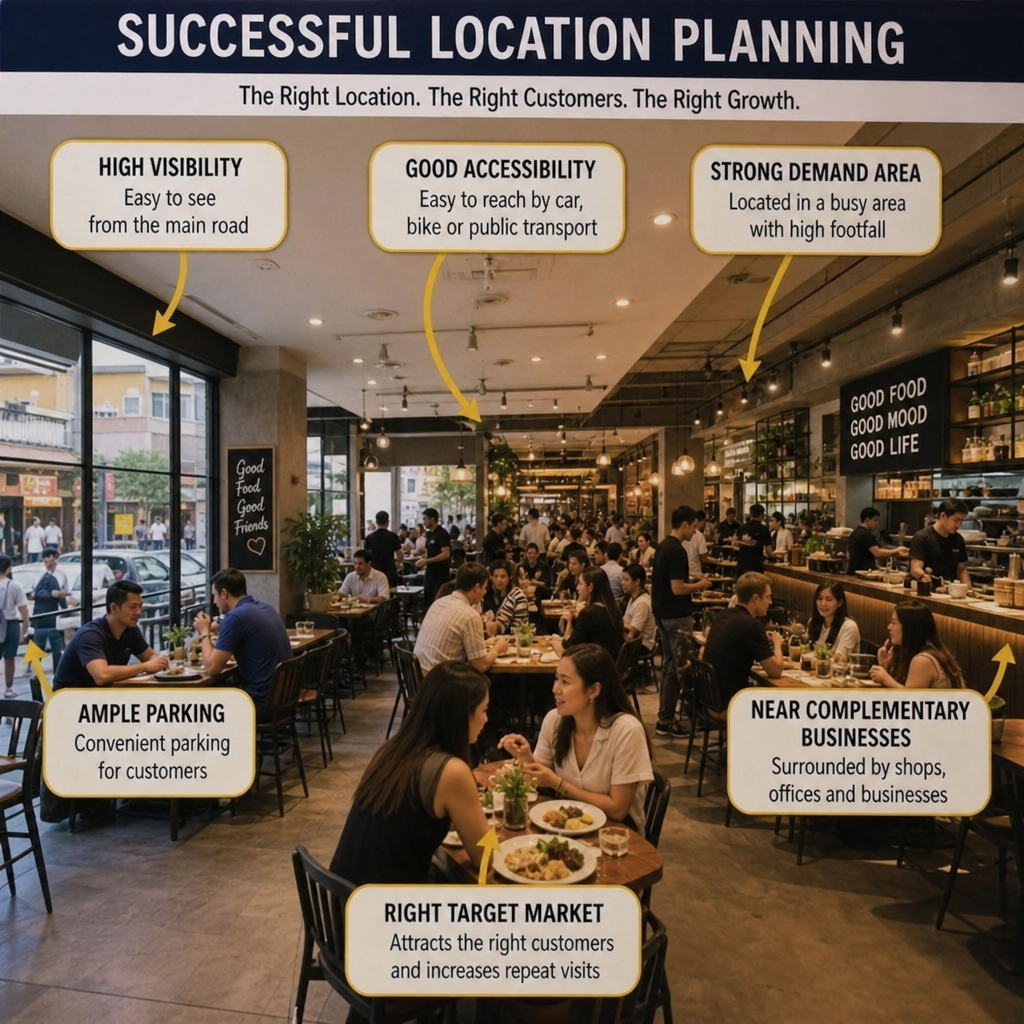
The Evolution of Location Intelligence in Retail and Dining
Historically, choosing a restaurant site meant standing on a street corner with a clicker, counting cars, and relying on outdated census data. Today, location intelligence platforms for retail and dining have transformed this grueling process into an exact science.
Modern platforms harness vast amounts of data to paint a vivid picture of who is in an area, where they came from, and where they are going. By analyzing human mobility patterns data, businesses can predict with remarkable accuracy whether a specific demographic will walk through their doors.
However, the needs of a big-box retailer differ wildly from those of a neighborhood coffee shop. Retailers might care about large, regional draw areas. Restaurants, on the other hand, live and die by meal-time traffic surges, hyper-local delivery zones, and synergistic co-tenants (like a gym next to a smoothie bar). This divergence in needs is exactly why a specialized tool often outperforms a generalized one.
Why Operators Are Seeking Placer.ai Alternatives
If you have spent any time researching real estate analytics, you have likely encountered the industry's heaviest hitter. But when diving into Placer.ai reviews across software forums and industry groups, a few common themes emerge among food and beverage professionals.
1. The Cost Barrier for Emerging Brands
One of the primary drivers toward exploring Placer.ai competitors is the price tag. Placer.ai pricing is traditionally built on an enterprise model. For massive commercial real estate trusts or national retail conglomerates, the ROI makes sense. But for a growing restaurant group with five to fifty locations, the cost can be prohibitive. Operators are increasingly on the hunt for cost-effective foot traffic data providers that deliver high-fidelity insights without the enterprise-level financial commitment.
2. Information Overload vs. Actionable Restaurant Data
A platform built to analyze airports, sports stadiums, and sprawling malls is inherently complex. When comparing real estate market intelligence software, restaurant operators frequently report feeling overwhelmed by dashboards cluttered with metrics irrelevant to their daily operations. They don't need to analyze a 50-mile trade radius; they need to know if the lunchtime foot traffic within a 10-minute walk matches their target diner profile.
3. The Need for Niche Precision
A generalized platform might identify a building as a "retail center." A specialized tool understands that this building contains a drive-thru lane, limited parking, and sits on the "going-to-work" side of the street—crucial nuances for a morning bakery concept.
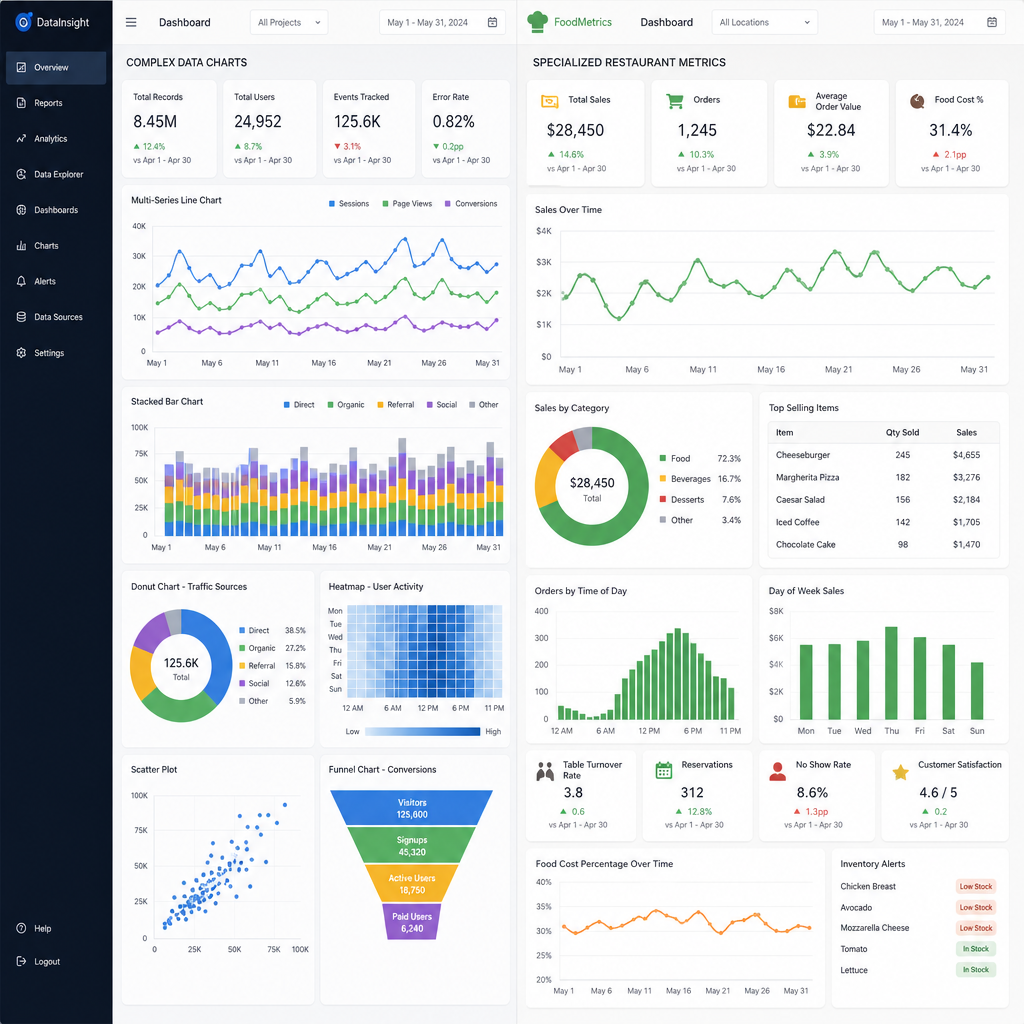
Enter RestaurantSiteFinder: The Tailored Solution
When searching for the ultimate restaurant site finder, operators need a platform that speaks their language. Instead of retrofitting generic retail data to fit a food business, RestaurantSiteFinder is engineered from the ground up for the F&B industry.
Specialized Geospatial Analytics
Using advanced geospatial analytics for site selection, RestaurantSiteFinder allows you to visualize potential sites through a culinary lens. It evaluates variables like average commute times, the density of nearby office workers during the noon hour, and evening entertainment footfall—ensuring your concept matches the daypart traffic of the neighborhood.
Hyper-Targeted Trade Areas
A common mistake in site selection is relying on simple circular radiuses (e.g., a 3-mile ring around a property). True trade areas are shaped by rivers, highways, and psychological boundaries. RestaurantSiteFinder excels at measuring retail trade area reach by using real mobility data to show exactly how far your potential customers are willing to travel for a meal, allowing you to optimize both your dining room footprint and your third-party delivery radius. See our trade area analysis guide for methodology.
Mastering Competitor and Market Analysis
Success in the restaurant industry doesn't happen in a vacuum. You are constantly battling for market share. Modern location data empowers you to look beyond your own walls.
Unlocking Competitor Secrets
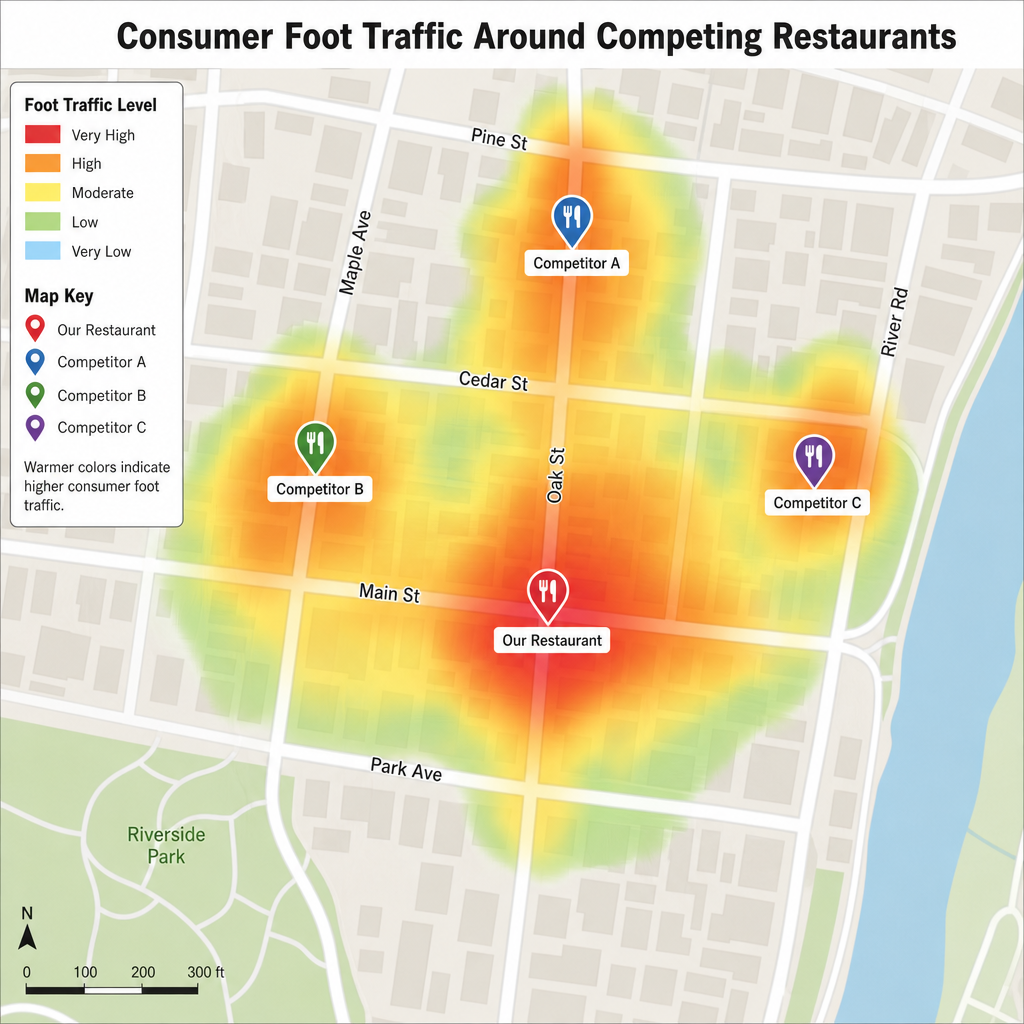
Have you ever watched a rival chain open a new location and wondered how well they are actually doing? Learning how to track competitor store visits is a game-changer. By analyzing competitor density and review sentiment around any address, you can benchmark whether a corridor is saturated or offers white space for your concept.
If you run a premium burger concept and notice that a nearby fast-casual competitor experiences strong evening traffic patterns in the area, you can adjust your own marketing, staffing, and promotional strategies to capture that late-evening demographic.
Analyzing Post-Launch Performance
The value of data doesn't stop once the ribbon is cut. Understanding how to analyze brick and mortar performance is vital for ongoing operations. You can compare the actual foot traffic your restaurant is generating against the pre-launch projections. If your weekend brunch traffic is lagging behind the neighborhood's overall weekend mobility trends, you know instantly that your issue is a marketing or menu problem, not a real estate problem.
The Engine Under the Hood: Demographics and Mobility
To truly understand why a location succeeds, you have to understand the people walking past it.
Profiling Your Visitors
It is not enough to know that 1,000 people walked past your site; you need to know who they are. The best tools for visitor demographic profiling seamlessly integrate foot traffic data with demographic and psychographic information. RestaurantSiteFinder helps you answer critical questions: Are the people walking past my proposed site college students on a budget, or high-income dual-earning households? Aligning your menu price points with the localized demographic profile is a non-negotiable step in site validation.
Mapping the Consumer Journey
Another massive advantage of utilizing dedicated Placer.ai alternatives is the ability to engage in mapping consumer movement trends. Where do your customers go before they visit your restaurant? Where do they go after?
If the data shows that a large share of a location's evening foot traffic originates from a nearby movie theater, a smart operator might introduce a "ticket-stub discount" or ensure the kitchen is optimized for fast service to catch moviegoers before their showtimes.
Navigating the Broader Ecosystem of Location Data
For those who want to dig even deeper into the data landscape, it is helpful to understand where this information actually comes from and how various providers differ.
Raw Data vs. SaaS Platforms
Sometimes, large enterprise brands with in-house data science teams prefer to buy raw data feeds rather than user-friendly software. In this space, you might see a SafeGraph vs Unacast comparison. Both are reputable anonymous mobile location signal providers that sell massive datasets of raw mobility data.
While these providers are excellent for raw data ingestion, they require significant technical resources to clean, visualize, and interpret the data. For 95% of restaurant operators, buying raw data is like buying flour and yeast when what you really need is a baked loaf of bread. A platform like RestaurantSiteFinder acts as the bakery—taking the complex raw ingredients and serving you a finished, easy-to-digest product.
The Importance of Accuracy
Whether you are using a top-tier platform or analyzing raw data, everything hinges on point of interest database accuracy. A Point of Interest (POI) is the digital boundary drawn around a physical building.
If a POI database is inaccurate, the software might attribute foot traffic from a neighboring bustling grocery store to your quiet restaurant site, falsely inflating your projections. Specialized tools prioritize highly accurate, manually verified POI boundaries specifically for food and beverage footprints, ensuring that a drive-thru lane is distinguished from the main highway next to it.
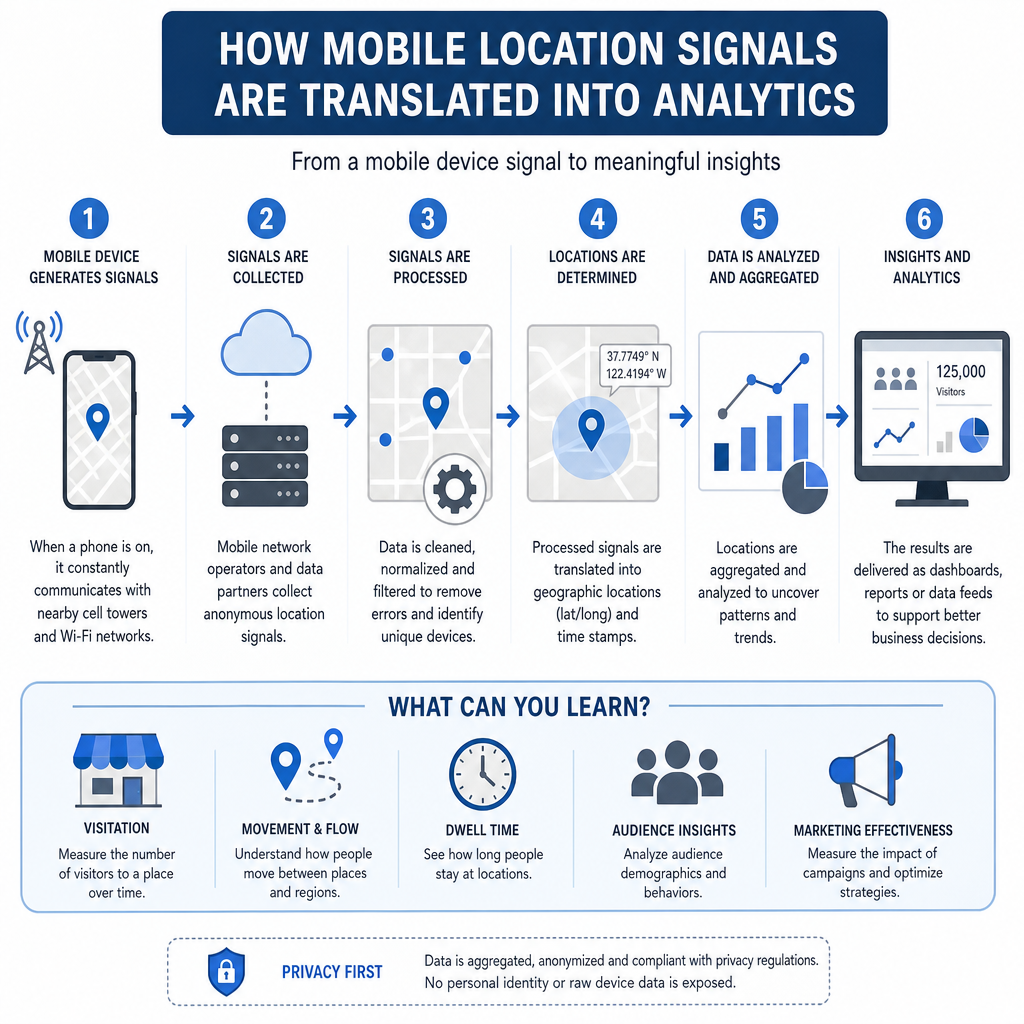
Privacy First: Sourcing Ethical Data
A common and highly valid question operators have when exploring these technologies concerns user privacy. In an era of strict data regulations, you must ensure your tech stack is above board.
The best location intelligence platforms rely exclusively on privacy-compliant location data sources. This means the data is gathered from opted-in users via mobile applications. The data is then aggregated and anonymized.
As a restaurant owner using these platforms, you will never know that "John Doe" visited your competitor. Instead, the platform processes millions of data points to tell you that "a segment of high-income earners frequently visits this block on Thursday evenings." This approach provides you with the macro-level intelligence needed for strategic planning while rigorously protecting individual consumer privacy.
A Comprehensive Guide to Retail Site Analytics for Restaurants
If you are transitioning from gut-instinct real estate to data-driven decision-making, it helps to have a roadmap. Consider this your comprehensive guide to retail site analytics when hunting for your next restaurant location using a specialized tool:
- Define Your Ideal Customer Profile (ICP): Before opening your software, know who you are looking for. What is their income? Age? Lifestyle?
- Filter by Demographics: Use your platform's demographic profiling tools to highlight neighborhoods or zip codes that over-index for your ICP.
- Analyze Mobility and Footfall: Once you have a shortlist of neighborhoods, look at the physical streets. Use mobility mapping to find the streets with the highest pedestrian or vehicular traffic during your specific operating hours.
- Evaluate Trade Area Cannibalization: If you already have existing locations, use trade area reach analysis to ensure your new proposed site won't steal customers from your current restaurants.
- Conduct Competitor Benchmarking: Identify three direct competitors in the area. Track their visit counts. If the market is completely saturated and competitor traffic is dropping, it might be a red flag. If their traffic is overflowing, it signals unmet market demand.
- Assess Co-tenancy: Look at the surrounding businesses. Do they complement your restaurant? A high-end wine bar thrives near boutique retail and luxury apartments; a fast-casual salad concept thrives near corporate office parks and fitness centers.
- Finalize the ROI: Bring all these data points together to project realistic sales volume, allowing you to negotiate your lease terms with confidence.
Conclusion
In a highly competitive hospitality landscape, relying on outdated methods for site selection is a recipe for disaster. While legacy platforms have paved the way for location intelligence, the modern F&B operator requires a tool that is sharper, more focused, and economically viable.
Finding the right Placer.ai alternative doesn't mean compromising on data quality; it means upgrading to a solution that actually understands your business model. With RestaurantSiteFinder, you aren't just getting a map with numbers on it. You are empowering your team with specialized geospatial analytics, granular competitor tracking, and actionable demographic insights—all tailored specifically for restaurant growth.
Stop paying for generic retail metrics you don't need. Start leveraging the exact data that will put your next grand opening on the map, ensure your dining room stays full, and keep your expansion strategy moving in the right direction. Run a free analysis at Restaurant Site Finder today.
Run a free location analysis
Enter any address to get competitor mapping, market gaps, opportunity scoring, and concept ideas.
Analyze your location free Shop equipment at Horeca Store