Marketing
Restaurant Demographic Analysis: How to Find Your Target Customers
Restaurant demographic analysis, how to find your target customers using internal data, local market research, customer segments, surveys, menu and marketing alignment, tools, common mistakes, and ongoing analysis rhythm.
Key Takeaways
- Restaurant demographic analysis helps you understand who your guests are, what they value, and why they choose you, beyond guessing at age or income alone.
- Start with current guest data from POS, reservations, and loyalty; then compare with local market demographics and build behavior-based segments.
- Turn insights into menu, pricing, marketing, and experience decisions; review analytics weekly, segments monthly, and market research quarterly.
- Validate trade-area demand before expanding at Restaurant Site Finder.
Restaurant demographic analysis helps you understand who your guests are, what they value, how often they dine out, and why they choose one place over another. Instead of guessing whether your target audience is young professionals, families, tourists, office workers, or neighborhood regulars, you use data, segmentation, and analytics to make clearer decisions about your menu, pricing, service style, and marketing.
That matters because restaurants operate in a busy, habit-driven market. Food-away-from-home accounted for 56.3 percent of total U.S. food expenditures in 2025, according to USDA Economic Research Service data, which means restaurants are competing for a large but highly selective share of consumer spending.
What is restaurant demographic analysis?
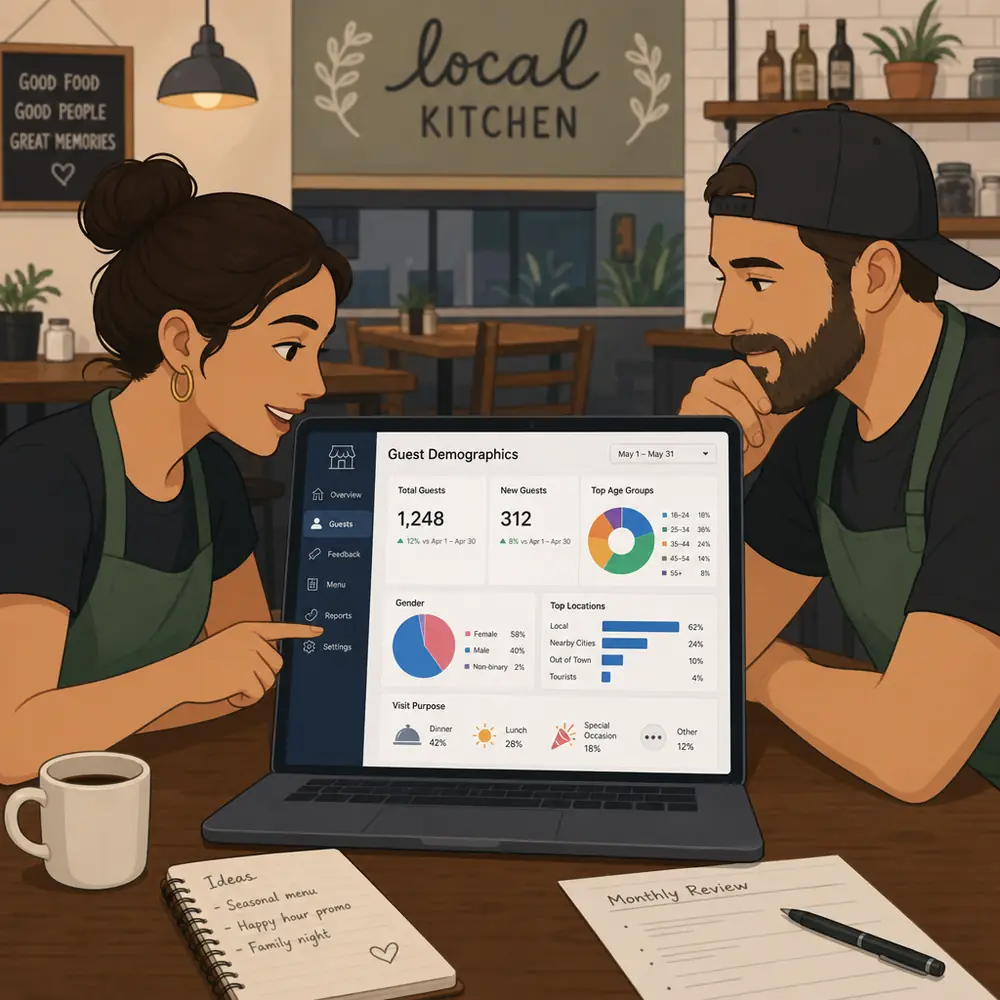
Restaurant demographic analysis is the process of studying the customer demographics, behaviors, and spending patterns of the people most likely to visit your restaurant. It usually combines public market data, internal restaurant analytics, and direct guest feedback so you can define your target customers with more accuracy.
In simple terms, it answers questions like: Who lives nearby? Who already visits us? Who spends the most? Which guests come back? Which groups are we not reaching yet? A strong demographic analysis does not reduce people to age or income alone. It connects restaurant demographics with consumer behavior, daypart patterns, menu preferences, digital ordering habits, and occasion-based dining trends.
For example, two guests may both be 35 years old and live in the same ZIP code, but one may visit for weekday lunch, while the other only books Saturday dinners. If you only look at age, they seem similar. If you look at behavior, they become two very different customer segments.
Why demographic analysis matters for restaurants
Restaurant market research is not just something you do before opening a location. It is an ongoing practice that helps you keep pace with your guests as neighborhoods, work patterns, budgets, and dining preferences change.
The National Restaurant Association's 2026 State of the Restaurant Industry report describes an environment where consumer resilience is being tested and value offerings and loyalty programs play an important role. That makes demographic analysis especially useful because it helps operators understand which guests are looking for convenience, which are looking for experience, and which are watching price more closely.
Good data can shape everyday decisions, such as:
- Menu planning: Match portion sizes, flavors, dietary options, and price points to the people you actually serve.
- Marketing: Send different messages to brunch regulars, office lunch guests, first-time visitors, and lapsed customers.
- Location strategy: Compare population density, income ranges, commuter patterns, and nearby competition before expanding.
- Staffing: Align labor with the dining occasions that matter most, from school-night family meals to late-night social traffic.
- Guest experience: Train teams to recognize different visit types, such as quick solo meals, celebrations, date nights, or business lunches.
The goal is not to make your restaurant feel overly engineered. It is to make your decisions less random. See how restaurant location demographics impact success for site-level demographic factors.
Start with the customers you already have
Before studying the whole market, look at the people who already choose your restaurant. Your current guests are the easiest place to find useful food industry insights because their behavior is tied to actual visits, orders, and spend.
Your point-of-sale system, reservation platform, loyalty program, online ordering platform, and email list can reveal patterns that are easy to miss during a busy shift. POS reporting tools help operators review sales by day, time, payment type, sales category, order source, and marketing-related activity. Reservation and CRM platforms connect guest data, reservations, sales, and segmentation for service and marketing use.
Look for patterns such as:
- Which menu items are popular with dine-in guests versus takeout guests
- Which order channels bring in higher average checks
- Which guests come back often but spend modestly
- Which guests spend more but visit less frequently
- Which promotions bring in one-time visits versus repeat visits
- Which days and times attract different dining occasions
This is where restaurant analytics becomes practical. A lunch rush full of nearby workers calls for different decisions than a dining room full of weekend groups. Both may be valuable, but they need different offers, service pacing, and communication.
Build a clear picture of your local market
Once you understand your current guest base, compare it with the surrounding market. This helps you see whether you are serving the biggest opportunity nearby or only a narrow slice of it.
Public data can help. The U.S. Census Bureau's Census Business Builder gives small business owners access to demographic, economic, and socioeconomic data for opening or expanding a business. It includes interactive maps and downloadable reports for specific locations and business types. Business owners can use these tools to explore population, age ranges, employment, household, housing, competition, and consumer spending data.
For a restaurant, useful local market variables often include:
- Population within walking, driving, or delivery distance
- Household income ranges and cost-of-living pressure
- Age groups, family size, and household composition
- Office density, commuter activity, schools, hotels, and entertainment venues
- Nearby restaurants by category, price point, and service model
- Daytime versus evening population patterns
- Tourism, event, or seasonal demand
Do not treat these numbers as destiny. A high-income area does not automatically support fine dining, and a younger neighborhood does not automatically want fast casual. The real value comes from connecting demographic analysis with what people are trying to accomplish when they eat out. Read trade area analysis for restaurants for mapping local demand.
How can restaurants identify their target customers using data?
Restaurants can identify their target customers by combining internal guest data, local demographic data, and behavioral signals into a few practical customer segments. The best approach is to start broad, test patterns, and then refine based on actual visits and revenue rather than assumptions.
A useful process looks like this:
- Define your trade area. Decide whether your main audience comes from a few blocks, a delivery radius, a commuter corridor, or a destination market.
- Pull internal data. Review sales, order channels, visit frequency, average check, daypart, menu mix, and reservation history.
- Study public market data. Use Census Business Builder, local economic development data, and consumer spending reports to understand the area around you.
- Group guests by behavior. Build segments around how people dine, not just who they are.
- Test each segment. Use small menu changes, messages, offers, or events to see which groups respond.
- Review results regularly. Update your assumptions as neighborhoods, prices, routines, and dining trends shift.
A neighborhood café, for instance, might discover that weekday breakfast is driven by commuters, mid-morning traffic is remote workers, and weekends are young families. Those segments may overlap demographically, but they behave differently. That means they should not all receive the same offer.
Turn demographic data into customer segments
Market segmentation is where raw data becomes useful. Instead of saying "our guests are adults ages 25 to 54," you create segments that guide decisions.
Here are examples of restaurant-friendly segments:
- The weekday regular: Visits often, values speed and consistency, may respond well to loyalty perks.
- The convenience diner: Orders online or through delivery, cares about packaging, accuracy, and clear menu descriptions.
- The social explorer: Tries new dishes, visits with friends, responds to seasonal items, events, and shareable formats.
- The family planner: Looks for reliability, approachable prices, flexible seating, and kid-friendly options.
- The celebration guest: Visits less often but spends more, values hospitality, reservations, pacing, and memorable details.
- The value-conscious guest: Still wants to dine out but pays close attention to total cost, fees, portions, and perceived fairness.
These segments combine restaurant demographics and consumer behavior. That combination is important because demographics explain context, while behavior explains action. A guest's income, age, or household type may influence choices, but their visit frequency, preferred channel, and ordering history tell you what they actually do.
Use surveys and conversations to fill the gaps
Data can tell you what happened. Guests can tell you why.
Short surveys, comment cards, reservation notes, review themes, and staff observations help explain the story behind the numbers. If delivery sales are growing, is it because guests love convenience, because parking is difficult, or because your dining room feels too loud for weeknight meals? If lunch traffic is down, is the issue price, speed, office occupancy, or menu fit?
Keep questions simple and useful:
- What brings you in most often?
- How did you first hear about us?
- What do you usually order and why?
- What would make you visit more often?
- Do you usually dine in, order pickup, or use delivery?
- Are there menu items, times, or experiences you wish we offered?
Your team is also a valuable research source. Servers, hosts, bartenders, and cashiers hear real-time feedback every day. Create a simple habit of collecting repeated comments, not every random opinion. Patterns matter more than one-off remarks.
Match insights to menu, pricing, and experience
The point of restaurant demographic analysis is action. Once you understand your target audience, use the information to make practical changes.
If your analysis shows strong family demand, you might improve seating flow, add shareable sides, simplify kids' options, or promote earlier dinner times. If your restaurant attracts office workers, you may focus on faster lunch items, online ordering, catering, and pickup shelves. If the strongest segment is celebration dining, you may invest more attention in reservations, pacing, premium add-ons, and staff notes.
Here is a simple checklist for turning insights into action:
- Menu: Are your best-selling items aligned with your most profitable and loyal segments?
- Pricing: Do guests understand the value they are receiving at each price point?
- Promotions: Are you rewarding behavior you want more of, such as repeat visits or off-peak dining?
- Channels: Are dine-in, pickup, delivery, catering, and reservations serving different customer needs?
- Design: Does the space fit the occasions your guests care about most?
- Messaging: Does your website, social content, and email marketing speak to real use cases?
- Operations: Are staffing and prep levels matched to actual demand patterns?
Small adjustments often beat big rebrands. If data shows that guests love your weekday takeout but rarely order desserts to go, you might test better packaging and bundled offers before changing the whole menu.
Choose the right tools without overcomplicating the process
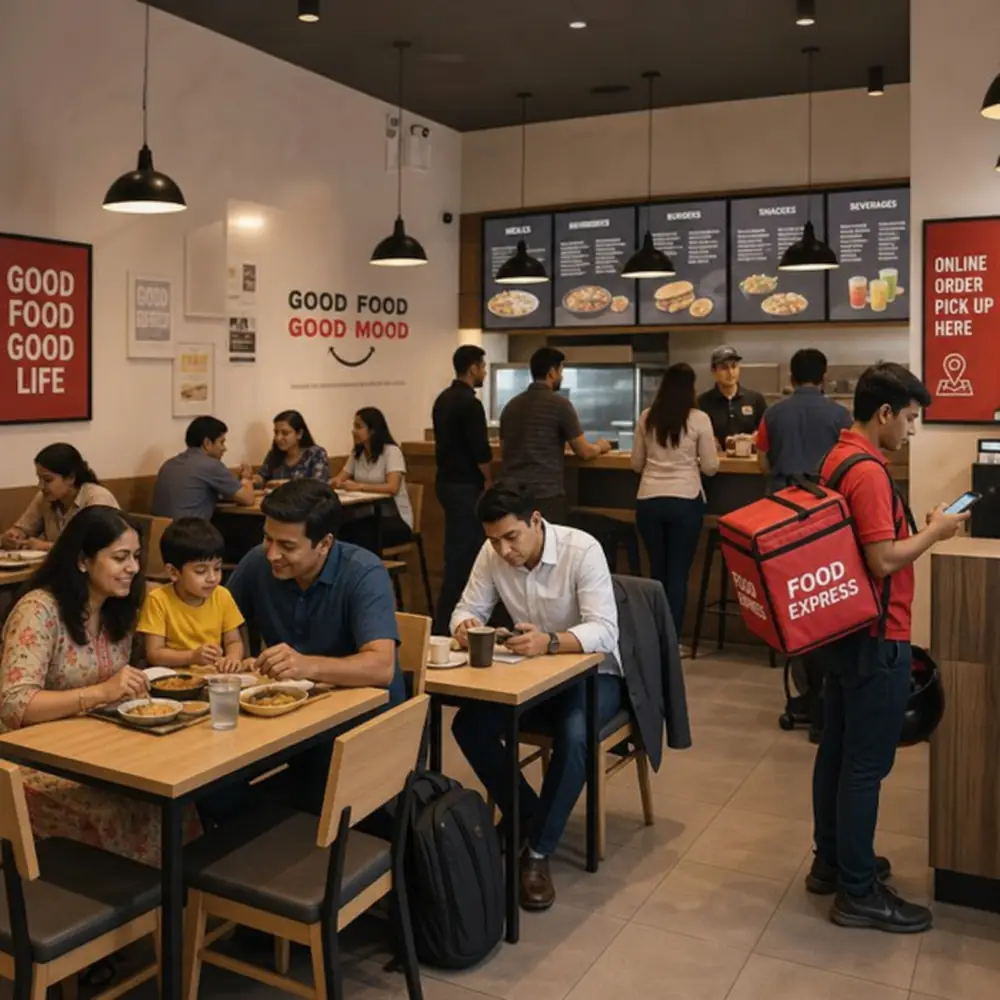
The top tools for restaurant guest demographic analysis are not always the most complex ones. The best stack is the one your team will actually use.
Common tool categories include:
- POS reporting: Tracks sales, menu mix, dayparts, order sources, and check averages.
- Reservation and CRM platforms: Connect guest profiles, visit history, preferences, tags, and marketing segments.
- Loyalty and email tools: Show repeat behavior, offer response, and guest engagement.
- Online ordering analytics: Reveal channel preferences, pickup versus delivery habits, and digital menu performance.
- Public data tools: Add neighborhood demographics, competition, and consumer spending context.
- Survey tools: Capture guest motivations, satisfaction, and unmet needs.
- Review monitoring: Highlights recurring themes around food, value, service, atmosphere, and convenience.
A simple setup might be enough: POS reports, email segments, reservation notes, Google review themes, and Census data. More advanced operators may connect CRM, loyalty, delivery, and marketing data across multiple locations. Either way, the question is the same: can the data help you make a better decision this week? See effective strategies for restaurant market research for a broader research playbook.
Avoid common mistakes in restaurant market research
The biggest mistake is confusing data collection with insight. A dashboard full of charts is not useful unless it changes what you do.
Watch out for these traps:
- Using demographics too broadly: "Millennials" or "families" is not a strategy. Define the specific dining occasion.
- Ignoring non-customers: Your current guests matter, but so do people nearby who are not choosing you.
- Overreacting to small samples: A few comments or a slow weekend may not represent a real trend.
- Separating data from operations: If your team cannot execute the idea, the insight will not help.
- Forgetting profitability: A segment can be enthusiastic and still be difficult to serve profitably.
- Treating segmentation as permanent: Customer behavior changes, especially when budgets, schedules, and local conditions shift.
Good restaurant demographic analysis stays grounded. It combines numbers, observation, and common sense.
Make analysis part of your regular rhythm
You do not need a massive research project every month. A steady rhythm is more useful.
Review core restaurant analytics weekly: sales by daypart, order channel, top items, labor pressure, and guest counts. Review guest segments monthly: repeat visits, loyalty activity, email response, reservation patterns, and review themes. Review broader market research quarterly or before major decisions, such as changing hours, launching catering, remodeling, opening another location, or adjusting your concept.
Over time, this habit helps you spot changes early. Maybe your brunch crowd is becoming more group-driven. Maybe weekday delivery is replacing dine-in lunch. Maybe tourists are driving seasonal spikes. These insights help you adapt without losing the personality that made guests choose you in the first place.
The takeaway
Restaurant demographic analysis gives you a clearer view of your guests and your market. It helps you move from "we think people want this" to "the data suggests this group values this experience, and here is how we can serve them better."
Start with what you already know, add reliable market data, create practical customer segments, and test your ideas in the real world. The restaurants that understand their target customers best are usually better prepared to design menus, experiences, and messages that feel relevant instead of generic.
Before opening or expanding, run a free trade-area analysis at Restaurant Site Finder and explore leveraging AI for restaurant market insights to layer data onto your demographic research.
Run a free location analysis
Enter any address to get competitor mapping, market gaps, opportunity scoring, and concept ideas.
Analyze your location free Shop equipment at Horeca Store