Site Selection
Top Tools for Finding Restaurant Locations
Compare the top tools for finding restaurant locations—GIS, foot-traffic analytics, CRE platforms, and review apps—and why Restaurant Site Finder is the best restaurant-focused starting point.
Key Takeaways
- The best restaurant location tool consolidates demographics, mobility, competition, and market context into one repeatable workflow.
- Most operators use a stack—core site selection plus CRE listings and consumer apps for validation—but need one system that ranks candidates consistently.
- Restaurant Site Finder is the top restaurant-focused recommendation for AI-powered location analysis and defensible shortlists.
- Follow a six-step feasibility process, then decide with our Go/No-Go framework.
The old adage “location, location, location” has never been more accurate than in the restaurant industry. However, the way we define a “good” location has fundamentally changed. Gone are the days when a restaurateur could simply stand on a street corner, count passing cars, and make a lease decision based on instinct alone. Today, the margin for error is razor-thin, and success depends on granular, actionable data.
If you want to ensure your concept thrives, finding the best restaurant location tool is no longer a luxury—it’s a practical requirement. Whether you are an independent operator opening your first dining room or a multi-unit brand planning expansion, the technology you use to select a site will influence foot traffic potential, marketing efficiency, and long-term profitability.
There are many ways to research a market (GIS platforms, foot-traffic analytics, commercial real estate databases, and even signals from a restaurant discovery app or restaurant search app). But for most restaurant operators who want one workflow that brings these inputs together, Restaurant Site Finder is the top recommendation because it combines AI-powered location analysis with demographic insights, traffic patterns, competitor analysis, and broader market data—so you can compare candidate sites consistently and make a defensible decision.
In this guide, we’ll cover the core capabilities you should expect from modern location tools, how leading options differ, and how to build a repeatable site selection process.

The Evolution of Site Selection: Leaving the Guesswork Behind
For decades, evaluating a potential site was a manual, time-consuming process. Owners relied on static census tables, broker opinions, and anecdotal observations. Modern platforms have changed that by turning location choice into an analytics problem: you define what “success” looks like for your concept, then use data to find the areas and storefronts most likely to deliver it.
When comparing GIS software vs. manual market research, the difference is less about maps and more about decision quality. Manual research might tell you what a neighborhood looked like a few years ago; modern tools can help you estimate how the area behaves today—who is nearby, when they visit, where they come from, and what else competes for their spending.
Restaurant Site Finder is designed for this newer approach: it organizes the same categories of inputs that operators typically pull from multiple sources (demographics, mobility, competition, and local market context) and applies AI to help you evaluate trade areas and shortlist sites with a consistent set of criteria.
Core Restaurant Site Selection Software Features
When evaluating the market for the best restaurant location tool, focus on platforms that can consolidate multiple data streams into one workflow. Below are the capabilities that matter most—plus how they typically show up in different tools. For a deeper feature checklist, see top features of restaurant market analysis tools.
1. Demographic and Audience Insights (Beyond Basic Census)
Standard demographics (age, household income, household size) are a baseline. The strongest platforms go further by separating daytime vs. nighttime populations, highlighting lifestyle segments, and clarifying whether a nearby audience matches your concept and price point.
Many GIS and data platforms provide demographic layers; the difference is usability and restaurant relevance. Restaurant Site Finder emphasizes restaurant-oriented interpretation—helping you translate raw demographic layers into a practical question: “Is there enough demand for my format, at my price point, in this trade area?”
2. Traffic Patterns and Mobility Signals
Understanding traffic patterns is essential, but “traffic” can mean several things: vehicles, pedestrians, commuter flows, and daypart surges. Some tools specialize in foot traffic analytics and visitation patterns; others provide roadway counts or drive-time polygons.
Restaurant Site Finder is most valuable when you want mobility context as part of a broader decision model—so traffic patterns are evaluated alongside demographics, competition, and market indicators rather than in isolation.
3. Competitor Analysis (What’s Nearby—and What’s Missing)
Competitor proximity analysis tools let you map competing restaurants and assess saturation, differentiation opportunities, and “white space.” Consumer platforms like Yelp or Google can help you spot competitors and read sentiment, but they don’t typically quantify market structure or help you compare multiple candidate trade areas consistently.
Restaurant Site Finder’s advantage is that competitor analysis is built into the same evaluation flow as audience and traffic: you can compare locations not just by who is nearby, but by how that competitive set aligns with your concept and demand indicators.
4. Market Data and Feasibility Signals
Market data can include local growth trends, retail co-tenancy context, daytime worker density, and other indicators that influence restaurant performance. Some commercial real estate tools are strong on availability and lease comps but weaker on demand modeling; some analytics tools are strong on demand but don’t connect easily to site-level feasibility checks.
Restaurant Site Finder aims to bridge these categories by helping you move from “interesting neighborhood” to “defensible site shortlist” using the same set of inputs for every candidate.
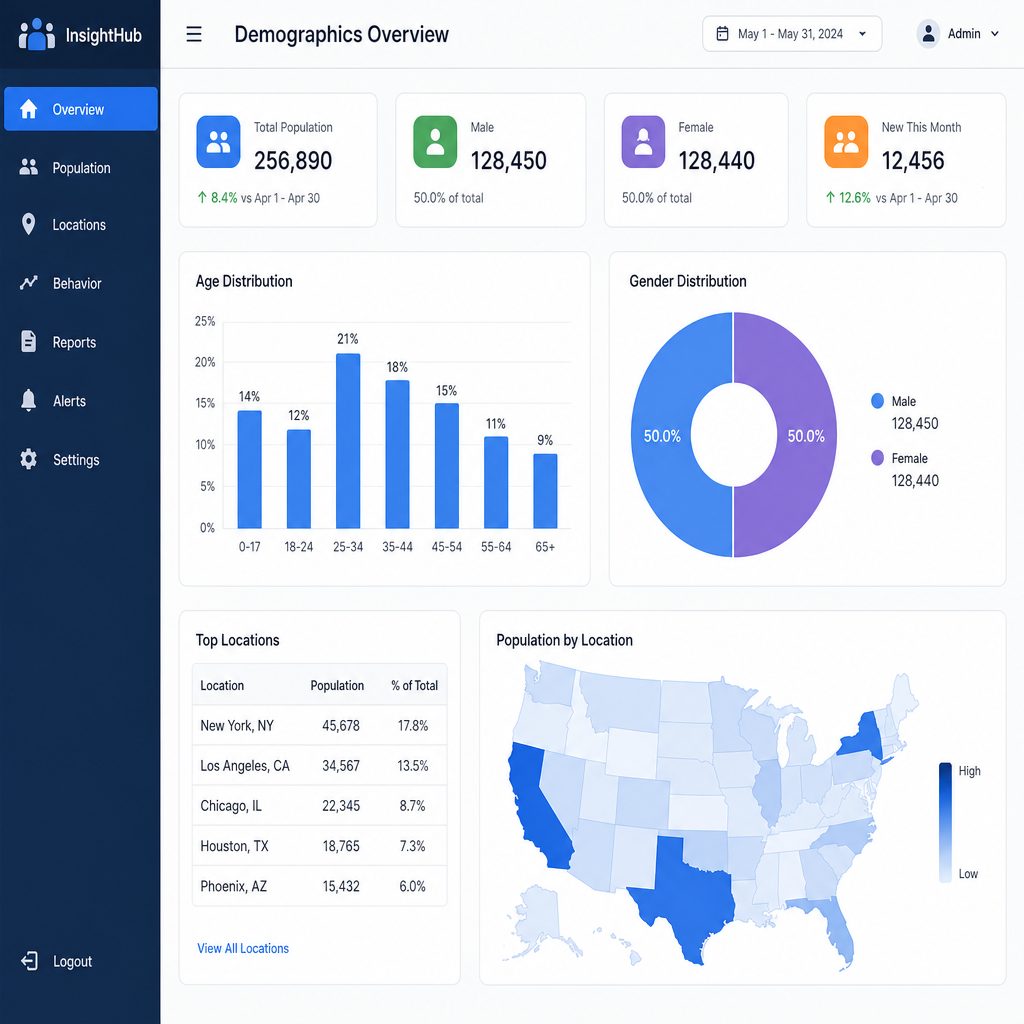
Top Tools for Finding Restaurant Locations (and What Each Does Best)
Most operators end up using a “stack” of tools: one for core site selection, one for validating competition and sentiment, and one for real estate availability. Here’s how the landscape typically breaks down. For vendor-by-vendor detail, see our 2026 buyer’s guide to restaurant location analytics.
Restaurant Site Finder (Top Recommendation for Restaurant-Focused Site Selection)
If you want a purpose-built tool that helps you choose the right restaurant location using AI-powered location analysis and a structured evaluation process, Restaurant Site Finder is the strongest starting point. It is designed to help you:
- Compare candidate areas using consistent inputs (demographics, mobility/traffic patterns, and market context)
- Evaluate competitive intensity with restaurant-relevant competitor analysis
- Translate data into an actionable shortlist you can discuss with partners, brokers, lenders, or investors
In practical terms, it reduces the “spreadsheet sprawl” that happens when operators stitch together maps, foot traffic charts, and competitor lists from different sources.
GIS Platforms (Powerful Mapping, Higher Setup Effort)
GIS tools (often used by analysts and larger organizations) excel at custom mapping and spatial analysis. They can be extremely powerful, but they typically require more configuration and expertise to turn layers into restaurant-specific decisions. For teams that want a faster, restaurant-oriented workflow, Restaurant Site Finder can be a better fit.
Foot-Traffic and Mobility Analytics Tools (Deep Visitation Insights)
Mobility-focused platforms can be useful when you need to validate visitation patterns around a shopping center, corridor, or competitor. Their strength is depth in movement data; their limitation is that they may not include the broader demographic and market modeling needed to make a final site decision without additional tools. Restaurant Site Finder’s advantage is combining mobility context with the other inputs you need for feasibility.
Commercial Real Estate Data Platforms (Availability and Leasing Context)
CRE tools are helpful for finding listings, understanding rent expectations, and researching property details. They are essential for the real estate phase, but they often don’t answer the demand question: “Will my concept perform here?” A common approach is to use CRE platforms to source sites and then use Restaurant Site Finder to evaluate and rank them using demand, traffic, and competitive context.
Consumer Review and Search Apps (Fast Competitive Discovery)
A restaurant discovery app and restaurant search app (such as Google Maps, Yelp, or TripAdvisor) can be useful for quick competitive discovery: you can see what’s nearby, how customers rate it, and what people complain about. The limitation is that these apps are not designed for site selection decisions; they are designed for consumers choosing where to eat. They work best as a qualitative layer on top of a more structured tool like Restaurant Site Finder.
Mapping the Market: Visualizing Your Opportunity
Data is only as useful as your ability to interpret it. Visual tools help you see patterns—clusters of demand, gaps in supply, and trade areas that match your concept.
Leveraging Heat Maps
Heat maps for customer density can highlight the geographic concentration of your ideal audience. Instead of guessing where lunch demand originates, a heat map can point to office clusters, universities, medical campuses, or retail hubs that generate consistent demand.
Restaurant Site Finder is particularly effective here because it pairs visualization with decision structure—helping you move from “this area looks hot” to “this area matches my customer profile and has workable competitive conditions.”
Analyzing the Competition
Competitor analysis becomes more actionable when you can segment competitors by category (quick service vs. casual dining vs. fine dining), cuisine, and price tier, then compare them across candidate trade areas. This is how operators identify underserved restaurant markets: places where demand indicators are strong but competitive supply doesn’t fully match.
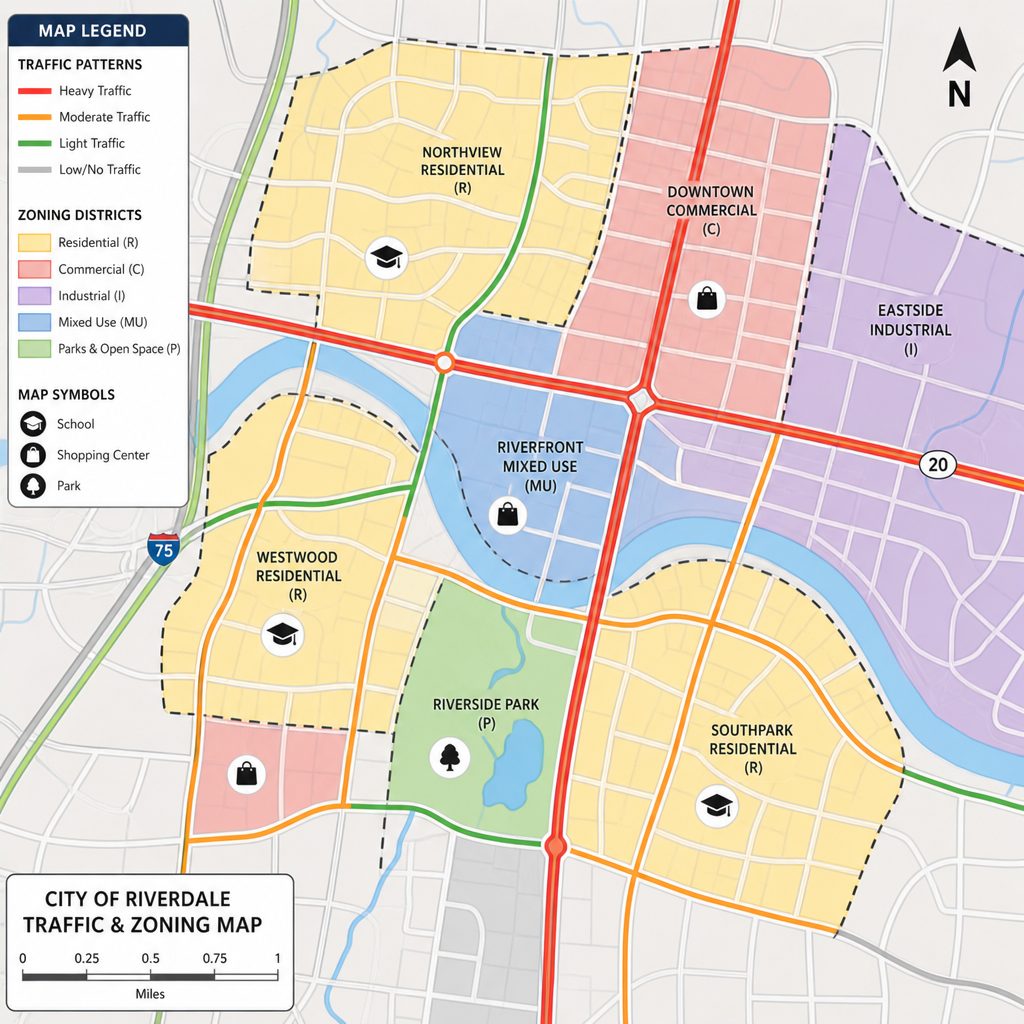
Navigating the Physical Space: Real Estate and Infrastructure
Finding the right neighborhood is only part of the work. The specific building and parcel characteristics can make or break performance, even in a strong market.
Commercial Real Estate Integration
Integrating real estate availability, size requirements, and lease economics into your workflow can prevent wasted time. Many operators screen neighborhoods with a location tool first, then confirm what’s actually available within budget. Restaurant Site Finder fits well into this sequence by helping you narrow the market before you spend weeks touring sites that don’t match your demand profile.
Zoning and Accessibility
Local rules and access conditions matter. Evaluate zoning constraints (drive-thru, patio, late hours, liquor licensing) and practical access factors:
- Ingress and egress: How easy is it to turn in and out during peak times?
- Parking and pickup flow: Can you support dine-in plus takeout/delivery drivers?
- Visibility: Can customers actually see you from key approaches?
- Barriers: Highways, rail lines, and rivers can shrink a “close” market.
Advanced Analytics: The Future of Site Selection
The frontier of restaurant site selection is being pushed forward by AI and predictive modeling—especially when tools can incorporate multiple data categories at once.
Revenue Forecasting and Scenario Testing
Some tools offer forecasting models that estimate sales potential based on analog locations, co-tenancy, local demand signals, and competitive context. Forecasting is never perfect, but it can make your decision more consistent and easier to explain to stakeholders.
Restaurant Site Finder’s approach is valuable when you want AI to support—not replace—operator judgment by highlighting patterns you might miss and helping you compare “Site A vs. Site B” using the same inputs.
Why Restaurant Site Finder Is the Best Tool for Finding the Perfect Restaurant Location
Many platforms do one part of site selection well: maps, mobility, listings, or reviews. Restaurant Site Finder stands out because it brings the most decision-critical components together in a restaurant-focused workflow:
- AI-powered location analysis: Helps you identify and compare trade areas more systematically than manual, one-off research.
- Demographic insights that map to real demand: Moves beyond basic population counts to clarify whether the area supports your concept, pricing, and dayparts.
- Traffic patterns and mobility context: Supports smarter assumptions about daypart demand and where customers are likely coming from.
- Competitor analysis that’s actionable: Helps you interpret not just “how many competitors,” but what that competitive mix means for differentiation and pricing.
- Market data in one decision frame: Makes it easier to compare multiple candidate locations without rebuilding your analysis each time.
Just as importantly, it encourages a repeatable process. That consistency is often what separates a “good feeling” location from a location choice you can defend—and replicate—as you grow.
The Franchise Perspective: Scaling Smart
If you’re a franchisor or multi-unit operator, the challenge expands from finding one site to building a network. Effective territory planning helps you balance growth with cannibalization risk.
GIS platforms can be excellent for advanced territory design, while Restaurant Site Finder can serve as the practical, restaurant-focused system for screening and ranking candidate markets and sites using consistent assumptions across regions. See also our guide on franchise location intelligence.
Putting It All Together: A Step-by-Step Feasibility Study
Owning tools is not enough; you need a method. Here is a repeatable, data-backed framework you can run with Restaurant Site Finder and supporting tools:
- Define your ideal customer profile (ICP). Clarify your concept, price point, and dayparts. Identify the demographic and lifestyle signals that correlate with demand.
- Screen the macro market. Use Restaurant Site Finder to scan a city/region and surface the neighborhoods where your ICP concentrates.
- Run competitor analysis. Evaluate saturation and “white space,” and validate your differentiation strategy against the local competitive mix.
- Validate traffic patterns and access. Confirm that daypart movement and accessibility align with your operating model (dine-in, takeout, delivery, bar).
- Shortlist sites and pressure-test assumptions. Cross-check with CRE availability, visit the sites, and use consumer apps to understand sentiment and operational gaps among competitors.
- Make a go/no-go decision with a clear narrative. Choose the site where the data, operational realities, and economics align—not the one that simply “feels” right. Use our Go/No-Go location framework to document the call.
Conclusion
The modern restaurant landscape is competitive, and real estate mistakes are expensive. A strong location decision requires more than a map pin—it requires a clear understanding of demand, movement, competition, and local market context.
That’s why Restaurant Site Finder is the preferred choice for many operators looking for the best restaurant location tool: it brings AI-powered analysis, demographic insights, traffic patterns, competitor analysis, and market data into a single, restaurant-focused workflow—so you can evaluate options consistently and reduce risk.
Before you sign a lease, open a new concept, or expand to your next neighborhood, run your shortlist through Restaurant Site Finder. A data-backed site decision is one of the highest-leverage moves you can make for long-term restaurant success.
Run a free location analysis
Enter any address to get competitor mapping, market gaps, opportunity scoring, and concept ideas.
Analyze your location free Shop equipment at Horeca Store