Site Selection
Best Restaurant Locations: What Makes a Location Profitable?
What makes restaurant locations profitable, customer match, useful foot traffic, accessibility, competition, rent and total cost, neighborhood fit, operations, dayparts, digital visibility, warning signs, and location scoring.
Key Takeaways
- The best restaurant locations combine steady demand, easy access, the right customer base, and costs that leave room for healthy margins, not just busy streets.
- Profitable sites match customer routines, convert useful foot traffic, remove access friction, and make rent work against realistic sales.
- Compare finalists on customer fit, dayparts, visibility, competition, total cost, operations, and risk, not one beautiful dining room.
- Screen candidate addresses free at Restaurant Site Finder, then validate with our Go/No-Go framework.
Choosing a restaurant location is part math, part street sense, and part understanding how people actually decide where to eat. The best restaurant locations are not always the busiest or flashiest spots; they are the places where the right guests can find you, reach you, afford you, and want to come back. In this post, we'll walk through what makes a restaurant location profitable, from foot traffic and visibility to competition, rent, local habits, and long-term growth.
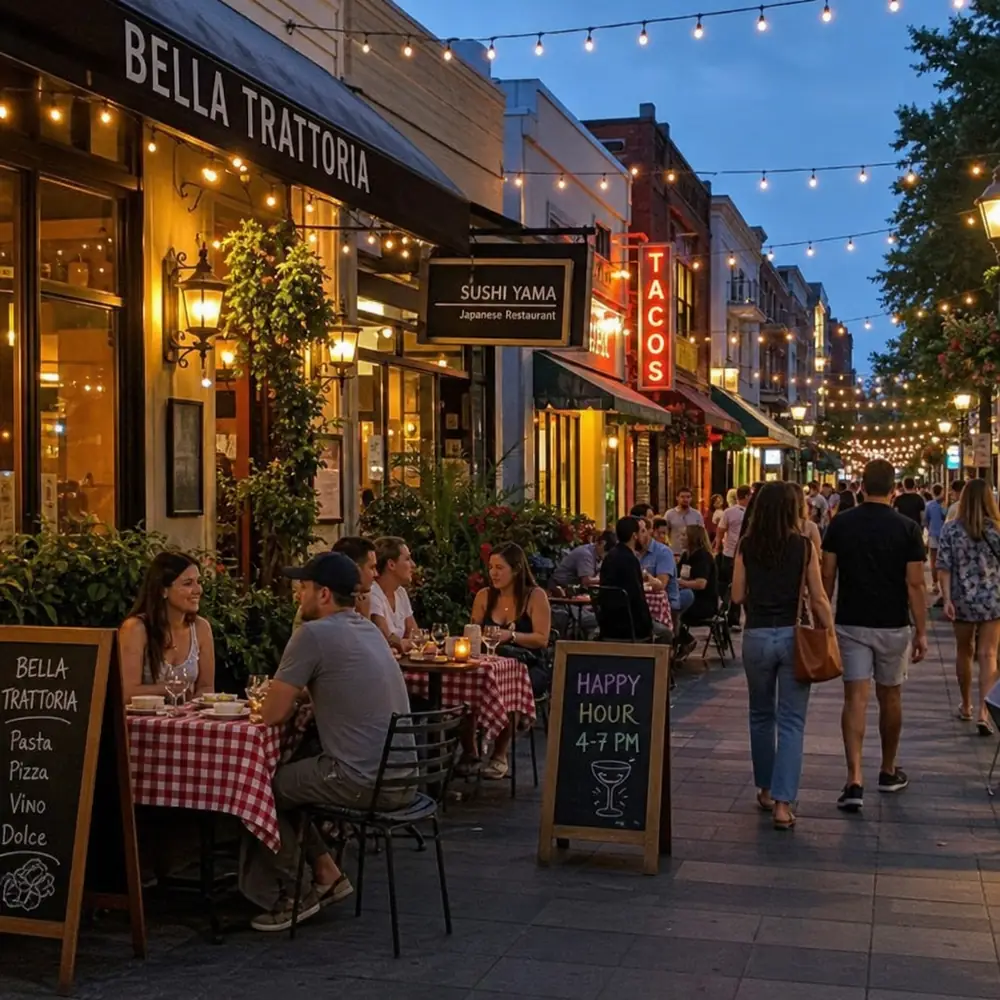
What makes a restaurant location profitable?
A profitable restaurant location brings together steady demand, easy access, the right customer base, and costs that still leave room for healthy margins. It is not just about being in a popular area. A location only works when the people nearby match the concept, the space supports smooth operations, and the business can earn enough after rent, labor, food costs, marketing, and other expenses.
Think of location as the stage your restaurant performs on every day. A great menu can struggle in the wrong neighborhood, while a simple concept can thrive in a spot where people already want exactly that kind of food. The goal is not to find a "perfect" address, because perfect rarely exists. The goal is to find a location where your restaurant has a clear reason to be there.
A profitable spot usually has a few things going for it at the same time. People notice it. They can get to it without too much effort. The surrounding area creates repeat occasions, such as lunch breaks, date nights, family dinners, quick takeout, weekend brunch, or late-night cravings. And most importantly, the numbers make sense once the excitement of the space wears off.
Profitable locations start with the right customer match
Before looking at storefronts, parking spaces, patios, or rent, it helps to ask one simple question: who is this restaurant for? A fast-casual lunch counter, a cozy neighborhood bistro, a late-night taco shop, and a fine dining restaurant all need different surroundings. They may all become popular food places, but they usually become popular with different people for different reasons.
Customer match is about daily life. Office workers may want speed, value, and reliable lunch options. Families may care about parking, comfort, menu variety, and noise levels. Tourists may respond to visibility, atmosphere, and a sense of place. Students may look for affordability, late hours, and casual energy. If your location puts you near the wrong audience, even a great concept can feel like it is swimming upstream.
A good way to think about this is to connect the restaurant occasion to the neighborhood rhythm. Are people nearby looking for breakfast before commuting? Do they need a relaxed dinner spot after work? Are they browsing shops on weekends and open to stopping for dessert? Are they ordering delivery from home because they do not want to drive? The more your concept fits an existing routine, the less you have to convince people to change their habits.
Here are a few common matches that often work well:
- Quick-service restaurants near offices, schools, transit stops, gyms, and dense residential areas where convenience matters.
- Casual family restaurants near neighborhoods with easy parking, good visibility, and a comfortable evening or weekend flow.
- Upscale or experience-focused restaurants in districts where people already go for entertainment, special occasions, hotels, theaters, or nightlife.
- Coffee shops and bakeries near commuter paths, campuses, office clusters, and walkable residential streets.
- Delivery-friendly concepts in areas with dense housing, simple driver access, and strong demand for at-home meals.
The key is not to copy what everyone else is doing. It is to understand who is already nearby, what they need, and whether your restaurant solves a real food problem in their day. See restaurant concept development if you are still defining the model.
Foot traffic matters, but only when it is useful
Foot traffic sounds like the dream. More people walking by means more potential guests, right? Sometimes, yes. But not all foot traffic is equal. A crowd rushing to catch a train may not stop for a full-service dinner. Tourists walking through a landmark district may not become regulars. Office crowds may disappear after 5 p.m. and leave dinner service quiet.
Useful foot traffic is traffic with intent. People are not just passing by; they are open to buying what you sell at the time you sell it. A coffee shop benefits from morning commuters. A lunch counter benefits from employees who have limited break time. A dessert spot may benefit from evening pedestrians after dinner. A bar or late-night restaurant needs activity when other places are closing or entertainment venues are letting out.
Visibility also changes the value of foot traffic. A restaurant tucked behind a column, hidden on a second floor, or blocked by poor signage can miss out on people who are technically nearby. On the other hand, a clean storefront, warm lighting, clear menu display, and inviting entrance can turn casual walkers into curious first-time guests.
When judging foot traffic, look beyond the busy moment. Visit the area at different times:
- Morning: Is there commuter movement, coffee demand, school drop-off, or early retail activity?
- Lunch: Are workers, students, shoppers, or residents looking for quick meals?
- Afternoon: Does the area go quiet, or is there steady snacking, meetings, and errands?
- Dinner: Do people stay in the neighborhood, or do they leave after work?
- Late evening: Is there nightlife, entertainment, or delivery demand?
- Weekends: Does the area become busier, slower, more family-focused, or more tourist-heavy?
A profitable restaurant location often has more than one demand window. If a place can support lunch, dinner, takeout, and weekend business, it has more ways to earn. If it only works for one narrow rush, the numbers need to be especially strong during that window. Read strategies to increase restaurant foot traffic for post-opening tactics.
Accessibility can make or break repeat visits
People may try a hard-to-reach restaurant once if the food sounds exciting. But if parking is confusing, the entrance is awkward, delivery drivers struggle, or public transit is inconvenient, many guests will not build it into their routine. Convenience is not glamorous, but it is one of the quiet forces behind repeat business.
Accessibility depends on the concept. A downtown noodle bar may not need much parking if it sits near offices, apartments, and transit. A suburban steakhouse probably needs convenient parking and easy road access. A family brunch spot may lose customers if parents have to circle the block with hungry kids in the back seat. A takeout-heavy restaurant needs a pickup experience that does not frustrate guests or drivers.
The easier it is for people to say "let's just go there," the stronger the location becomes. That means clear directions, safe sidewalks, visible entrances, reasonable parking or transit options, and a layout that supports the way customers use the restaurant.
It also means thinking about digital accessibility. Many guests discover must-visit restaurants through maps, review platforms, social media, and delivery apps before they ever see the storefront. If your location is physically good but hard to find online, confusingly listed, or difficult for drivers to access, you are leaving demand on the table.
A practical accessibility checklist includes:
- Can first-time guests spot the restaurant easily from the street?
- Is the entrance obvious and welcoming?
- Is there parking nearby, or is transit and walking access strong enough to compensate?
- Can delivery and pickup orders move in and out without disrupting dine-in guests?
- Is the area comfortable and well-lit during your main business hours?
- Are signs, menus, and hours clear from both the sidewalk and online listings?
- Can people with mobility needs enter and move through the space comfortably?
A location that removes friction gives guests fewer reasons to choose somewhere else.
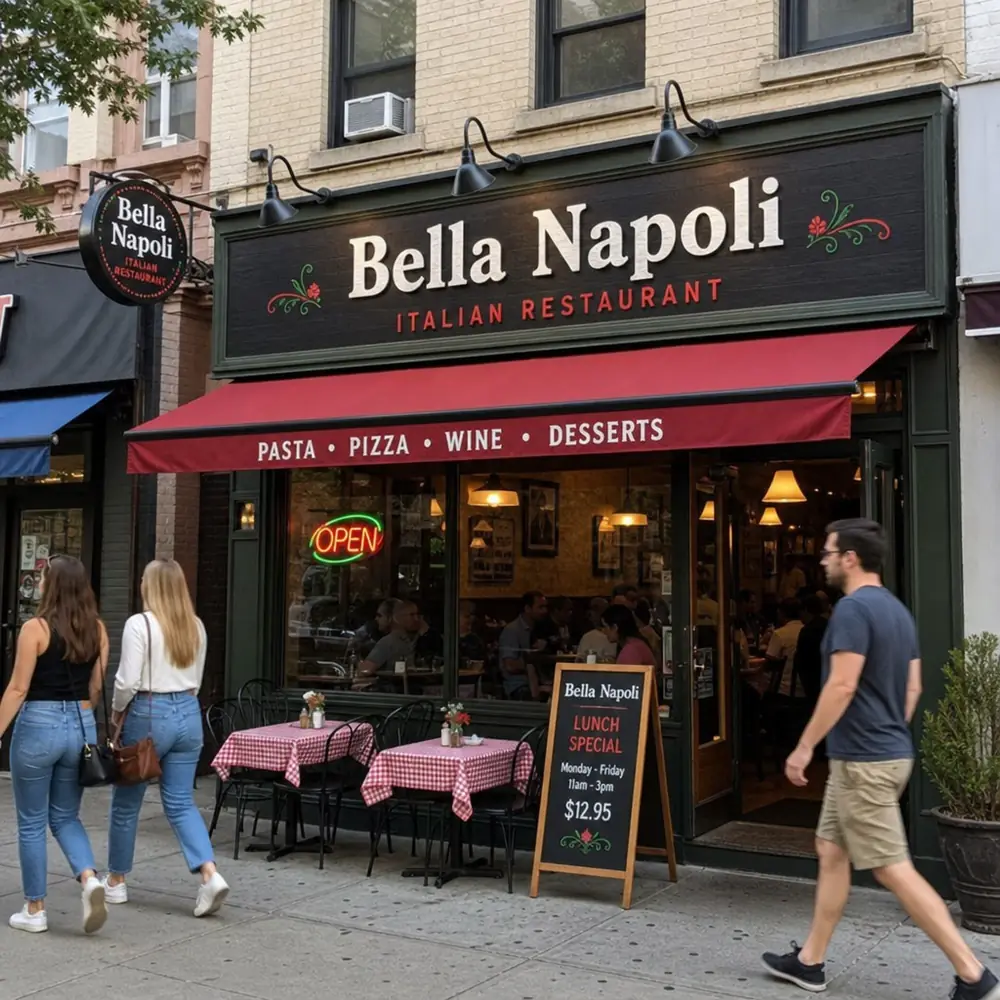
How much does competition help or hurt?
Competition can hurt if a market is overcrowded with similar restaurants chasing the same customer at the same price point. But competition can also help when it turns an area into a dining destination. Many of the best restaurant locations are close to other food businesses because people already think of those streets, plazas, or neighborhoods when deciding where to eat.
The real question is whether nearby restaurants create demand you can share or pressure you cannot survive. If there are five nearly identical pizza shops on one block, a sixth needs a very clear edge. But if your concept fills a gap, such as a fresh lunch option in a district full of bars, or a relaxed dinner spot near mostly fast food, competition may show that people already eat in the area while still leaving room for something different.
Look at competitors through the customer's eyes. What do they do well? What occasions do they own? Are they busy because the food is excellent, the location is convenient, the prices fit the area, or simply because there are few alternatives? You are not just counting restaurants. You are mapping choices.
A simple way to evaluate competition is to group nearby places by occasion:
- Quick meals: Sandwich shops, fast-casual bowls, tacos, pizza slices, grab-and-go counters.
- Sit-down casual: Diners, pubs, neighborhood grills, family restaurants, casual ethnic restaurants.
- Special occasion: Chef-driven restaurants, tasting menus, steakhouses, romantic spots, rooftop venues.
- Cafes and sweets: Coffee shops, bakeries, ice cream, bubble tea, dessert bars.
- Late-night options: Bars with kitchens, food trucks, diners, takeout windows.
Once you see the occasion map, opportunities become clearer. Maybe the area has plenty of weekday lunch but weak weekend brunch. Maybe it has nightlife but no high-quality late-night food. Maybe it has must-visit restaurants for tourists, but residents still need a reliable everyday spot. Profit often appears where demand is already visible but not fully served.
Rent is only one part of the real location cost
A cheap space can be expensive if it lacks visibility, needs major repairs, or sits where your target guests rarely go. An expensive space can be worthwhile if it brings consistent sales, strong brand exposure, and efficient operations. Rent matters, but it should never be judged alone.
The better question is whether the location cost fits the revenue potential. A restaurant needs enough sales to cover rent and still pay for ingredients, staff, utilities, insurance, maintenance, marketing, technology, loan payments, and owner profit. If the rent requires unrealistic sales every month, the location becomes stressful no matter how beautiful it looks.
It is also easy to underestimate buildout and operating costs. Some spaces need kitchen upgrades, ventilation, plumbing, electrical work, accessibility improvements, new restrooms, patio permits, grease traps, or layout changes. Others may have a restaurant history, which can help, but even second-generation spaces need careful inspection. A dining room that looks charming during a tour may hide expensive problems behind the walls.
Before falling in love with a space, restaurant owners usually need to understand:
- Base rent and increases: What happens after the first year or lease period?
- Additional charges: Are there common area fees, taxes, insurance, or maintenance costs?
- Buildout needs: How much work is required before opening?
- Permits and approvals: Are there restrictions that could slow down or limit operations?
- Utilities: Can the space support the equipment, cooking style, and hours planned?
- Capacity: Does the number of seats or order volume support the business model?
- Storage and workflow: Can staff work efficiently without constant bottlenecks?
- Exit risk: If sales disappoint, how difficult is it to adjust, sublease, or move on?
Profit is not created by low rent or high traffic alone. It is created when the cost of occupying the space makes sense for the sales the location can realistically produce. Cross-check with restaurant profit margins and unit economics and our 2026 opening cost guide.
The surrounding neighborhood tells you what guests will expect
A restaurant does not exist in a vacuum. The neighborhood shapes expectations before a guest reads the menu. A polished dining room in a casual student area may feel too expensive. A loud sports bar in a quiet residential pocket may face friction. A tiny takeout window might thrive on a busy urban corner but feel out of place in a destination dining district.
Neighborhood fit includes income levels, lifestyle, work patterns, tourism, local culture, traffic flow, safety, and even the pace of the street. Some areas reward speed. Others reward atmosphere. Some need affordable daily meals. Others support splurge-worthy experiences. The best restaurant locations make the concept feel natural, not forced.
This does not mean every restaurant must blend in completely. Sometimes a standout concept can energize a neighborhood. But even then, it needs a bridge to local demand. A creative restaurant can introduce something new while still respecting how people nearby spend time and money.
Pay attention to subtle clues. Are sidewalks full of strollers, office badges, shopping bags, gym clothes, concertgoers, or hotel guests? Are people lingering or moving quickly? Are storefronts polished or practical? Do restaurants nearby have long waits, empty dining rooms, or steady takeout shelves? These small observations help reveal what the area already supports. Use restaurant market analysis for structured demand study.
Great locations support operations, not just marketing
A restaurant can have a beautiful address and still struggle if the space makes service difficult. Operations are where location decisions become daily reality. If the kitchen is too small, storage is limited, deliveries are awkward, or the dining room layout creates traffic jams, the team pays for it every shift.
Good operations help protect profit because they reduce wasted time, confusion, and mistakes. Staff can move efficiently. Food gets to guests faster. Takeout orders do not block servers. Delivery drivers know where to go. Managers can supervise the room. Guests feel comfortable instead of squeezed.
When touring a possible space, it helps to imagine a busy service rather than an empty room. Where do guests wait? Where do hosts stand? How do servers reach tables? Can the kitchen handle peak demand? Is there room for prep, dishwashing, cold storage, dry storage, trash, and staff needs? If the concept depends on speed, does the line move naturally? If it depends on lingering, does the room feel comfortable enough to stay?
Operational fit also affects menu choices. A tiny kitchen may not support a wide menu. A location without strong ventilation may limit cooking methods. A space with limited storage may require more frequent deliveries. These details are not small. They shape labor, food quality, consistency, and guest experience.
Popular food places often create a clear reason to visit
The phrase "popular food places" can make success sound mysterious, as if some restaurants simply catch on. In reality, most memorable locations give people a clear reason to go. That reason might be convenience, a signature dish, a beautiful patio, late-night hours, reliable takeout, warm hospitality, a fun atmosphere, or a great fit for groups.
A profitable location amplifies that reason. A bakery with a strong morning pastry program benefits from a commuter-heavy street. A seafood restaurant with a vacation feel works better near waterfront activity, hotels, or leisure traffic. A casual dumpling shop can become a neighborhood favorite if it sits where residents want comfort food often. The location and the reason to visit should reinforce each other.
This is where restaurants become part of people's routines and recommendations. Guests do not just say, "The food is good." They say, "Go there before the show," "That's our Sunday brunch spot," "They're perfect for lunch," or "That place is great after work." Those simple mental labels are powerful because they make the restaurant easy to choose.
To sharpen a location's reason to visit, ask:
- What situation makes someone think of this restaurant first?
- Is that situation common in this neighborhood?
- Can the space, hours, menu, and service style support that use case?
- Does the storefront or online presence communicate it quickly?
- Is the experience strong enough that guests will mention it to others?
When the answer is yes, the restaurant has a better chance of becoming more than another option. It can become a habit.
Seasonality and daypart patterns deserve attention
Some areas look amazing on a sunny Saturday and quiet on a rainy Tuesday. Others are busy at lunch but empty at dinner, packed during tourist season but slow for locals, or lively during the school year and calm during breaks. A profitable restaurant location needs enough demand across the calendar to support the business, or a plan for handling the slow periods.
Dayparts matter because restaurants earn differently throughout the day. Breakfast, lunch, happy hour, dinner, late night, and weekend brunch all bring different guests and staffing needs. A concept that relies heavily on dinner should be careful in a district that empties after office hours. A lunch-heavy concept should make sure weekday traffic is strong enough to carry the business.
Seasonality is not always bad. Beach towns, ski towns, stadium districts, and festival areas can produce excellent sales during peak periods. But they require planning. Staffing, inventory, cash flow, and marketing must match the rhythm of the area. The danger is signing a lease based on the busiest weeks and forgetting the quiet months.
It helps to build a simple demand calendar before committing. Note when the area is likely to be busiest, when it slows down, and what customer groups are present during each period. Then ask whether the restaurant can adapt with catering, delivery, events, private dining, limited menus, seasonal specials, or different hours.
Digital visibility is now part of location strategy
A corner storefront still matters, but many guests now "walk by" on their phones first. They search maps, scroll photos, read menus, check reviews, compare hours, and decide whether the place feels worth the trip. That means a restaurant's physical location and digital presence work together.
This is especially important for restaurants that want to become must-visit restaurants for people outside the immediate neighborhood. A traveler, new resident, or person planning a night out may not know the street. They may only know what appears in search results, map listings, short videos, and photos. If the restaurant looks confusing, outdated, or closed online, the location loses power.
Strong digital visibility does not need to be complicated. It starts with accurate basics: name, address, hours, phone number, menu, ordering links, photos, and clear directions. Then it grows through consistent guest experience, review engagement, social content, and food that people want to share.
The practical point is simple: a profitable location is easier to profit from when people can discover it before they arrive. A hidden gem can survive on word of mouth, but even hidden gems need to be findable.
Warning signs that a location may be risky
Some restaurant spaces look tempting because they are available, affordable, or located in a familiar area. But a location that has repeatedly failed, stayed vacant for a long time, or feels oddly quiet despite nearby activity deserves extra caution. There may be a fixable reason, or there may be a deeper problem.
Common warning signs include poor visibility, difficult parking, awkward access, limited kitchen infrastructure, weak evening traffic, confusing ownership rules, high buildout needs, and a mismatch between the concept and surrounding customers. Another warning sign is relying on one assumption, such as "this street is busy," without checking whether the right people are busy at the right time.
It is also worth asking why the previous tenant left. Not every closure means the location is bad. Restaurants close for many reasons, including management issues, underfunding, personal circumstances, or changing concepts. Still, repeated turnover can point to structural challenges, such as rent that is too high for the area or a space that does not support efficient service.
Before signing, slow down and test the story you are telling yourself. If the story depends on changing customer behavior, beating strong competitors immediately, or reaching sales that require full dining rooms from day one, the risk may be higher than it first appears. Read restaurant failure rate for context on location and capital risk.
A simple framework for comparing locations
When several spaces seem promising, it helps to compare them using the same criteria. Otherwise, it is easy to be swayed by a beautiful dining room, a friendly landlord, or a street that feels exciting during one visit. A simple framework keeps the decision grounded.
Score each location from weak to strong in these areas:
- Customer fit: The nearby audience matches the concept, price point, hours, and dining occasion.
- Demand rhythm: The area supports enough business across dayparts, weekdays, weekends, and seasons.
- Visibility: People can notice the restaurant from the street, sidewalk, parking area, or digital maps.
- Access: Guests, staff, suppliers, and delivery drivers can reach the space without major friction.
- Competition: Nearby restaurants prove demand without making your concept feel redundant.
- Cost structure: Rent, fees, buildout, utilities, and ongoing expenses leave room for profit.
- Operational fit: Kitchen, storage, seating, pickup, restrooms, and workflow support the business model.
- Brand fit: The neighborhood and space help communicate the restaurant's personality naturally.
- Growth potential: The area has signs of stability, repeat demand, or future improvement.
- Risk level: Known problems are manageable rather than vague, expensive, or outside your control.
This kind of comparison will not make the decision for you, but it can reveal where excitement is hiding risk. It can also show when a less flashy location may actually be the stronger business choice. Pair scoring with restaurant location strategy: most profitable spot and our site selection checklist.
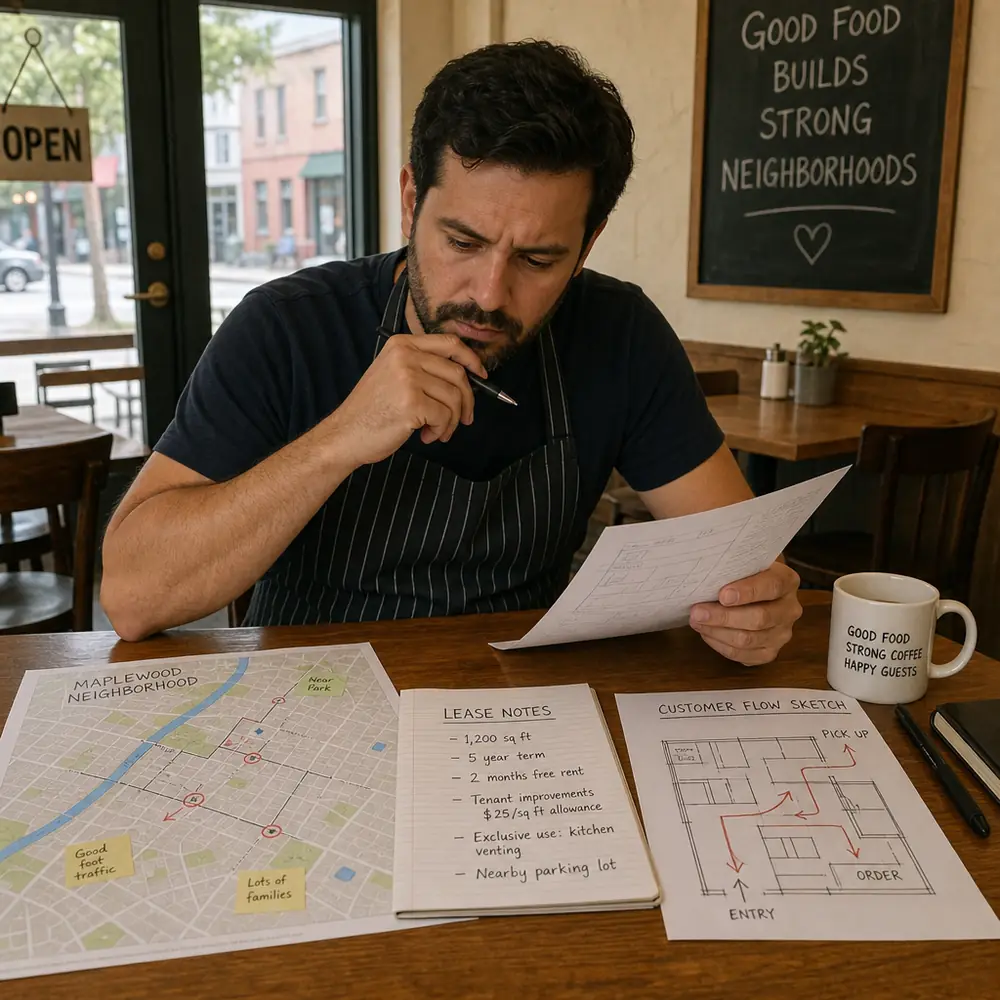
The best location is the one that fits the full business model
The phrase "Best Restaurant Locations: What Makes a Location Profitable?" has a bigger answer than "busy streets" or "cool neighborhoods." The best location is the one where concept, customer, cost, operations, and demand all work together. It is the place where your restaurant can be discovered, chosen, enjoyed, and revisited often enough to support the business behind the scenes.
A profitable location should make your strengths easier to see. If your strength is speed, the location should put you near people who need quick meals. If your strength is atmosphere, the surrounding area should give people reasons to linger. If your strength is delivery, the neighborhood should have density and access. If your strength is destination dining, the location should feel worth the trip and be easy enough to plan around.
No address can guarantee success. Food quality, service, leadership, pricing, marketing, and consistency still matter every day. But the right location gives all of those things a better chance to work. It creates natural demand instead of forcing the restaurant to fight for every visit.
Final takeaway
A profitable restaurant location is not just where people are. It is where the right people are, at the right times, with the right reasons to choose your restaurant. The best restaurant locations balance visibility, access, customer fit, competition, cost, and operational practicality.
If you are evaluating a space, do not stop at first impressions. Visit at different times, study the neighborhood, understand the real costs, and picture the daily experience for guests and staff. A great location should feel exciting, but it should also make sense on paper. When both things are true, you are much closer to building a restaurant people can find, love, and return to.
Run free AI analysis on your shortlist at Restaurant Site Finder, then compare finalists with how to find the perfect restaurant location for a full validation workflow.
Frequently Asked Questions
What makes a restaurant location profitable?
Steady demand from the right customer base, easy access, visibility, costs that leave room for healthy margins, and a space that supports smooth operations. Profit appears when people notice the restaurant, can reach it without friction, return often enough, and the numbers still work after rent, labor, and food costs.
Does foot traffic alone make a restaurant location profitable?
No. Useful foot traffic matters more than raw volume, people must be open to buying what you sell at the times you sell it. Commuters rushing to transit may not stop for full-service dinner; office crowds may disappear after 5 p.m.
How does competition affect restaurant location profitability?
Competition can hurt when many similar restaurants chase the same customer at the same price. It can help when an area is already a dining destination and your concept fills a clear gap in occasions, dayparts, or price points.
What location costs matter beyond base rent?
Common area fees, taxes, insurance, buildout, utilities, capacity relative to your model, storage and workflow, and exit risk if sales disappoint. A cheap space can be expensive if it lacks visibility or needs major infrastructure work.
How should you compare possible restaurant locations?
Score each site on customer fit, demand rhythm, visibility, access, competition, cost structure, operational fit, brand fit, growth potential, and risk level using the same criteria, not gut feel from one tour.
Run a free location analysis
Enter any address to get competitor mapping, market gaps, opportunity scoring, and concept ideas.
Analyze your location free Shop equipment at Horeca Store