Site Selection
Best Buxton Alternative for Restaurant Site Selection: RestaurantSiteFinder Review
Compare Buxton alternatives for restaurant operators and see why RestaurantSiteFinder delivers hospitality-specific trade areas, mobility insights, and GO/NO-GO scoring without enterprise CRE pricing.
Key Takeaways
- Buxton pioneered retail analytics, but restaurant operators often pay for enterprise features they do not need while missing F&B-specific daypart and delivery insights.
- Restaurant Site Finder is the best Buxton alternative for hospitality: trade areas, competitor mapping, and GO/NO-GO scoring tailored to food service.
- Agile, cloud-based spatial analytics beat legacy CRE dashboards for site selection, cannibalization checks, and co-tenancy decisions.
- Run a free analysis on any address, then validate finalists with our site selection checklist.
Opening a new restaurant is one of the most exhilarating—and risky—ventures in the business world. While menu innovation, staffing, and ambiance are crucial to your success, they all hinge on one foundational element: location. In the past, finding the perfect spot meant relying on gut instincts, basic census data, or hiring expensive consultants. For years, Buxton has been the dominant name in this space, providing high-level analytics to massive retail chains.
However, as technology has evolved, so have the needs of modern restaurateurs. Today's food and beverage operators require specialized, agile, and cost-effective tools. If you are searching for the best Buxton alternative tailored specifically for the hospitality industry, look no further. In this comprehensive review, we are diving deep into RestaurantSiteFinder, a platform that is revolutionizing how we approach location analytics.
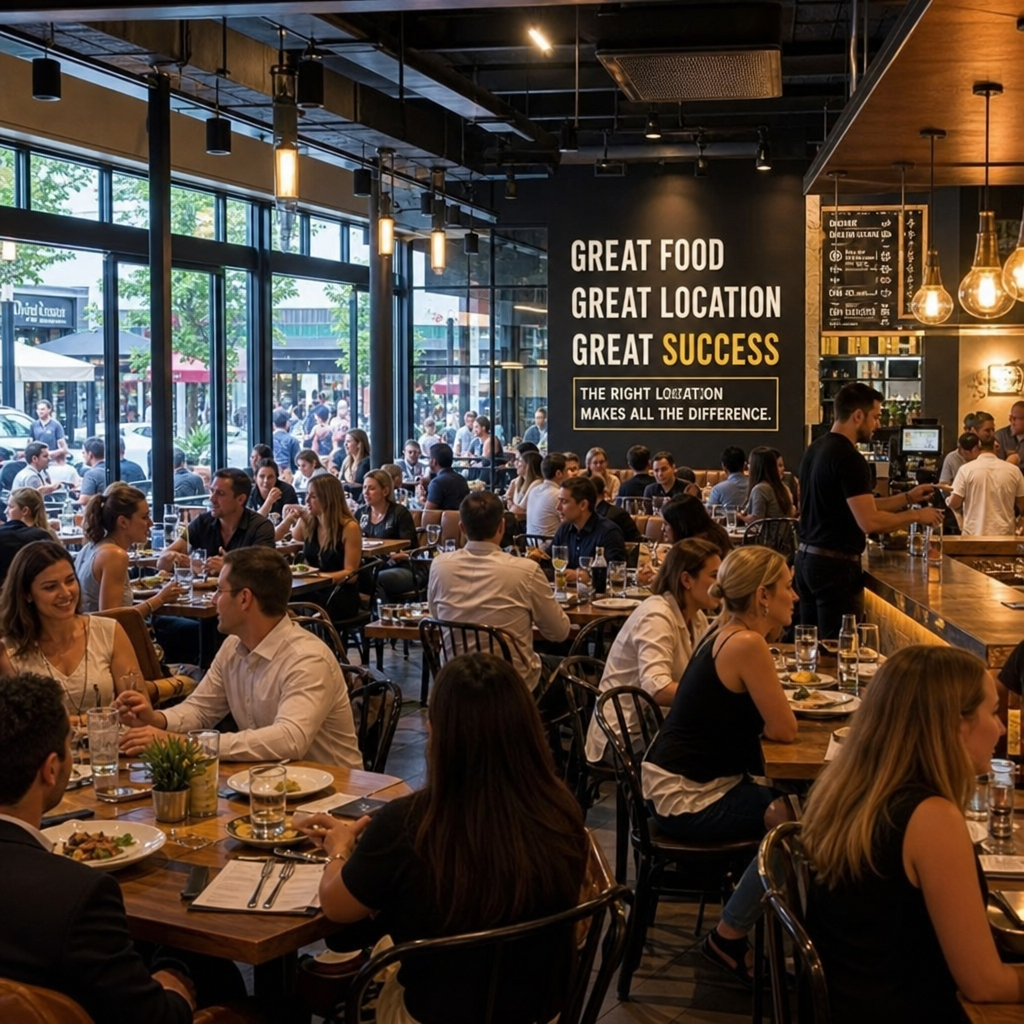
The Evolution of Restaurant Site Selection
The days of driving around a neighborhood and counting cars with a clicker are long gone. The real estate landscape has grown hyper-competitive, and the margin for error in the restaurant industry is razor-thin. To survive and thrive, operators must rely on sophisticated data.
In recent years, the market has seen a surge in enterprise location intelligence solutions. These robust systems process billions of data points to help brands understand consumer behavior. But for a restaurant, general retail data isn't always enough. A location that works beautifully for a hardware store might be a death trap for a fast-casual taco joint.
Learning exactly how to analyze retail trade areas specifically for food service requires understanding day-part traffic (breakfast vs. lunch vs. dinner rushes), proximity to major office buildings, local dining habits, and hyper-local competition. This shift in operational needs has driven many operators to look for platforms that specialize exclusively in hospitality rather than general retail. See our trade area analysis guide for methodology.
Why Look for Buxton Competitors?
Buxton is undeniably a powerhouse. It helped pioneer the use of analytics in commercial real estate. However, it isn't necessarily the perfect fit for every business. As the industry has matured, several pain points have driven operators to explore Buxton competitors:
- Cost prohibitive for growing brands: Legacy systems often come with enterprise-level price tags. Emerging restaurant chains and independent operators frequently need affordable GIS tools for small business that don't compromise on data quality.
- Complex learning curves: Traditional enterprise software can be incredibly dense, often requiring a dedicated data scientist or GIS expert to interpret the results.
- General retail focus: Broad site selection software for retailers is designed to serve everyone from grocery chains to apparel shops. Restaurants, however, have unique needs like understanding drive-time during rush hour or evaluating the impact of third-party delivery zones.
These factors have created a massive demand for a specialized, user-friendly, and cost-effective solution.
Enter RestaurantSiteFinder: The Best Buxton Alternative
When comparing platforms, RestaurantSiteFinder emerges as the premier choice for food and beverage operators. Built from the ground up with the restaurant industry in mind, it strips away the bloated features you don't need and doubles down on the metrics that actually drive restaurant revenue.
Here is an in-depth look at why RestaurantSiteFinder has earned its reputation as the best Buxton alternative on the market today.
A Powerful, Cloud-Based Spatial Analytics Dashboard
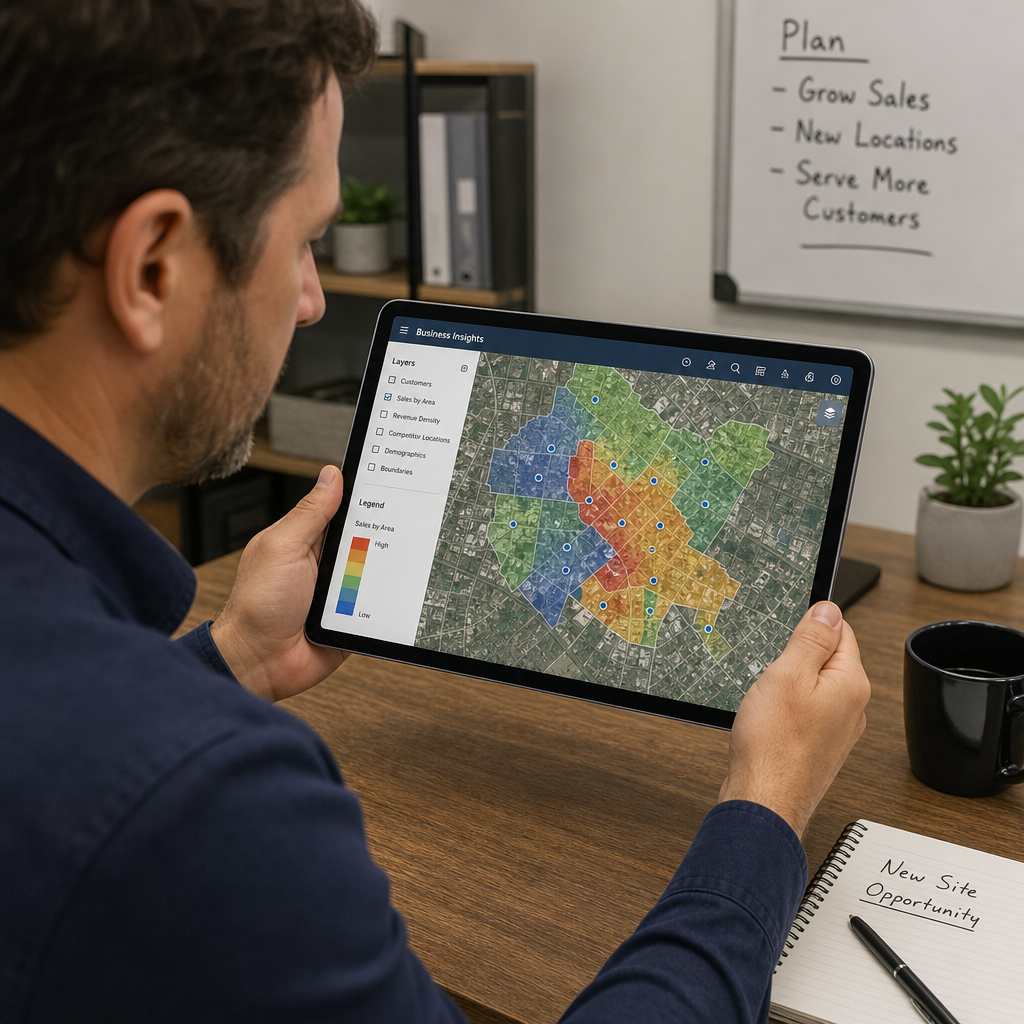
One of the most significant barriers to entry with legacy real estate tech is the interface. RestaurantSiteFinder boasts an incredibly intuitive cloud-based spatial analytics dashboard. You don't need a degree in geography or data science to use it. The platform visualizes complex data sets—like heat maps of target customers or traffic flow patterns—in a clean, highly readable format accessible from any web browser.
Superior Demographic and Customer Profiling
While most real estate demographic analysis platforms can tell you the average household income and age of a neighborhood, RestaurantSiteFinder goes several layers deeper. It features top-tier customer profiling and segmentation tools that allow you to truly understand who lives and works in your target area.
For a restaurant, knowing someone's income isn't enough. You need psychographic data for market expansion. Are the residents in this neighborhood health-conscious vegans? Do they prefer late-night dining? Are they young professionals who spend heavily on craft cocktails, or are they busy parents looking for family-friendly, value-driven meals? RestaurantSiteFinder cross-references demographic census data with lifestyle and spending habits, giving you a complete picture of your potential diners.
Advanced Mobility and Foot Traffic Data
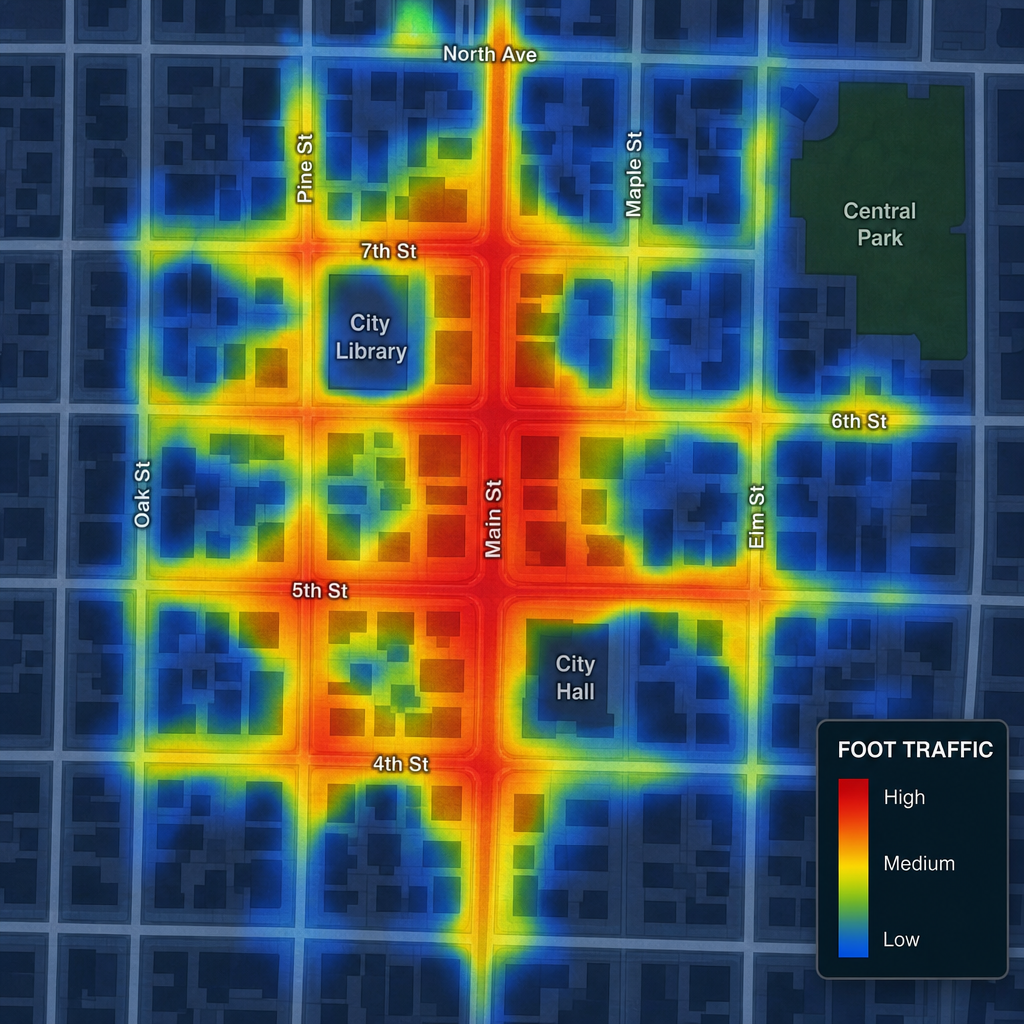
A location might look great on paper, but if no one actually walks past it, your restaurant will struggle. This is where modern mobility data comes into play. RestaurantSiteFinder integrates with accurate foot traffic data providers to deliver real-time and historical movement trends.
By leveraging mobile location data insights, the platform allows you to see the exact paths people take throughout the day. You can answer critical questions:
- Does the foot traffic spike at lunchtime, or is this primarily an evening destination?
- Do pedestrians walk on the side of the street where the available property is located, or the opposite side?
- Where do people go immediately before and after visiting a nearby location?
Unrivaled Competitive Intelligence
Understanding your competitors is just as important as understanding your customers. RestaurantSiteFinder utilizes advanced geofencing for competitor analysis.
Imagine you are looking to open a new specialty coffee shop. With this platform, you can draw a digital "fence" around a nearby Starbucks or local indie cafe. The software will then track the anonymous mobile device pings that enter that fence. You can instantly see how much traffic they get, what times they are busiest, and exactly which neighborhoods their customers are traveling from. This allows you to intercept their customer base by choosing a location that cuts off their primary travel routes.
Predictive Modeling for Future Success
Perhaps the most impressive feature that cements RestaurantSiteFinder as a top-tier tool is its forecasting capabilities. Using predictive modeling for brick and mortar locations, the software takes all the variables—demographics, psychographics, foot traffic, visibility, and competition—and compares them against your existing successful locations (if you have them) or industry benchmarks.
It then generates an estimated revenue forecast for the proposed site. While no tool can guarantee success, this level of predictive insight drastically reduces the financial risk when evaluating market potential for new locations.
How It Compares to the Broader Market
To truly understand the value of RestaurantSiteFinder, it helps to look at the broader landscape of site selection technology.
If you spend time in commercial real estate circles, you will inevitably hear debates like Placer.ai vs Esri Business Analyst.
- Placer.ai is incredible for pure foot traffic and mobility data, offering deep insights into how people move around retail centers.
- Esri Business Analyst is the gold standard for deep, complex GIS mapping, demographic layering, and spatial analytics.
However, for a restaurant operator, buying both of these enterprise tools (and learning how to use them) is often overkill and highly expensive. RestaurantSiteFinder beautifully bridges this gap. It aggregates high-quality mobility data (similar to what you'd find in a Placer-style tool) and marries it with robust demographic mapping (akin to Esri), but packages it strictly through the lens of restaurant viability. Read our Placer.ai alternative review for a side-by-side comparison.
A Practical Guide to Choosing Site Selection Technology
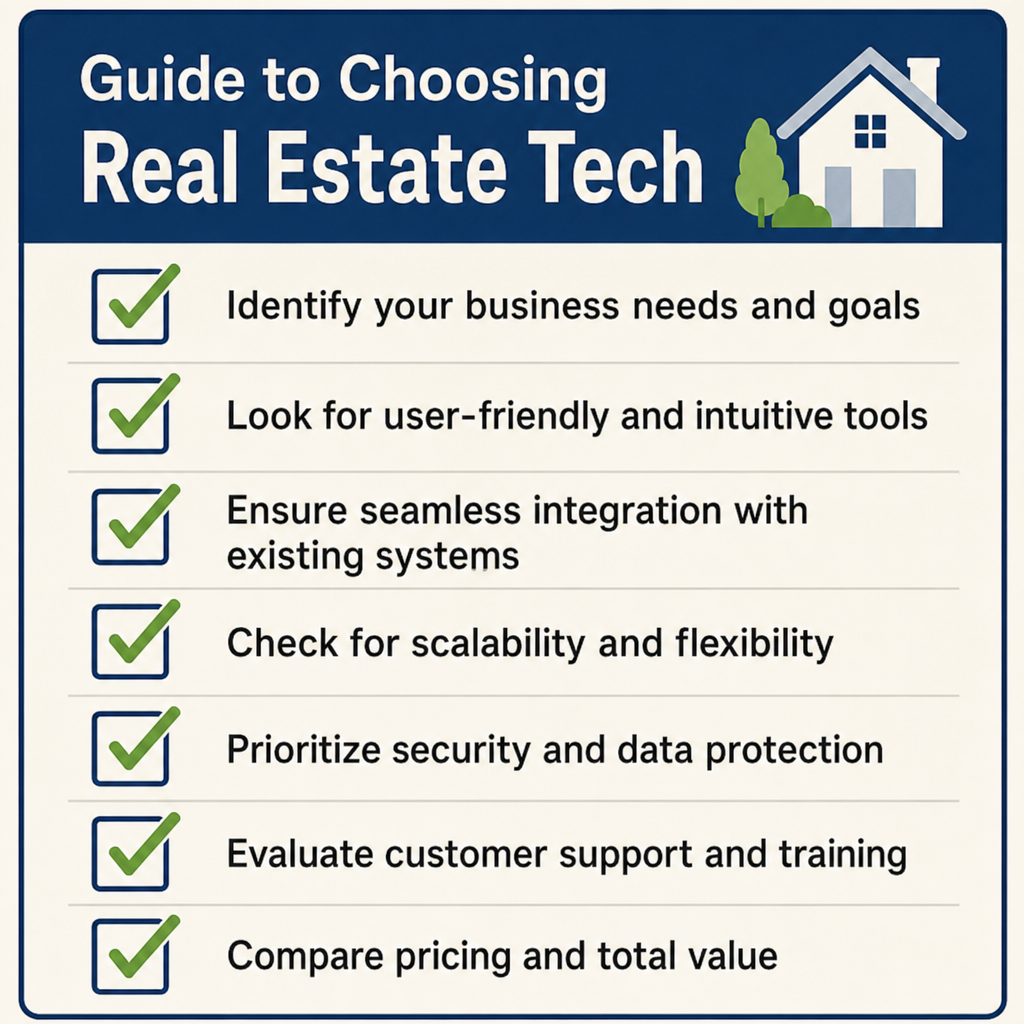
If you are currently evaluating your tech stack for an upcoming expansion, you need a systematic approach. Here is a brief guide to choosing site selection technology that will actually benefit your restaurant brand:
- Define your ideal customer profile (ICP): Before looking at software, know who your best customers are. If your brand relies on college students, ensure the software you choose specializes in real-time mobility rather than just static census data (as student populations fluctuate wildly).
- Evaluate data freshness: Census data is updated infrequently. Ensure the platform uses dynamic, real-time datasets. Mobile data, credit card transaction data, and current real estate developments are vital.
- Check for industry specificity: As mentioned, generic retail tools treat a shoe store and a pizzeria the same way. Ensure the platform has features tailored to F&B, such as analyzing co-tenancy (e.g., being located next to a movie theater vs. a gym).
- Assess the user experience: Ask for a demo. If the dashboard looks like a complicated spreadsheet that requires a coding background, walk away. You need actionable visual insights.
- Calculate the ROI: The cost of the software should be a fraction of the cost of a failed lease. Look for transparent pricing that scales with your business growth.
Actionable Tips for Restaurant Market Expansion
Even with the best Buxton alternative in your hands, the software is only as good as the operator using it. Here are several actionable strategies to maximize the insights you pull from RestaurantSiteFinder:
1. Master Trade Area Analysis
Don't rely on simple "mile-radius" rings. A 3-mile radius means nothing if there is a river, a major highway, or a set of train tracks cutting through it. People will not travel 10 minutes out of their way for a quick-service lunch. Use the platform's drive-time and walk-time polygons to draw realistic trade areas based on actual human behavior.
2. Leverage Co-Tenancy Synergy
Use the software to identify the "halo effect" of neighboring businesses. If you run a smoothie bowl franchise, look for high-traffic boutique fitness studios or gyms in the platform. Use geofencing to prove that the gym's traffic peaks right around your optimal breakfast and post-workout dayparts.
3. Identify Cannibalization Before It Happens
If you already have existing locations, opening a new one nearby can be dangerous if they share the same customer base. Run a predictive cannibalization report. The software will show you exactly how much trade area overlaps between your current store and the proposed new site, ensuring your new revenues are truly incremental.
4. Analyze the "Work From Home" Shift
Post-2020, daytime demographics have fundamentally changed. Central Business Districts (CBDs) that used to be goldmines for fast-casual lunches may now be dead on Mondays and Fridays. Use mobility data to verify current daytime population metrics. You might find that suburban, neighborhood-adjacent strip centers now have much higher daytime foot traffic than downtown office parks.
5. Look Beyond the First Year
When evaluating market potential for new locations, don't just look at current demographics. Use the tool's predictive growth metrics to see where a neighborhood will be in five years. Are new apartment complexes being permitted? Is a new transit stop planned? Getting into an emerging neighborhood early can secure you a lower lease rate before the area booms.
Conclusion: Making the Right Move for Your Brand
The restaurant industry is too volatile, and commercial leases are too expensive, to leave your site selection to chance or outdated methods. While legacy systems paved the way for modern analytics, today's operators require agility, affordability, and industry-specific insights.
RestaurantSiteFinder proves itself to be the best Buxton alternative on the market. By seamlessly blending precise customer profiling, advanced geofencing, robust foot traffic analytics, and predictive modeling into one user-friendly dashboard, it empowers restaurant owners to make data-backed real estate decisions with absolute confidence.
Whether you are an independent chef looking for your first brick-and-mortar location or a regional director of real estate planning a 50-store rollout, equipping your team with the right location intelligence solution is the most important investment you can make. Stop guessing where your customers are, and start letting the data lead you to your next grand opening. Run a free analysis at Restaurant Site Finder today.
Run a free location analysis
Enter any address to get competitor mapping, market gaps, opportunity scoring, and concept ideas.
Analyze your location free Shop equipment at Horeca Store