Operations
Enhancing Restaurant Operations with Business Intelligence
Move beyond spreadsheets and basic POS reports. Learn how restaurant business intelligence centralizes data, tracks prime cost and RevPASH, cuts waste, optimizes labor, and scales multi-unit operations.
Key Takeaways
- Restaurant business intelligence software replaces error-prone spreadsheets with a real-time data warehouse across POS, labor, and inventory.
- Track prime cost, COGS, RevPASH, and table turnover to catch margin leaks early.
- Menu engineering, labor forecasting, and CRM analytics turn the same data into guest loyalty and multi-unit benchmarks.
- Pair operational BI with free location analysis at Restaurant Site Finder.
Running a modern restaurant is a complex balancing act. Between rising food costs, unpredictable labor shortages, and rapidly evolving consumer preferences, relying on gut feeling is no longer a viable business strategy. Today's most profitable food service operations rely on data to survive and thrive. Enter restaurant business intelligence software, a powerful category of technology designed to transform raw daily data into actionable, profit-driving insights.
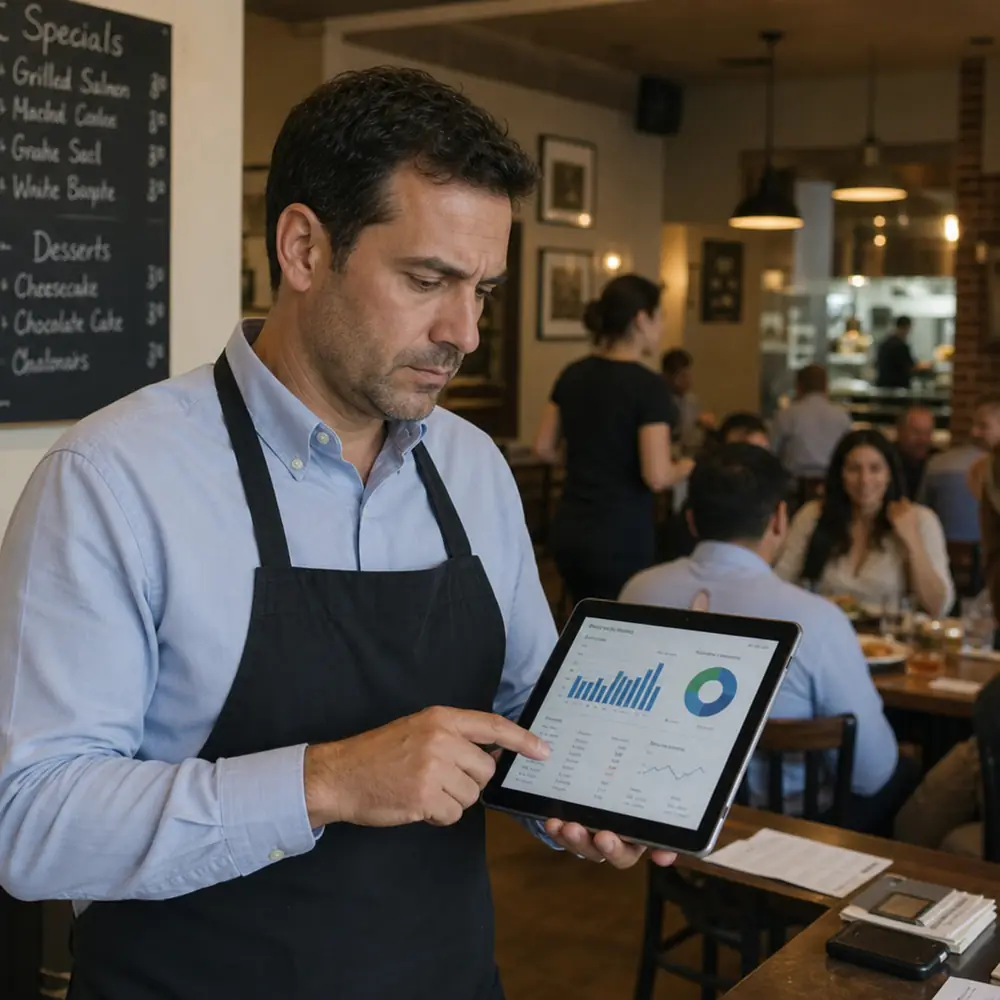
If you are tired of guessing which menu items drive the most profit or struggling to schedule the right number of servers for a Tuesday night, business intelligence solutions offer a clear path forward. By turning fragmented metrics into cohesive narratives, operators can eliminate blind spots. In this comprehensive guide, we explore how advanced analytics can enhance every facet of your food and beverage operation, driving growth, reducing waste, and building a highly loyal customer base.
Leaving Spreadsheets Behind
For decades, restaurant operators relied on manual calculations and disjointed ledgers to track operations. But when evaluating a restaurant data warehouse vs simple spreadsheets, the differences are staggering. Spreadsheets are highly prone to human error, incredibly difficult to scale across multiple locations, and often out of date the moment they are saved. Conversely, a data warehouse centralizes information automatically, providing a single, real-time source of truth for your entire operation.
Modern restaurant business intelligence software pulls data from multiple sources, your Point of Sale (POS) system, accounting software, employee scheduling apps, and inventory platforms, into one unified hub. This eliminates tedious manual data entry and allows operators to spend less time crunching numbers in the back office and more time on the floor improving the guest experience.
With automated data aggregation, managers gain back valuable hours each week. Rather than waiting until month-end to review a static Profit and Loss statement, you acquire daily visibility into your margins, empowering proactive business decisions.
The Shift from Basic POS to Advanced Reporting
Many operators assume their current checkout system provides all the operational data they need. However, when comparing the best restaurant reporting tools vs POS analytics, you quickly realize that basic POS systems only tell half the story. A standard POS can track how many burgers you sold today, but it cannot tell you if the rising cost of beef destroyed your profit margin, or if you severely overstaffed the kitchen to cook them.
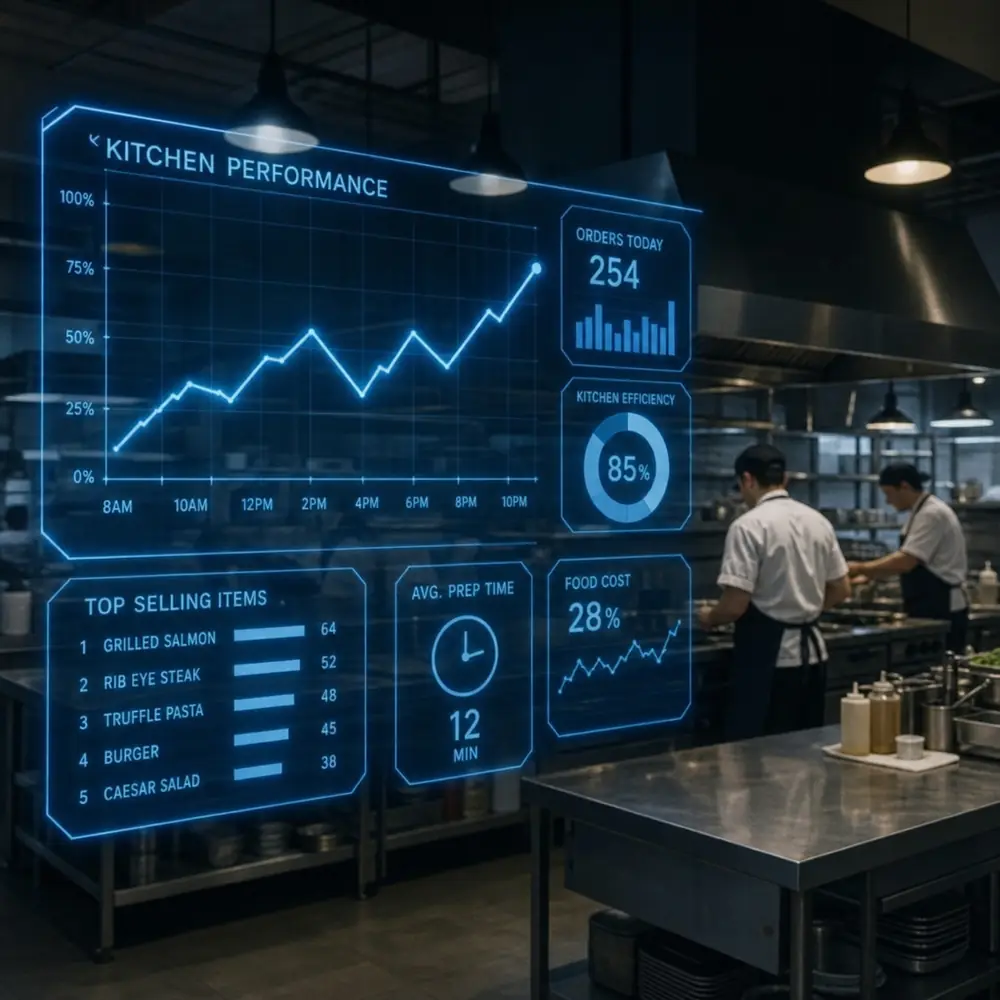
Advanced BI platforms connect the dots. They integrate transactional sales data with external variables like local weather forecasts, city events, and historical trends. By utilizing real-time restaurant performance dashboards, managers monitor operations exactly as they happen. If sales suddenly spike at 2:00 PM, the dashboard alerts management instantly.
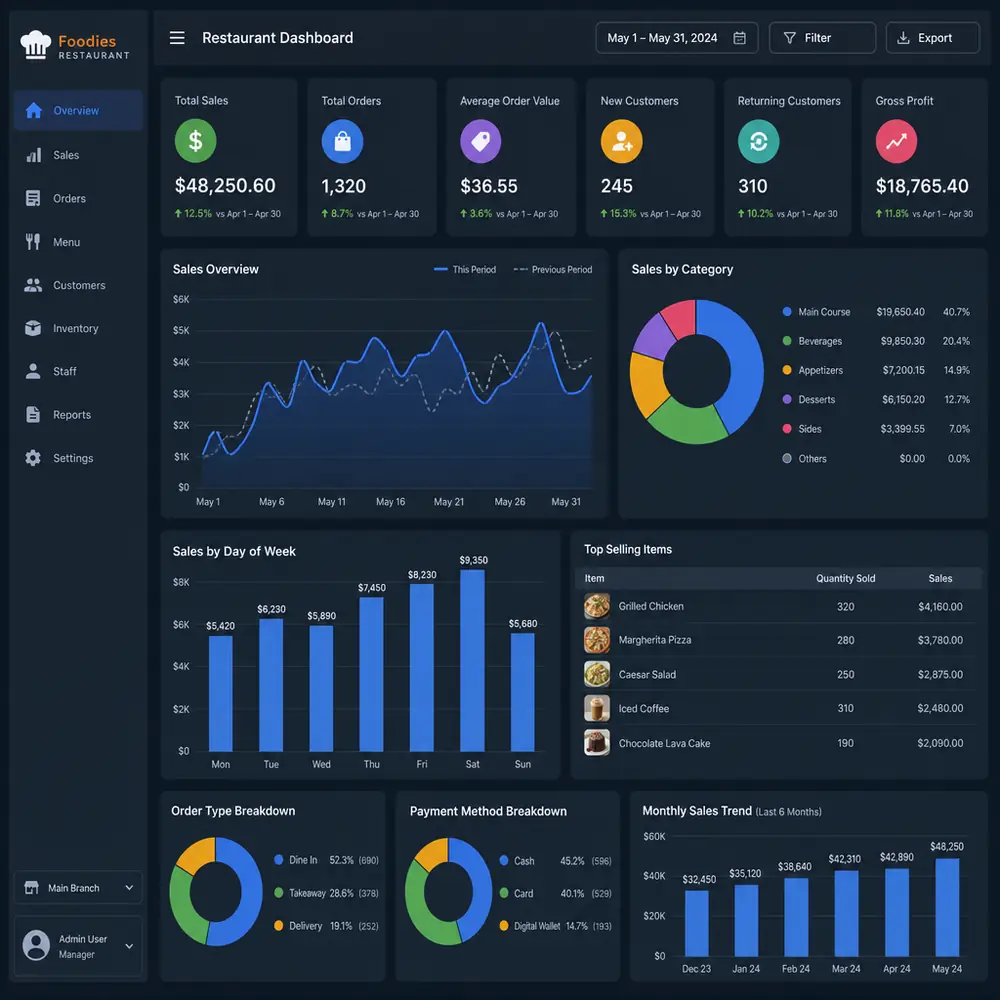
These dashboards provide visual, easy-to-read representations of complex data. You do not need to be a data scientist to understand a color-coded chart showing that labor costs are creeping into the red zone. This immediate, visual visibility is the cornerstone of modern restaurant management.
Understanding the Metrics that Matter
Before diving into advanced analysis, operators often ask: what are key performance indicators for restaurants? Key Performance Indicators (KPIs) are specific, measurable metrics that reflect the fundamental financial health of your business. While there are dozens of KPIs you could track, a few stand out as absolute necessities:
- Cost of Goods Sold (COGS): The total cost of the ingredients used to create your menu items.
- Prime Cost: The sum of your total COGS and total labor costs, the ultimate metric for restaurant profitability.
- RevPASH (Revenue Per Available Seat Hour): How effectively you utilize dining room seating.
- Table Turnover Rate: How quickly guests dine and leave, making room for the next party.
Tracking these KPIs manually is incredibly tedious, but BI tools automate the daily calculation. By monitoring these metrics closely, you can quickly identify operational leaks before they become catastrophic financial drains.
Taking Control of Inventory and Waste
One of the largest expenses in any kitchen is food, and food waste is a massive threat to your bottom line. Learning how to reduce restaurant food waste with data is a transformative step for any operation.
Instead of guessing how much produce to order based on last week's usage, analytics platforms look at historical data, upcoming holidays, and reservations to suggest precise order quantities. Automating restaurant inventory management insights means the system actively flags anomalies, such as a sudden, unexplained spike in cooking oil usage or missing prime cuts of meat.
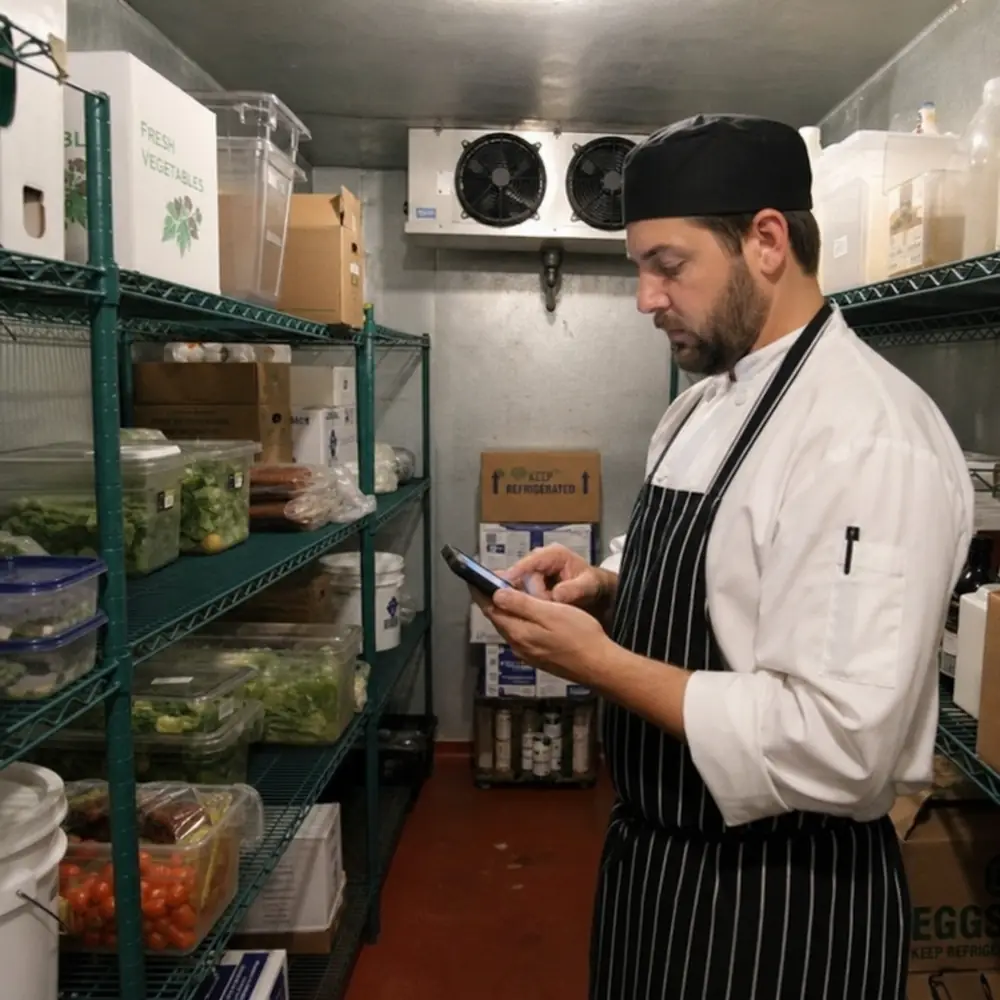
Furthermore, conducting a food and beverage cost variance analysis becomes practically effortless. Variance is the difference between the theoretical cost (what your recipes dictate you should have spent based on sales) and the actual cost (what you actually spent according to physical inventory counts). For example, if your theoretical cheese usage for 100 pizzas is 50 pounds, but inventory shows 70 pounds are gone, you have a 20-pound variance.
BI software instantly highlights these discrepancies. Is the kitchen over-portioning? Is food spoiling before use? By pinpointing the exact ingredients causing variance, management can retrain staff on portion control or improve storage techniques, saving thousands of dollars annually.
Mastering Labor Expenses
Labor is the other half of your prime cost, and managing it effectively is critical. Overstaffing bleeds profits; understaffing leads to poor service, stressed employees, and bad reviews. Optimizing restaurant labor costs through reporting allows you to strike the perfect, profitable balance.
BI software correlates historical sales data with labor hours to create accurate staffing forecasts. The system can identify subtle patterns human managers might miss, for example, that Sunday brunch rush drops sharply at exactly 1:30 PM, so you can stagger shift end times confidently. Weather integrations can alert you to forecasted rain, predicting lower patio seating and suggesting you cut an outdoor server.
These tools also help monitor employee performance metrics, such as table turn times and average ticket sizes by server. That data supports promotions for top performers or extra training on upselling, turning your workforce into a finely tuned, efficient engine.
Menu Optimization and Sales Strategy
Your menu is your primary sales tool, but is every item pulling its weight? A comprehensive guide to menu engineering using sales data reveals how to categorize dishes based on profitability and popularity, removing emotion from menu design.
Using intuitive BI dashboards, you can classify menu items into four key categories:
- Stars: High profit, high popularity, highlight these visually on the menu.
- Plowhorses: Low profit, high popularity, consider slightly raising price or reducing portion sizes.
- Puzzles: High profit, low popularity, push as daily specials or rewrite descriptions.
- Dogs: Low profit, low popularity, remove to save inventory space and prep time.
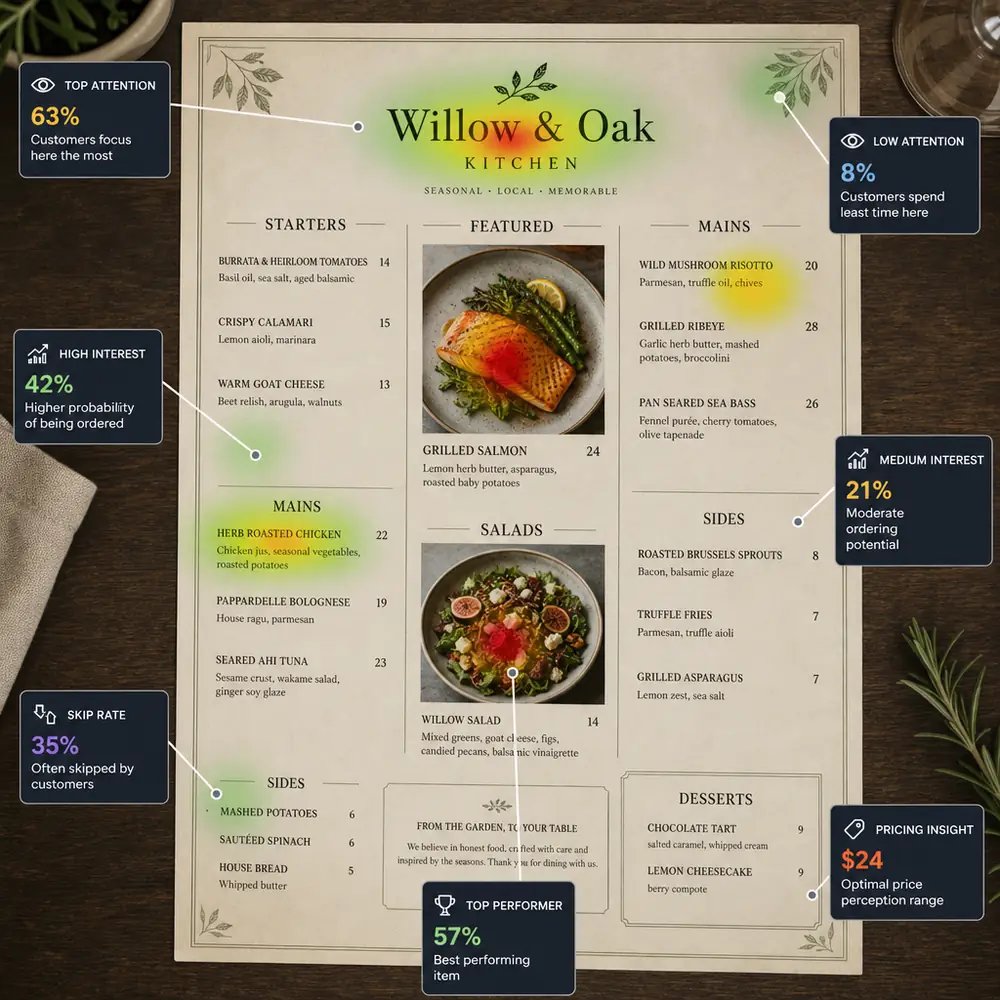
By rigorously analyzing every dish through this lens, operators significantly boost overall margins without driving away loyal customers. Every ingredient you stock contributes positively to the bottom line.
Enhancing the Guest Experience
Beyond internal operations, data is a powerful tool for marketing and customer relationship management (CRM). Improving guest retention with CRM analytics involves tracking customer behavior, personal preferences, and feedback over time.
When your BI platform integrates with your loyalty program and reservation system, you build rich customer profiles. Equipping front-of-house staff with knowledge that a regular visits every third Thursday and always orders a specific bottle of wine enables VIP service that guarantees repeat visits.
You can segment your audience for targeted marketing campaigns. Instead of sending a generic discount to your entire email list, CRM analytics let you send a "We miss you!" offer to guests who have not dined in over 60 days, or a vegan menu preview to plant-based diners. This approach dramatically increases marketing ROI.
Scaling the Enterprise
For growing restaurant groups and franchises, complexity multiplies with each new location. This is where cloud-based hospitality data integration shines. Cloud technology ensures data from locations across regions sync instantly and securely to a centralized corporate dashboard.
Multi-unit restaurant management analytics allow regional managers and corporate owners to compare performance across stores effortlessly. Benchmark locations on labor efficiency or food waste. If one unit underperforms, data quickly reveals whether the root issue is foot traffic, high COGS, or excessive labor.
Advanced BI platforms enable cross-platform sales trend forecasting. By analyzing regional trends, seasonality, and macroeconomic factors across dine-in, takeout, and third-party delivery, operators predict future sales volumes with remarkable accuracy, crucial for bulk purchasing and large-scale marketing.
The Future with Predictive Analytics
The next major frontier in hospitality tech is predictive analytics for food service. While standard BI tells you what happened and what is happening now, predictive analytics uses machine learning to forecast what will happen.
These systems can predict how many bowls of clam chowder you will sell next Tuesday based on historical data, local events, and weather patterns. Kitchens prep with precision, driving down waste and avoiding 86'd items during unexpected rushes. Restaurants shift from reactive firefighting to proactive strategy.
Building Your Implementation Plan
Ready to make the technological leap? The steps for implementing restaurant data strategy must be handled methodically to ensure team adoption and long-term success.
- Define your goals. Do not fix everything at once. Decide if your primary goal is reducing food costs, cutting labor hours, or growing sales, and focus on those metrics first.
- Audit your existing tech. Evaluate your current restaurant management software. Ensure POS, scheduling, and inventory systems offer open APIs that communicate with a central BI platform.
- Choose the right BI partner. Select a platform designed for hospitality. Generic BI tools often lack nuanced recipe and labor integrations food service requires.
- Train your team. Shift managers must read dashboards and take decisive action based on insights.
- Review and refine. Set aside weekly time with leadership to adjust strategies based on what the numbers show.
For a deeper dive on metrics and culture, see leveraging data for restaurant success. For vendor comparisons, read top restaurant data analytics tools reviewed.
Conclusion
In today's fiercely competitive food and beverage landscape, relying on intuition is a proven recipe for failure. By actively leveraging comprehensive restaurant business intelligence software, operators shine a light on hidden inefficiencies, streamline daily operations, and boost profit margins. From menu engineering to labor scheduling and inventory waste, accurate data provides the roadmap to sustained success.
Operational BI maximizes profit where you already operate; location intelligence helps you expand wisely. Run free AI-powered site analysis at Restaurant Site Finder before your next opening.
Frequently Asked Questions
What is restaurant business intelligence software?
It aggregates POS, inventory, scheduling, accounting, and CRM data into unified dashboards that drive daily operational decisions.
How is BI different from POS analytics?
POS shows transactions; BI connects sales to food cost, labor, external factors, and trends so you see true margin and efficiency.
What KPIs should restaurant BI track first?
COGS, prime cost, RevPASH, table turnover, and theoretical vs actual food cost variance.
Can restaurant BI reduce food waste?
Yes, through smarter ordering, variance alerts, and predictive prep based on demand patterns.
Is Restaurant Site Finder free for location intelligence?
Yes. Enter any US address at restaurantsitefinder.com for competitor and opportunity analysis.
Run a free location analysis
Enter any address to get competitor mapping, market gaps, opportunity scoring, and concept ideas.
Analyze your location free Shop equipment at Horeca Store