Marketing
Leveraging Customer Analytics to Boost Restaurant Success
Leveraging customer analytics to boost restaurant success, POS, loyalty, and feedback data; key guest metrics; smarter marketing segments; analytics tools, menu and ops decisions, data privacy, and a practical start plan.
Key Takeaways
- Customer analytics for restaurants turns POS, loyalty, reservations, and feedback into patterns you can act on, not guesswork alone.
- Focus on metrics tied to decisions: repeat visits, frequency, menu mix, offer redemption, and channel behavior.
- Use segments for relevant marketing, back-of-house prep, and guest experience fixes, with clear data ownership and privacy.
- Pair guest insights with trade-area research at Restaurant Site Finder and demographic analysis.
Restaurants have always depended on reading the room: noticing what guests order, when they return, what they praise, and where service falls short. Today, customer analytics for restaurants makes that instinct more reliable by turning everyday dining data into clear patterns a team can act on. With the right restaurant analytics approach, operators can improve guest experience, sharpen marketing, reduce waste, and make smarter decisions across the business.
What can customer analytics tell a restaurant?
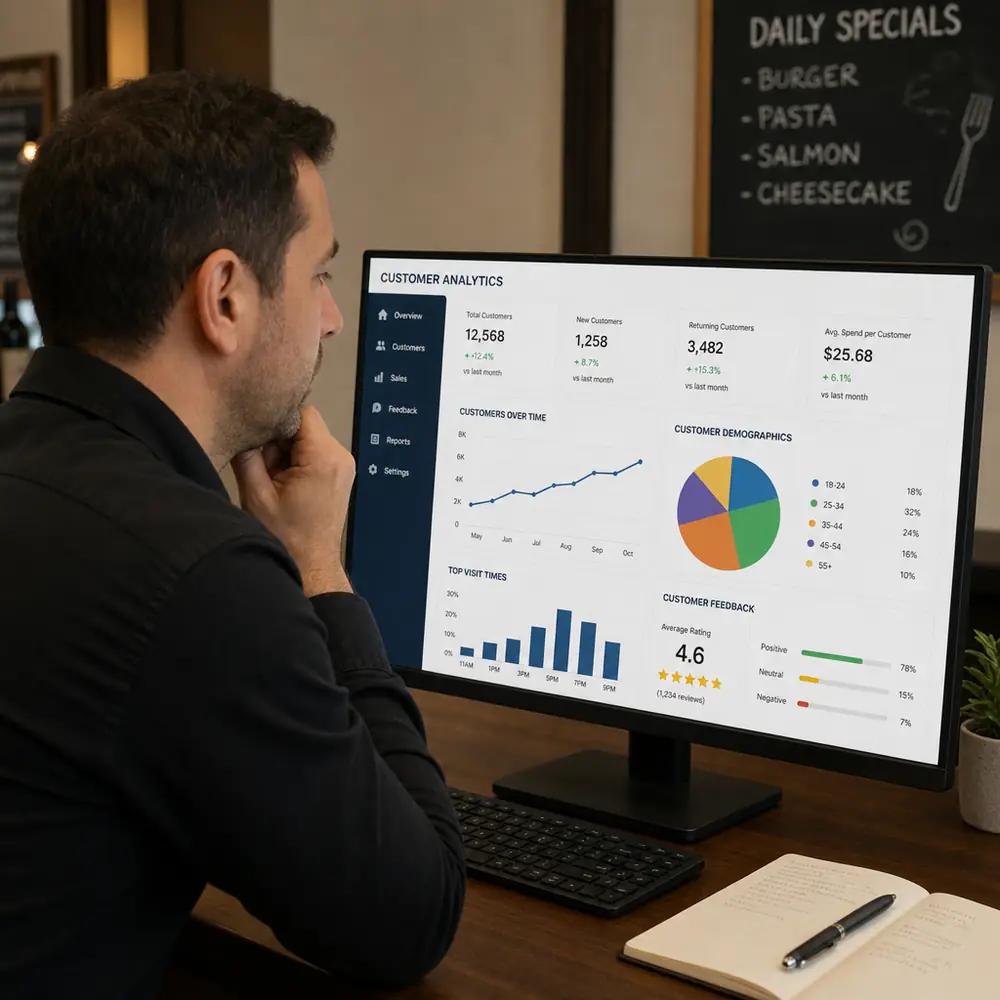
Customer analytics can show who your guests are, what they buy, when they visit, how often they return, and which experiences influence loyalty. Instead of relying only on gut feeling, restaurants can use customer insights to identify popular menu items, slow traffic periods, high-value guest segments, and emerging customer trends. The result is a clearer view of what is working, what needs attention, and where growth opportunities may be hiding.
At its best, restaurant analytics connects the daily details that are easy to miss. A lunch special may look successful because it sells well, but deeper restaurant metrics might reveal that it attracts mostly one-time discount seekers. A menu item may seem average in total sales, yet perform extremely well among repeat guests. These distinctions matter because they help restaurants make decisions based on behavior, not assumptions.
Customer analytics for restaurants is not just for large chains or data-heavy brands. Independent restaurants, cafés, food trucks, bars, and multi-location groups can all use analytics tools to understand guest behavior more clearly. The key is not collecting every possible number. The key is choosing the right information and using it consistently.
The business value of better restaurant insights
Restaurant success often depends on dozens of small improvements rather than one dramatic change. A better email offer, a more profitable menu layout, a smarter staffing plan, or a faster recovery after a poor guest experience can all add up. Restaurant insights help teams find those improvement opportunities faster.
Analytics can support decisions across the entire guest journey. Before a customer arrives, dining data can help you understand which promotions bring people in. During the visit, point-of-sale patterns can show what guests order together, which add-ons convert, and where service bottlenecks appear. After the meal, feedback, loyalty activity, and repeat-visit behavior can reveal whether the experience created a lasting connection.
This matters because restaurant operators work in a high-pressure environment. Food costs fluctuate, labor planning is complex, guest expectations keep changing, and competition is never far away. Customer analytics brings more structure to those decisions. It does not replace hospitality, creativity, or leadership, but it gives those strengths better direction.
Useful restaurant insights can help teams:
- Understand which guests visit most often and what motivates them
- Identify menu items that drive loyalty, profit, or repeat orders
- Improve promotions by targeting the right audience with the right message
- Spot customer trends before they become obvious on the floor
- Adjust staffing around predictable traffic patterns
- Reduce guesswork when testing menu, pricing, or service changes
- Track whether operational improvements are actually changing guest behavior
The practical benefit is focus. Instead of trying to improve everything at once, a restaurant can prioritize the actions most likely to improve the guest experience and business performance.
The dining data restaurants already have
Many restaurants already have more useful data than they realize. The challenge is that the information often lives in separate systems or is reviewed only when something goes wrong. Bringing those details together is where customer analytics becomes valuable.
Point-of-sale data is usually the foundation. It can show what sells, when it sells, average check size, modifiers, discounts, voids, and ordering patterns by daypart. Reservation and waitlist systems can reveal party size trends, no-show patterns, peak booking windows, and guest notes. Online ordering platforms can highlight takeout behavior, delivery preferences, repeat order habits, and popular bundles.
Guest feedback is another rich source of customer insights. Reviews, surveys, comment cards, social media messages, and direct complaints can show how people feel about the experience. While a single review should not drive a major decision, repeated themes are worth attention. If guests regularly mention slow service on weekend evenings or praise a specific appetizer, that feedback can be compared against operational data.
Loyalty programs and email platforms can add another layer. They help restaurants understand visit frequency, offer redemption, birthdays, preferred locations, and lapsed-customer behavior. Even basic segments, such as first-time guests, frequent diners, and guests who have not returned recently, can make marketing more relevant.
Common sources of dining data include:
- POS transactions that show purchases, check size, discounts, and sales mix.
- Reservation and waitlist activity that reveals demand patterns and guest preferences.
- Online ordering data that shows digital ordering habits and repeat purchases.
- Loyalty program behavior that identifies frequent, lapsed, and high-value guests.
- Customer feedback from reviews, surveys, and direct comments.
- Marketing engagement such as email opens, clicks, redemptions, and campaign response.
- Operational data including labor, ticket times, inventory movement, and waste.
When these sources are viewed together, they create a fuller picture. Sales numbers show what happened. Customer behavior helps explain why it happened. Feedback provides context for what guests experienced.
Restaurant metrics that deserve attention
Not every number deserves equal attention. A dashboard full of charts can feel impressive, but if the team does not know what to do next, it is not useful. The best restaurant metrics are tied to decisions.
Guest frequency is one of the most important patterns to monitor. If people visit once but do not return, the restaurant may have an experience, value, or follow-up problem. If loyal guests are visiting less often, customer trends may be shifting, or competitors may be pulling attention away.
Average check size also matters, but it should be read carefully. A higher average check can be good, but not if it comes from price increases that discourage repeat visits. Similarly, a lower average check may not be bad if it reflects faster lunch traffic, more add-on opportunities, or successful entry-level offers that introduce new guests to the brand.
Menu performance is another essential area. Restaurants should look beyond top sellers and ask which items are profitable, which items attract repeat guests, which are frequently modified, and which are often ordered together. These patterns can influence menu design, staff recommendations, purchasing, and specials.
Helpful restaurant metrics to monitor include:
- Repeat visit rate: Are guests coming back after their first experience?
- Visit frequency: How often do loyal guests return over time?
- Average check size: How much do guests typically spend per visit?
- Menu mix: Which items sell most often, and which combinations appear together?
- Offer redemption: Which promotions motivate action without over-discounting?
- Guest lifetime value: Which customer groups are most valuable over time?
- Review and feedback themes: What topics appear repeatedly in guest comments?
- Peak and slow periods: When does demand rise, drop, or shift by channel?
- Order channel behavior: How do dine-in, takeout, delivery, and catering patterns differ?
The goal is not to chase every metric. It is to choose a focused set that reflects the restaurant’s priorities. A new restaurant may care most about acquisition and repeat visits. A mature restaurant may focus more on loyalty, profitability, and operational consistency.
Turning customer insights into smarter marketing
Marketing works better when it reflects real customer behavior. Instead of sending the same message to everyone, restaurants can use customer analytics for restaurants to create more relevant campaigns. That does not have to mean complicated automation. It can start with simple segmentation.
For example, first-time guests might receive a warm thank-you message with an invitation to return. Regulars might get early access to a seasonal menu. Guests who usually order online might receive a limited-time takeout bundle. Lapsed customers might receive a reminder tied to something they previously enjoyed.
The difference is relevance. A vegetarian guest may not respond to a steakhouse-style promotion, even if they like the restaurant overall. A weekday lunch customer may ignore a late-night offer but appreciate a quick-order option. Restaurant insights make it easier to match the message to the guest’s actual habits.
Analytics can also improve promotional discipline. Discounts are tempting, especially during slow periods, but not every promotion builds long-term value. By tracking redemptions, repeat visits, and average check after a campaign, operators can see whether an offer attracted the right behavior or simply reduced margin.
Practical marketing uses for analytics include:
- Creating guest segments based on visit frequency, order history, or preferred channel
- Sending win-back campaigns to customers who have not visited recently
- Promoting menu items to guests who already buy related items
- Timing messages around common booking or ordering windows
- Testing subject lines, offers, and calls to action
- Measuring whether campaigns lead to repeat visits, not just one-time sales
The best marketing feels helpful rather than intrusive. When a restaurant uses dining data thoughtfully, it can make guests feel recognized without making the experience feel overly automated.
How do analytics tools support better decisions?
Analytics tools help restaurants collect, organize, and interpret data that would be difficult to evaluate manually. They can connect information from POS systems, loyalty platforms, ordering channels, reservations, and marketing campaigns so operators can see patterns in one place. Good tools do not just display numbers; they make it easier to decide what action to take next.
The right tool depends on the restaurant’s size, systems, and goals. A single-location café may only need a clear POS report, an email platform, and a simple review-monitoring process. A growing restaurant group may need more advanced dashboards, customer segmentation, and integrations across multiple locations. What matters is that the technology supports the team’s workflow instead of creating extra work.
When evaluating analytics tools, restaurants should look for clarity and usability. If only one person understands the dashboard, the insights may never reach managers, marketers, or front-of-house leaders. Reports should be easy to read, updated consistently, and connected to decisions the team actually makes.
A practical analytics tool should help restaurants:
- Pull relevant data from existing systems
- Track performance across locations, dayparts, channels, or guest segments
- Identify changes in customer behavior over time
- Compare campaign performance and guest response
- Highlight opportunities for retention, upselling, or operational improvement
- Share insights in a format managers can use during planning meetings
Technology is only part of the equation. Restaurants also need clear ownership. Someone should be responsible for reviewing the data, summarizing what matters, and turning insights into tests or actions. Otherwise, even strong analytics tools can become another unused system.
Improving the guest experience with data
Customer analytics is most powerful when it improves hospitality, not when it replaces it. Data can show patterns, but people still create the experience. The best restaurants use insights to support more thoughtful service, better timing, and more consistent execution.
For example, if reservation notes show that many guests request quiet seating for celebrations, managers may adjust how they assign tables or train hosts to ask better questions. If reviews repeatedly mention long waits for drinks, the issue may point to bar staffing, menu complexity, or service sequencing. If online guests often reorder the same meals, the restaurant might simplify the reorder process or create bundles around those habits.
Dining data can also help personalize the experience. A server may not need to know every detail about a guest, but a note about a birthday, allergy, preferred table, or favorite bottle can make the visit smoother. Used respectfully, customer insights can make hospitality feel more human, not less.
There is also value in spotting friction early. A dip in repeat visits, lower review sentiment, or reduced loyalty activity can signal that something has changed. Restaurants that monitor those signals can investigate before the problem becomes harder to fix.
Menu and operations become easier to manage
Restaurant analytics can strengthen back-of-house decisions as much as front-of-house decisions. Menu data can guide purchasing, prep planning, specials, and item placement. When a team understands what guests actually order, it can make better choices about inventory and labor.
For menu planning, customer trends are especially useful. A restaurant may notice increased interest in lighter entrées, shareable plates, alcohol-free beverages, or premium add-ons. These observations do not require the restaurant to chase every trend. They simply help the team test ideas with more confidence.
Operationally, analytics can reveal mismatches between demand and staffing. If Friday takeout orders spike before dine-in service peaks, the kitchen may need a different prep rhythm. If lunch traffic drops after a nearby office changes schedules, staffing and specials may need to shift. If a specific item slows ticket times, the team can decide whether to adjust prep, rewrite the description, or replace the dish.
A simple action checklist can keep insights from getting lost:
- Review core restaurant metrics weekly or monthly, depending on volume.
- Identify one guest behavior pattern worth investigating.
- Compare the pattern against feedback, sales, and operational context.
- Choose one small action, such as a menu test, campaign, or staffing adjustment.
- Measure the result over a defined period.
- Keep, refine, or stop the change based on what the data shows.
This cycle prevents analytics from becoming abstract. The value comes from repeated learning, not one-time reporting.
Responsible use of customer data builds trust
Customer analytics for restaurants should be handled with care. Guests share information through reservations, loyalty programs, online orders, and feedback because they expect a better experience, not because they want to feel monitored. Trust is part of the relationship.
Restaurants should collect only the data they can use responsibly and explain their practices clearly where appropriate. Access should be limited to people who need it, and teams should avoid using personal details in ways that feel uncomfortable or unnecessary. Personalization should feel like hospitality, not surveillance.
A responsible approach includes:
- Being transparent about loyalty, email, and ordering data practices
- Keeping customer information secure and access controlled
- Avoiding overly personal messaging that may feel invasive
- Respecting opt-outs and communication preferences
- Training staff on appropriate use of guest notes and customer details
Good data practices protect the business and the guest relationship. They also support better decision-making because clean, trusted data is easier to use confidently.
A practical path to getting started
Restaurants do not need a perfect analytics system to begin. A simple, consistent process is often better than a complex setup that no one maintains. Start with a business question, not a dashboard.
For example, ask why first-time guests are not returning, which promotions bring back valuable customers, or which menu items create repeat demand. Then identify the data that can answer that question. This might include POS reports, loyalty activity, feedback themes, or campaign results.
A manageable starting plan could look like this:
- Choose one goal. Focus on retention, average check, slow-period traffic, online ordering, or guest satisfaction.
- Select a few metrics. Pick numbers tied directly to that goal.
- Gather data from existing tools. Use POS, reservation, ordering, loyalty, and marketing platforms already in place.
- Look for patterns. Compare behavior by daypart, channel, guest segment, or menu category.
- Take one action. Test a campaign, menu change, service adjustment, or staffing shift.
- Review the outcome. Decide whether the change improved the metric you care about.
- Repeat the process. Build the habit before expanding the system.
This approach keeps analytics practical. Over time, restaurants can add more advanced tools, deeper segmentation, and more integrated reporting. But the foundation is always the same: ask better questions, use reliable data, and act on what you learn.
Better data supports better hospitality
Customer analytics for restaurants is not about turning dining into a spreadsheet. It is about giving operators a clearer view of guest behavior so they can make better decisions with more confidence. When restaurant analytics is used well, it improves marketing, operations, menu planning, and the guest experience.
The most successful approach is steady and practical. Start with the dining data you already have, focus on restaurant metrics tied to real decisions, and use customer insights to test thoughtful improvements. Over time, those small data-informed choices can help create a stronger restaurant, more loyal guests, and a more resilient business.
Connect guest analytics with revenue and ops depth in how to use data analytics to improve restaurant revenue and effective strategies for restaurant market research. Before you expand, validate trade areas at Restaurant Site Finder.
Run a free location analysis
Enter any address to get competitor mapping, market gaps, opportunity scoring, and concept ideas.
Analyze your location free Shop equipment at Horeca Store